
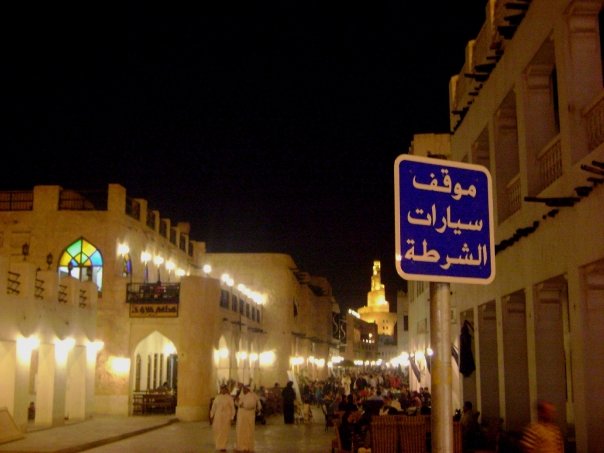
The Middle East has always been a mystery to me. Perhaps when living overseas, the only references I had of the region were scattered images of Saddam Hussein parading around Baghdad, dishes of tabouleh served with mint leaves by the friendly Lebanese guys that lived some four miles down the road from my house and of course, Aladdin.
Class and casts are very important in the Middle East. It is present on every building, on every local behaviour and it hits you as soon as you step out of the plane, with First Class passengers having their own dedicated door and transported to the terminal building in fancy Mercedes, whilst humble ‘cattle class’ passengers use the rear door pointed at overcrowded low-floored buses.
The heat is stroke-inducing despite the early morning time and the sunshine glows through the small terminal windows. Most passengers are in fact connecting to onward flights and only a dozen queue at the small immigration hall to enter the Qatari peninsula.
A woman in a black burkha avoids eye contact and extends her arm requesting my travel documents with no courtesies. Without any sort of interaction and at the clack of her nails on the plastic keyboard, she stamps my passport with one arm whilst she directs me to the baggage hall with the other.
Confused by the rather stale welcome, I rush to grab my two pieces of luggage which have been placed outside of the moving carousel and walk to the empty arrivals hall, where a young attractive Housing Officer from Malaysia calls my name.
Since arrangements were made last minute, no fancy bus is at my waiting. Instead, I am driven in a ‘civilian’ car through the wide recently-built roads of Doha and into my new neighborhood.
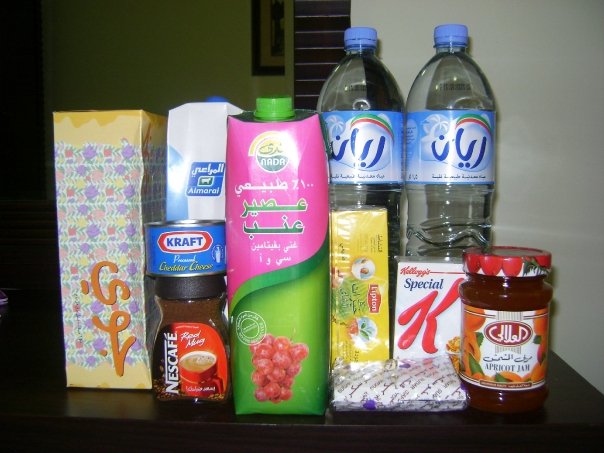
I have been assigned an apartment in the new building, the spotless living room large enough to echo our conversation within its tall ceilings and my room decorated with a welcome pack of basic groceries and kitchenware. The kitchen and living room are shared, whilst each flatmate on an apartment for two has their own bedroom and ensuite bathroom.
My ‘induction money’ and calling card will arrive later and so will my flatmate. In the mean time, I am advised to rest and take the day off. Training starts at seven in the morning sharp the next day.
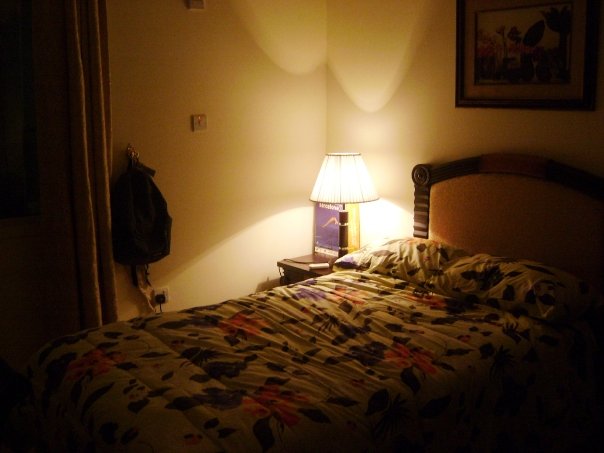
Once the housing officer leaves, I open the heavy curtains in my bedroom and then it hits me, for less than twenty-four hours ago I was helplessly awaiting for certainty in a small messy room in North Dublin and now, I stand alone in my own massive bedroom, glancing at a landscape of half-built buildings dominating a horizon of dust. The call to prayer on the mosque built next to my building hitting me with the last punch of hard impressions before some desperation invades.
– What am I doing here? . Do not, I repeat, do not cry.
I rush to bed for a nap under the full-powered air conditioning and wake up when my flatmate arrives in the apartment and introduces himself as Nikola from Montenegro (until this moment, I was not aware that Montenegro had separated from Serbia, nor that the capital was Podgorica).
Later that day, an envelope full of Qatari Riyals is handed to me, along with a calling card. My flatmate and I walk to a department store and buy trousers, shirts and formal shoes for training, and dinner is served in abrupt Soviet manners back in the new apartment.
For the next days in Doha, my routine involves early morning breakfasts in Al Mansoura and plenty of hours in ‘Plane School’ with a class of nineteen batch mates from sixteen different nationalities, whilst tossed around floors at the Qatar Airways tower on every lunch break, mostly sorting out documentation and visas, especially since I am a late joiner and such items were left to be sorted on the spot.
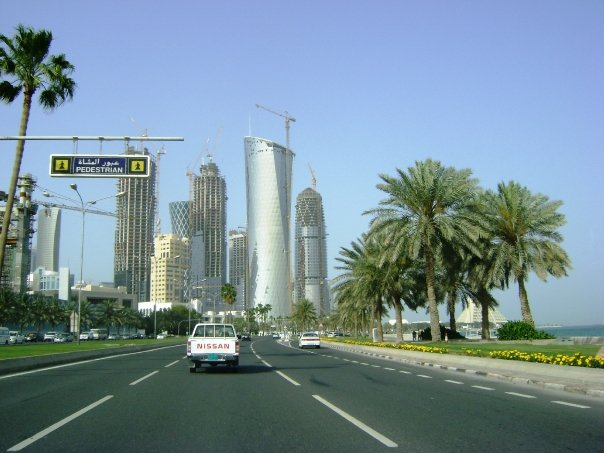
After almost a week in Doha, I finally catch a glimpse of the City Centre. Exaggerated by nature, the buildings rising in all sorts of extravagant architecture defy the logic of the hostility of the desert and produce an interesting setting to the millions of expats that outnumber the locals living in the Qatari capital by almost a tenfold.
Wealth is plentiful. Public transport is almost non-existent. Gold locks and chains overflow the stores in the City Centre and the Souq. The petrol is cheaper than water.
 THE FLYING CAMBA