
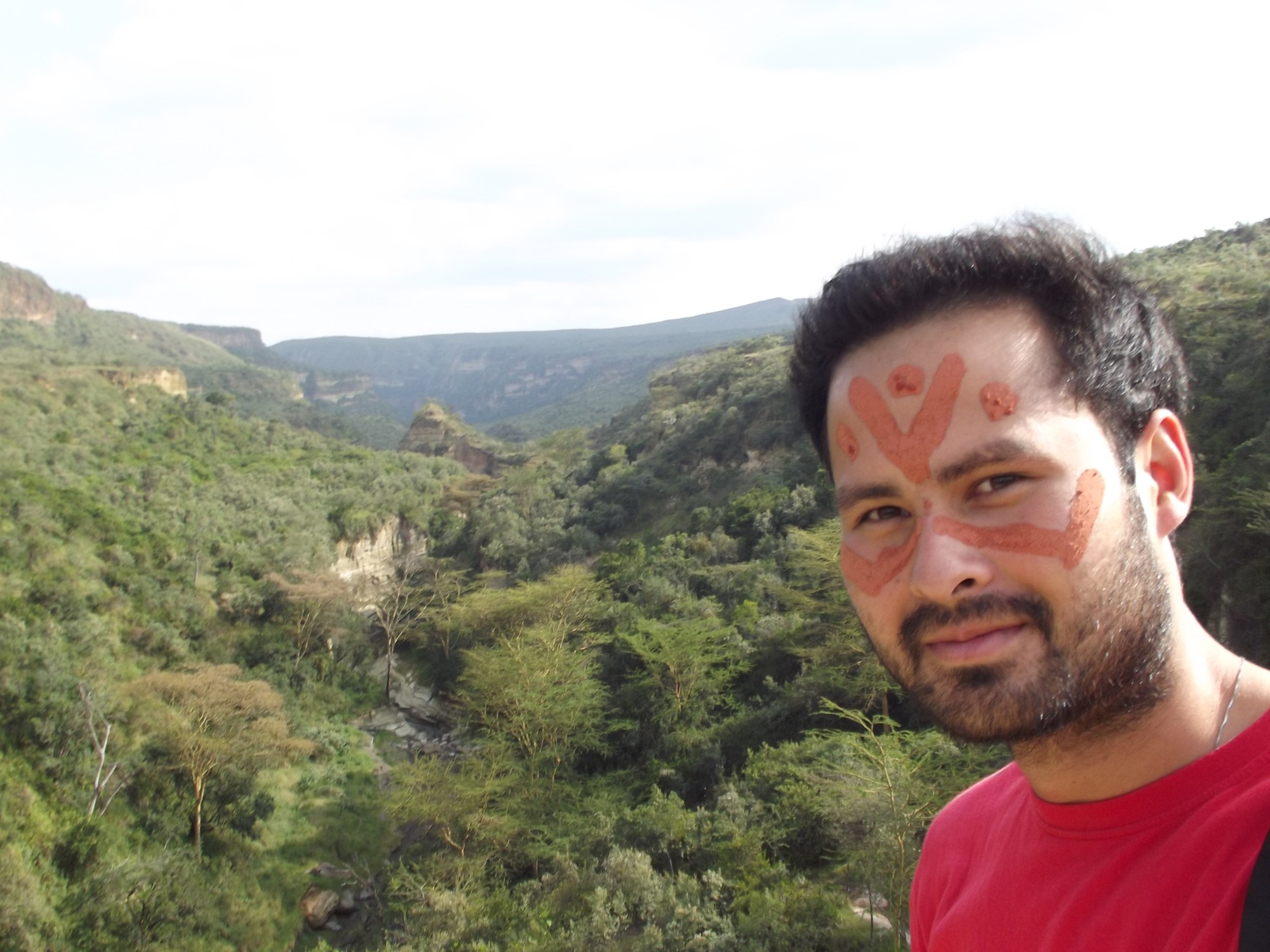
I sleep like a rock after two days of moving around. In the morning and feeling a bit less out of place, I reluctantly hire a taxi outside our expat fortress.
First destination: The David Sheldrick Wildlife Trust. Objective: to get a close encounter with baby elephants.
As the taxi rockets up and down the hilly landscape of Nairobi, I get a quick glimpse of what this city is about. An urban sprawl of remarkable contrasts. Massive embassies protected by tall walls and fences lining large, wide avenues. Minutes later, Kibera: the second largest slum in Africa (after Soweto in Johannesburg) squeezed in between two large hills of deep red soil. Next to Wilson Airport, a tempting road sign indicates for Carnivore Restaurant and on the Langata Road leading deep into the Karen neighbourhood, my driver shouts ‘royalty’ while pointing to the homes of ambassadors and diplomats on both sides of the avenue.
The road grows wilder and contours Nairobi National Park before turning left to the Elephant Orphanage gates.
A one and half hour time window is provided to visitors, this to minimise human contact. The red sand sticks to my boots as I step off the taxi and spot three giraffes, my first time seeing them in the wild.
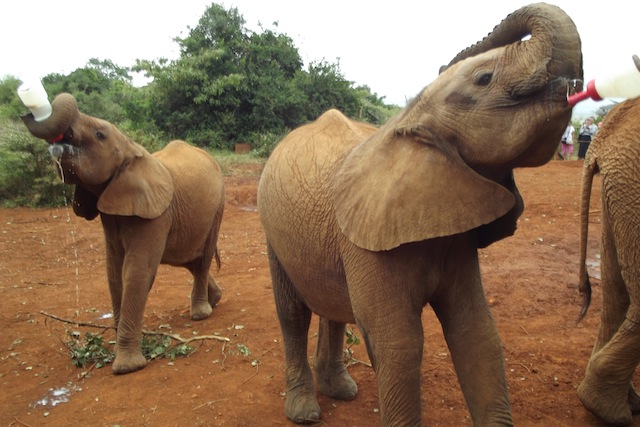
As the crowd gathers around the place, a heavy stampede is heard, and baby elephants rush towards us and the caretakers conveniently wearing green. A little “elephant nursery” takes place.
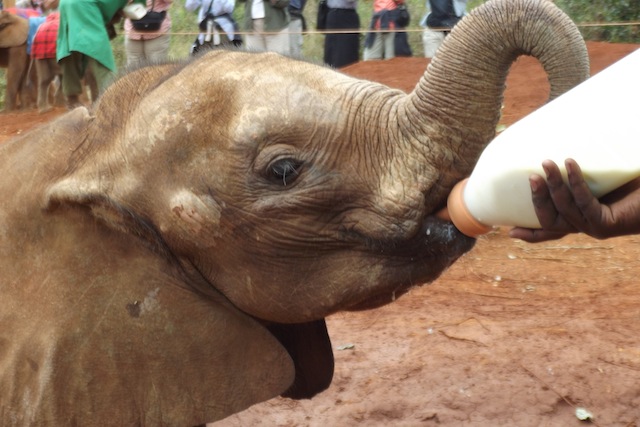
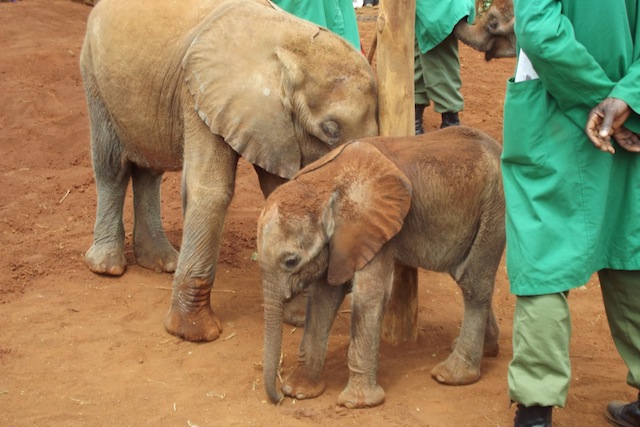
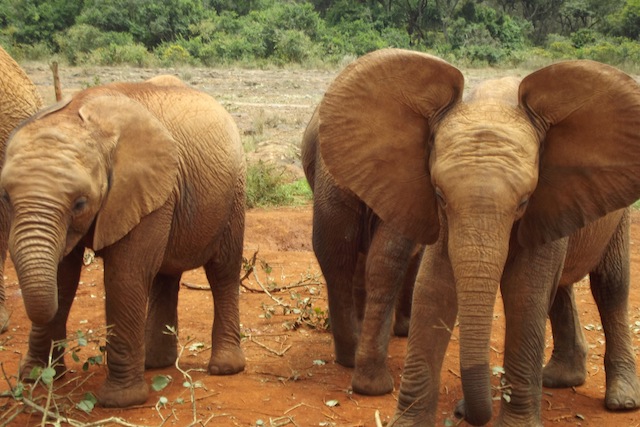
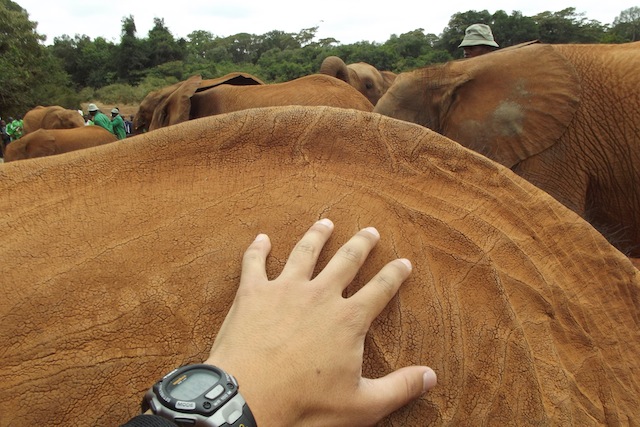
I caress their hard and dry skin before they collapse on the ground and fall asleep, just like little human babies would after a nice meal. The caretakers explain about their background, the state they were found and the efforts of this Trust to return them to the wilderness.
A rapid downpour falls and turn the air moist with sand and haze before a second heavier stampede hits the ground. This time adult elephants run across the field with the same energy as the little ones. I get to appreciate their true size up close and touch them as they have their bottles of formula and a few tree branches for lunch.
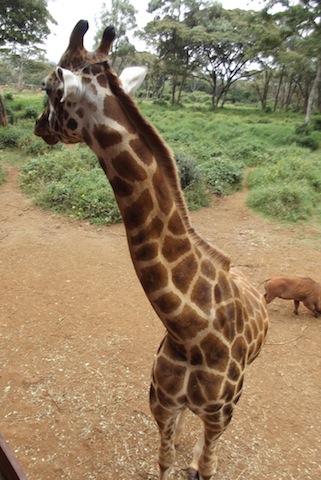
The taxi drives down for a mile towards a tall wooden tower. A caretaker hands me a handful of rations and once I reach the top of the platform, a tall elegant giraffe awaits to be fed with puppy eyes.
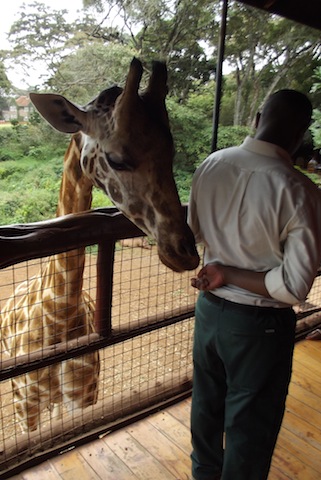
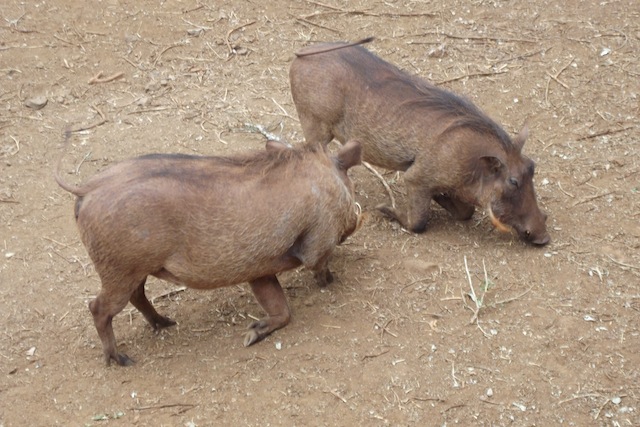
Giraffes seem to defy the laws of biology. Both clumsy-looking and elegant, up close, eyes are deep, round and starry . I am petrified few a few seconds, for a real giraffe is eating rations out of my hand. Her tongue is warm and long, wrapping around my palm with slime. As a camelid, they smell like horses and have almost the same habits. I caress her in between her eyes to appreciate her colourful and perfectly groomed skin, while underneath her long legs, a group of warthogs kneel on their front legs to eat leftovers.
There is a short and interesting presentation on giraffes at the centre, and I wander around the centre before a bunch of tourists, and some familiar faces, arrive from the Elephant Orphanage as I am about to leave.
I return to the city, at midday the busiest. Matatus fighting for space alongside adventurous boda-bodas, trucks and beaten buses. The weather is hot under the African sunshine, but thanks to the high altitude, it is still dry.
Starved, succulent tuna sandwiches are downed with the best Kenyan coffee at the Java Cafe, a popular place with locals and expats that around me read yesterday’s The Guardian and have meetings in colourful business attires.
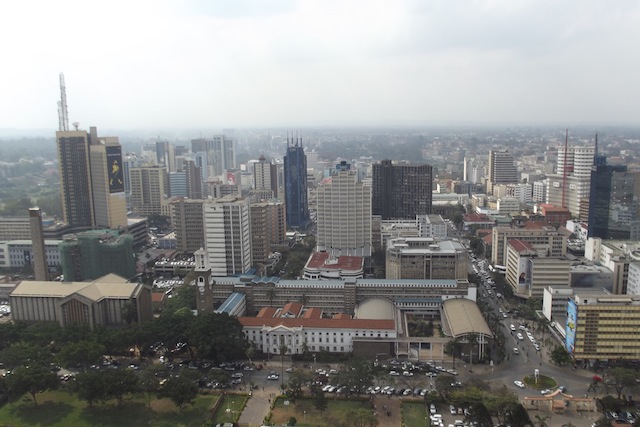
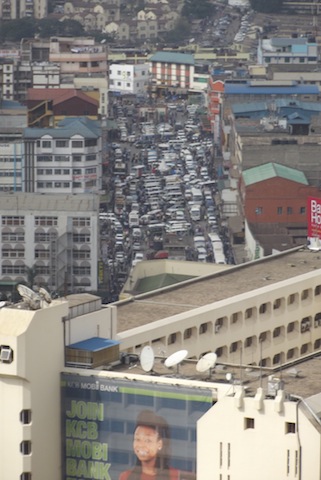
From the top of the Kenyatta Convention Centre, I shoot a few snaps of the nearly four million people metropolis. Skyscrapers of luxurious hotels and multinational offices flanked by narrow streets aggressively congested with markets and traffic jams.
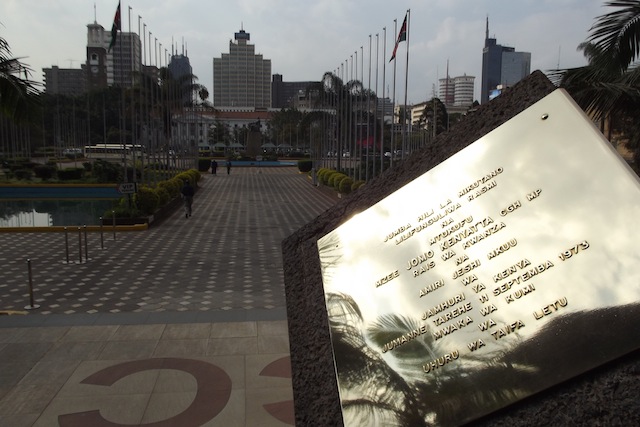
On the opposite direction, Uhuru Park extends besides the Trans-African Highway, creating a green wall between the Financial District, the hills of Millimani and further down, Amboseli.

I open a beer by the bonfire, and a group of Pakistanis on holiday after working in Goma join me for some chats. An Irish girl joins after spending the whole day volunteering at the slums in Kibera and our evening grows around chats of African experiences and the Che, who lived in Congo for a brief while. We are joined by a tall curly-haired British who happened to be traveling alone for work and by two British girls escaping from the decadence of the Cayman Islands. The power is cut -as it happens regularly in Africa- and we decide to experience Nairobi’s nightlife right after.
We hire a few taxis and we head up to the Westlands, the most exclusive neighbourhood in Nairobi. We pick a table in a cozy local cafe to have an enjoyable dinner and then move onto some local bars for some not pleasant experiences.
We try three bars and dance at times. The girls in our group are ambushed in the toilets by furiously drunk local girls and we leave amidst a full mooned mild evening filled with the sound of African tunes.
I team up with the Irish girl and we leave for River Road in the morning.
Across the Pan-African highway, the street markets sit on red sand dotted with puddles of motor oil. Biscuits, bottles of water, bananas and ready-made meals are offered by street vendors every time we stop. The road hits the rim of the valley and, just like being on an endless balcony, I can see how Mount Elgon rises from the water at Lake Naivasha like a king over the Great Rift Valley.
The road bends down for Naivasha Town, a cluster of tin roofed houses arrayed around dirt street and stagnant water and the place where I discover the famous “Blue Band” margarine, something of an East African obsession.
On the local road from Naivasha Town, I break the shell:
‘Shortly after the police checkpoint, we suddenly stop in middle of nowhere. I am shouted at in Swahili to get off the bus as I am seated next to the door. Panicking, I can only think this is it. My friend stares and for some odd reason I hand her my backpack and get off the minibus. Four panting passengers run towards me and cramp in the back of the minivan before I am pushed into my seat again and we set off.’
This is the moment in which Africa stops being alien to become human. The moment in which I finally notice the authenticity of its people and the moment in which I let Africa into my system to become one of them.
My friend smirks and reminisce on the moment she broke the shell, two weeks ago in Tanzania and we head down the road munching on salt crackers and candy.
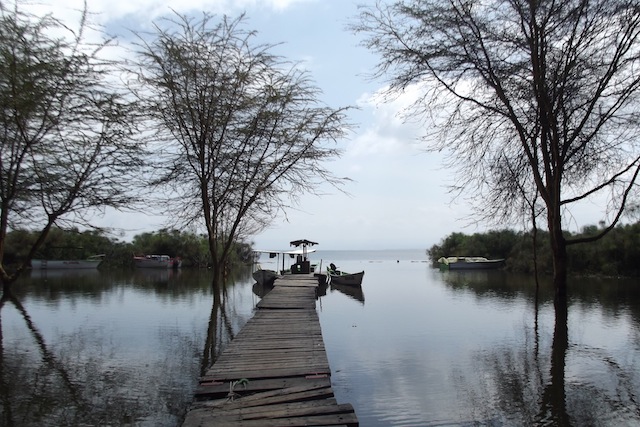
At Fisherman’s Camp, we pitch a tent next to the fence that divides humans and hippos, under trees that stand tall to Lake Naivasha and distant to Mount Elgon.
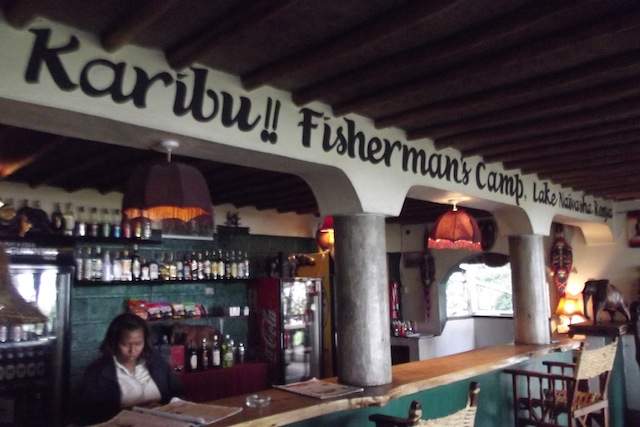
We rent bicycles and cycle down the road. Kids run behind waving notebooks and smile through their intense round dark eyes and their pure white teeth.
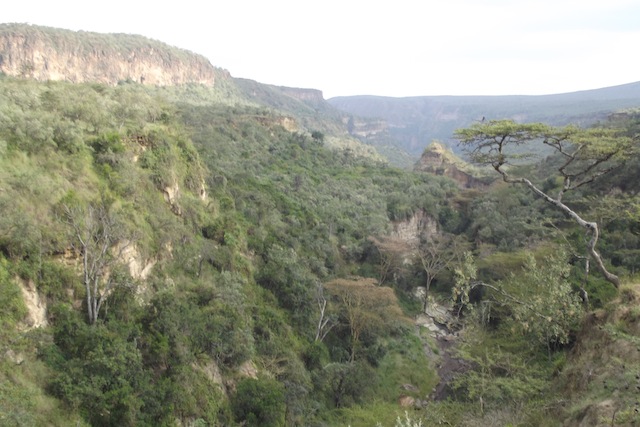
The sign reads ‘Hell’s Gate National Park’. A national park best explored by bicycle. Across the entrance, tall cliffs and soft hills are perfectly blended together and dip down a valley of collapsed horizons. Lonely trees scatter around the thick grass like solitary giraffes made out of wood.
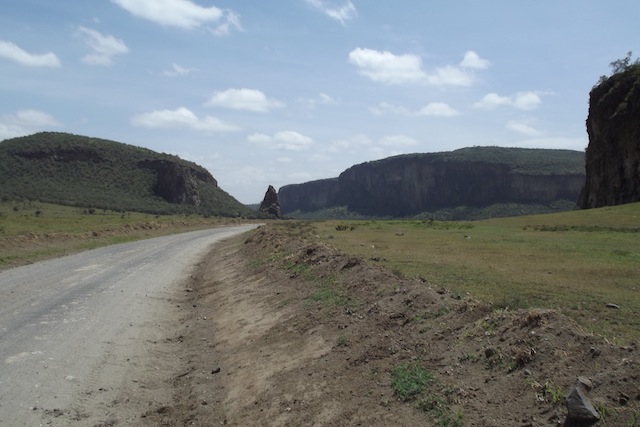
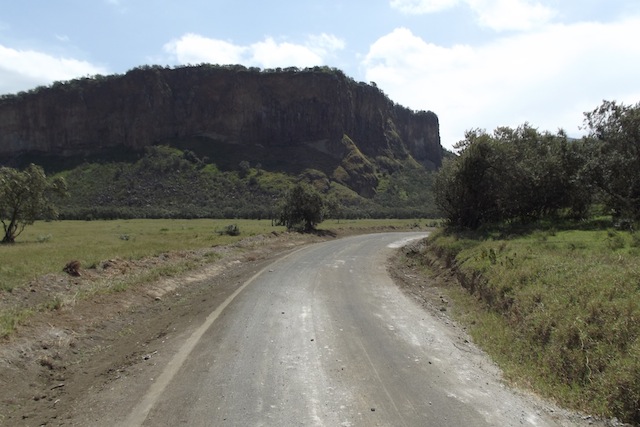
I spot wildebeests and buffalos, antelopes and baboons. Zebras move in groups of black and white beauty and giraffes stand curiously by the road watching the shiny wheels turn. Cars are replaced by bicycles and only a few fellow adventurers on the saddle are on sight.
We are met by a Masaai guide at the main gorge, the place that has given this National Park its infamous name. Deep and narrow, the gorge is an example of the seismic activity that has shaped the oldest continent on Earth, producing stars as tall as Mount Kilimanjaro and as deep as Lake Tanganyka.
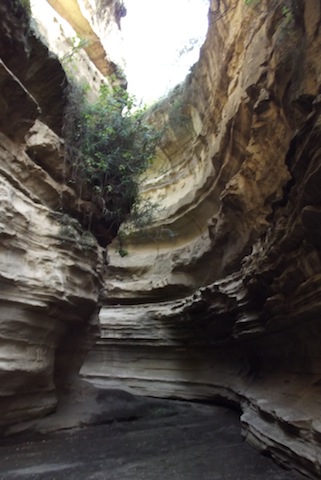
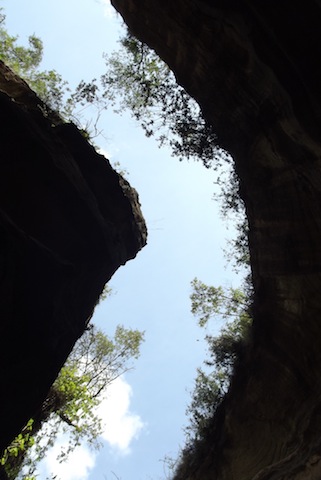
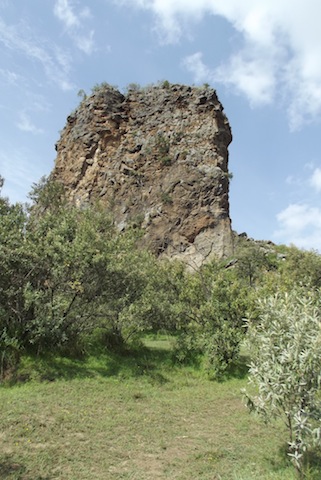
We reach the end of the gorge and bump into a rock chimney, a former volcano crater now only a witness of an ever changing Africa. Underneath, Hell’s Gate lives up to its title and the sulfur smell and boiling water tricking from the walls make up for an accurate description.

I return to Nairobi solo and, mad face on, fasten my pace at River Road once again. I sort out some lunch at Java Cafe and rush to the bus company office for a ticket East and out of Kenya. At the hostel, I pause for a toilet break and a beer before collecting my big backpack and taking a taxi into the madness of Nairobi at rush hour.
‘Rush hour in Nairobi can only be defined as pure chaos. At this point nobody can clear the mess, not even the suicidal boda-bodas. I am stuck at Haile Selassie Avenue and we take as long as twenty minutes to clear three blocks. It is dark outside and not even remotely safe to get out of the taxi and walk but this proves to be my last resort.
I walk as far as 100 meters and get almost run over by two matatus in some sort of slow motion movie. I make it through the crowd and just in time to catch my Easycoach bus bound to Uganda. Surprisingly, we depart on time.’
Uneventful at the beginning, the bus then proceeds to descend through the valley towards Nakuru in sways of violently dangerous overtakings that nearly end in a crash about five to six times. Hours later, the road turns sour and pot-holed until we reach the border at Kisumu, where the cabin lights turn on at the shout of ‘Border! Passports ready!’.
It is cold and wet outside and at three in the morning, my bones feel crushed and my mouth dry. I try not to get sick on the road and sip on some water as we queue next to two people being arrested at the Kenyan border post. Two policemen drag them away into the dark and travellers turn a blindside on it all. My passport is stamped through a little wooden window while two AK-47s are nonchalantly pointed at me. I breathe and walk to the Ugandan side where a dozen of touts wave Ugandan schillings at me as I decline to exchange any money. At the Ugandan post, the girl takes my passport and without a hesitation requests for fifty U.S. dollars. She stamps my passport, hands me an awkwardly big receipt and welcomes me into the Pearl of Africa.
 THE FLYING CAMBA