
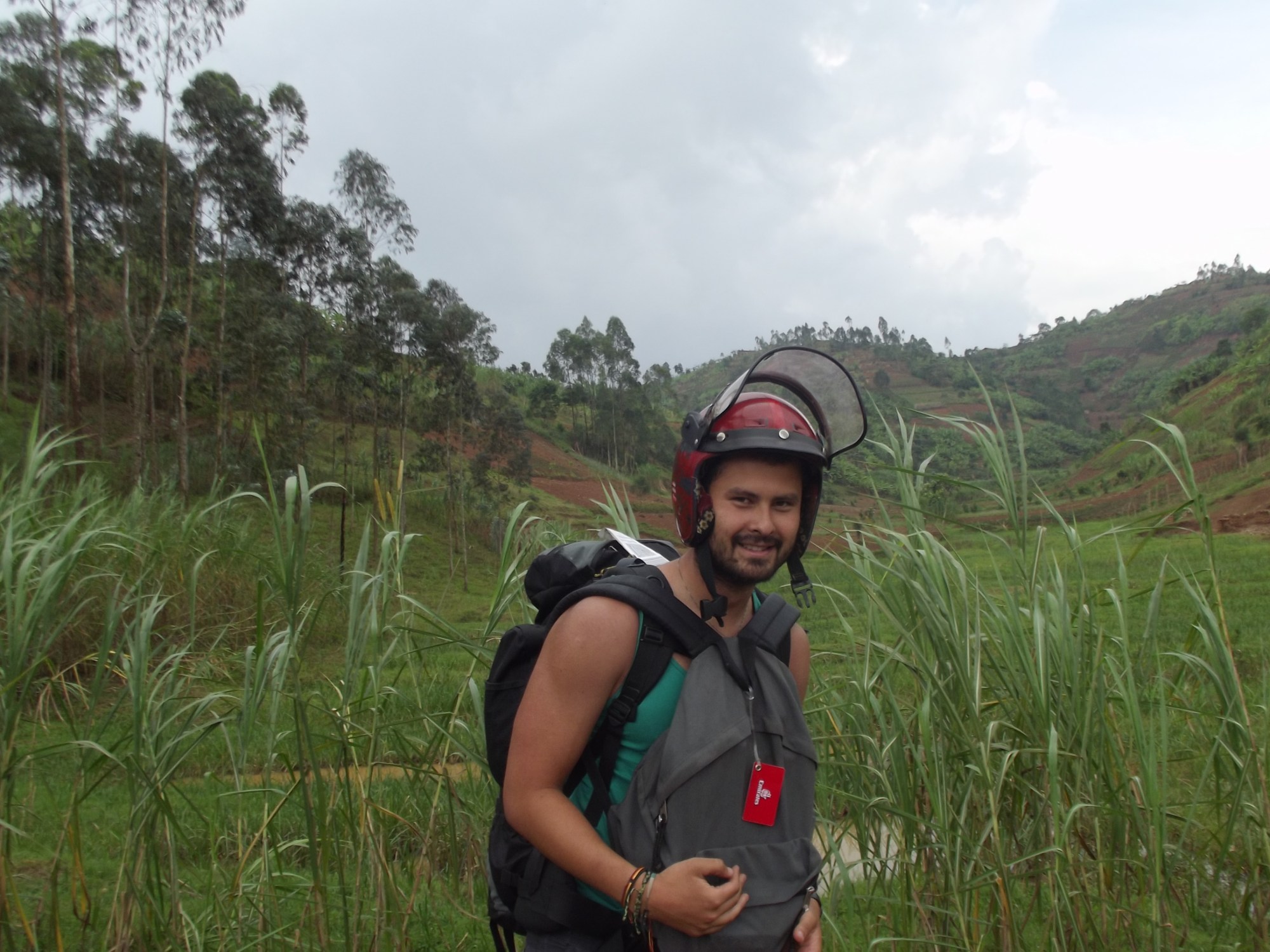
One mile of queued lorries separates Gatuna in Uganda from Katuna in Rwanda. At the Rwandan border post, a wooden cabin stands proudly displaying a brand-new flag and inside, as I show my eVisa printout, my backpack is thoroughly searched. A search not for drugs, or contraband but for plastic bags. Rwanda escapes from the cliches of Africa and it does so in heart-filling style. Dubbed ‘the Switzerland of Africa’, the country runs away from its tainted past in leaps as gigantic and as numerous as its hills.
Once on the bus, the asphalt softly rolls over a landscape of crops that rise from valleys in ripples of carefully maintained terraces with no flat land in sight. A local takes the empty seat next to mine. He is wearing a battered suit and a neatly groomed red tie. He is returning from a fruitful trip to Mombasa and this is the last leg of his bone-crushing thirty two hour bus trip. He smiles proudly as he shows me his Rwandan passport and with the eagerness of a child proudly showing his tidied bedroom, he prepares me for what I am about to expect next.
And as we pass rice crops glistening under the sun, and the roadsigns read for Kigali, three tall glass towers protrude from a round hill in the distance. For the first time in this trip, the bus pulls into a modern bus terminal -with platforms-, ending this tough part of the journey for both him and I.
His words resound as I walk through the spotless streets: ‘It is the cleanest city in Africa’ ; as a group of moto taxis wearing red helmets stop to let me through: ‘it is the safest city in Africa’; or as I enter Bourbon Cafe amidst foreigners smiling around cups of coffee: ‘it is the most progressive city in Africa’.
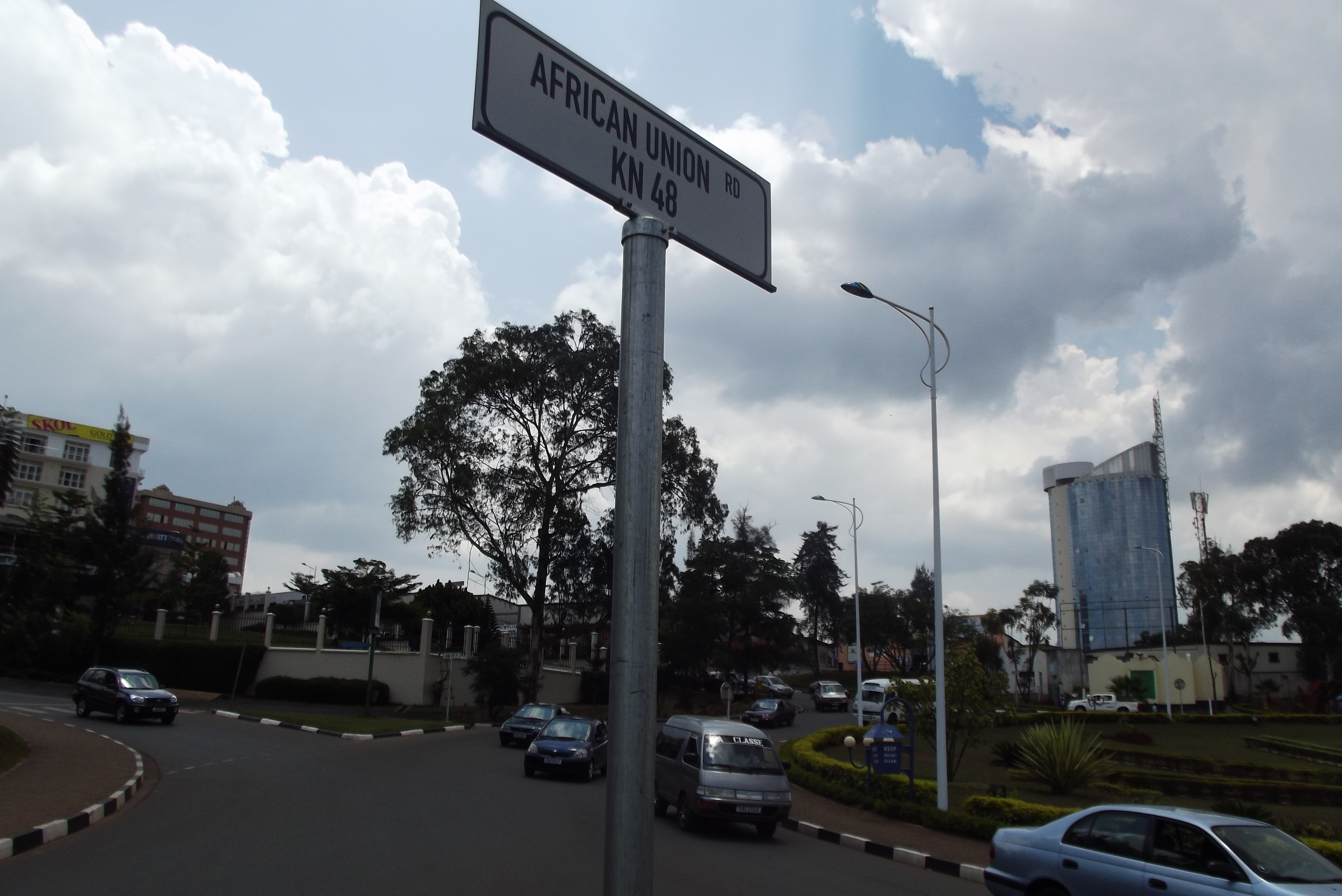
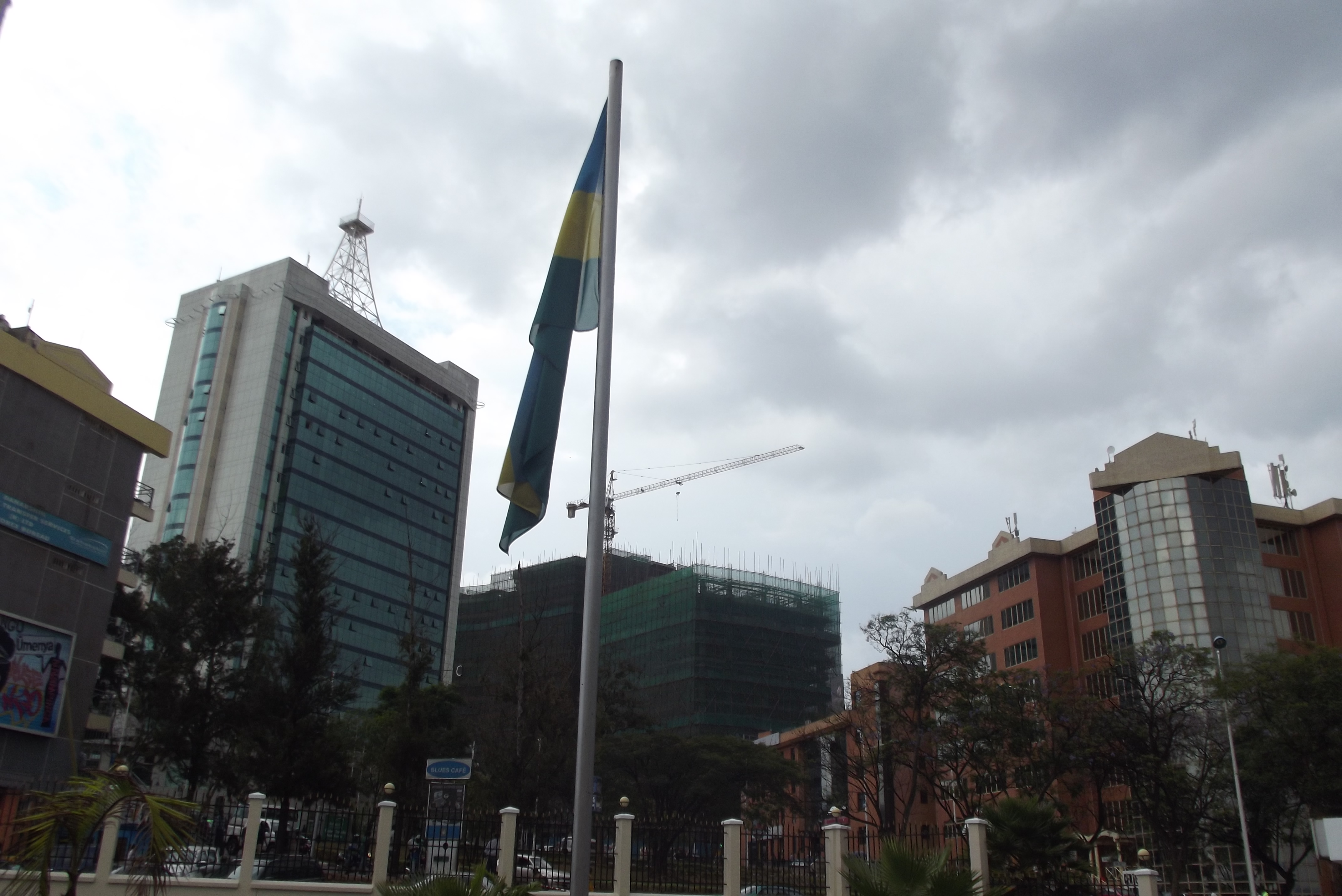
Nowadays proud, this small country squeezed in between the mighty Congo and Lake Victoria is still trying to forget 1994, it is still trying to heal from one of the worst genocides in history. Back then, over three million Tutsis were murdered raw in the now pristine streets of Kigali, the ones that survived tortured in front of their families by the mob-induced madness of a Hutu majority.
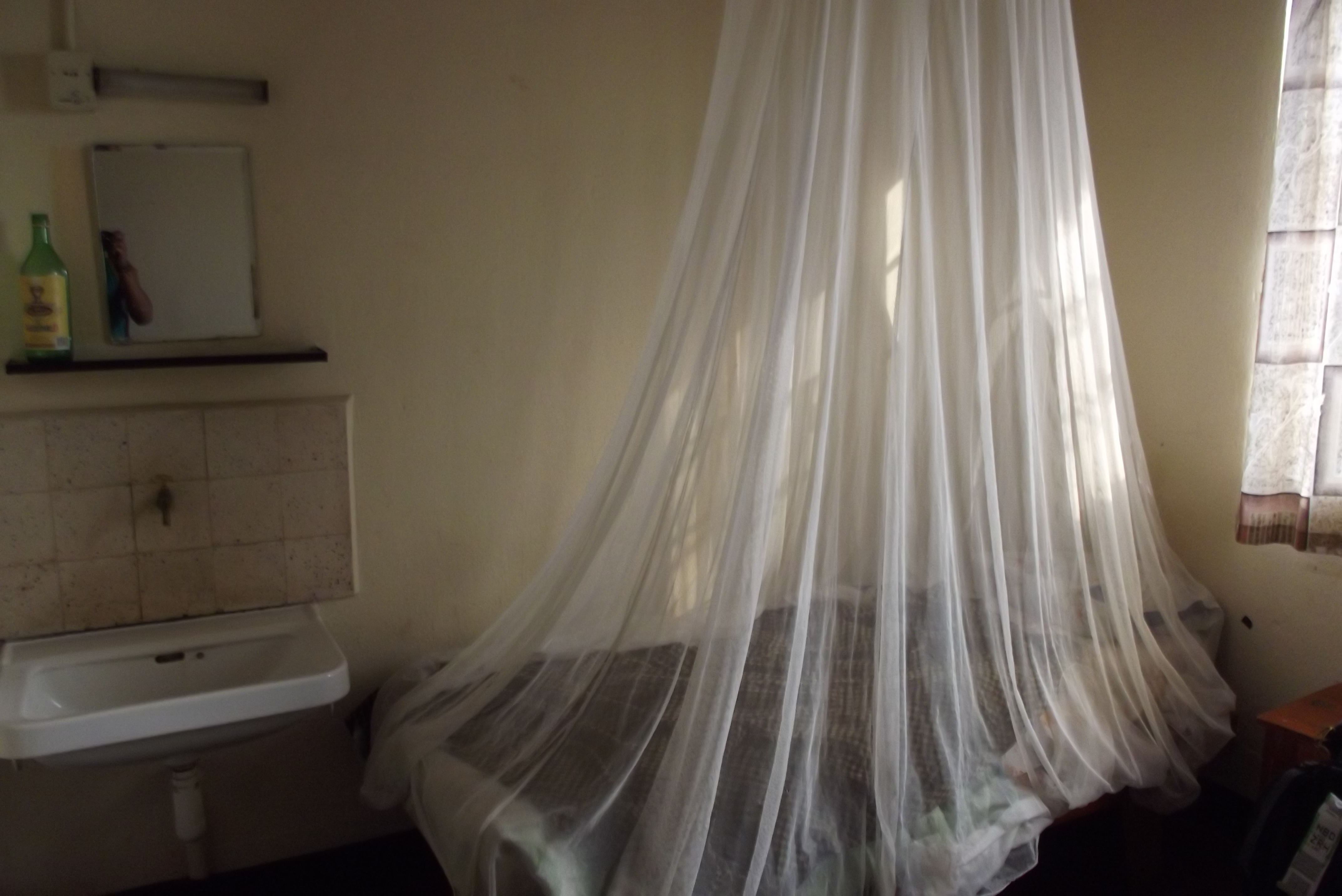
I check into the only budget accommodation in the city and I am shown one of the spare rooms by an Austrian nun. Over my single bed, a big cross. Over the small sink, a dilapidated mirror reflecting the mild high altitude sun.
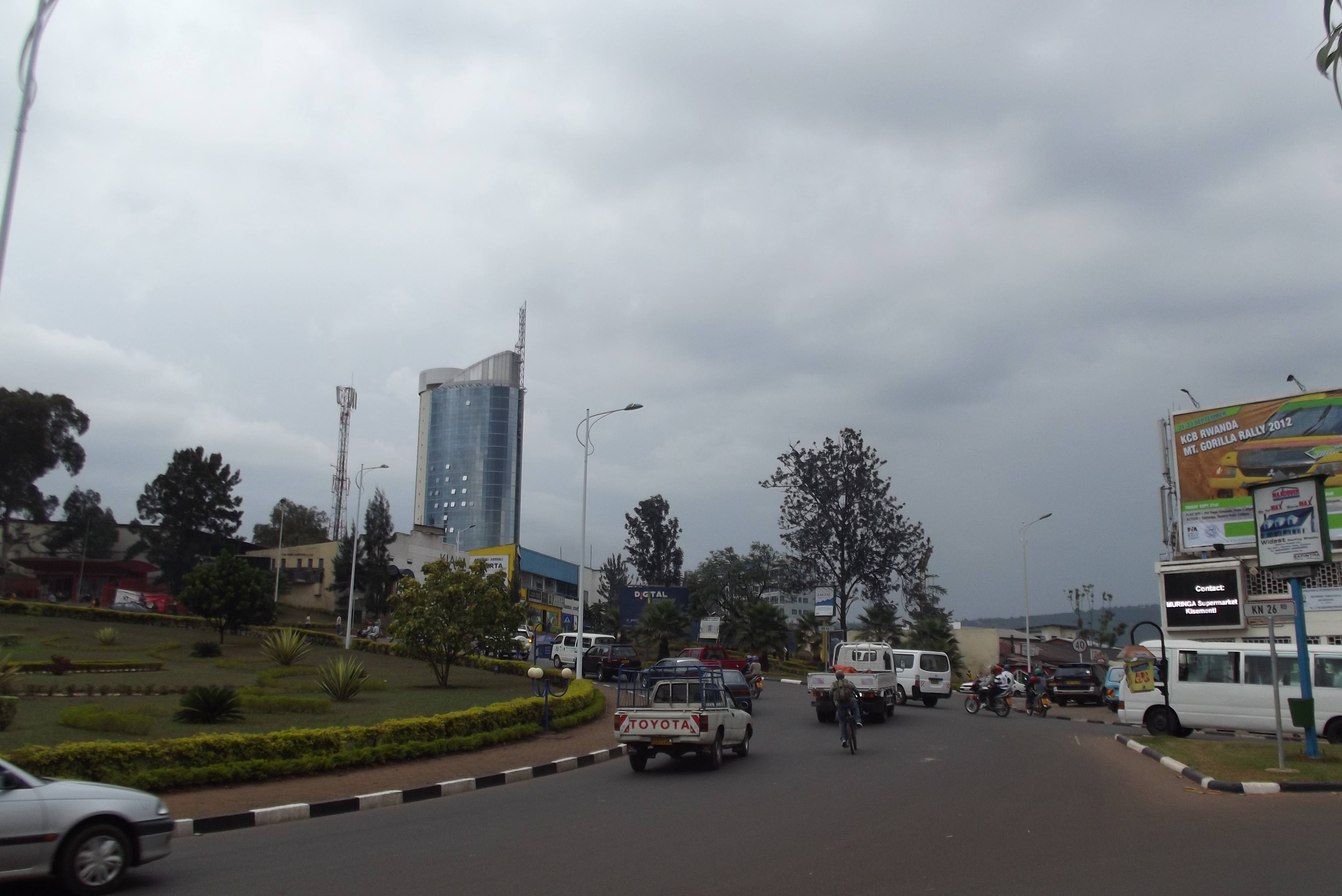
At Place de la Constitution, where locals are just finishing sweeping off the cleanest roundabout in Africa, I purchase a SIM card and a straw hat. I indulge in a much needed cup of Rwandan Coffee at Bourbon Cafe and as I sink in the comfort of a velvety red chair, I am offered a piece of freshly made chocolate cake.
In Rwanda, I am handed a helmet to ride a moto taxi and, cruising along perfectly laid tarmac, I arrive at the Kigali Memorial Centre, the place in which the always forward-thinking country comes to remember and learn.
In chronological order, room by room, the Centre talks about Hutus ,Tutsis and Twas living in a community together, followed by a short German takeover and finally by the Belgian colonisation of Rwanda, Congo and Burundi. Pleasantries are torn apart and replaced by gruesome imagery. Belgium to be blamed for the introduction of a system of ID cards that divided the population by physical features and skin colour -the Tutsies being lighter in skin- and only exacerbated power differences favouring a Tutsi minority, a phenomena still nowadays seen as far as Johannesburg.
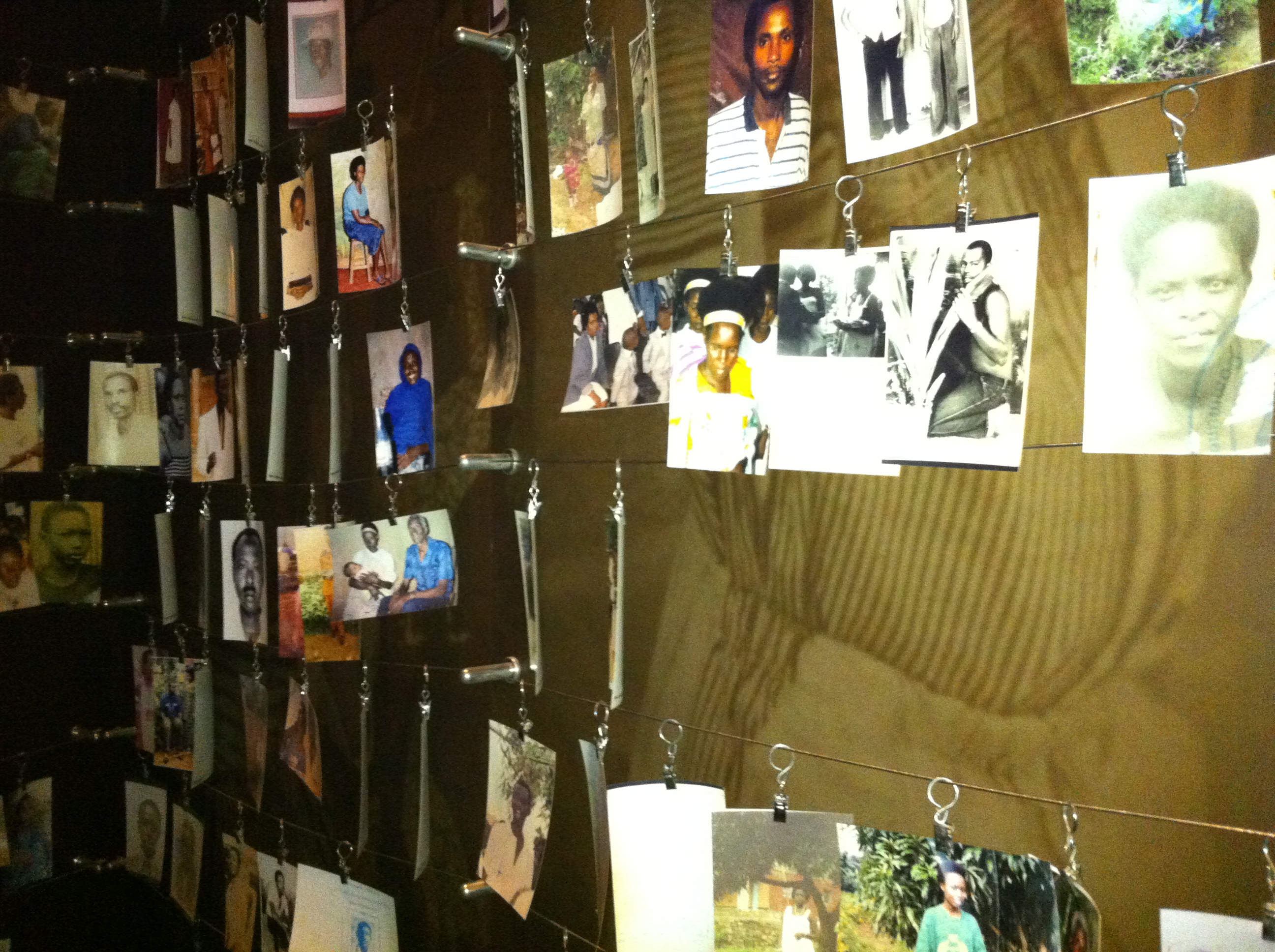
My stomach turns at the sound of videos with the testimonies of those who saw their families being murdered, and at the room where the pictures of murdered children hang like a mausoleum to human atrocity, my spine chills in disbelief. Two common graves display hundred of names engraved in black marble and the words ‘never again’ adorn the top of each slab with lilies.
Slightly numb, I decide to walk the four miles across the valley to clear my head. Locals smile at my fast pace and lift their hats in an informal greeting. a group of children play football next to puddles of freshly fallen rain and their once spotless plaid uniforms splatter with mud and laughter. Stared at like any mzungu with a backpack in Africa, for the first time I feel at complete ease.
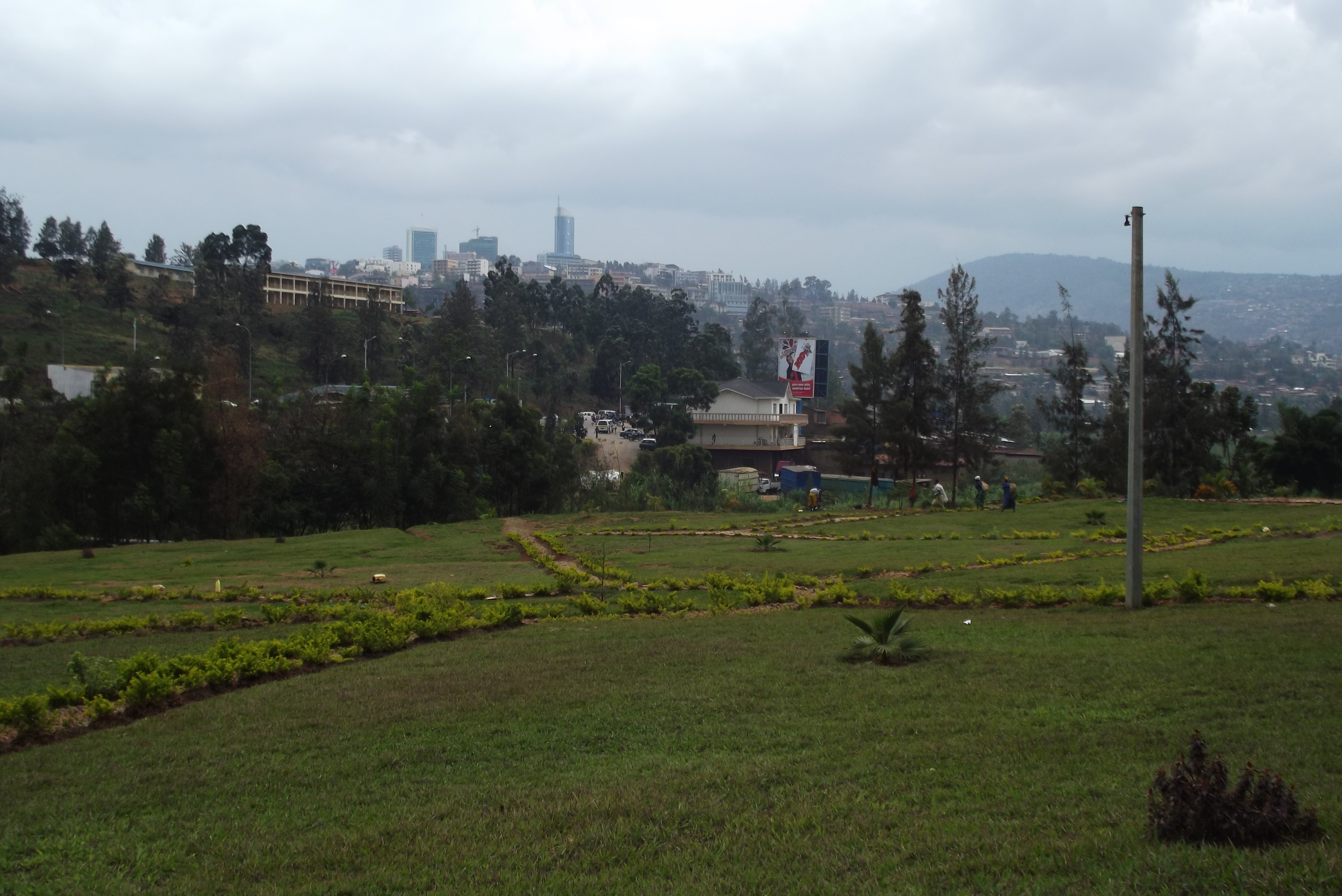
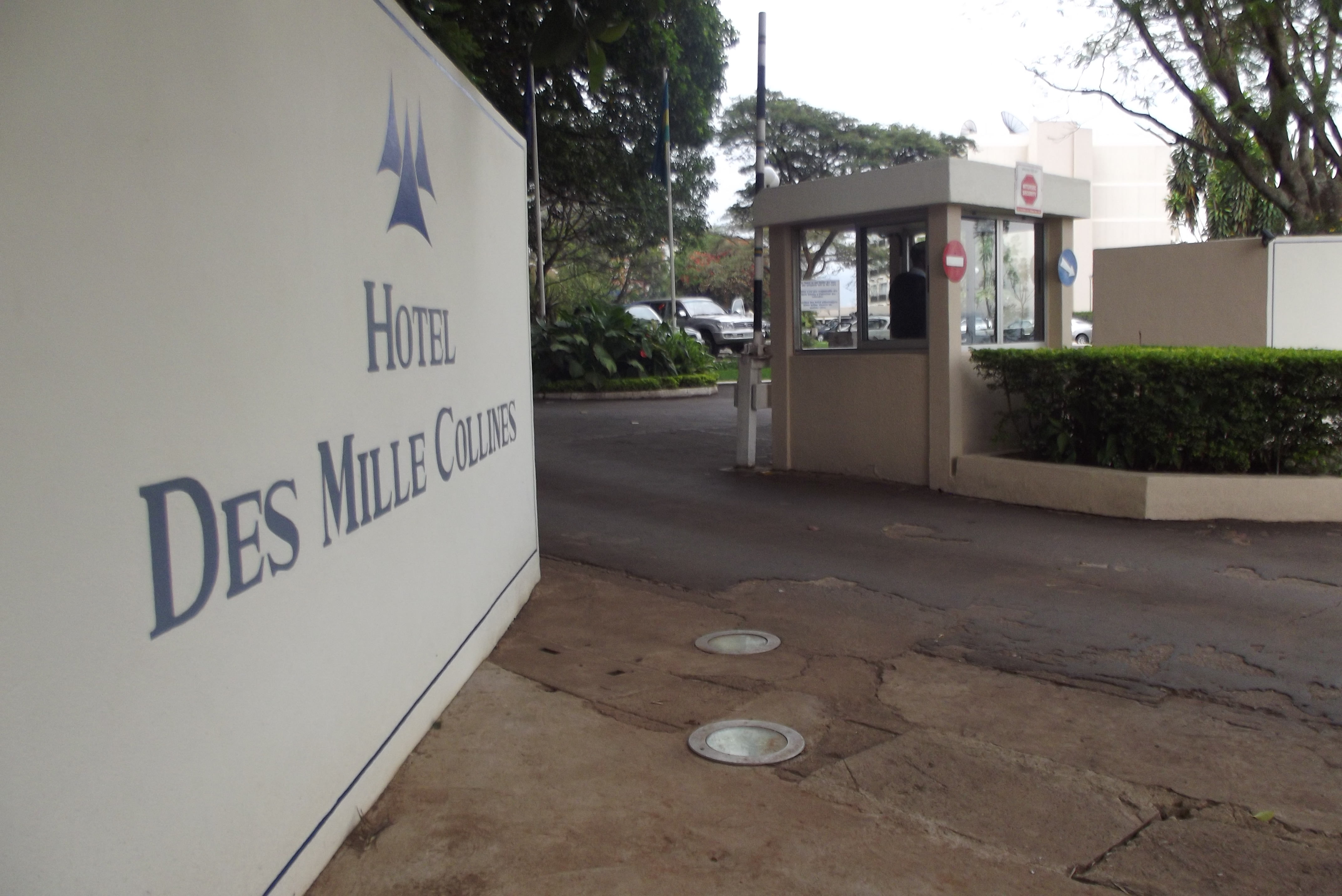
On top of a steep hill, the Hotel des Mille Collines, inspires past and present within its whitewashed walls and palm trees, for this is a place of heroism, a place in which, helped by the Hutu manager, hundreds of Tutsis hid from the massacre despite the oblivious stares of a blind U.N.
Inside, I plan my next move and sip on more coffee. I Skype and eat the first slab of meat I have had in weeks. Rwanda is a place of comfort and a safety net in a sea of neglecting.
From “Church Camp”, I light up the candle and see the lights of Kigali soaring over the round hills like a never ending meteor shower. The window lets the cold breeze in, and my mosquito net moves through the small bedroom like a veil contouring a slender bride.
Early, and at the synchronised ‘good mornings’ from a car wash staff, I leave the nuns and walk towards Nyabugogo bus station. I buy fruit at the local market and without thinking twice, I jump at the front seat of a brand-new bus that leaves the capital at ten in the morning sharp.
The road soon turns towards a valley and climbs in curves that shave hills like a sharp asphalt knife. The engine roars and the driver grows busy shifting gears. At nine hundred meters of altitude, the thousands of hills seem to emerge and disappear for as long as the eye can see. Flat land at last, for we have reached the top of a plateau extending towards the Virunga Range in a tapestry of green coffee crops. A four mile walk from Kisengi to Lake Ruhondo provides a tell to tale:
‘A boda-boda follows me offering its services. I decline confirming my intention of walking. Suddenly, a child follows me and mutters in French. He shouts and three children tag along. They are laughing and giggling while we all walk together through old houses where old women wave at me. Before I know it, over sixteen children are following me and giggling. They touch my arms and skin in awe as we keep on walking, the older ones, just out of school, pull out their notebooks to score an autograph. What it was supposed to be a boring walk becomes an interesting scope of the life in the Rwandan countryside.’
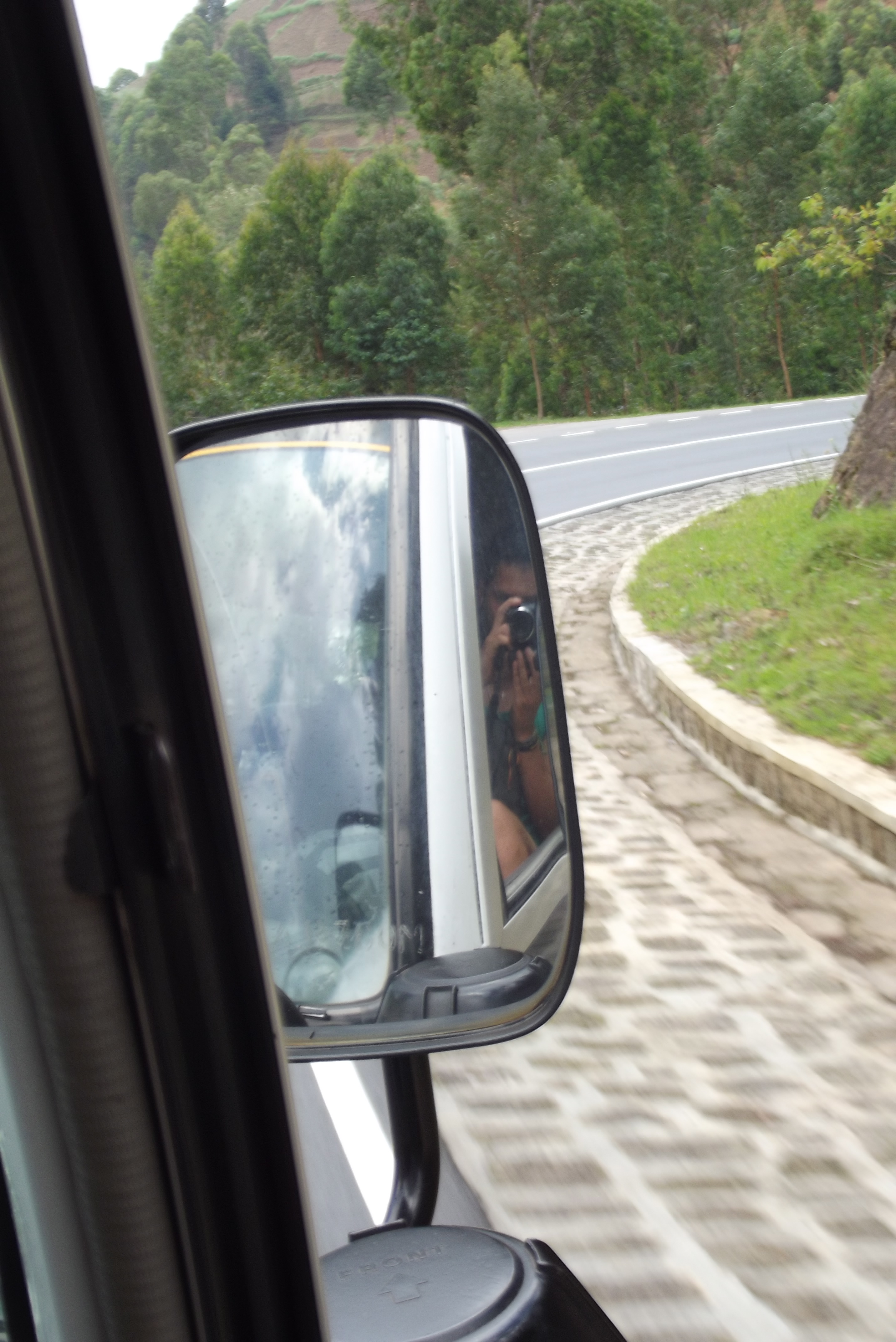
At the bifurcation, I haggle and take up on the offer, minutes later seeing myself weaving through potholes and hairpin turns of red mud.
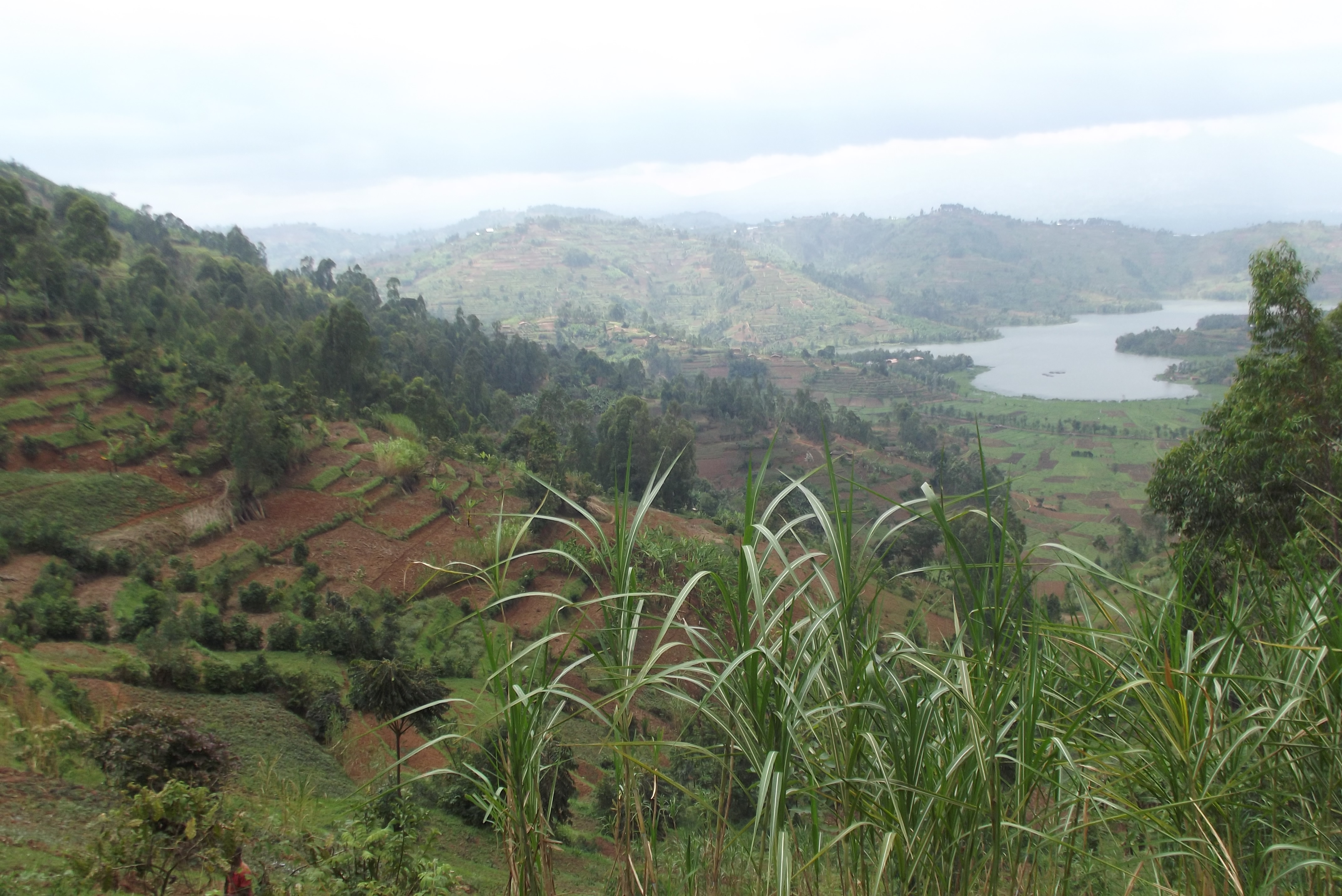
From the top of the Virunga Valley, a patchwork of crops stretches beyond the horizon and flirt with the waters of a lake that seems to play a tango with the distant active volcano. Men extend nets in the hope of catching tilapias while their wives fiddle through dry crest for weaving. Children finish their homework in Hello Kitty notepads and shout mzungu with a mischievous stare.
The noise of a distant thunderstorm completes a scene that can only be from a movie. On my way back into town, I stop to take a few pictures and ask the driver to take mine. It is the first time he ever uses a digital camera and the first time he ever sees himself on a screen.
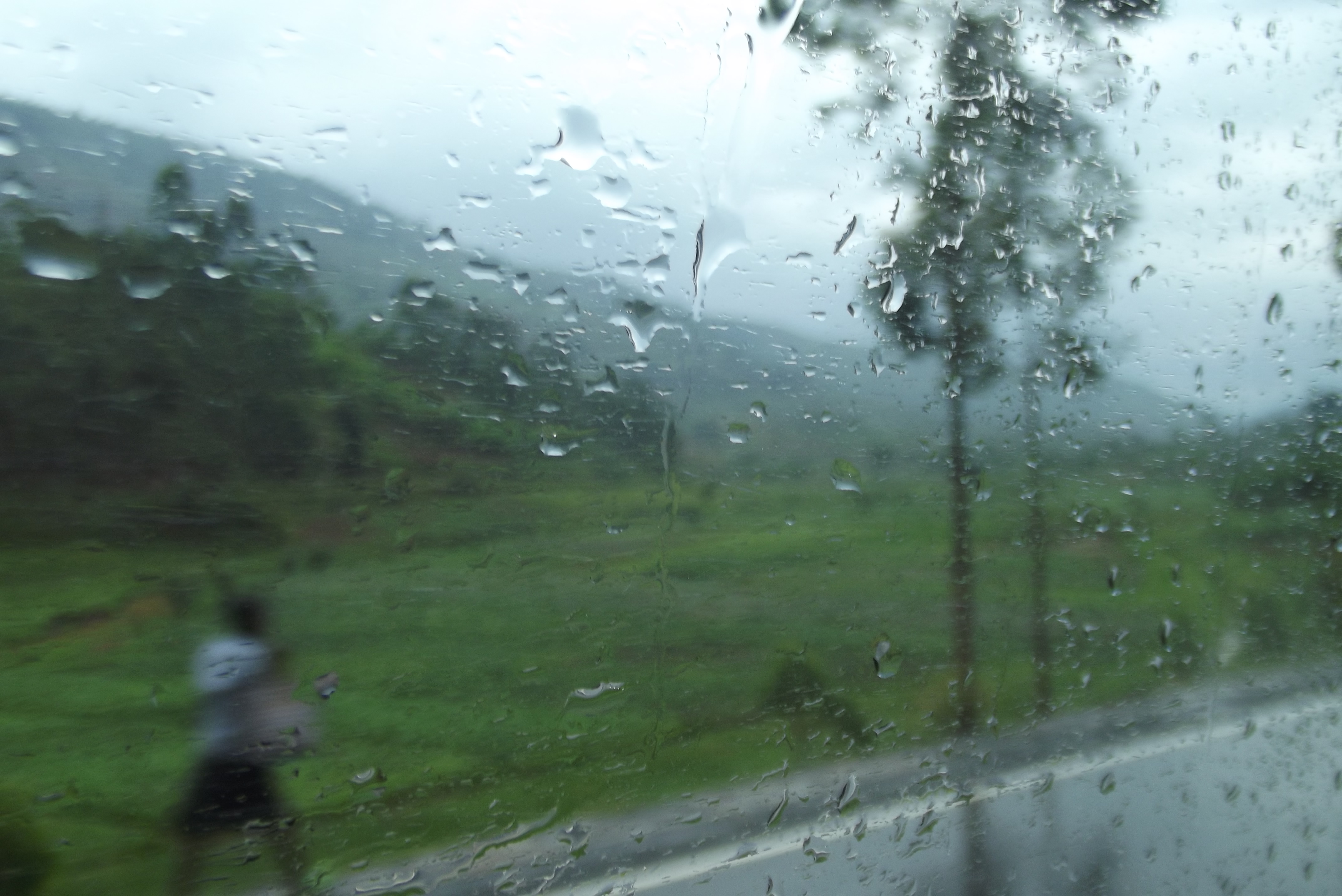
A heavy rain falls with the heaviness of coffee grains poured from heaven and while the bus negotiates every hill on its way to Kigali, I imprint the memory of those kids in my mind. I imprint the innocence of their naughty smiles, the deep stare coming from their round eyes and the cheekiness of their laughter.
I carry my heavy backpack to Cafe Bourbon and purchase another pot of fresh Rwandan coffee, a banana cake and a sandwich. Around me, a couple of blonde expats work and Skype from their laptops without looking at each other, and across the red velvety sofa, next to the extravagantly placed ferns, a young local couple feeds carrot cake to their child. The night sets in and I take public transport to the airport.
‘I stand at the bus stop and nothing happens. Locals come, go and stop to stare at the mzungu with the backpack. A couple asks if I am going to the airport and confirm no night services in that direction. I am explained that my best option would be to take a taxi or a bus to Gare de Remera and from there, another bus to the airport terminal. Having already spent most of my Rwandan francs, a “fancy voiture” ride is out of the question and I hop on the bus. Inside, five passengers assist me with directions in what I can only describe as genuine help.
A fellow passenger helps me navigate through Gare de Remera and on the way to the airport, he proudly shows me his family through the screen of his fancy mobile. He is a proud father, but most importantly, he is a proud Rwandan.’
At the International Airport, I lay on the floor while waiting for my flight to be called and connect to the wi-fi. I snack on the last bit of fresh fruit I have and nap until two in the morning. Families and businessmen form queues and board for Istanbul, Addis Ababa and Nairobi on the main tarmac. I glance outside the airport perimeter for an abandoned jetliner and my last sight of a country asleep in the ethereal African night. Asleep for tonight, awakened for tomorrow.
 THE FLYING CAMBA