
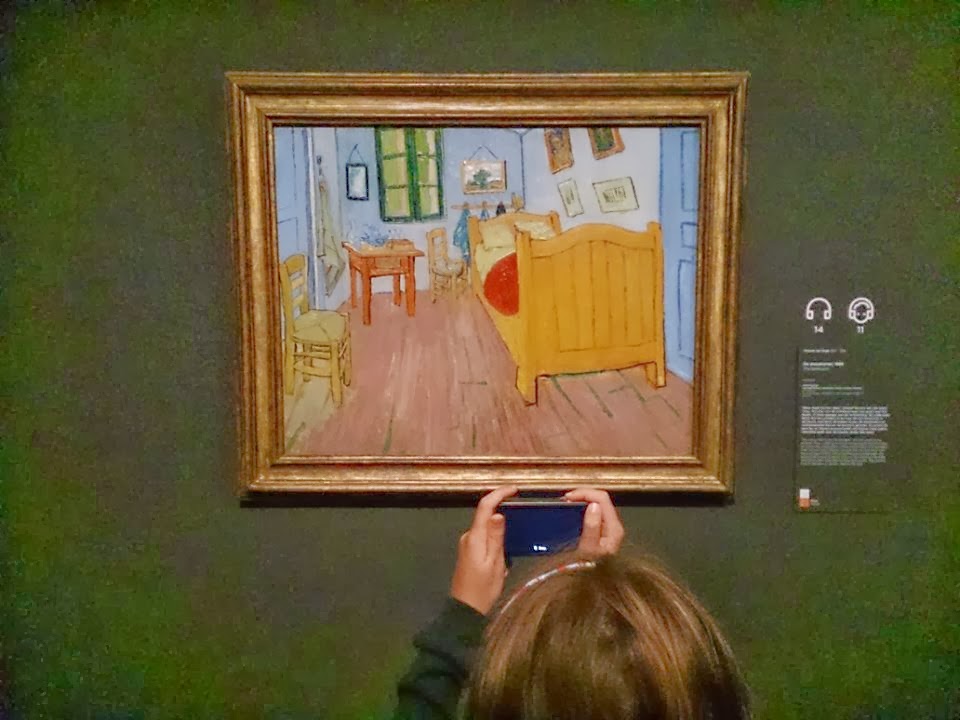
Queues form underneath the golden arches of Rijksmuseum amid the timid morning in Amsterdam. At the ticket booth, a blond tall lady prints out a white ticket into the colourful world of Van Gogh.
A true pointillist playground for adults. Paintings of daily life manifesting through the mind of one of the greatest artist in the world, ear or no ear.
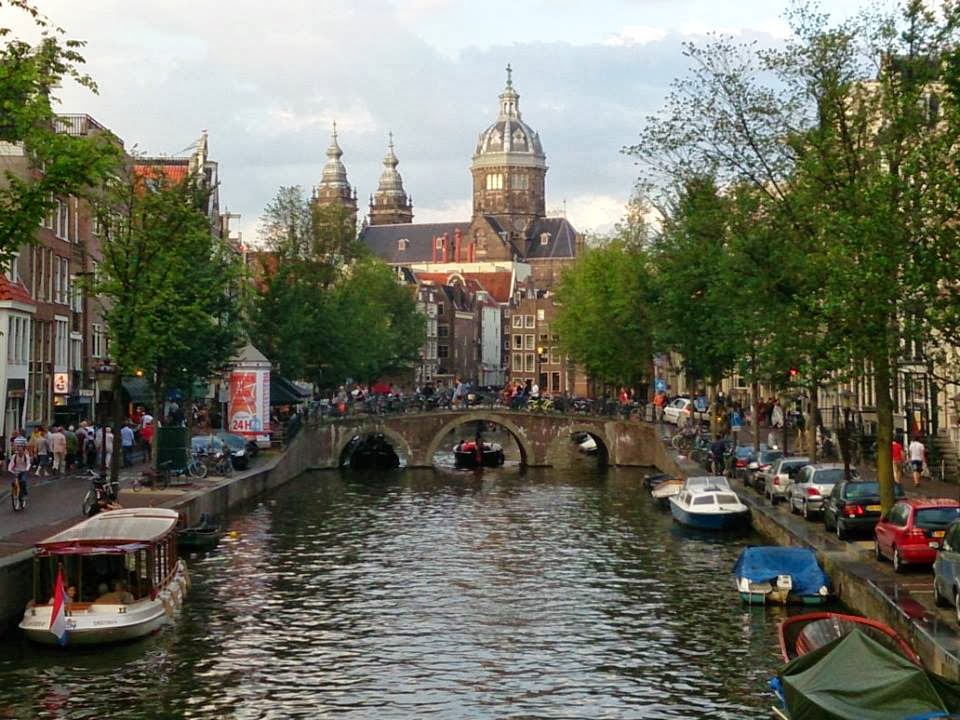
Outside the air conditioned building, the morning has heated up a frenzy of boats that rush across canals of dirty water. Tourists shelter from the sun under skinny trees and gaze upon Anne Frank’s house, while next door, bongs exude smoke as thick as a crematorium.
I feel tired of Amsterdam and on the spot, I decide to leave. The ticket machine sells in Dutch and I mistakenly try to ride the Thalys to the grin of the steward. I am explained I have bought a cheap local train ticket and as such, I should ride across the Benelux in stages.
At midday, I join cyclists to futuristically-built Rotterdam, where I run across six platforms to connect onto another train to Rosendaal.
Left behind is the tourist trap, and the mostly under-sea-level landscape is flat and dull. Villages of pre-fabricated houses floating in the stillness of reclaimed land from Rotterdam all the way to The Hague. A long bridge across the Waal dances over the Rhine waters and marks the entrance to Belgium.
From the empty seats across, a young man stares from underneath his blue cap. With an American accent, he excitedly speaks about his first time backpacking in Europe, his current route and his future whereabouts. I roll my eyes in disdain while I also admit the same behaviour on myself not so long ago.
We play with a cycle-powered phone charger at Antwerp Station and late in the afternoon, when the Flemish countryside tucks into an insular French-speaking Brussels, we share baguettes with cheese on the empty coach.
‘At Brussels Midi, a local directs the American and I to the metro station in a non-stop French. I kindly agree with everything she says, though I don’t understand. We emerge by the Godiva chocolate factory, in what seems to be a very unwelcoming neighbourhood. With no reservation, I show up at the hostel and I am assigned a room overlooking a small beer garden encrusted in a sea of apartment blocks.’
In North Brussels, rubbish piles in corners of ethnic tones. Elderly play backgammon at the sound of Al Jazeera and children wearing Real Madrid shirts cycle amongst the rubble of half-constructed apartment blocks. A place to see and perhaps forget. A place that has seen more painful arrivals than Zaventem, more arrests than Tiananmen Square and more Ramadans than Rabat.
Tall glass buildings protrude in the distance with the flaunt of European Union flags, on a Saturday, sterile, corporate and sheltered. The place in which thousands of citizens play catch and power in as many languages as required by the block.
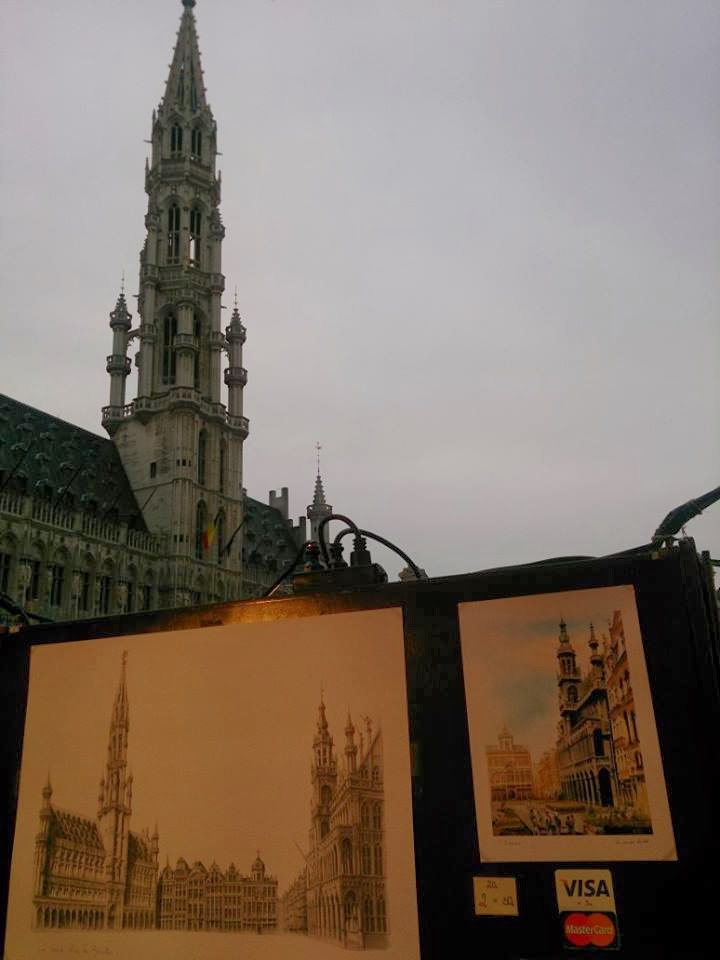
I feel lucky to be in Brussels during the weekend, away from the corporate heads that take the time off to go away, to charming Paris or young Dusseldorf. A Beer Fest takes place near the Stock Market and my American friend and I sit down in a flimsy plastic table and devour a metraillette, a long baguette filled with some sort of processed meat, sauce and a fair amount of fries. Replenished, I squeeze in between overpriced piles of chocolate and biscuits to the Grand Place and briefly admire its Gothic details turned golden at sunset.
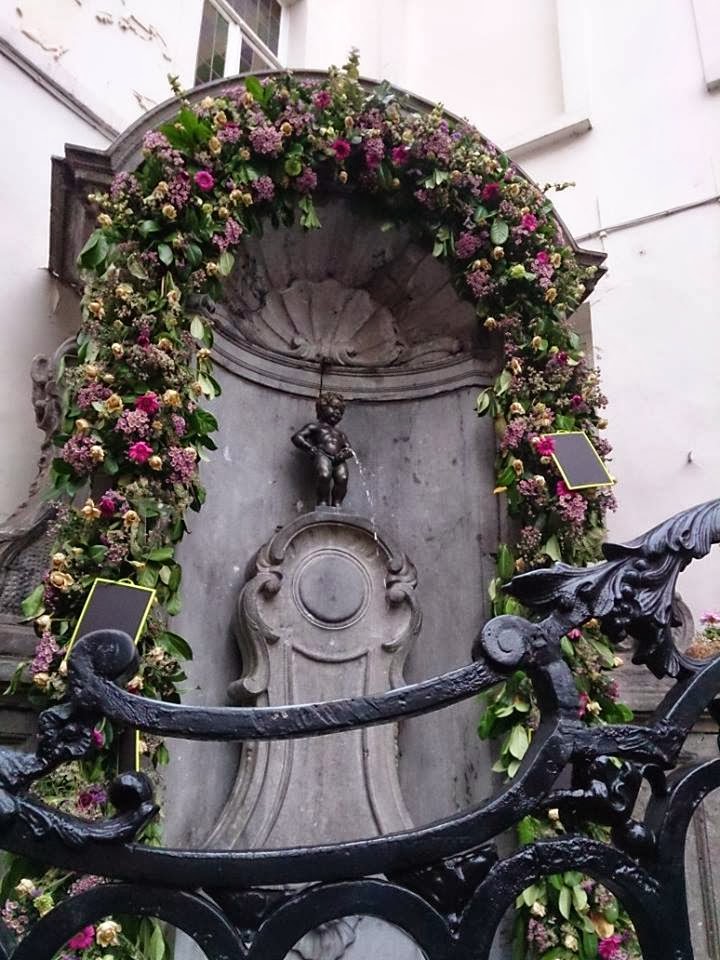
The tour follows through the parade of Brussels’ tourist traps and onto the statue of the peeing child, or Manneken Pis. Old historians affirm that these type of statues were produced and placed in strategic spots where the least wealthy could meet and sell their urine to the leather makers. Today, the little fella stares over a crowd of tourists in contempt. He speaks of the grim past of the Belgian capital, and the grim present that followed.
Bells ring high over the main square at nine in the evening and before walking back to the dark domains surrounding the hostel, I indulge in the softness of batter covered in chocolate and marshmallow, for it’s always waffle time in Belgium.
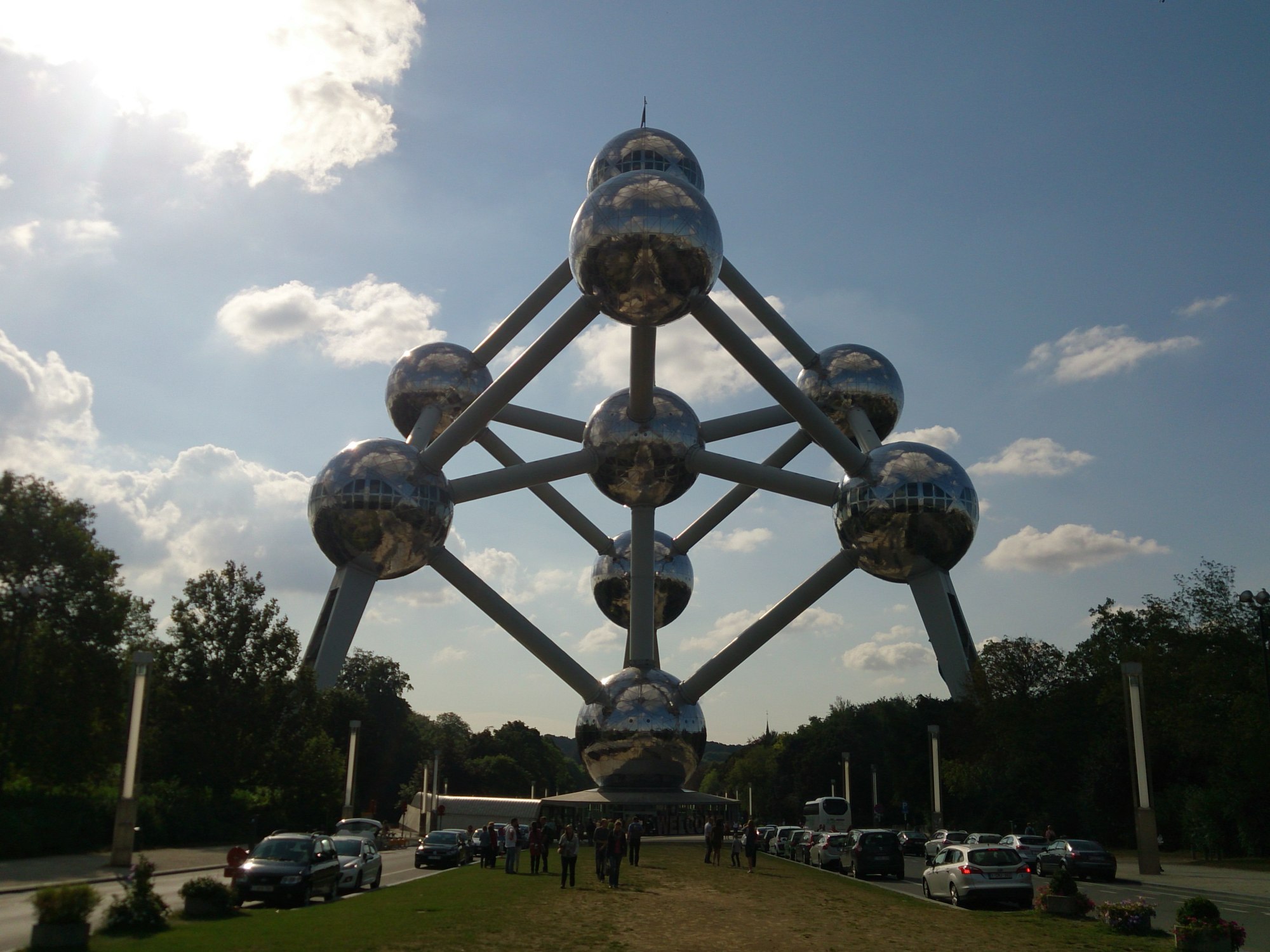
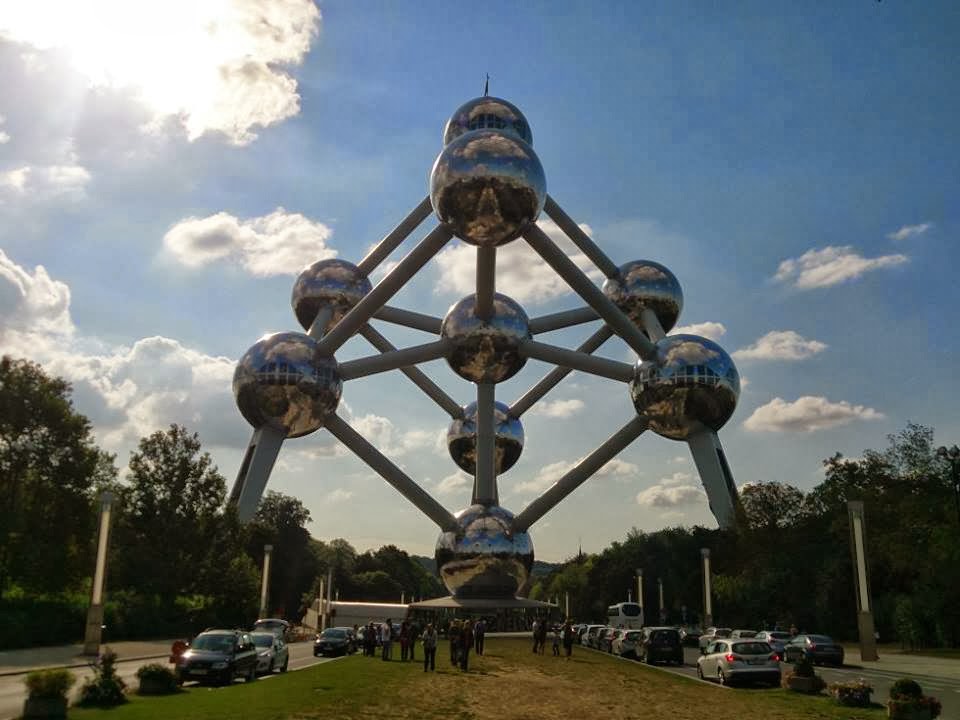
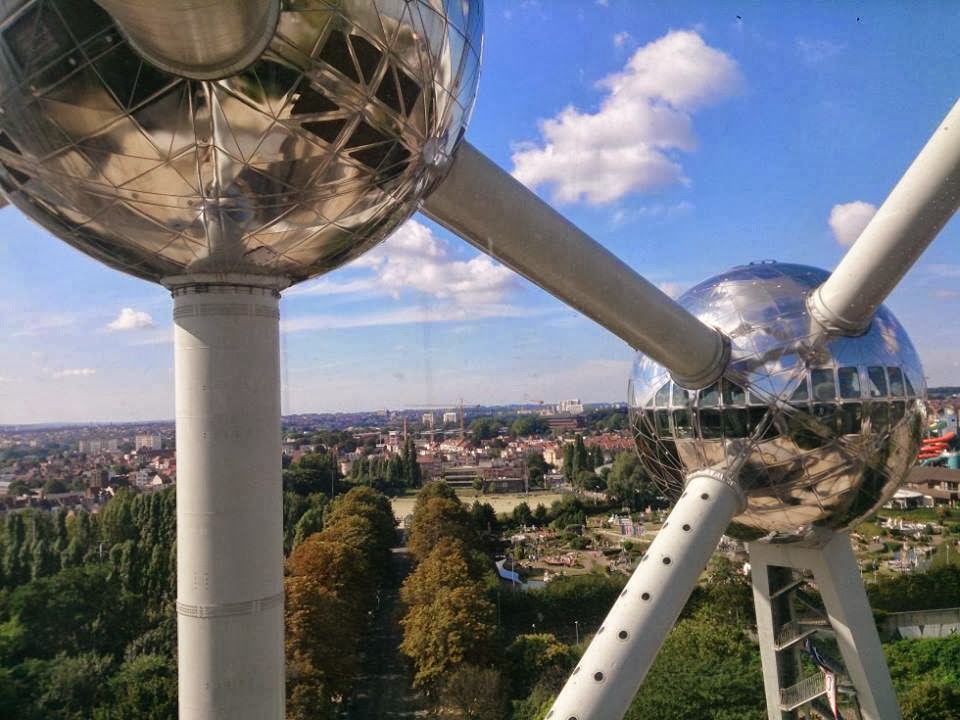
In the morning, I have troubles finding my way around the circular line of the Metro and victoriously, I reach the famous Atomium before anyone else. The morning sun reflects on the hundred-and-two meters tall structure in blinding beams of light. The building built for the World Expo in 1958 and shaped like a gigantic atom, is nothing short of an outdated relic of bygone atomic energy optimism, like a flight across a time machine of clumsy neon lights that seem to defy any sense of direction and induce the worst of claustrophobias. Endearingly tragic and amusing.
I run across Brussels Zuid Station with seconds to catch a bus to Charleroi, to my surprise and my own mistake, the flight not departing at three in the afternoon, but at thirteen hours. I beg the security guard to let me through the express security check and panting, I am the last one to board the flight across the Channel, across Britain and across the Irish Sea.
 THE FLYING CAMBA