
It takes forty five minutes to taxi from the runway to the terminal at Schiphol, in the early autumn embedded in a thick fog. My colleague transfers onto a flight to Dublin and I take the train to Centraal again, solo.
In Amsterdam, the night is dull and the lights of empty cafes reflect on the wet cobblestones. I check into a hostel and venture to the supermarket to buy a sandwich, a bottle of juice and cookies. I nap for an hour only to turn off the light and fall asleep overnight.
In the morning and backpack on shoulders, I walk to Centraal and catch a train to Eindhoven at the taste of stroopwaffle and coffee. Bicycles are seldom seen and the vegetation has turned brown in a wintry indoor sentence. At Eindhoven Airport, I board a Ryanair flight packed with tall Dutch men on stag parties lured to Eastern Europe by the cheap beer and entertainment. They howl and loudly laugh at the despair of traveling families and their small children.
‘The fanfare plays as we land in Ferihegy Airport. I withdraw forints from the teller and I am told to take a bus to the nearest metro station.
On my first time in Eastern Europe, streets look poorly lit in the suburbs of Budapest and old trolleybuses run across wide avenues surrounded by decrepit apartment blocks and rubble. At Kobanya-Kispest metro station, a Soviet-era steeled train heavily pulls into the cold platform. Doors mechanically and aggressively open before a bone-chilling chime rings, and a sad voice recites a warning in what can only sound like a final death sentence to a non-Hungarian speaker.
The train dips deep into the underground world of the Hungarian capital and locals carrying shopping bags and backpacks closed their jaws in an almost deliberately affair of tough shyness. I transfer lines at Deak Ferenc station through the longest escalator I have seen in my life and onto a metro line heavy with the smell of old oak and burned break pads.’

At the last stop in Mexiko station, the outskirts of Budapest are presented as a daunting middle of the night scene: soulless apartment blocks covered in graffiti, homeless people gathering around a barrel lit with fire and rubbish and old trains speeding under a cobweb of power lines.
A small sign reads ‘H O S T E L’ and I ring the tiny bell before a heavy steel gate opens up. Reluctantly, I enter an old musty house where four Polish students are drinking vodka and playing cards.
Four shots later, I find myself following the younger crowd through the dark emptiness of a park and down to the impressively lit Heroes Square.
From there, Champs Elysee’s doppelgänger Andrassy Ut extends all the way to the centre of the city, bisected by streets that lead to the excitement of the Jewish District and its famous ruin bars.

A former ghetto area, the Jewish District saw its post-war transformation when private investors decided to use the old vacant buildings as places to drink and dance, thus creating the concept of ruin bar. Places in which junk or unwanted items such as old cars and furniture are placed into a beer garden in what later was called boho-chic trend. Cheap pizzas and drinks complete the attraction of one of Budapest’s nightlife appeals.
We drink and eat for the equivalent of a fiver in forints and, slightly intoxicated, we walk back to the hostel in bouts of laughter heard in Polish, English and why not, Hungarian.
In the next morning, the wintry sunshine unveils a complete different face of the city, like a sleeping beauty just awakening from a night spell. The empty darkness of the City Park is replaced by a woodland of cherry trees standing still across a blue sky, and the Jewish District, busy with cheap booze and vomit at night, during the day rests in a solitary silence.
Energised with a Turkish coffee and a bagel, I walk to Deak Ferenc Square and take part of a walking tour for the first time in my life.
A tall young man screams and organises groups of fifteen. Bound by his funny sounding accent, we are transported into the Budapest of the past, the Budapest of Austro-Hungarian wealth, the Budapest of the Holocaust and the Budapest of the Iron Curtain.
Divided by the mighty Danube into Buda and Pest -namely Pesht-, the city seems to amalgamate two European capitals into one. The flat sprawl of the rebuilt Pest against the hilly and wealthy Buda.
Could you repeat after me: Megszentségteleníthetetlenségeskedéseitekért, which translates into: ‘for your continued behaviour as if you could not be desecrated’. An amalgamation of words that turns Hungarian into one of the most difficult languages to learn in the world.
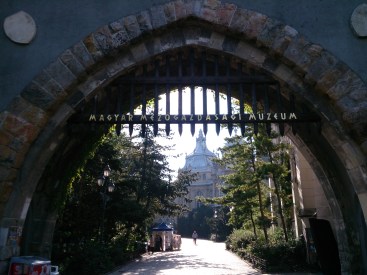
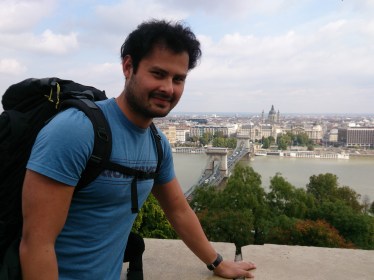
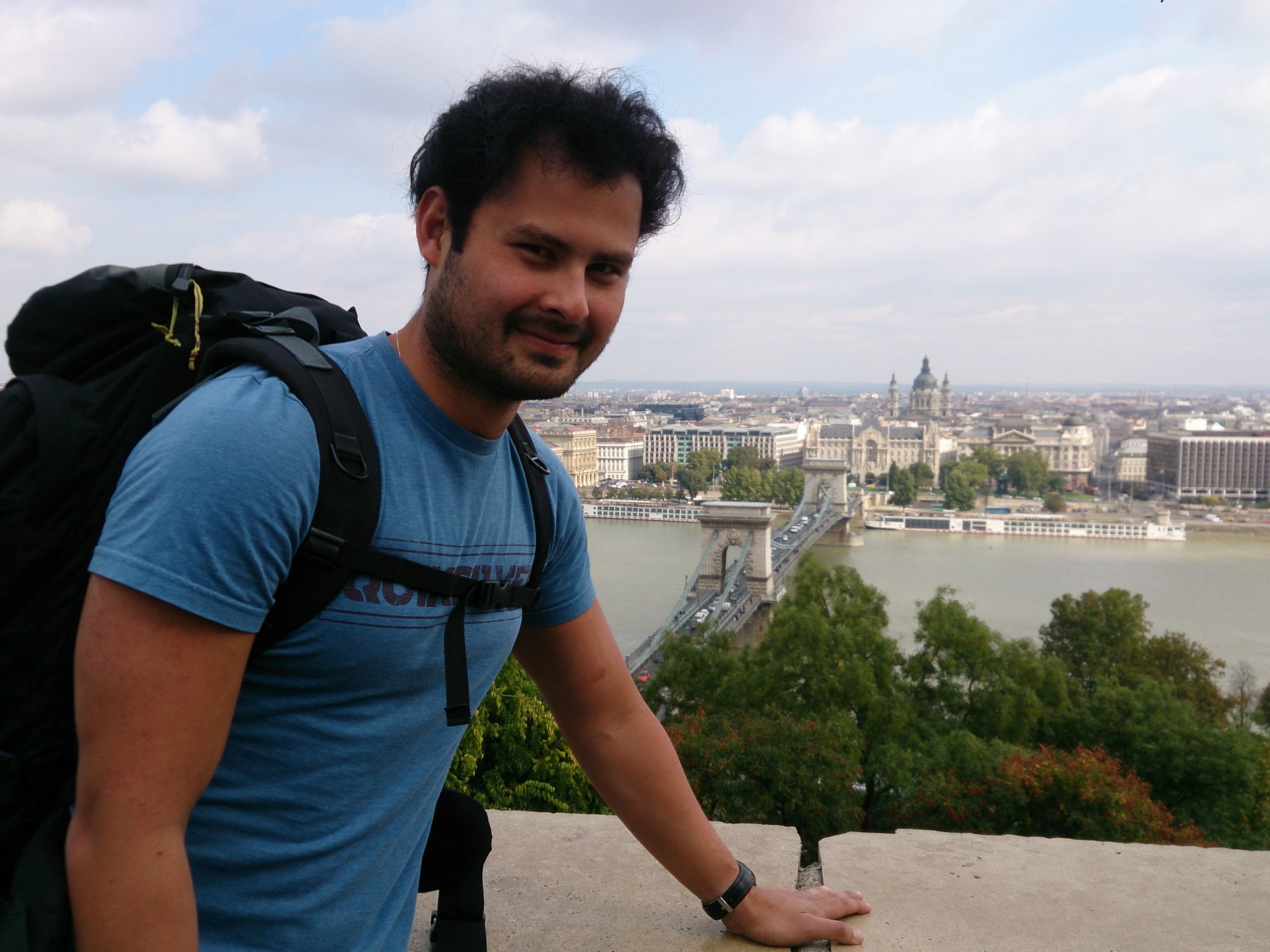
Cruise liners navigate across the murky waters of the powerful Danube. From the top of the eighty meters-high hill, the city looks vast and misty, while the House of Parliament, which is a replica of Westminster in London, imposes a yellow-bricked sparkle over the river banks.
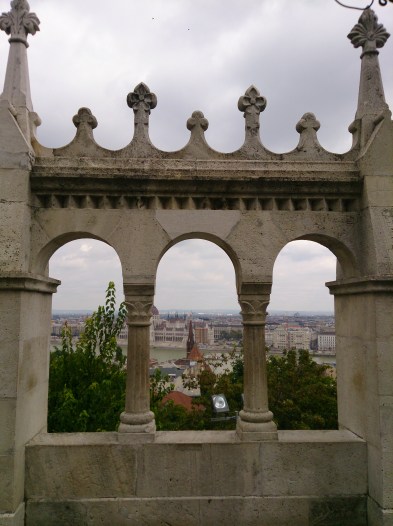
Forget about the plastic windows of the Buda Castle. At Fisherman’s Bastion, an old church sits next to a glass building, a couple follows the hundreds of couples that take their wedding pictures under its granite arches daily, and tourists finish their tours in a spot that perhaps talks about Budapest the loudest. It talks about a city that has recycled itself to accommodate the changing cultures and the changing times.
I buy a bottle of sweet Hungarian wine with a gyros and sit on a shaded bench at Oktogon. I relish on my cheap lunch and walk down the vacant streets of Buda to Szechenyi Thermal Baths, the largest bath house in the city.
Combining heavily active volcanic soil and cultural Ottoman legacy, Hungary has become a reference in a ritual that serves as both mental and physical cleansing in the dawn of an autumnal day.
For several hours, I jump past half open rooms covered in crafted tile work and sulfur-scented swimming pools. Severely cold or scalding hot, a transition that relaxes the muscles and tighten the skin in a setting where locals play chess by the largest dipping pool in an astounding silence and tourists swim by the whirlpool in hysterical laughs.
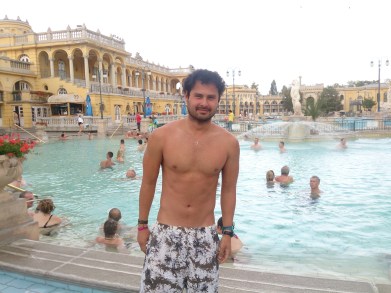
I befriend two Irish lads when we suffer together in the scalding steam room. We drink beers and count flags at sunset and, just when the clock marks seven in the evening, I cover my bare chest, bundle up and walk to the gelidness of the Keleti Railway Station.
An old blue train awaits on platform number eight and a very unfriendly ticket officer shows me my Soviet-era boudoir for the night.
I meet my fellow cabin buddies: a couple from Canada and a solo traveler from Malaysia. The couchette adventure begins shortly after with a loud whistle and a series of battered carriages pulling out of the dingy station and gaining speed through sprawling suburbs of commieblocks.
Cabin buddies become friends of a lifetime in a matter of one and a half hour as we play UNO and share sweets, drinks and food. The night outside the cabin turns chilly and daunting, time in which we turn off the lights and rest to the clickity-clack of the train against the steel beams. In about ten hours, we will unceremoniously cross over the border to Bratislava, stop in the beauty of Vienna and reach Eastern Europe’s jewel: Prague.
 THE FLYING CAMBA