
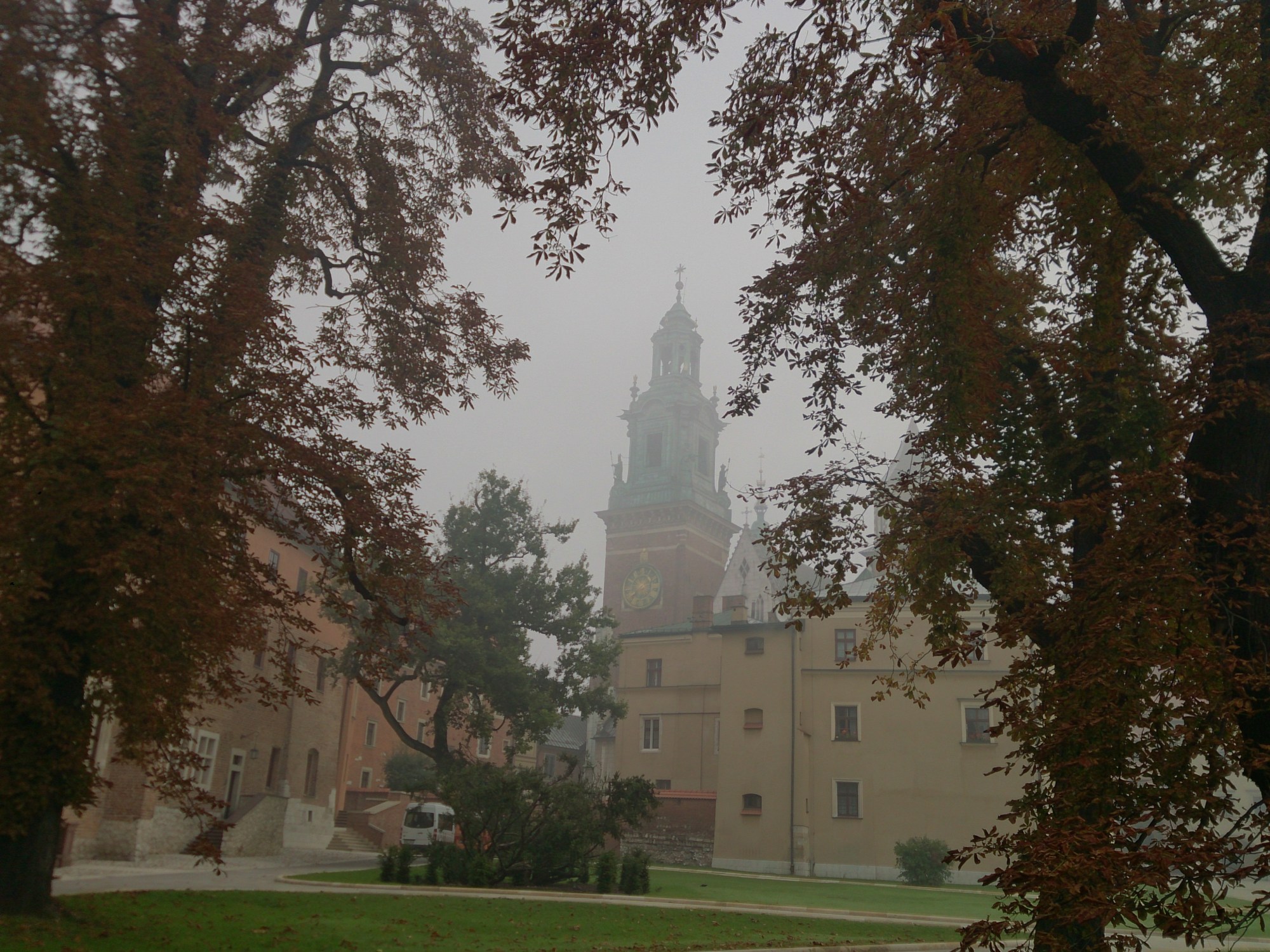
The train seems to progressively slow down as a forest of tall conifers embrace it.
‘I always thought there was something unique about train journeys. The departure whistle, the sound of the steel being pressured against the railroad ties, the rocking carriages, the platforms suddenly vacating. It is a fusion of modern technologies and old-fashioned traditions that dance in a ballet of comings and goings. By far my most favourite mode of transport.’
Krakow abruptly appears as the image of a train graveyard and a modern train station. Excited for both ending my overland journey across Eastern Europe and reaching my 60th visited country, I walk through the empty squares and pedestrian tunnels of Poland’s second largest city and relish on the wintry stillness of the overnight ice set over frozen windows.
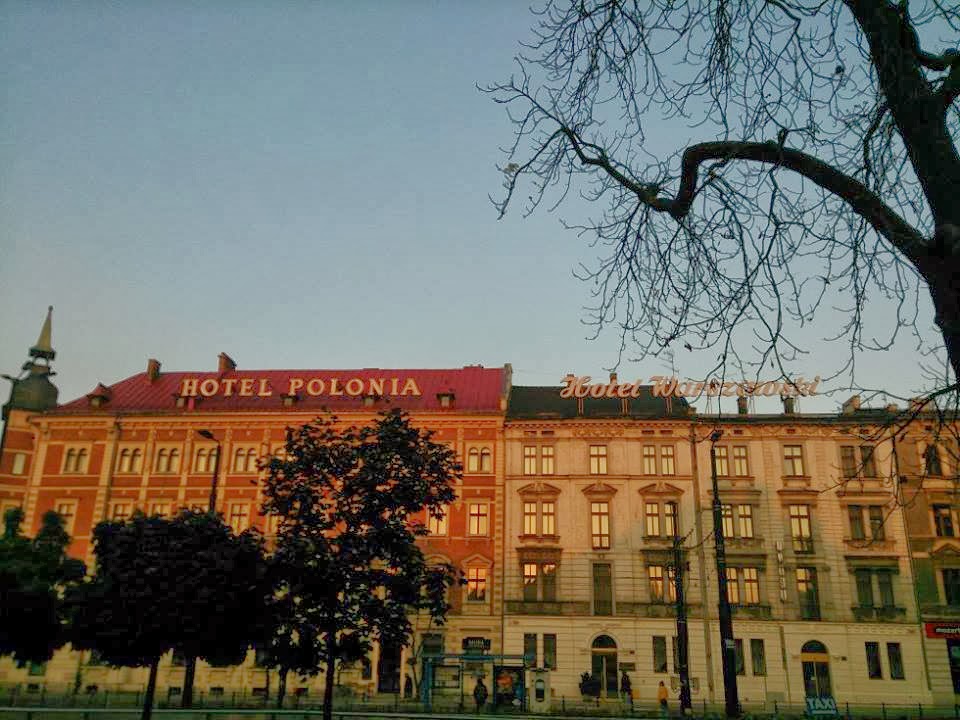
With no plans in mind, the desolated streets of Krakow become my private playground in the early morning. At Market Square, I buy a freshly baked
obwarzanek as sellers organise their stalls while drinking coffee and sharing cigarettes with the street cleaners.
Manageable, pristine and amicable, Krakow is a place best explored with no set agenda, contemplating the vast serenity of Market Square and its solemn cathedral, learning about scars still healing at the Jewish Neighbourhood and soaking in the view Casimir III envisaged in the 1330s at Wawel Castle.


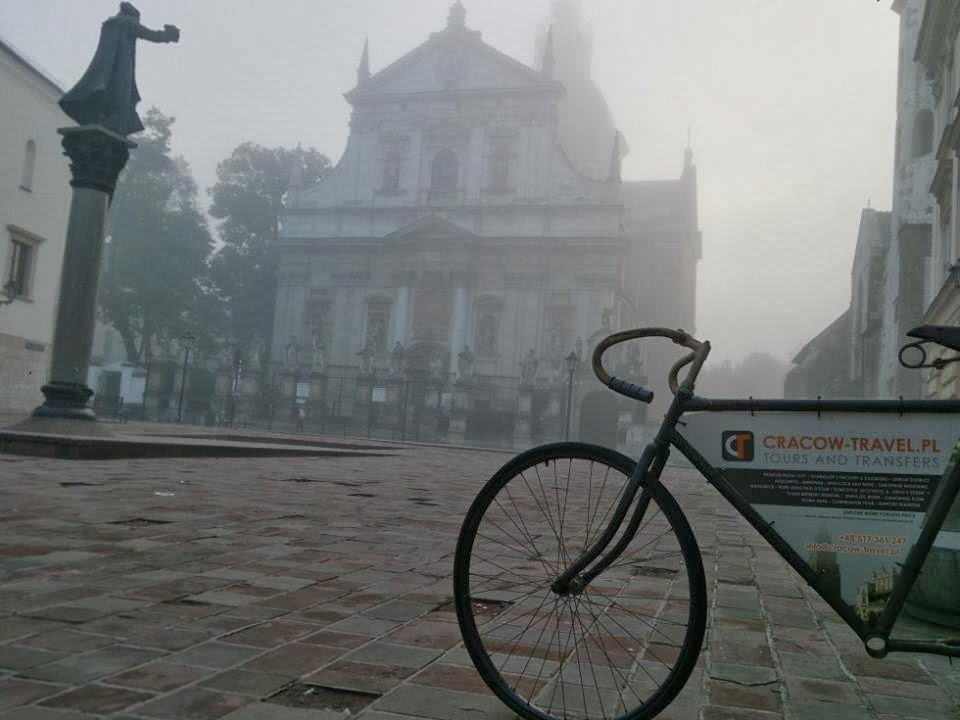
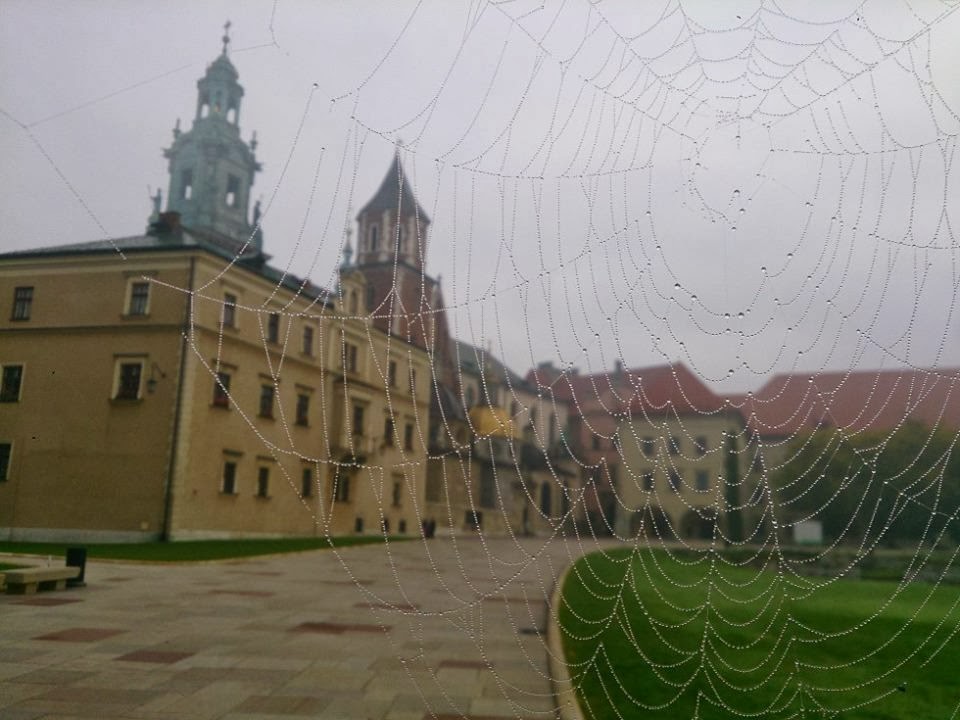
Business open as the fog clears. I stock on caffeine, charge my phone and use the toilet to realise I have not showered in over three days.
With thirteen hours left of this long adventure that started in Paris and took me across Kenya and Eastern Europe, I look at my map and impulsively decide to take a bus to the Polish countryside.
I read about a local bus leaving from the coach station in only five minutes and the next two hundred and forty seconds unfold in a long sprint across the square, into a shopping centre, down an escalator, through a tram station and up another escalator. The bus is gone and I am forced to wait twenty minutes for the next one.
Grasping some air I decide to move forward with the plan, while also discovering that the airport is not far from the road we will take and ask the driver if a stop is possible. With no knowledge of English, he looks at the map, reassuring me with a timid ‘yes’ .Minutes later, the bus swerves into a junction that opens to a road of endless wheat and barley crops , dotted with colourful wooden houses.
Oswiecim signs in sight, we have reached Auschwitz.
There are not many good things, if any, we can say about Auschwitz. The epitome of Holocaust destruction, a low point in human history, a scar yet to be healed. It is hard to believe that the train station of today’s Oswiecim, with its quaint village persona, colourful barley crops and crystal clear creeks, once saw over a million Jewish and Roma prisoners lining up for extermination.
It is a bright cloudless day. Cold dark corners enriched by the warmth of the wintry sunshine. I pay my admission and short of time, I am assigned a tour in Italian. My guide, a local middle-aged woman, wears a long dress and round glasses dominated by the sad countenance of working in one of the saddest places on Earth. Her voice is monotone and breaks as we walk under the threshold that still loudly shouts ‘Arbeit Macht Frei’, ironically, German for ‘work makes you free‘.
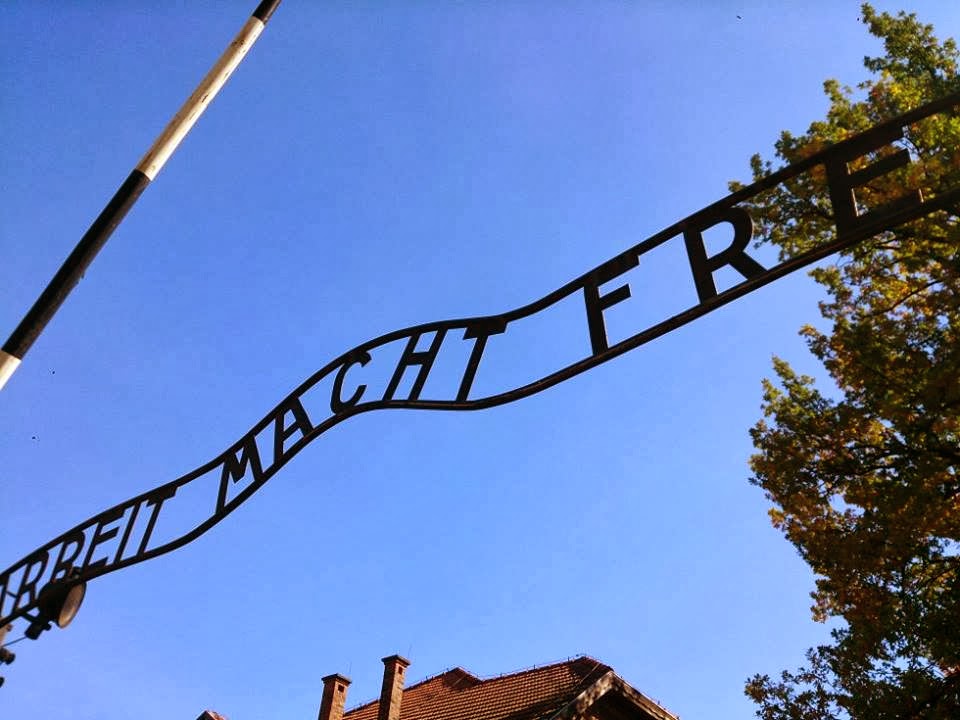
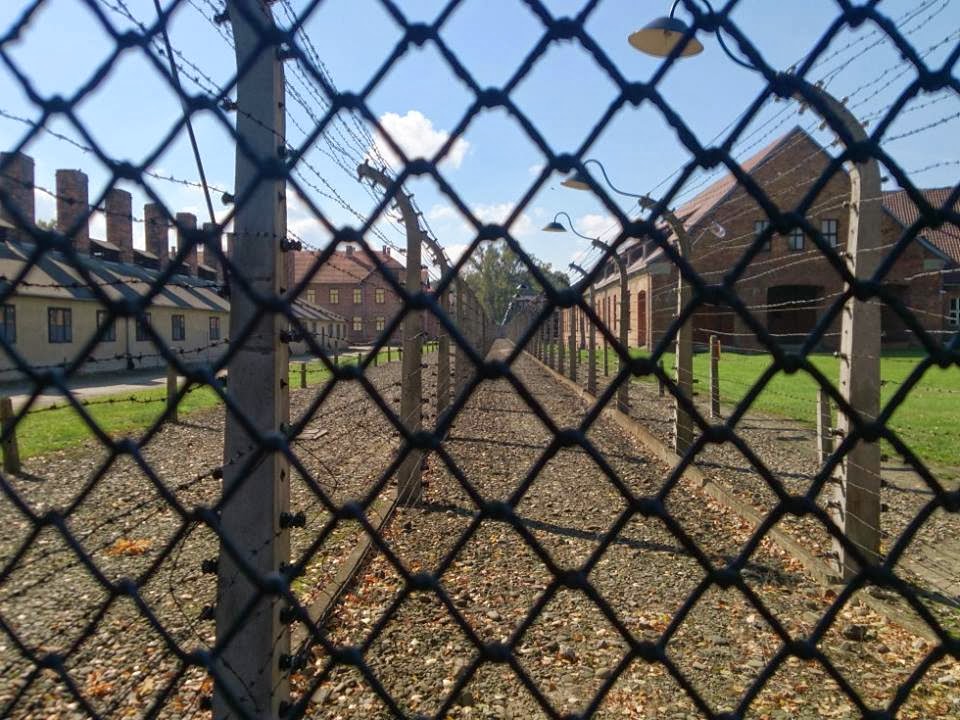
Not a single smile. Not one. Not even from the children. Auschwitz is still a place of mourning, but most importantly, a place of reflection.
Geometrically laid pavilions that once hosted crowded prisoners turned slaves now show memorabilia and pictures of the horrible procedures here implemented when Auschwitz was a full swing concentration camp. Stifling train journeys that lasted days, the terrifying disembarkation platform, the gut-wrenching selection of those who would become prisoners and those who would die immediately. Auschwitz turns graphic and more gruesome as we walk through pavilions of empty suitcases, of toys, of shoes.
Tears stream across visitors faces and stomachs twist at the pavillion dominated by the sight of piles of human hair. Hair once believed to be shaved from prisoners and sold to local business to fabricate brushes.
Small torture cells still whisper about the torture suffered by the so-called rebels and a long wall still exhibits accounts of deaths by direct shooting.
At the final part of the tour, the gas chamber, fingernail scratches draw a Zyklon B agony across the dark concrete walls and, light-headed by the overwhelming sight of humanity’s worst, I rush towards the parking bay for fresh air and a bottle of cold water.


Auschwitz I is a challenge to the senses. A place where one feels ashamed of being human, a level of cruelty yet to be understood. It is humbling. It is a lesson to be learned for generations to come.
I remain in silence as the bus crosses colourful villages at sunset. The driver stops in a dusty junction and points at me. From memory, I follow a road vacant of cars and bounty of fresh air, the tall lights of John Paul II International Airport materialising as soon as the sky finishes its transformation of orange colours into the dark black of the night.
On the three-hour flight to Dublin, I seem to slowly come out of the trance of Auschwitz and reflect on the past three weeks. Reflect on a sad-looking Paris that redeemed itself at the companion of great friends over a sunny day, on a familiar Kenya observed from a different optic, on love and friendship in the Mara and on the beauty and tragedy of Hungary, Czechia and Poland.
In Dublin , I take the number sixteen to Portobello and hastily unpack, I grab my first shower in four days and tuck into bed, for I will be in the office in less than eight hours.
 THE FLYING CAMBA