The plane floats over the large sprawl of mansions and swimming pools of wealty Tigre. The landing gears loudly extend and the plane seems to rocket like a fast missile through the skyline of Puerto Madero.
Squeezed in between the murky River Plate and the slums surrounding rich and famous Palermo, the small terminal at Aeroparque Jorge Newbery is a place in which Argentina seems to converge in a fast-moving knot of flights and people. Long queues form around boarding gates. A queue of business men for the flight to Cordoba next to a queue of footballers for Puerto Iguazu. I queue behind three Israeli girls and the flight is called right through the mid-morning weak sunshine.
I bag three seats to myself and rest my head against the bulkhead as we take off and U-turn over the brown sea of the River Plate. An alfajor and a sandwich are served as we flight away from the real world and enter true remoteness.
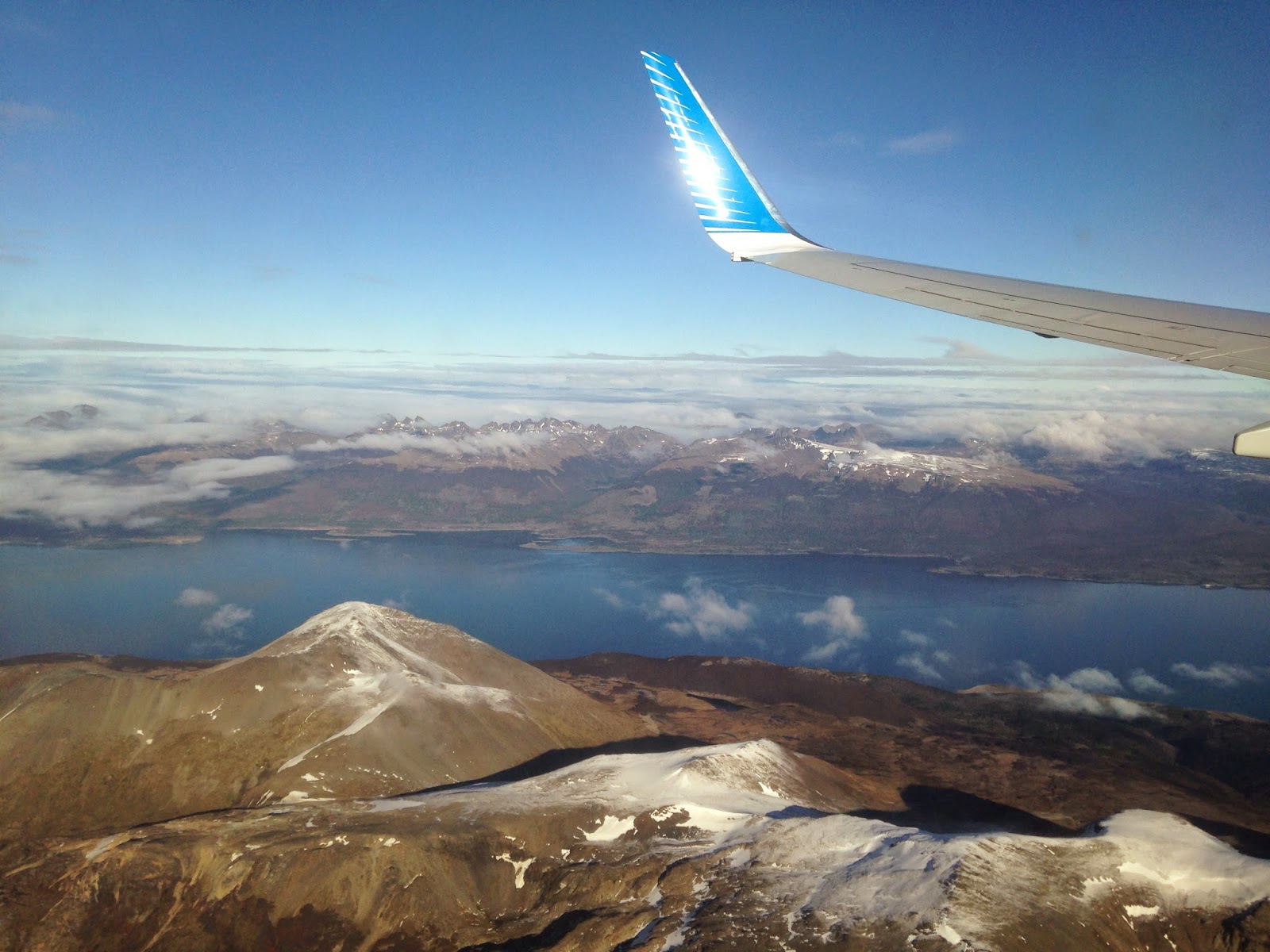
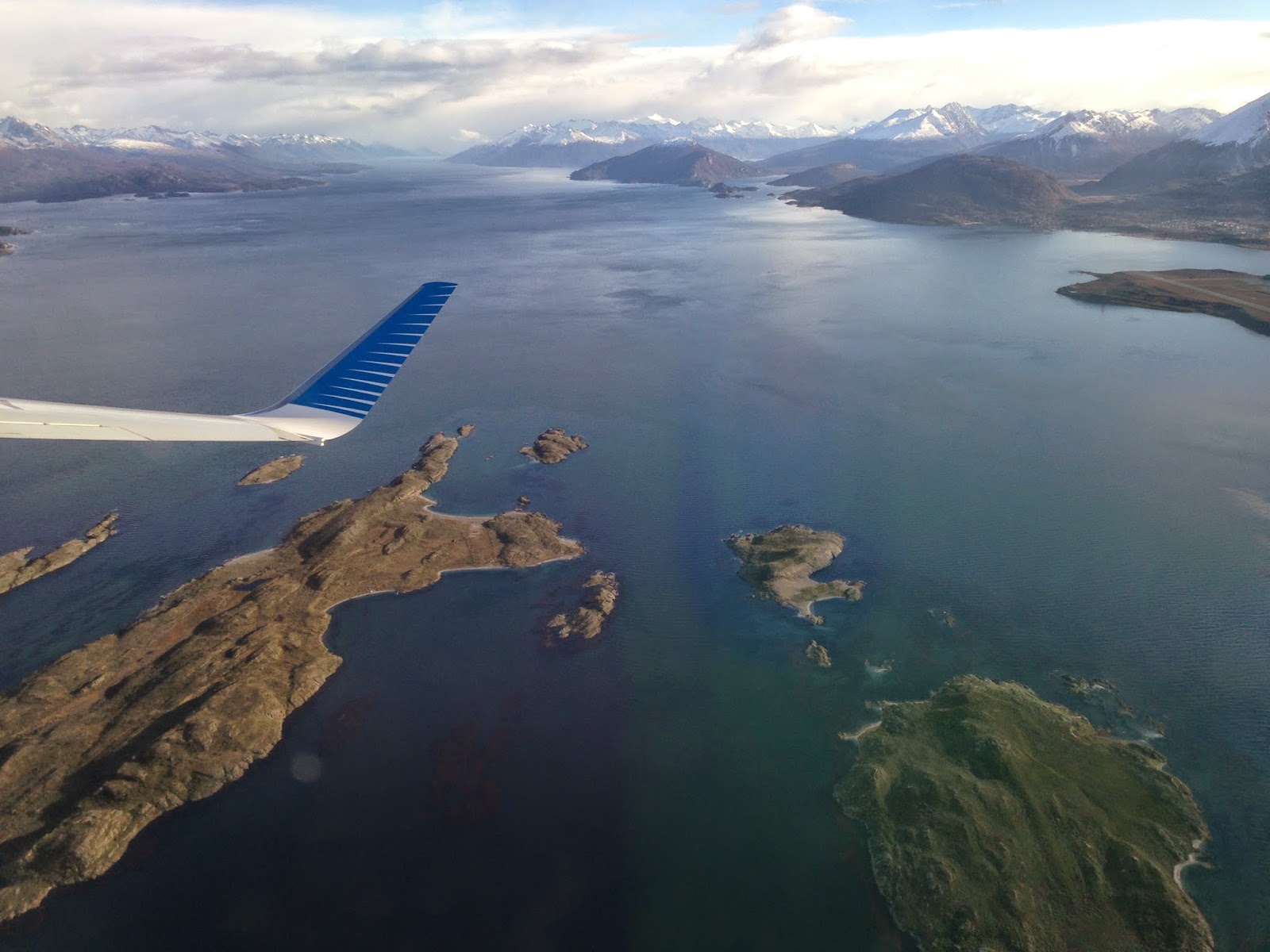
It takes three and a half hours to get across Argentina. Outside, we seem to rapidly skim through the sea of light haze and cloud and line towards a distant runway as the aircraft violently rocks sideways over a stunningly blue fjord.
Below, the snowy mountains seem to nearly touch our wings as we battle the rough winds of the afternoon and the waves crash softly against a rocky shoreline of grass and conifers. Asphalt suddenly extends below us and we uncomfortably touch down in the Southernmost runway in the world.
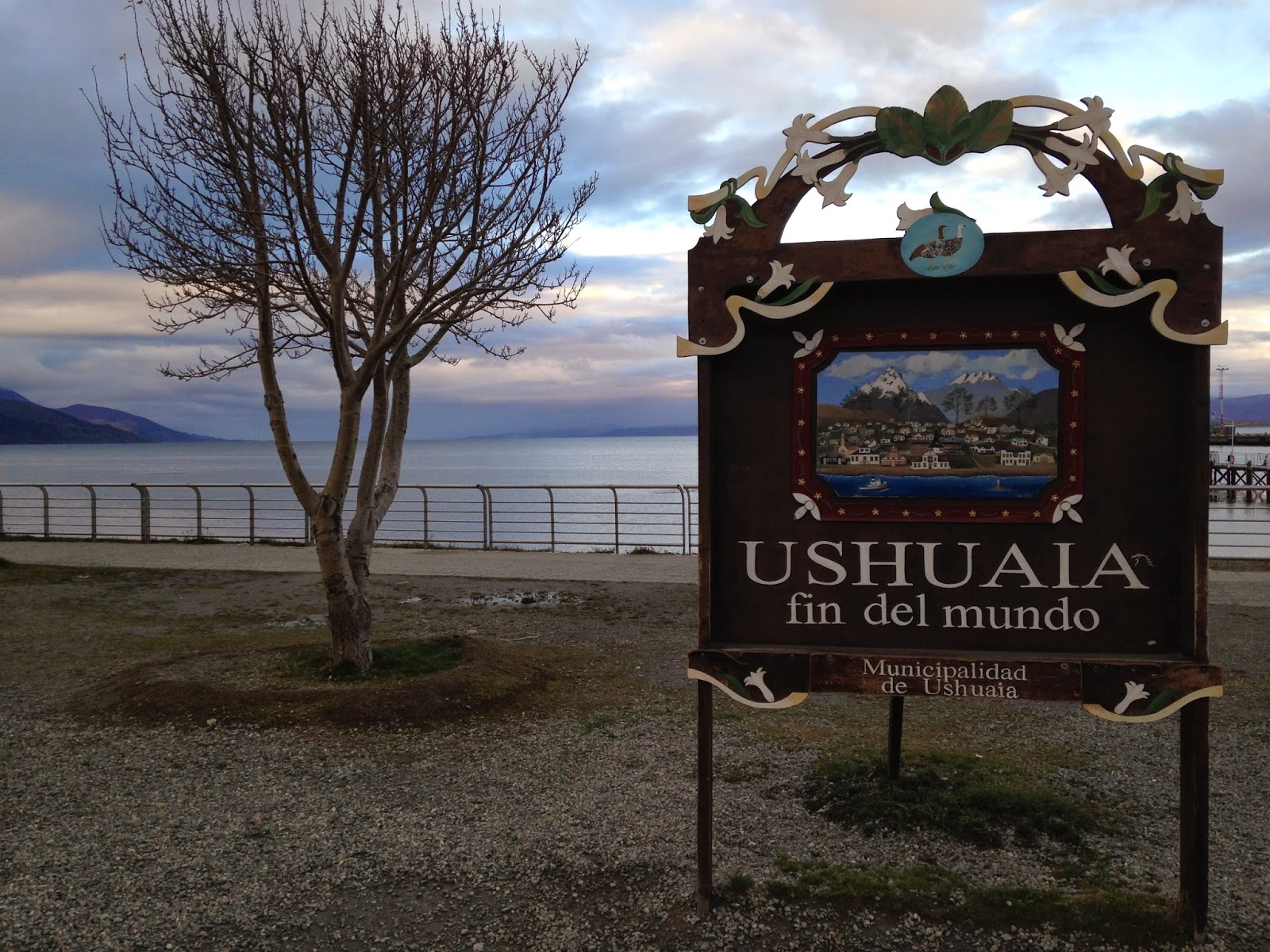
A sign at the arrivals hall reads: ‘Welcome to Ushuaia, the City of the End of the World, the Land of Fire’. It is remotely beautiful.
The airport has been built in some sort of lodge-like structure. Wooden, tall and well-lit. Outside, the wintry sun glistens when reflected in the freshly fallen snow. Bitterly cold and dry, the city of Ushuaia seems more like a coal miner village with its small houses of shiny tin roofs set against the bareness of frozen soil climbing towards tall snowy peaks.
I spot a backpacker at the taxi rank and we decide to share a lift to the same hostel. I am checked in the cozy lodge by a local woman who strongly hates flying. Once I drop the bag, I don the thickest winter coat I have ever owned and venture out to the freezing cold.
A few streets down the road, I soon understand the geographical remoteness I have now landed at: a tall mountain range that begins only a handful of streets away from where I am standing. A mountain range that will soon become the Southern end of the Andes, from here extending all the way to Alaska. On the opposite side, the Beagle Channel marks the end of the continent as a land mass and across it, Cape Horn signals the last possible piece of coastline between us and Antarctica.
‘I sit down in the cold bench and take a deep breath to contemplate the vessels timidly entering the narrow Channel. Sea lions yawn and nap as they lay in the distant black-coloured rocks, and the weak wintry sunset dyes the mountains behind me in a combination of pink tones.
The place where the two oceans meet. For a second, I can picture Magellan gasping in awe when negotiating his way through the turbulent waters ahead of me. I can picture him wondering about the torches lit by the Fueguin tribes and in his logbook writing ‘The Land of Fire”.
I return to the hostel as it gets dark at four in the afternoon, the days short in these latitudes in the Austral winter. Deprived of sleep, I rest through the night for fourteen hour straight.
In the morning, I am awoken by the noise of fellow tourists rushing down the wooden stairs for breakfast and travel plans. I join forces with two Australians and an Irish to become their official translator and we jump on a minivan to Tierra del Fuego National Park.
Serene, desolate, dramatically remote. A place of natural beauty that perhaps amazes the most due to its location. Indeed, it is incredible to just stand there and imagine one’s geographical position in the world, thousands of miles away from all of our worries, all of the things we know.
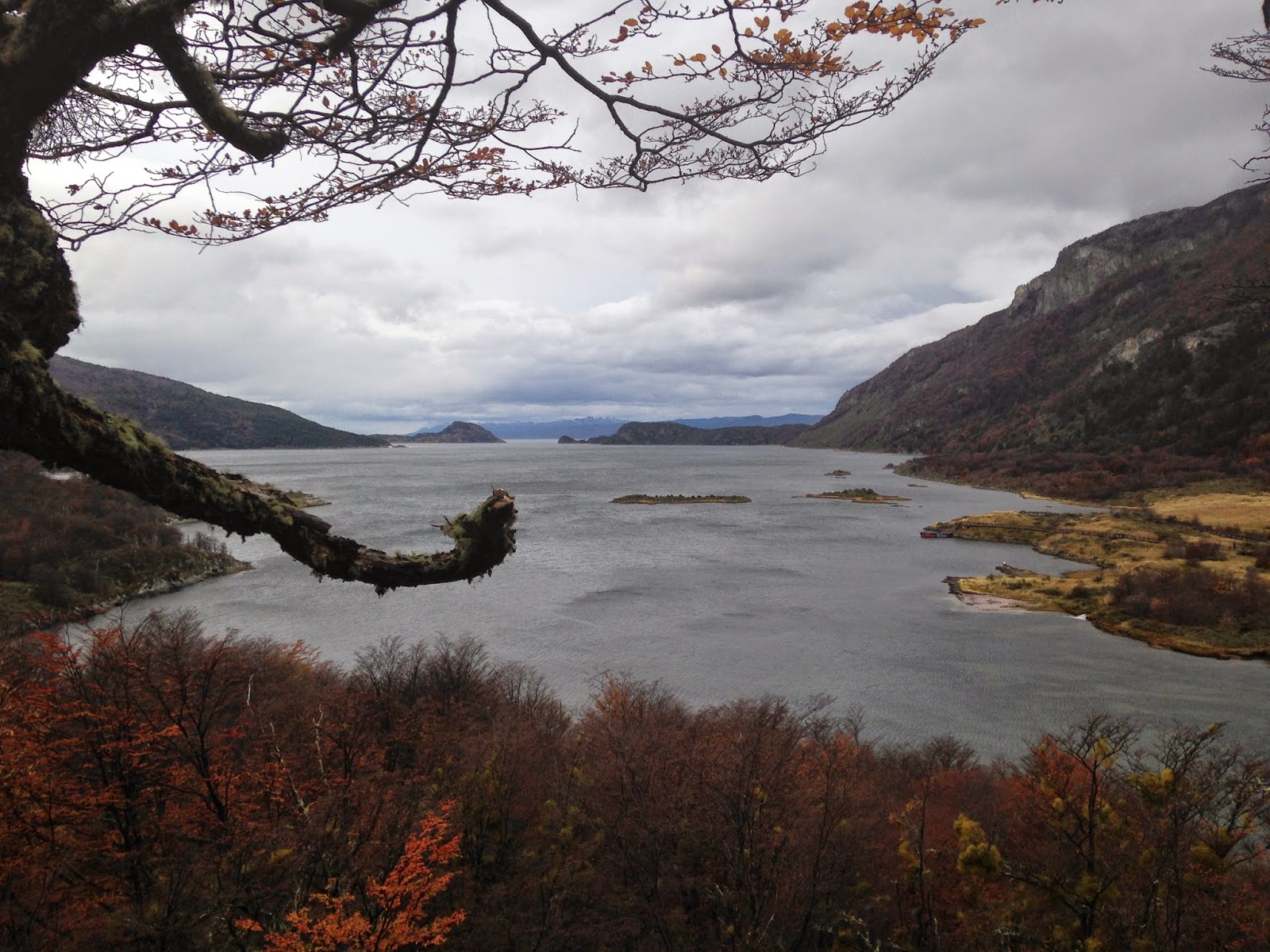
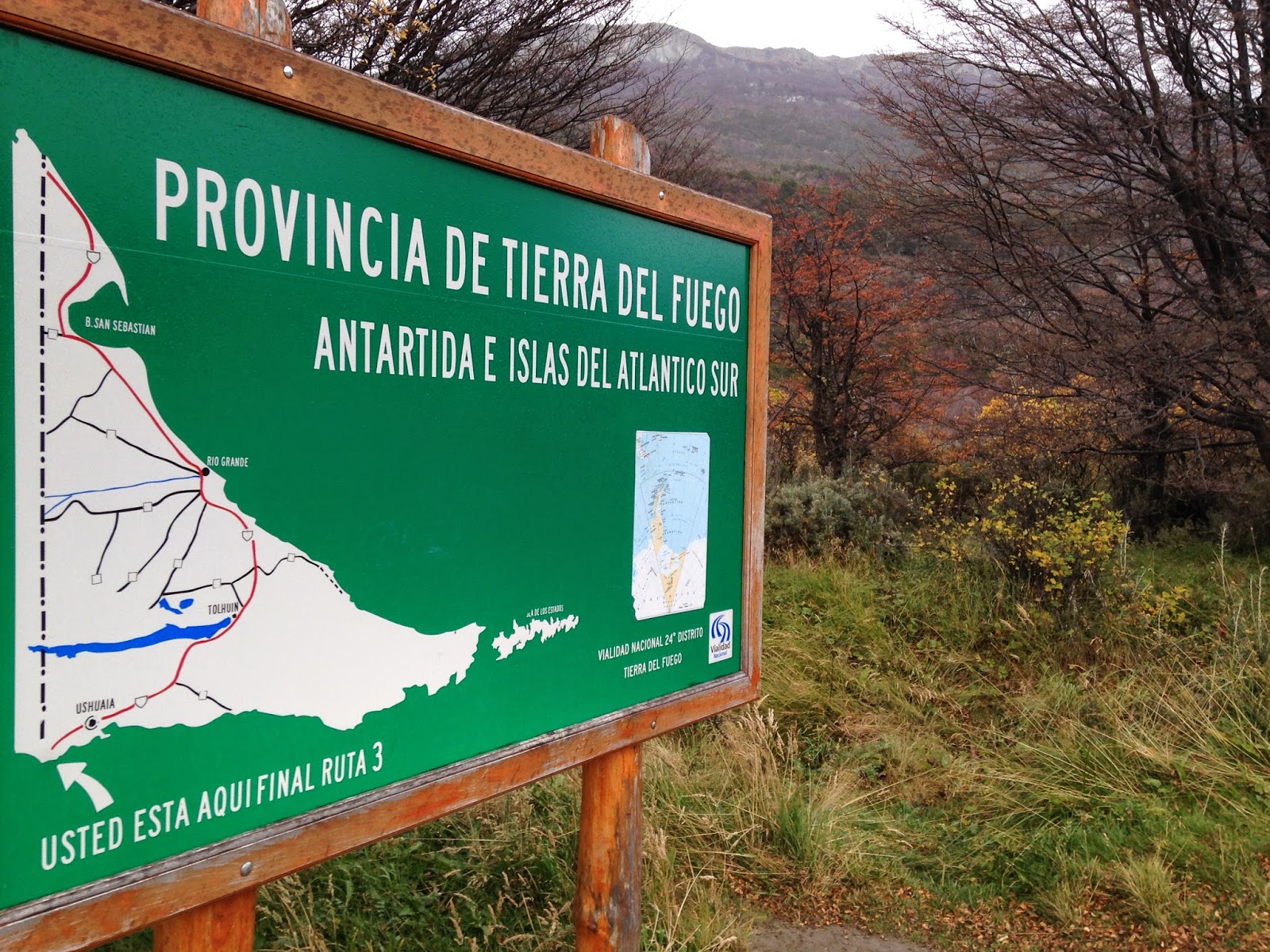
Guarded by tall lenga beech trees and Calafate bushes, we reach the silver-coloured waters of Bahia Lapataia and its emblematic sign , marking the end of the long Route 3 and the Southern end of any possible road in the continent.
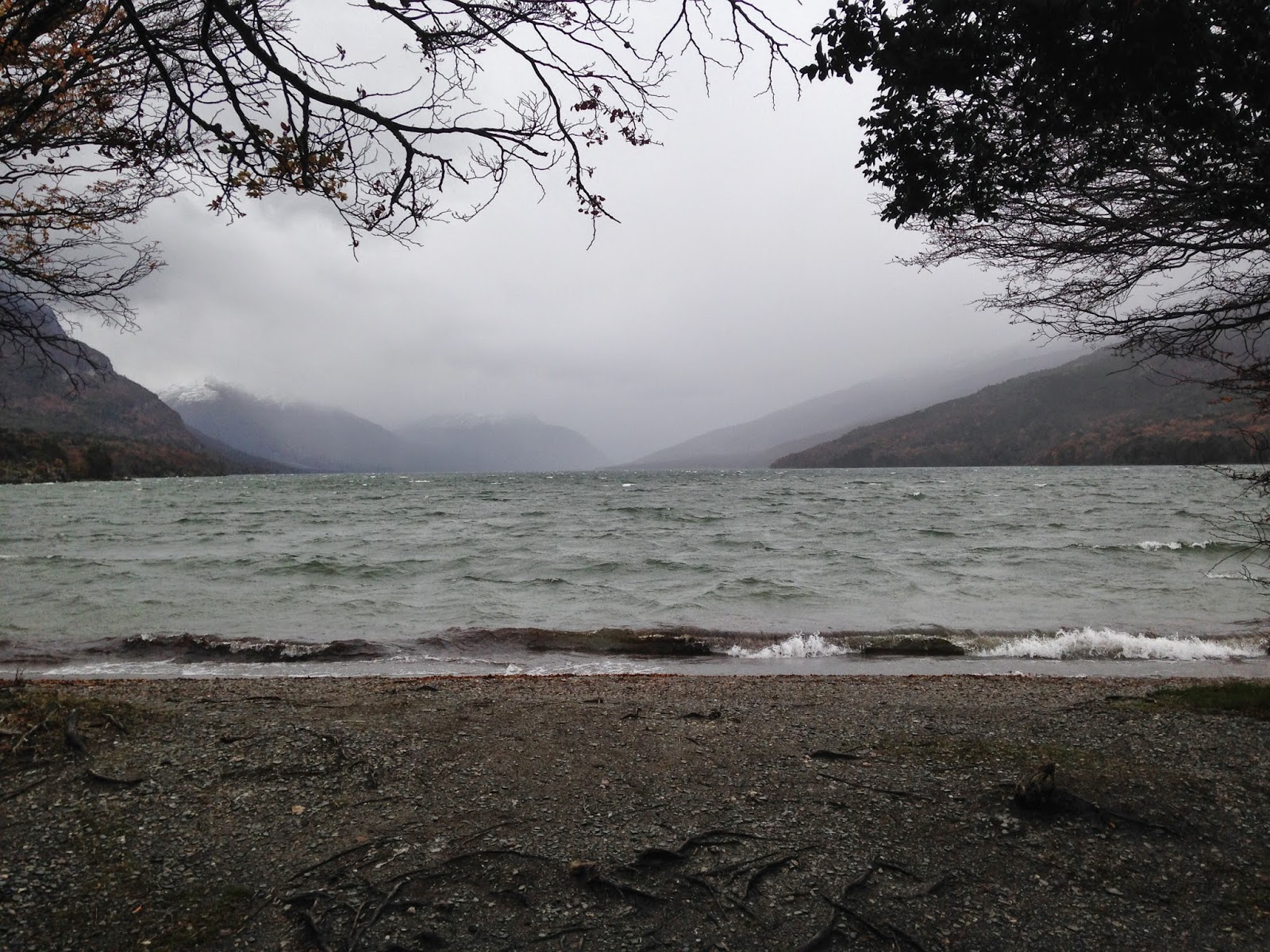
Fuelled by the combination of both Antarctic and Pacific winds, the changeable weather seems to rapidly deteriorate around us and a strong horizontal rain falls and cut through our skin like tiny knives. We spot a rather friendly Patagonic fox and we finish our bitterly cold hike at the shores of Lago Roca, now turned into a churning pond of violently shuffled swell.
Down the road, we find comfort in a small shack as we sip on cups of hot yerba mate and hang our wet socks around an open fire. The minivan shows up shortly before sunset as the rain has cleared towards the continent and the night turns icy. Back in Ushuaia, we treat ourselves to a well-deserved dinner of Argentinian sirloin steak sandwiches with fries, and we laugh and chat as we have glasses of Malbec as robust and full as the moon outside.
The noise of the morning commuters echoes across the double-glazed window. I peak from my cozy bed and see sour faces walking down footpaths of melty snow and brown grit. While enjoying a strong coffee and some pastries at the small kitchen, I am approached by a Dutch girl who is trying to figure out what to do for the day and, in a matter of seconds, we partner in a new and short adventure to nearby Martial Glacier.
Ushuaia’s playground by excellence, the glacier seems to be neglected in the early winter. A road of sharp hairpin bends crawls up the base of mountain and the taxi stops at the point where the snow seems too daunting to drive on.
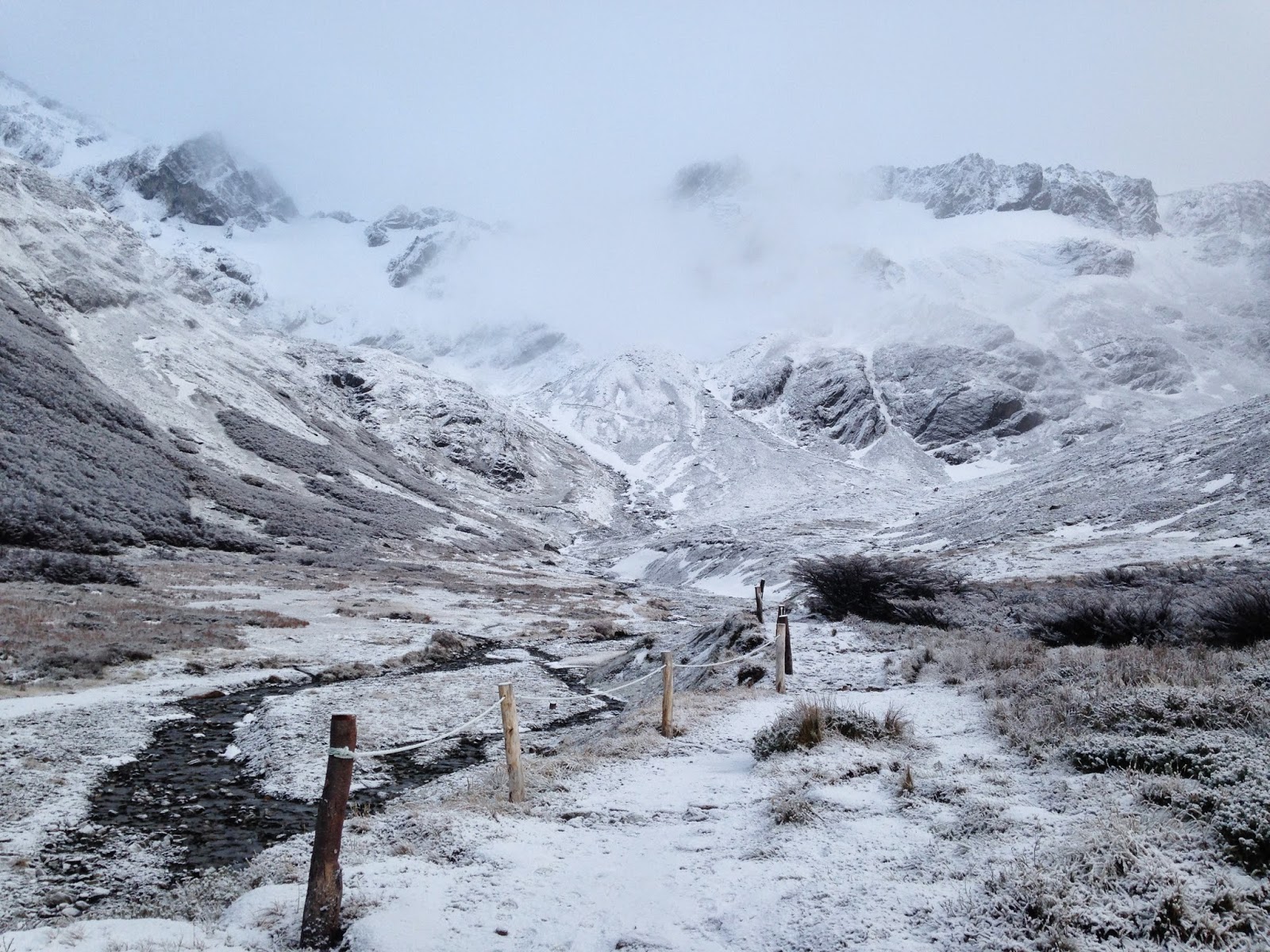
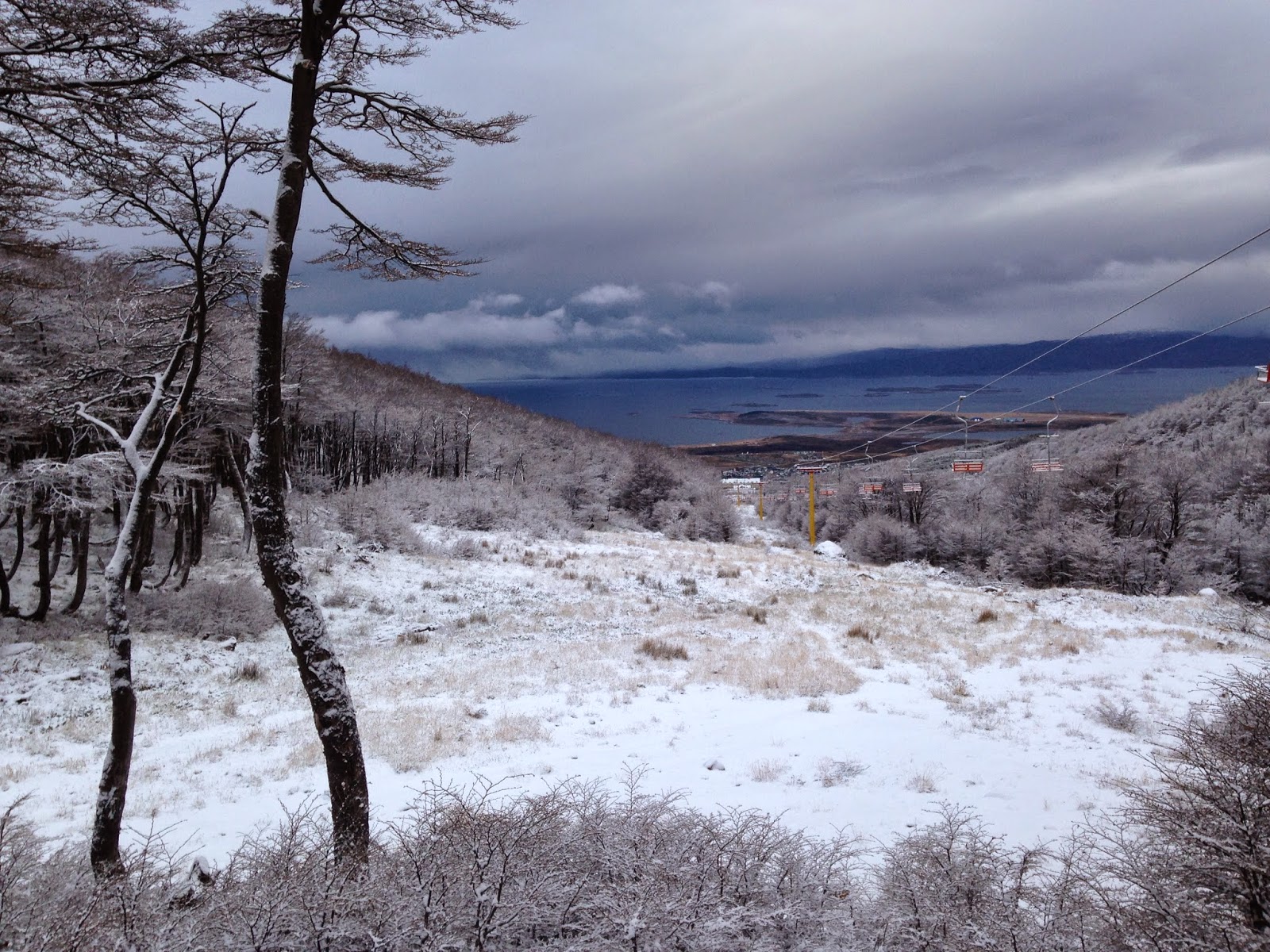
A narrow trail follows a stream of frozen water and zigzags through an U-shaped deep valley. I can spot the abandoned cable car, an eerie sight of busy summers of the past painted in bright yellow. The snow becomes deep and I shortly can not feel my feet anymore.
The Antarctic wind blows across the mountain and drops a thick blanket of snow within five minutes turning the trail treacherously slippery and dangerous.
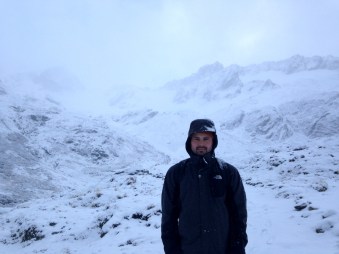
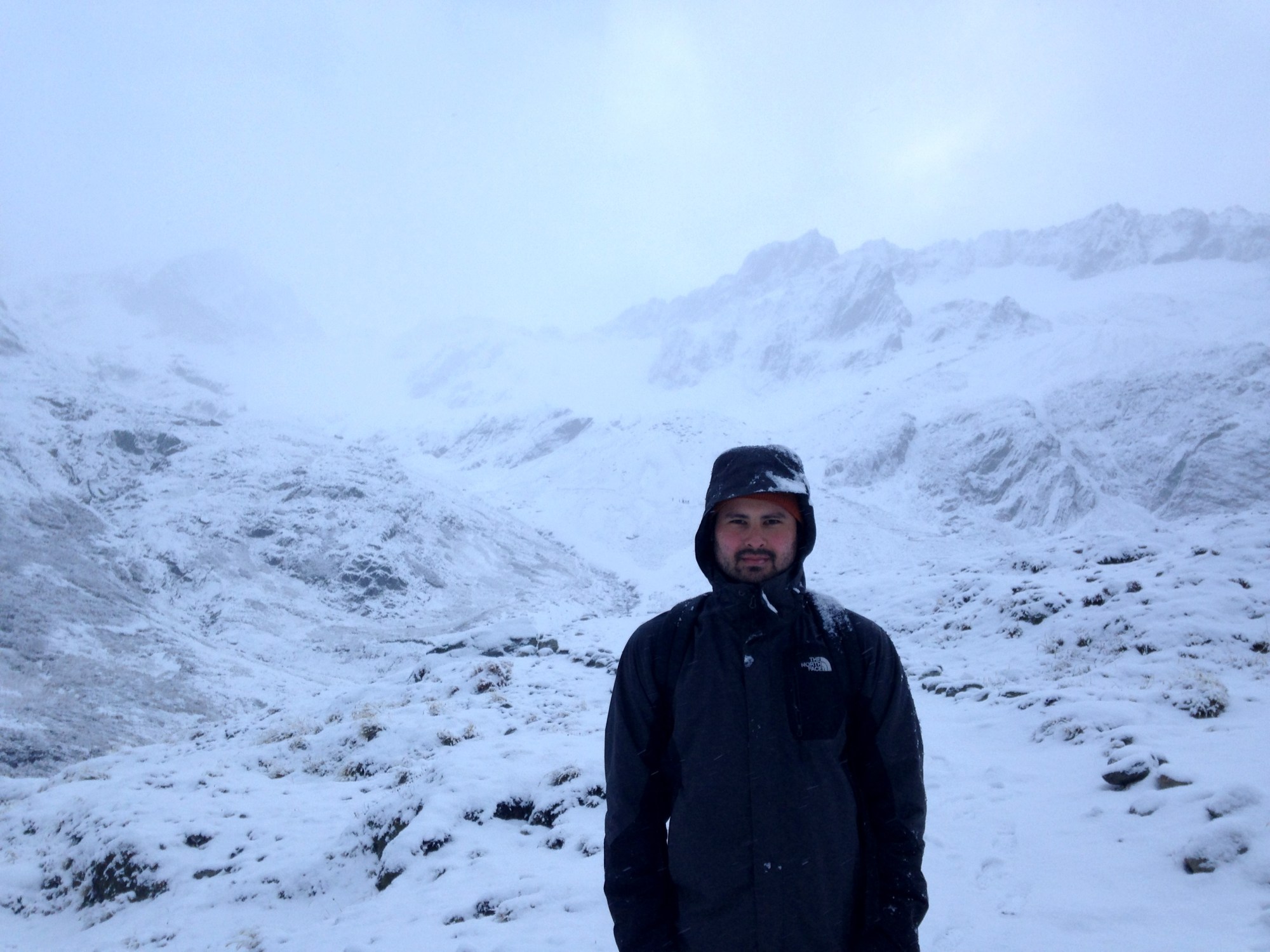
I put on my ‘tough guy’ face and nervously smile as I find myself watching my every step. The two only souls in the glacier that day, a wrong step to potentially become a catastrophe. I can feel the adrenaline fast pumping as we descend from the top of the glacier while minding both our safety and our time for in the end, I am due to flight out in less than two hours. Talk about an awkwardly timed adventure.
The blizzard clears when we are back in the trail and in the distance bestows an end-of-the-world sea of stuffy navy-blue beauty.
We hitchhike to town and we are driven right back into our hostel by a generous Ushuaian, allowing me enough time to say good-bye, pick up my backpack and, wet socks on, dash to the airport in the fastest of the rush.
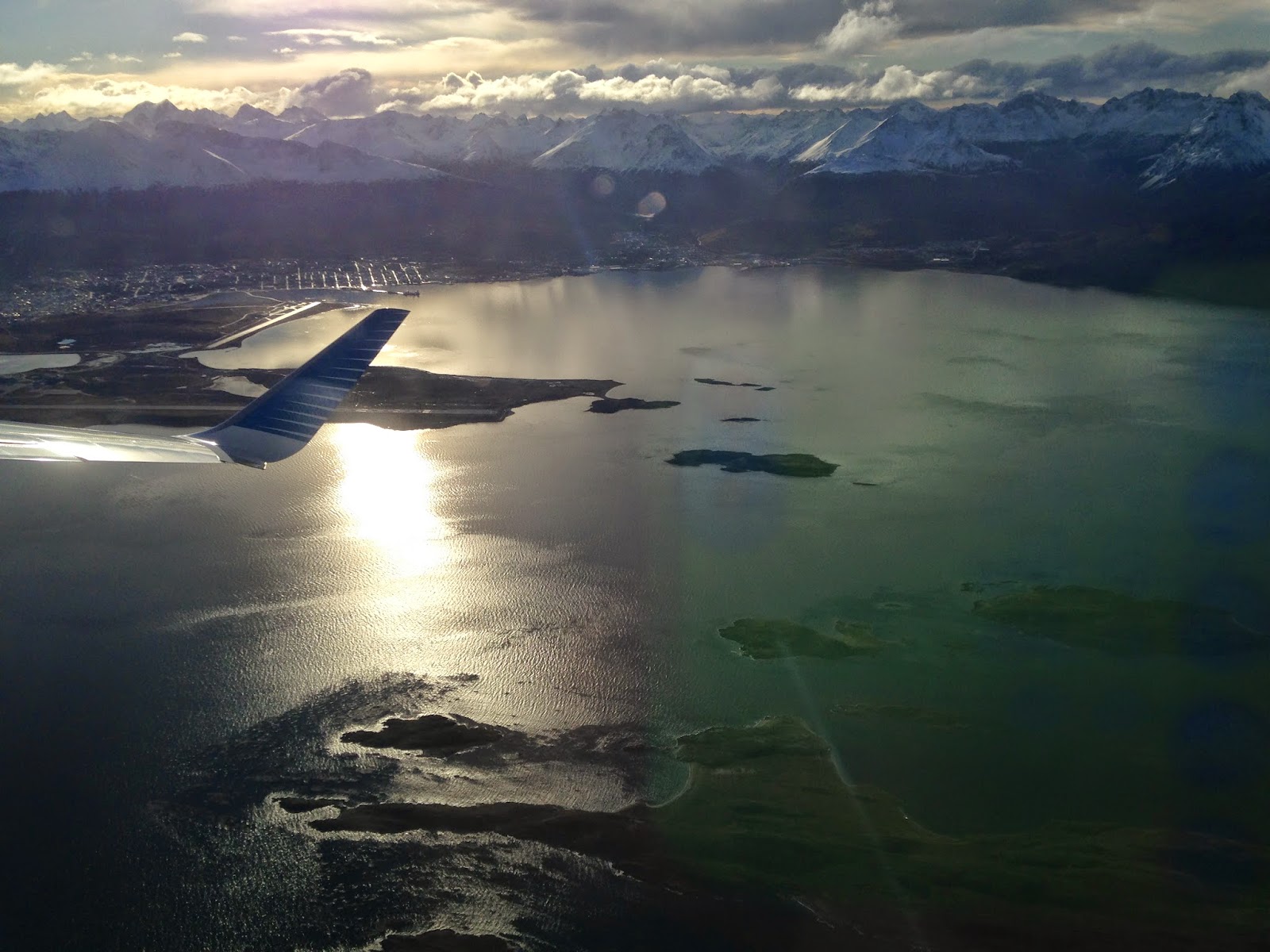
The flight is called and the aircraft gains altitude in a corkscrew manoeuvre over the Beagle Channel worth of any of the best amusement parks in the world.
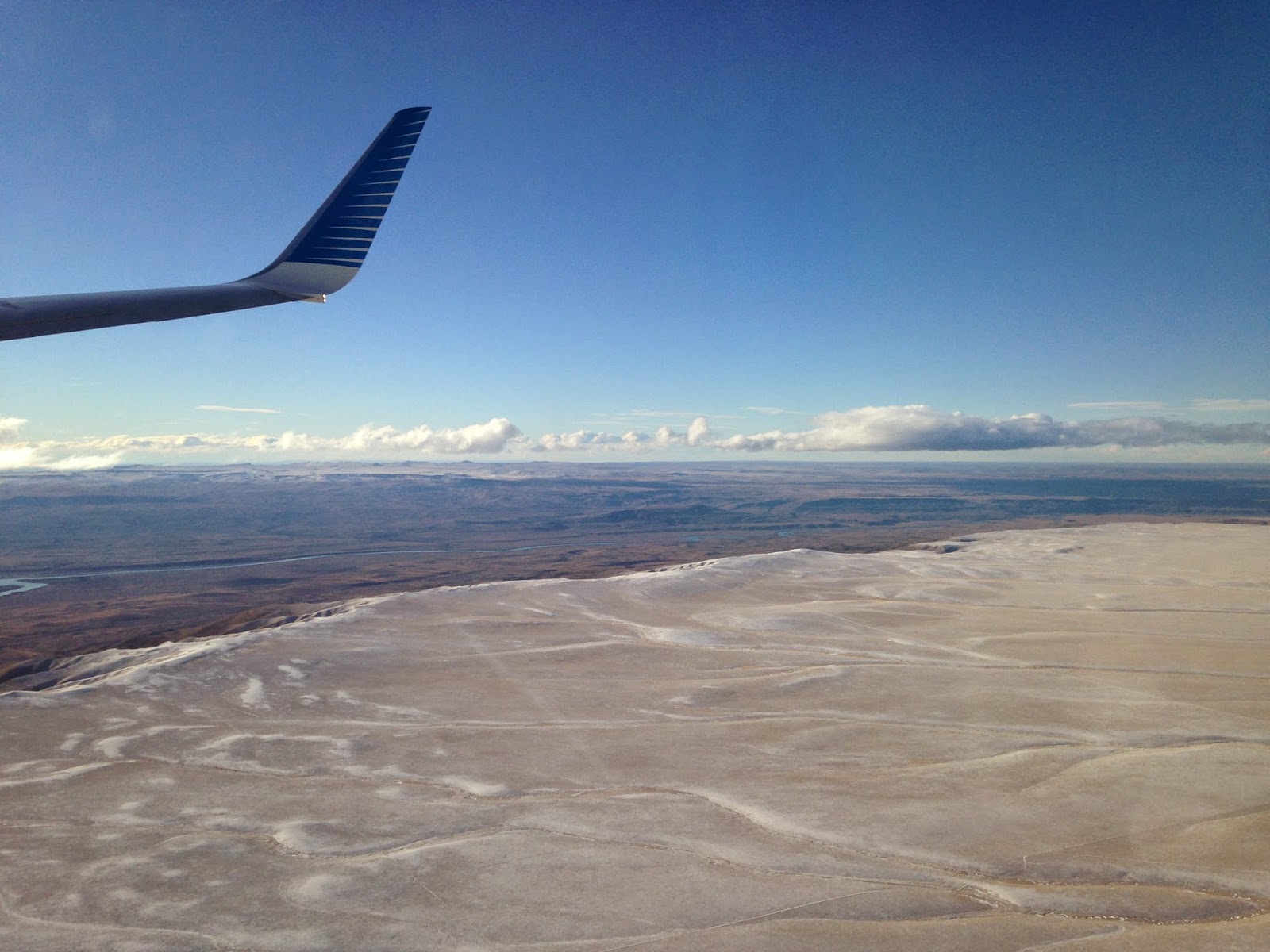
Once we gain enough altitude, we set course North and fly over the tall mountains of Tierra del Fuego to collide with the Magellan Strait, where a brown, dull and arid land marks the beginning of the vast and inhospitable Patagonia.
Outside, small streams of water seem to cut across the arid land like massive wounds stamped on dry skin, sterile and daunting. We are handed a little snack box and just shortly over an hour, we follow the turquoise turbulent waters of the Santa Cruz River and land in a runway paved in the middle of some sort of endless void. El Calafate I believe?.


 THE FLYING CAMBA