
Comandante Armando Tola Airport resembles a glass spaceship that has just landed on the moon. Surrounded by nothing but rocks and brown dust, I sit down in its sun-kissed arrivals hall and wait for my friend to arrive from Montevideo in an almost perfectly timed schedule.
When pointing at the Perito Moreno Glacier, he raises his voice and elaborates:
I glance through my guidebook to understand that the Patagonian landscape owns its complexity and bitter dryness to the weather systems that originate from as far as Australia and New Zealand. Warm and wet winds that find no barrier across the Pacific and violently crash against the Andes in almost monsoonal downpour, creating the unspoiled Chilean fjods of Bernardo O’Higgins National Park to the West of them, and the arid vastness of the Patagonia as the wind flows East over the mountain range towards the Atlantic. This also means that the glaciers we are due to summit in a couple of hours are the only ones in the world that are continuously growing and recycling as they are fed with fresh snow and are born West, and flow to die East.
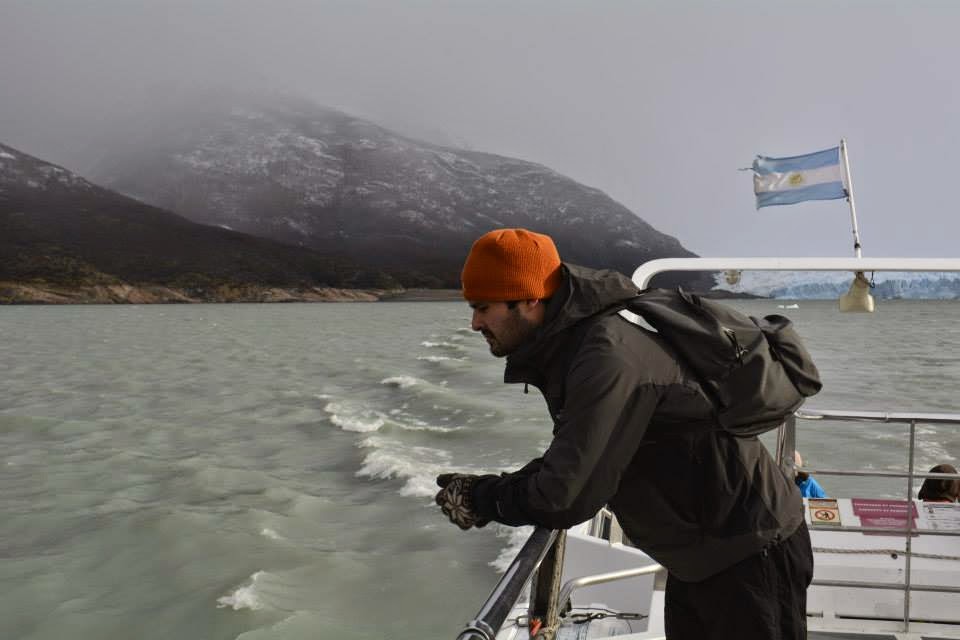
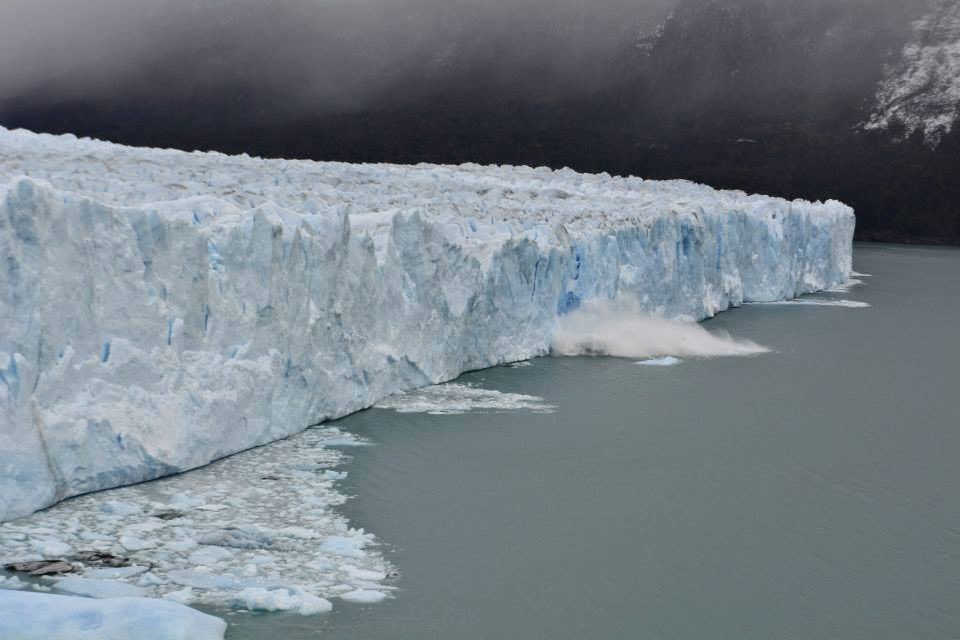
At an outstanding seventy four meters tall, the massive block of ice is nothing short of mesmerising. It is powerful and colossal, yet it seems to graciously flow downwards from the tall Andes and into the lake. Cameras click at the unison of sighs, and despite the piercing wind in the main deck, everyone seems to be hypnotised by the uniqueness of the landscape around us. The catamaran pulls next to an improvised dock across the lake and we are led though a woodland of petrified trees.
‘Volcanic rock beaches as dark as freshly roasted coffee splattered with crystal-clear pieces of ice like sugar cubes. The gigantic body of ice slowly cracking as it moves centimetre by centimetre across the field and succumbs to gravity, to the nature, to the valley of beech trees, now colourful with the last of autumn. It is freezing, it is extreme and it is surreal.’
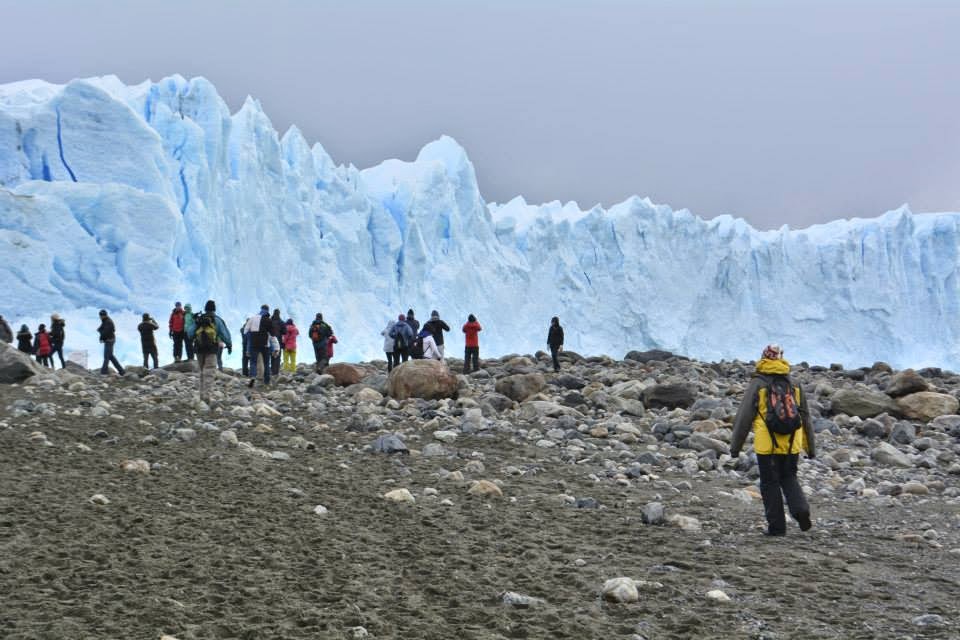
We are sat in a wooden cabin and heavy steel crampons are fitted on our shoes. The first step I set on the ice field somehow comes with a symbolism, a step outside of the comfort zone and into a new and memorable experience, a step taken with both excitement and care, a step forward to carry me through something memorable.
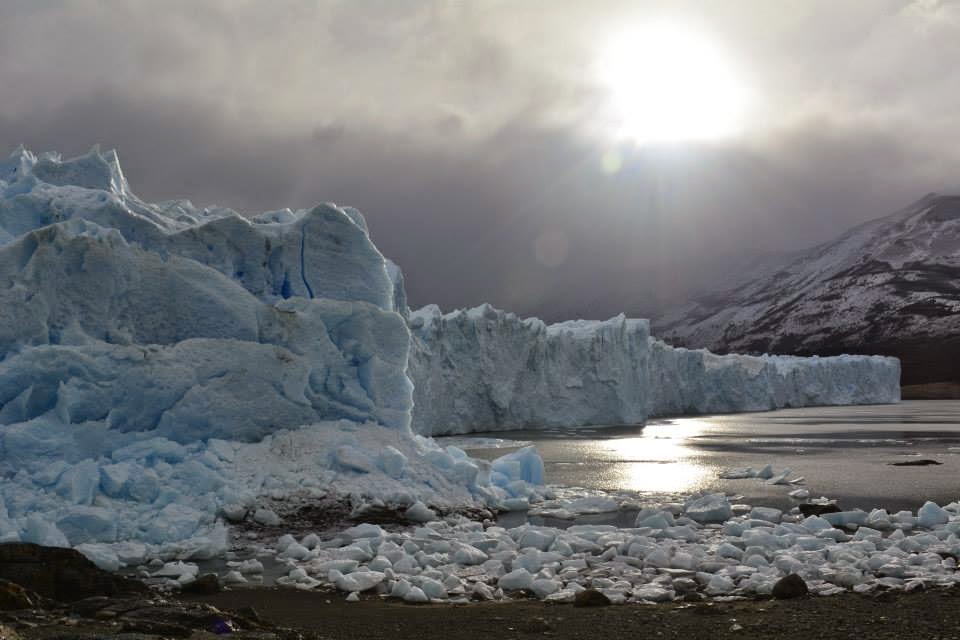
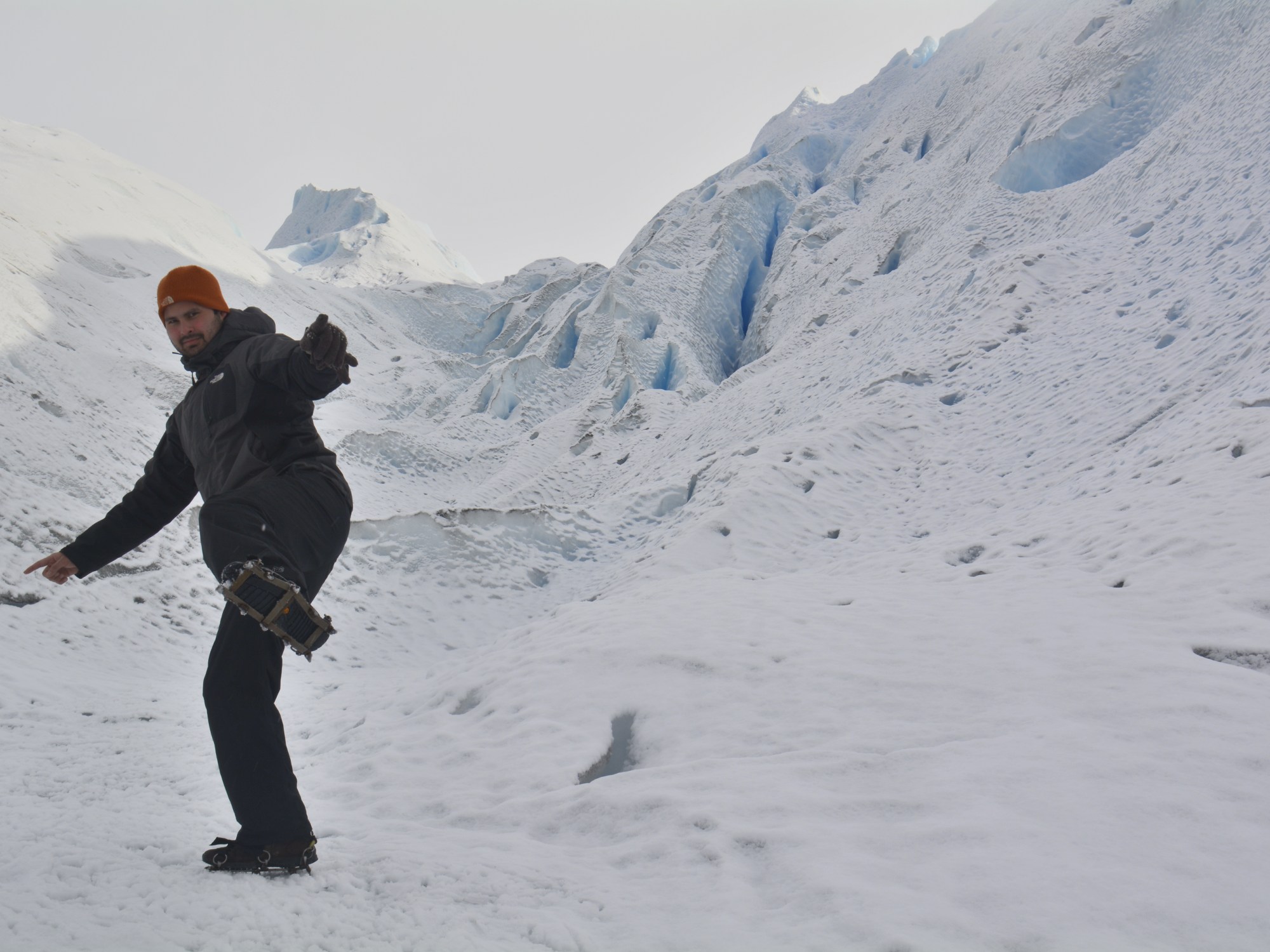
Following a trail carved by experienced guides earlier in the morning, we climb up steep hills of pure ice and lose ourselves in the endless white of it. Oddly enough, I stop to think about Armstrong’s first steps on the moon and, grasping enough air to make an out loud and obvious statement, I shout to my friend: ‘Look at me! I am now walking on a glacier’.
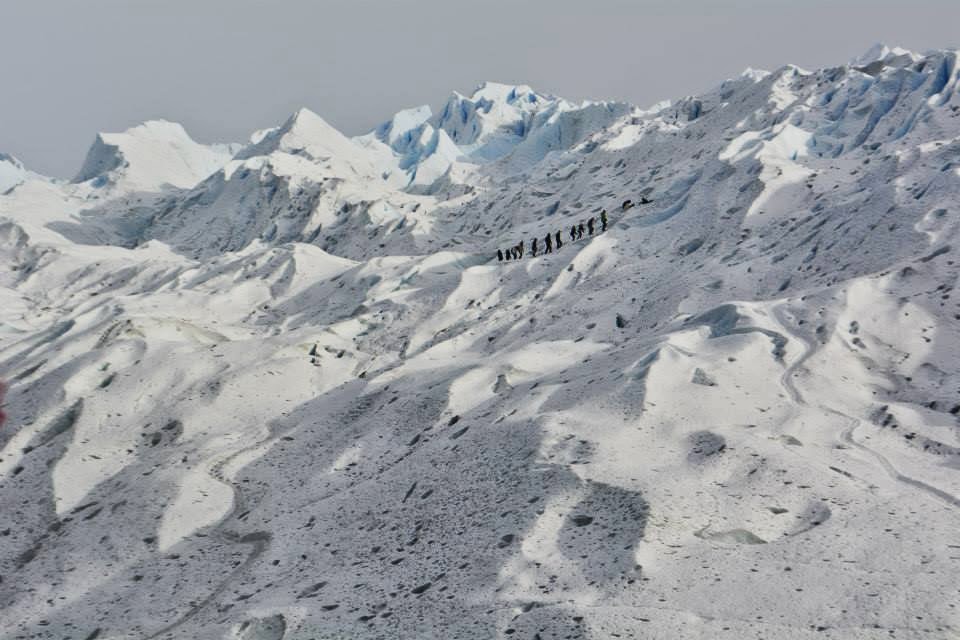
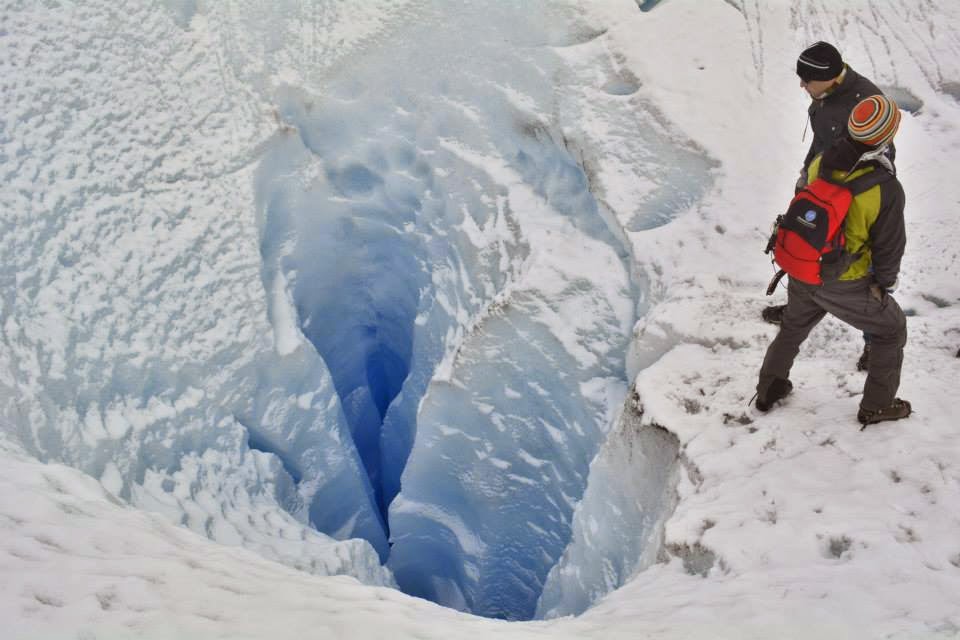
Water trickles across the ice field and constantly changes its shape. We are reminded that we are walking in some sort of a giant slow-moving vessel and as such, we owe respect to it. Carefully, we are shown deep ravines and fends of hypnotic blue and, by scrapping ice straight from the field, we are offered whiskey on the rocks, literally.
After three hours of crampon drama, we eat our lunch in the shelter of a wooden cabin and we are shipped across the lake to the wooden terraces and passageways built in front of the glacier to further contemplate the magnitude of the ice we have just hiked on.
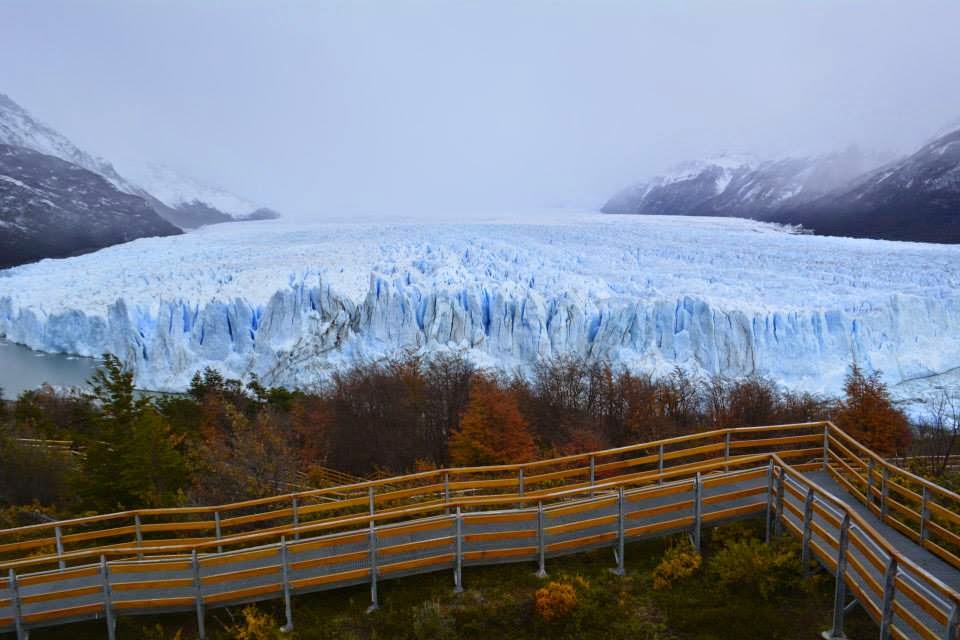
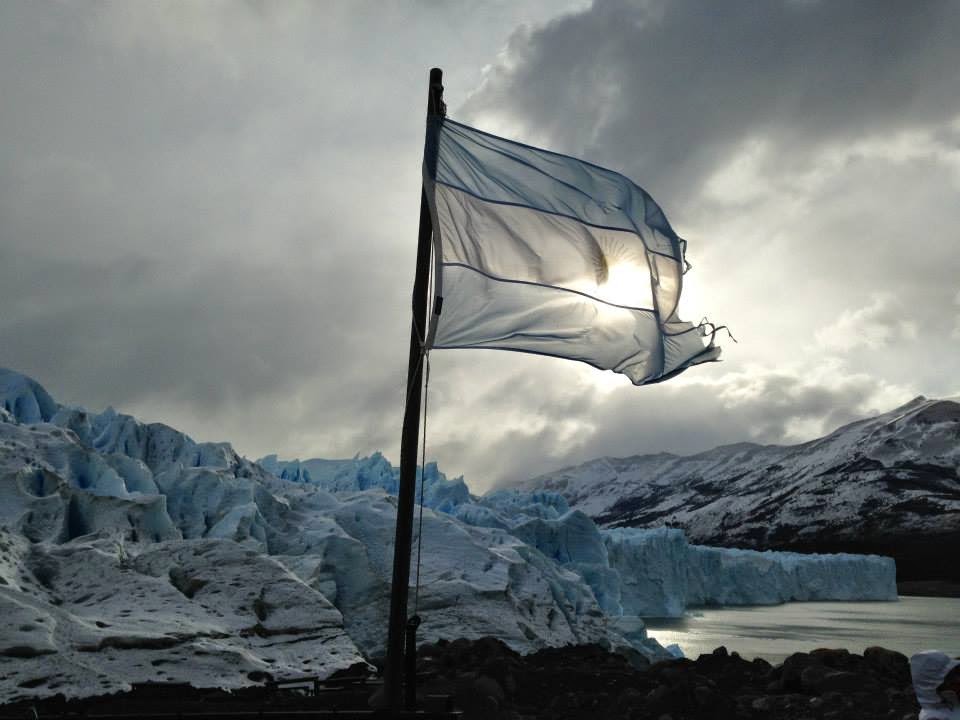
A loud roar resembling a bomb explosion is heard seconds before a wall of ice separates away from the glacier and sends ripples of water across the stillness of the milky lake. A growing glacier finding its death.
Exhausted, I fall asleep as the bus leaves the National Park amid heavy snow and wake up when the late afternoon is bright and chilly in El Calafate. With no time to be wasted and fighting the fatigue, my friend and I head to the outdoor shop in order to rent a tent and camping equipment for the next leg of the race. In the evening, we order stone baked pizzas and, trying to contain our excitement, we answer to questions asked by the fellow backpackers about the glacier hike.
The dark waters of Lake Argentino turn electric blue in the early hours of the morning. We pack the camping equipment and leave the hostel at the crack of dawn, and a bus jam packed with sleepy tourists departs towards El Chalten in the freezing morning.
El Chalten is Patagonia’s golden child. A place carefully preserved from tourist pollution and an ecologically proud National Park. A few miles before the dusty village, the bus stops at a gate and a park ranger recites the park rules with the conviction of a Greenpeace activist. Most importantly, he stresses on the fact that we are not to be charged for enjoying the National Park as long as we take care of it. A fair deal.
Along the dusty streets resembling a wrongly-gone Western, many businesses have closed their doors with sad-looking tarpaulins and cheerful signs reading ‘See you in September’. My friend and I tighten the ropes that hold our camping equipment around our backpacks and take the trail North beginning our expedition into the cold nature.
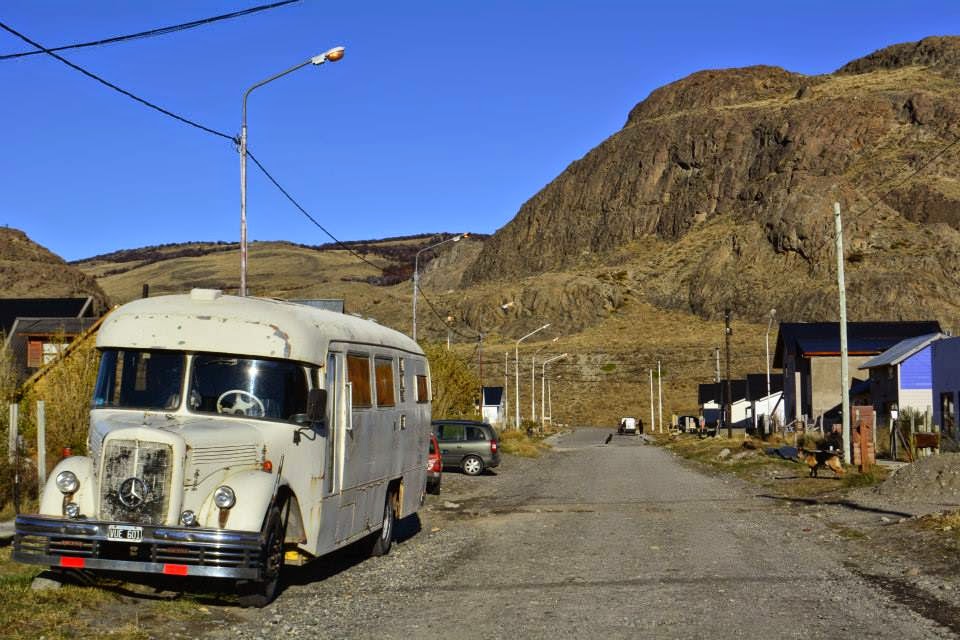
Only thirty minutes into the trail and the landscape dramatically changes around us. Sheltered under tall naked beech trees, the Santa Cruz River shyly roars at the bottom of the deep valley as it begins its journey through the Santa Cruz Province towards the Atlantic.
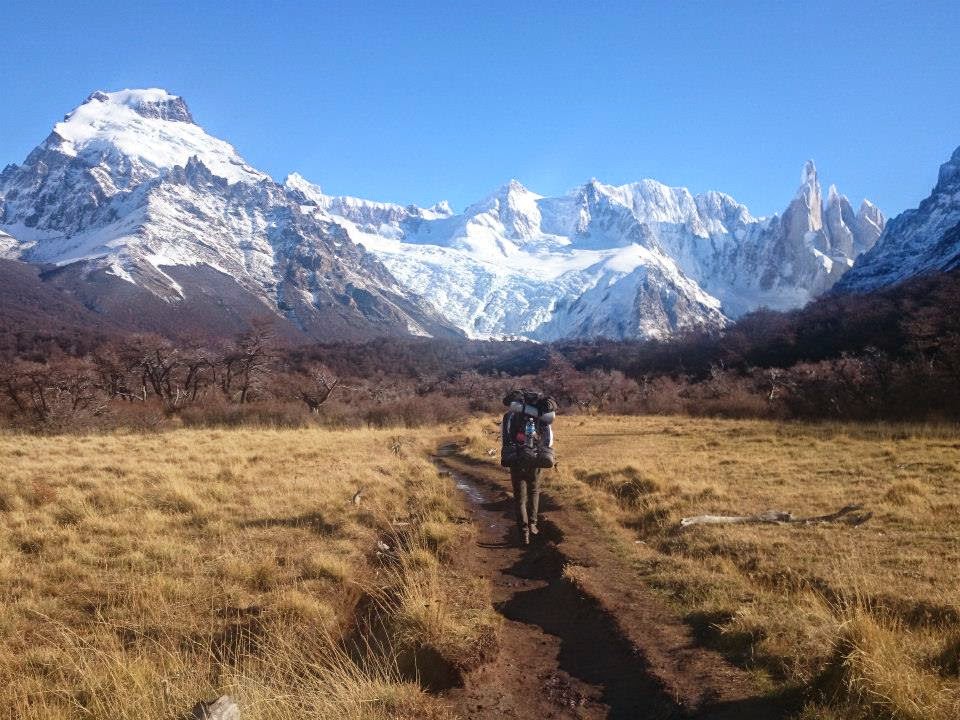
Like an elegantly built chimney, we follow the finger-like Cerro Torres towards our camp site as the forest turns bare and the winds from the Andes descend in bone-chilling gusts.
An awkwardly-placed wooden sign explains where El Chalten takes its name from, ‘Chalten’ being tehuelche -a native language- for smoky mountain, with natives believing that both Cerro Torres and Cerro Fitzroy were volcanoes, their tops constantly covered in fast-moving clouds blown from the Chilean side.
We spot a total of ten hikers, all of them walking in the opposite direction towards the village. A thin layer of frozen snow covers anything that is not reached by sunlight, the De Agostini campsite turned into some sort of permafrost hard to negotiate with the tent spikes.
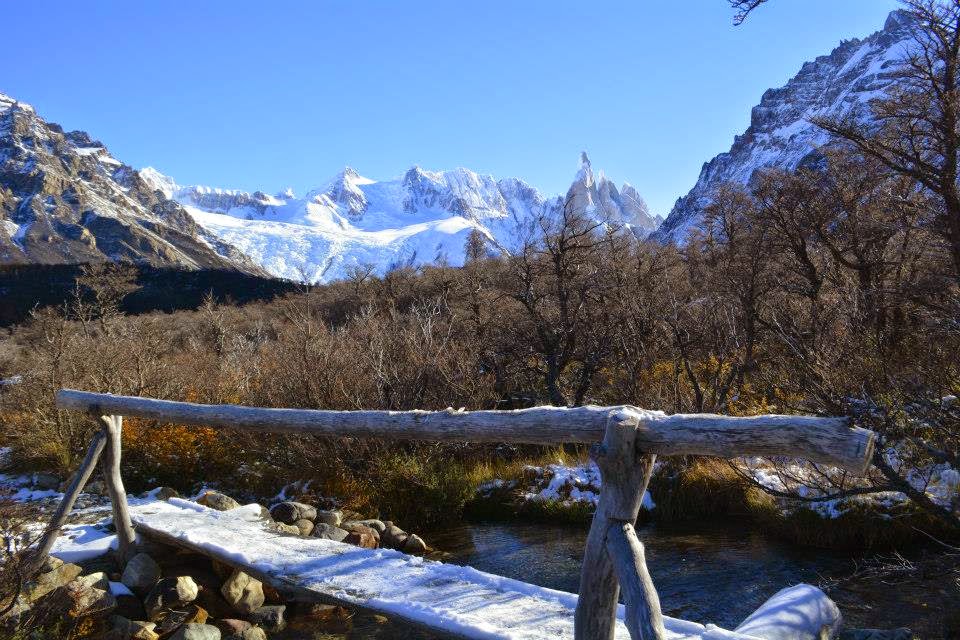
‘Our voices echo and no other humans seem to be around. My friend and I munch on cold-hardened chocolate and sit on ice blocks at the glacier lake. For moments, we look at each other in controlled panic. Panic for the remoteness of it. Hours of no technology, no phone signal. Hours of mental emptiness in which our real fears are no longer masked. Hours of joy and fear at the mighty Andes just in front of us.’
With the night ahead of us, I gather wood and to our horror, we realise that we forgot the matches. Inside the tent, we bundle up in preparation for one of the coldest nights in history and we eat sandwiches of cold ham and cheese, snack on salt biscuits and drink half frozen water.
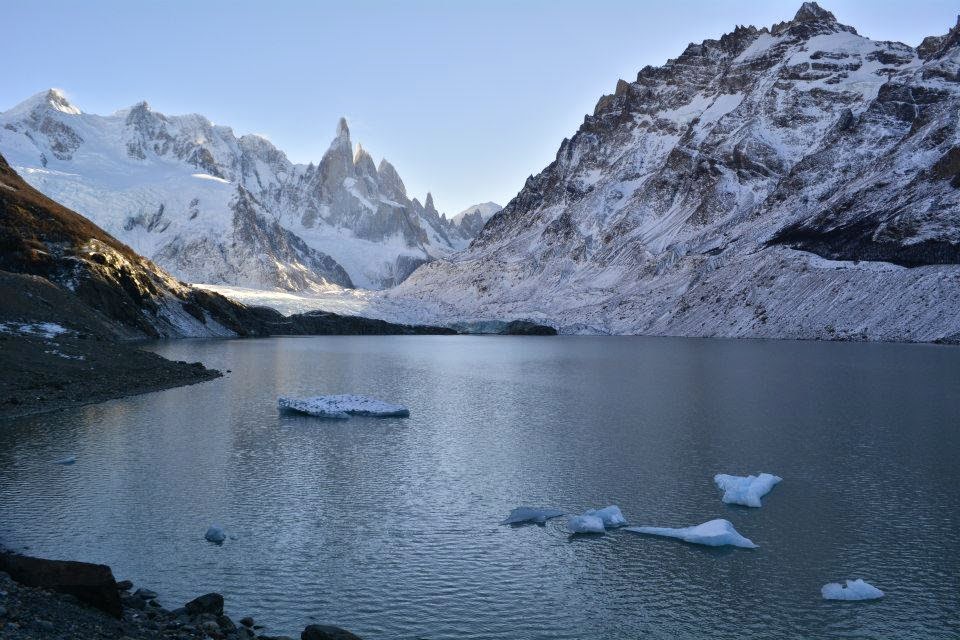
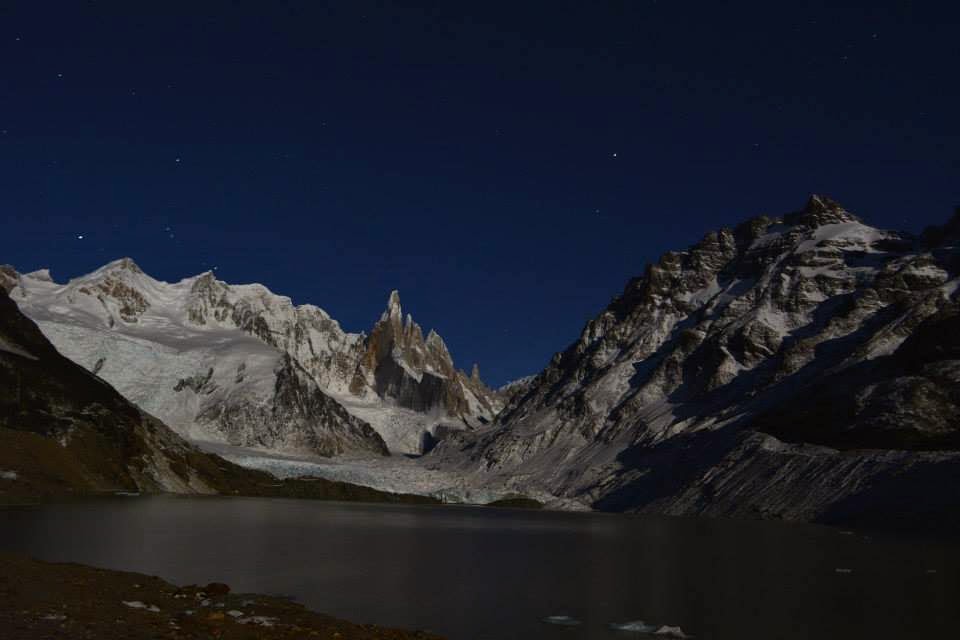
The morning sunshine reveals the ice which has covered the inside of our tent. I feel exhausted and I am dying for a hot meal. My friend and I decide to cancel the second night of camping and walk two days worth of hikes in one, targeting El Chalten town by sunset. Campsite dismounted and backpacks ready, we tackle a very steep snow-covered hill that lead us to a wide plateau of oil-like lake waters reflecting the mountains like giant mirrors.
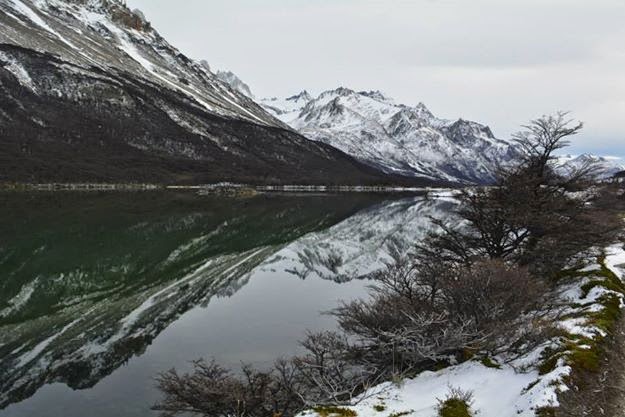
Down the trail and pulling our wet boots out of the snow, we spot the Park’s main attraction: Mount Fitzroy. Through a forest of naked conifers, we continue up a footpath of wooden bridges and half-frozen water streams to the Laguna de los Tres, for a close up of its wisdom-tooth shape crowning a range of collapsed ice fields.
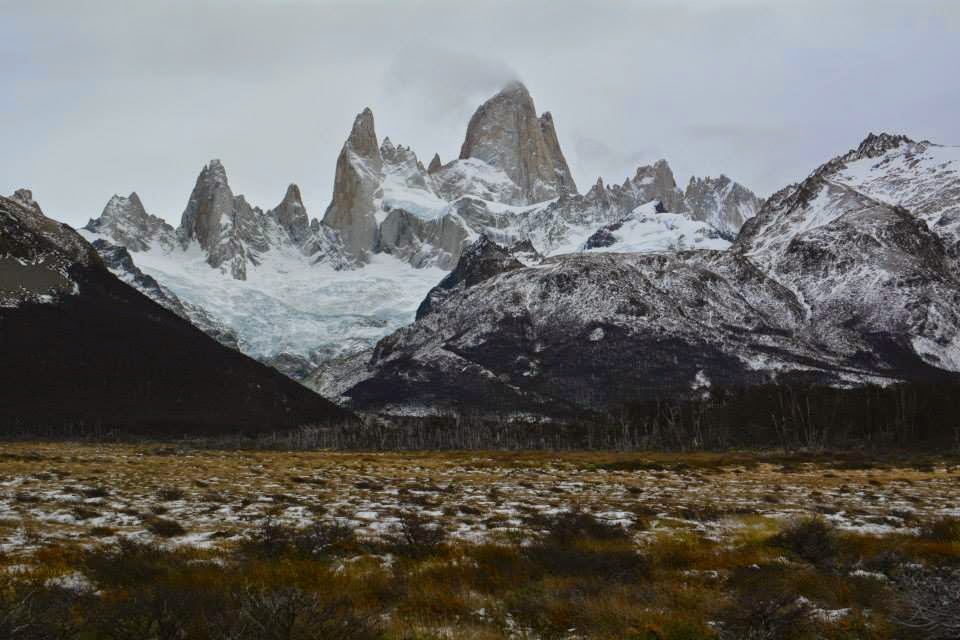
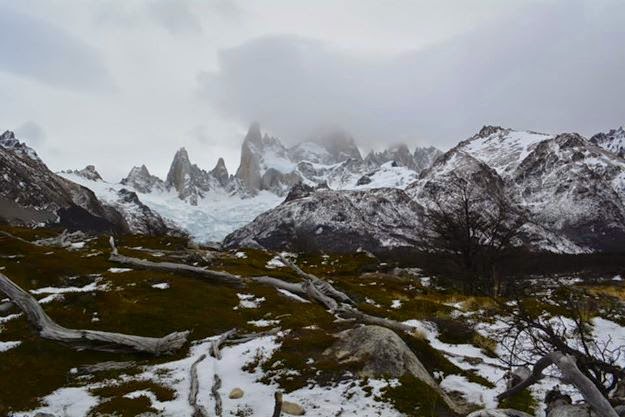
Time to put some pressure on the knees with the twelve kilometres downhill trail to El Chalten, with the mountains opening to wide forests of beech and finally to the flatness of the Patagonia, this time a welcomed sight.
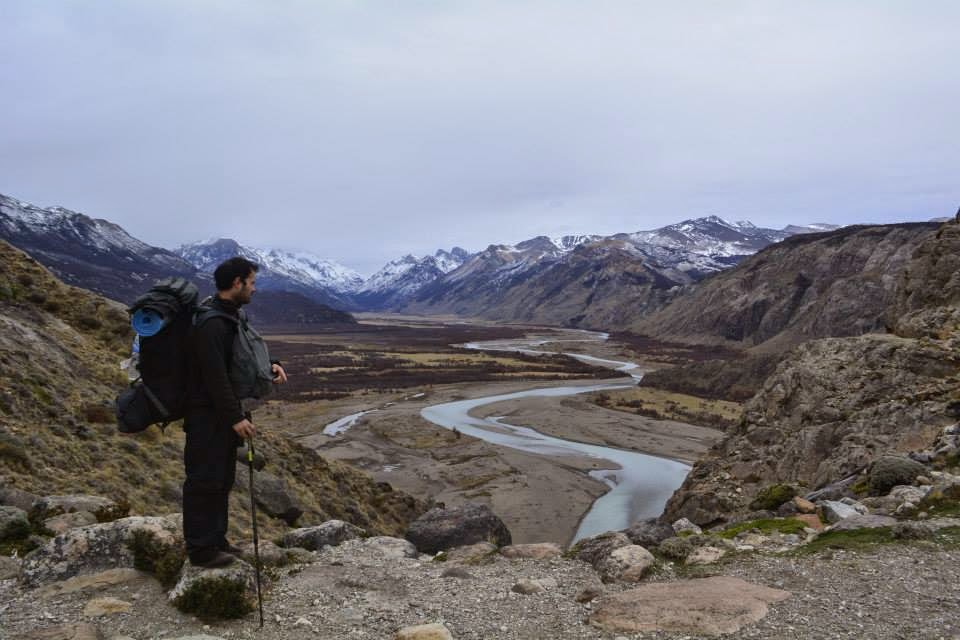
At a point where every single steps represents a bit of pain in our sleep-deprived bodies, we manage to run to the bus station and catch the last bus of the day back to El Calafate, perhaps minutes before the darkness sets in the Patagonia and freezes every single corner and its thoughts again.
Back at the hostel, we reward ourselves with lush steak sandwiches, hot showers and a comfy bed, ending our short and frozen adventure at the very foot of the Andes.
 THE FLYING CAMBA