Misty potato crops surround the Bosnian checkpoint, defining an imaginary yet striking line of economic contrasts. Now outside the European Union, the small villages of small pastel-coloured houses, LADA cars and worn out asphalt roads seem to have been left suspended in the times of Tito.
In Medugorje, groups of tourists loudly shouting in Italian surround the bus and ask for directions for the renowned religious sanctuary a few miles down the road. The sun breaks through the morning fog and reveals a landscape of deep valleys splattered with villages and ridiculously large warehouses.
The bus enters a meandering road that cuts through two mountains and lead to a cluster of houses that emerge from in between the rock walls and unfold towards a wide plateau.
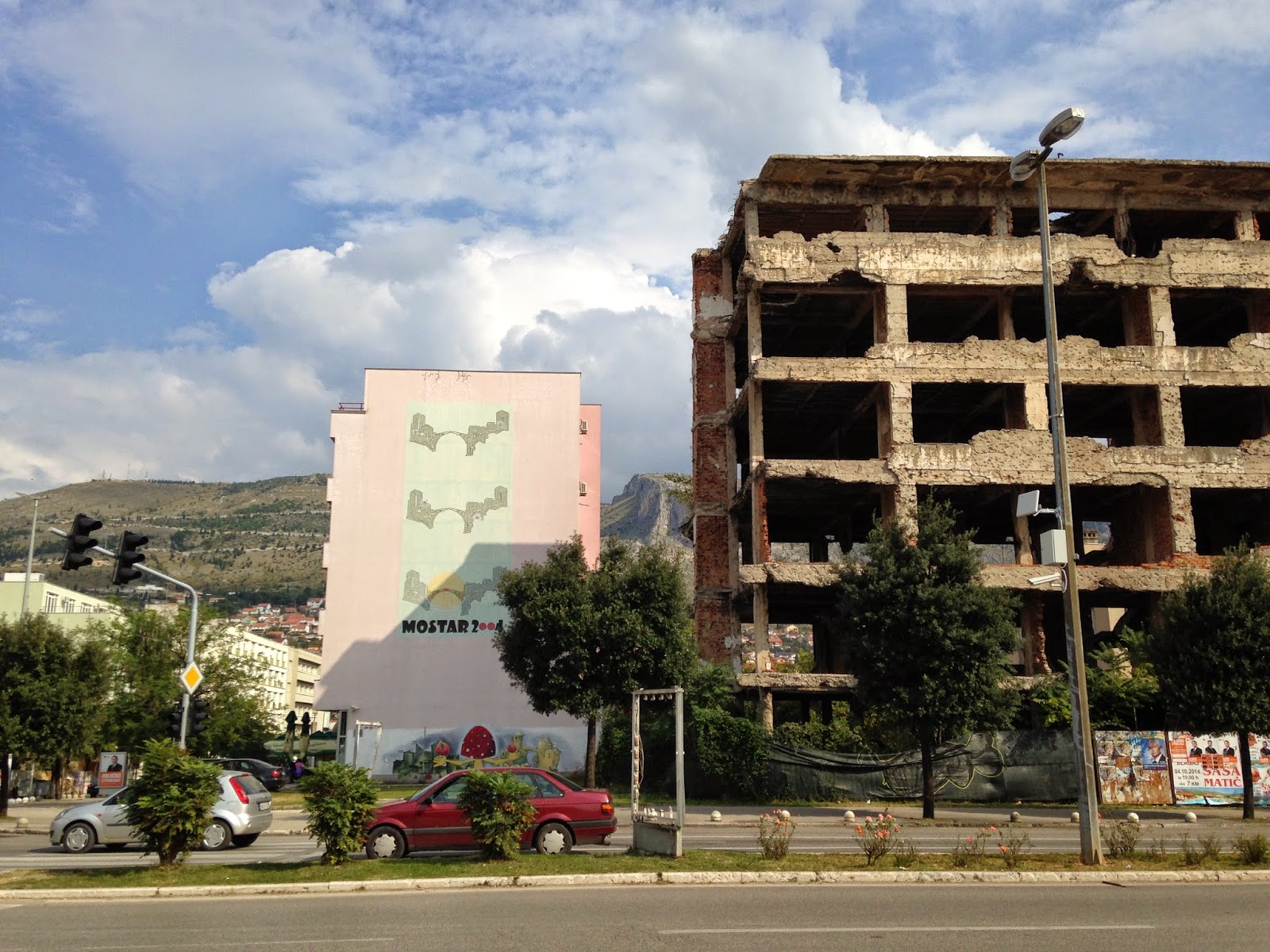
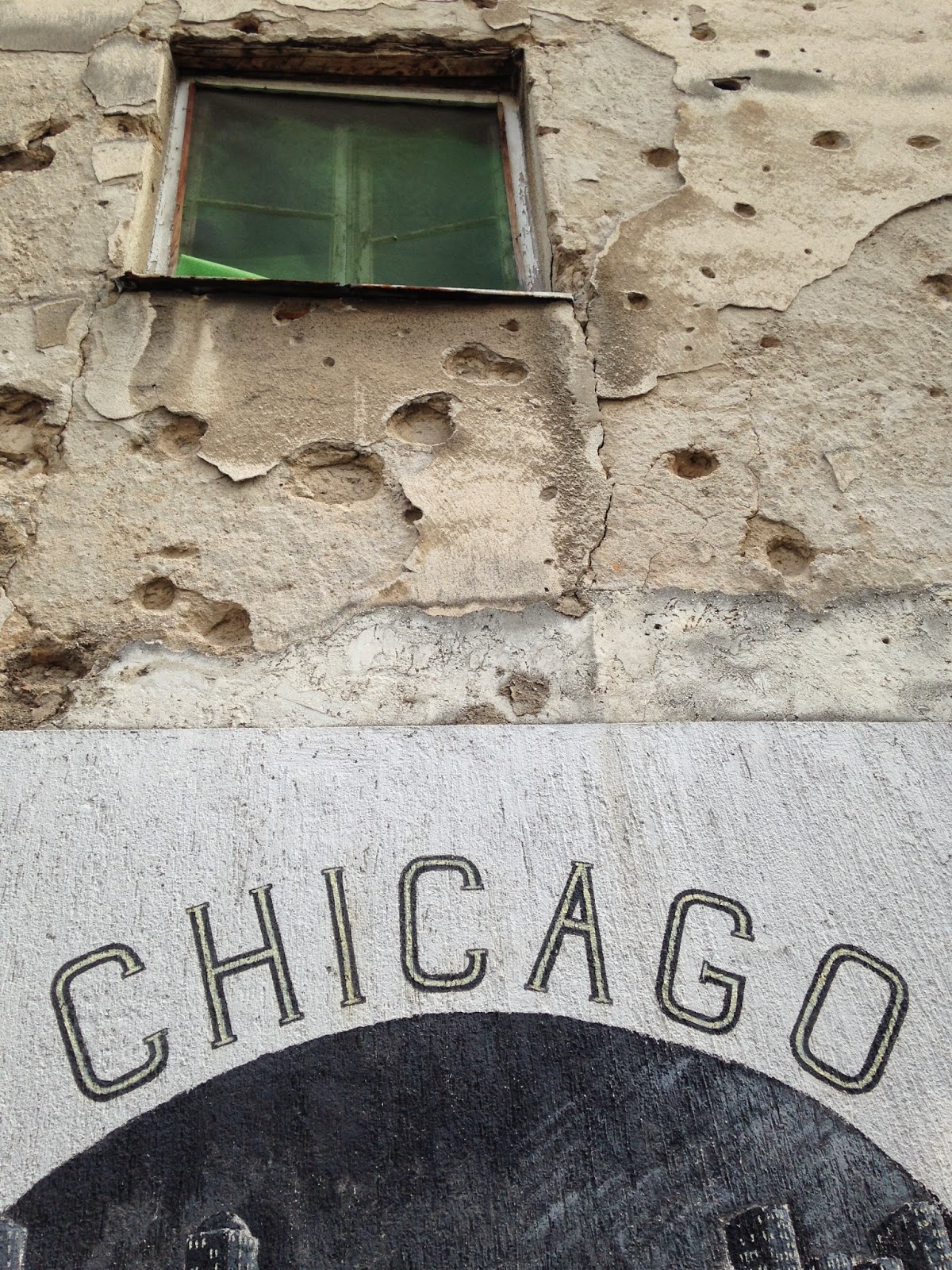
As I am driven into Mostar, bullet marks dot the walls of every single building. Bullet marks being the silent witnesses of war and genocide, like a fresh wound starting to finally scar.
I befriend two equally lost girls from Hong Kong at the bus terminus and the three of us walk together across a valley of olive trees and Soviet-era apartment blocks. Although polite, the locals do not seem very comfortable with English when asked for directions, which makes being in Mostar even more exciting.
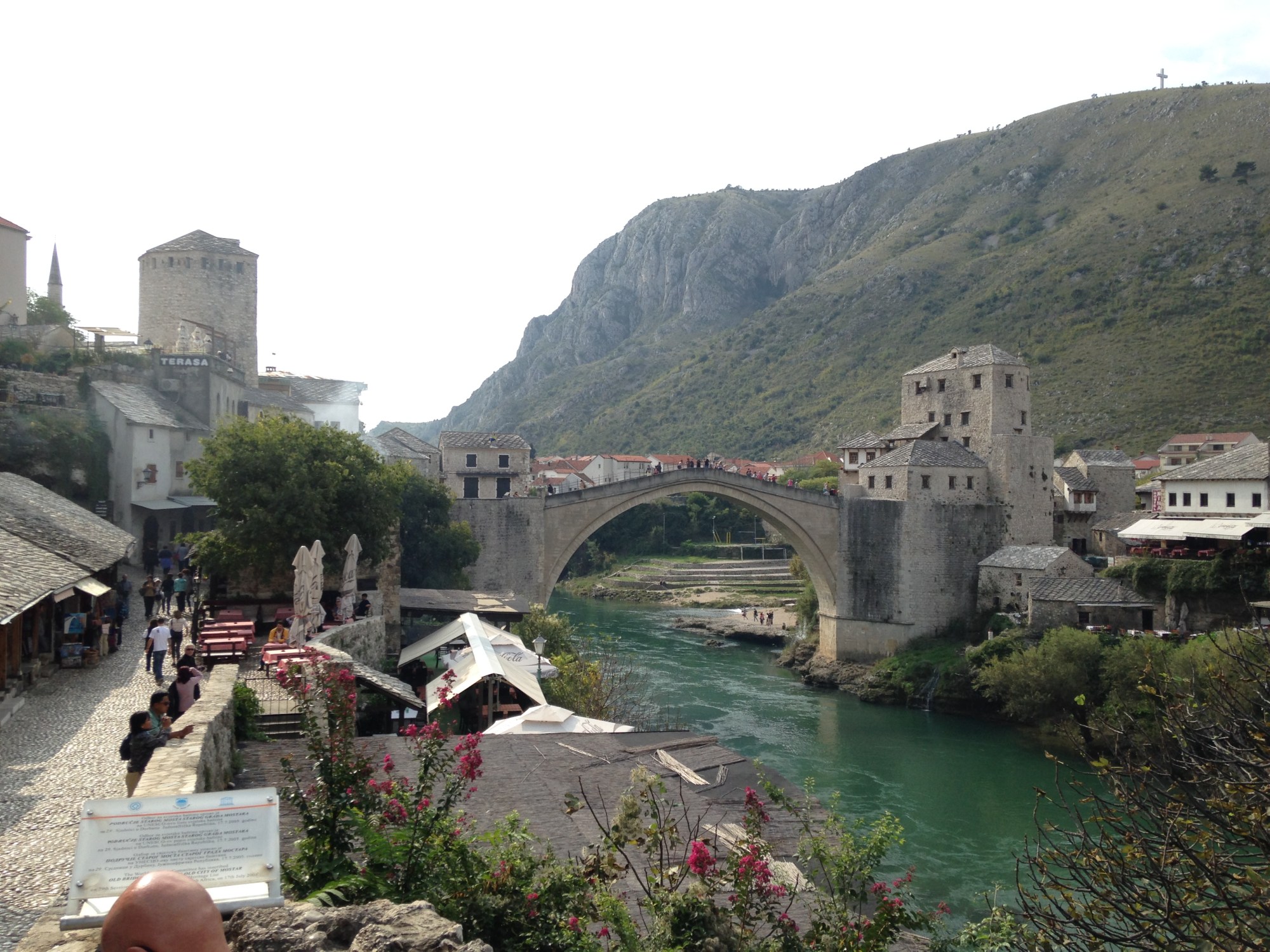
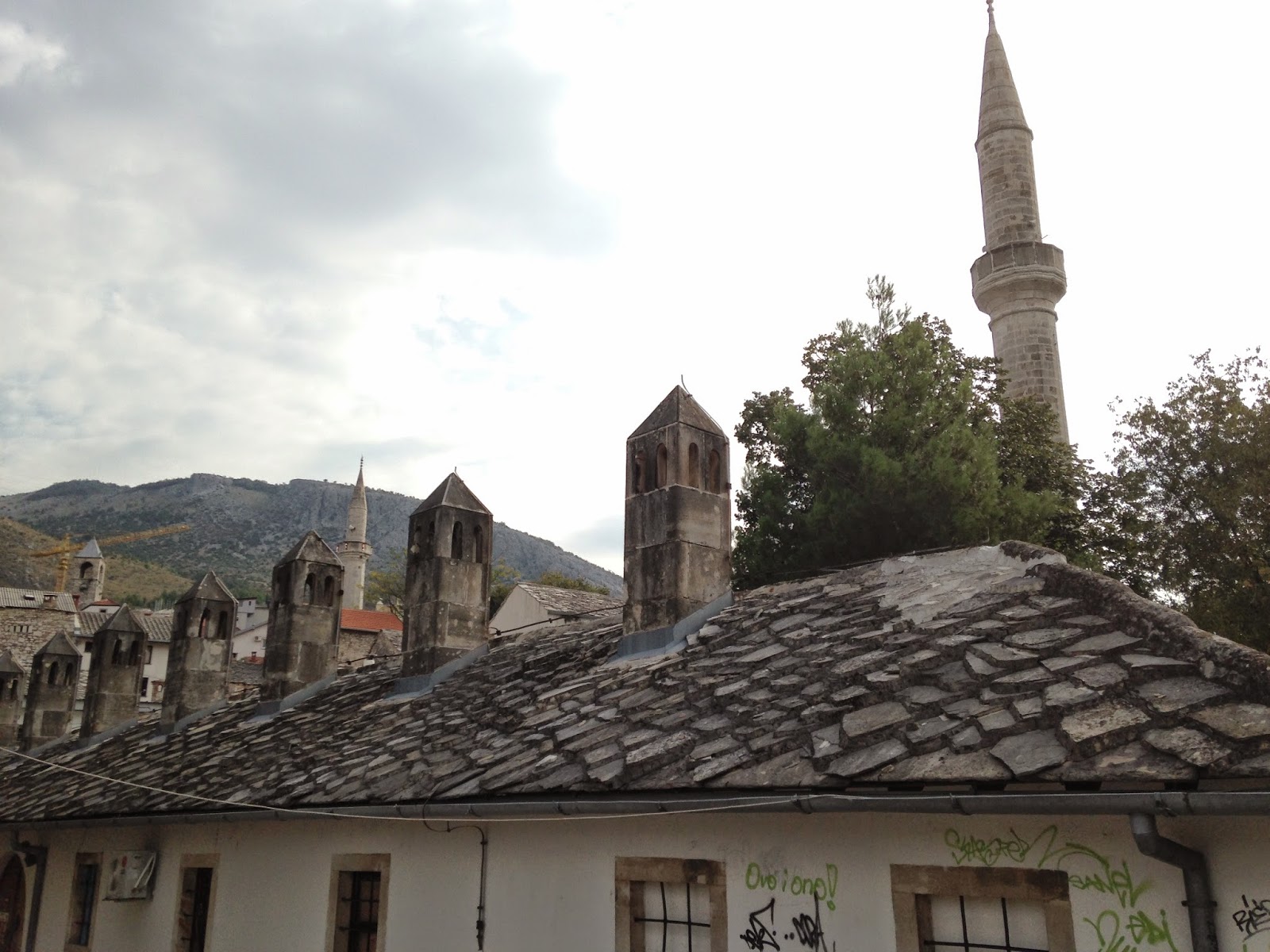
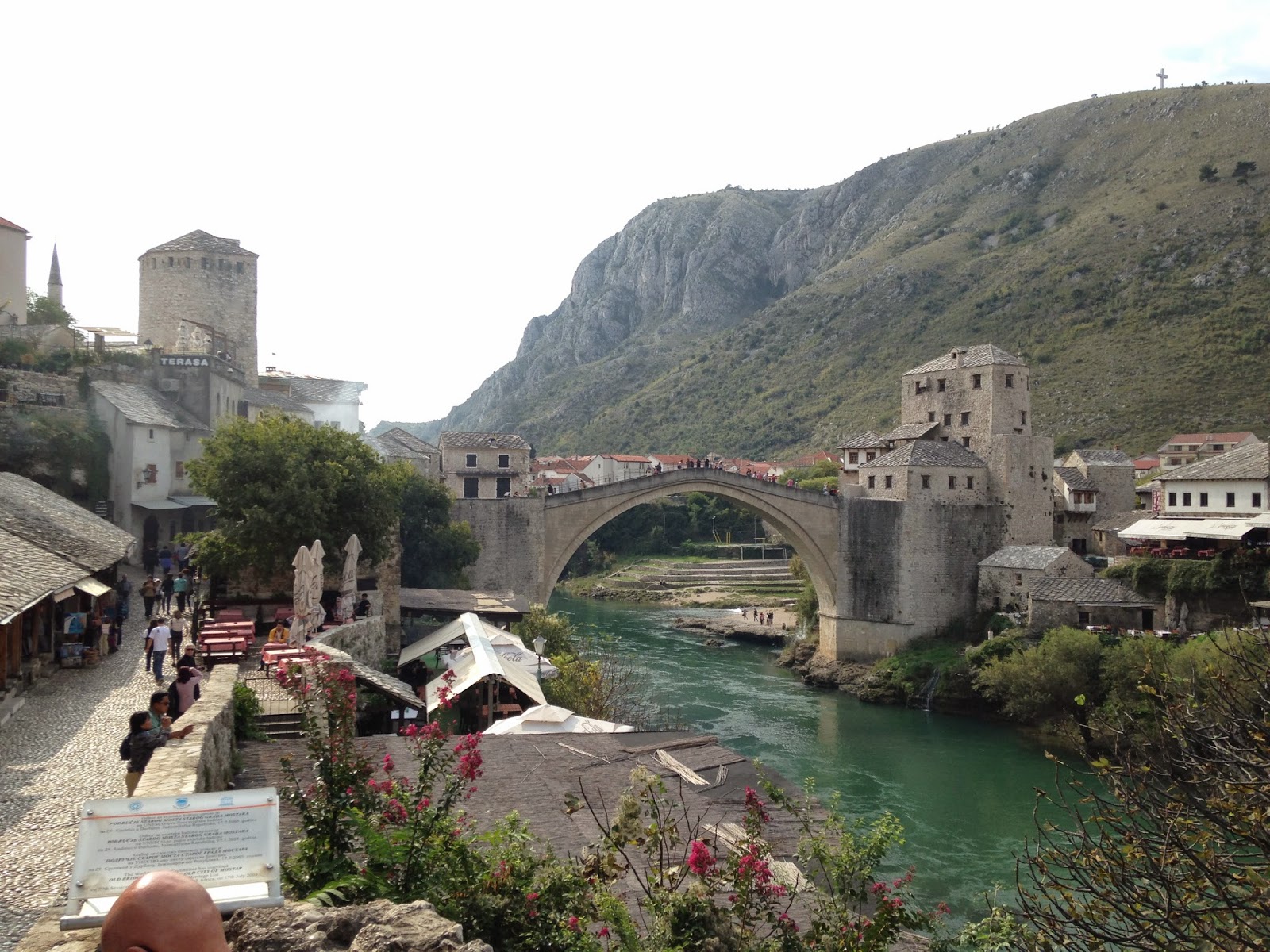
At Old Town, my pulse quickens at both the loud call for prayer from the main mosque and at the gravity-defying sight of Stari Most in the distance.
Tall minarets of white stone are hugged by strikingly pink bougainvillea trees that overhang from terraces where patrons have Turkish coffee and baklavas.
Encrusted in the narrow valley like a delicately placed precious stone, Stari Most, which is the town’s star attraction by excellence, complements a postcard-worthy picture of Mostar.
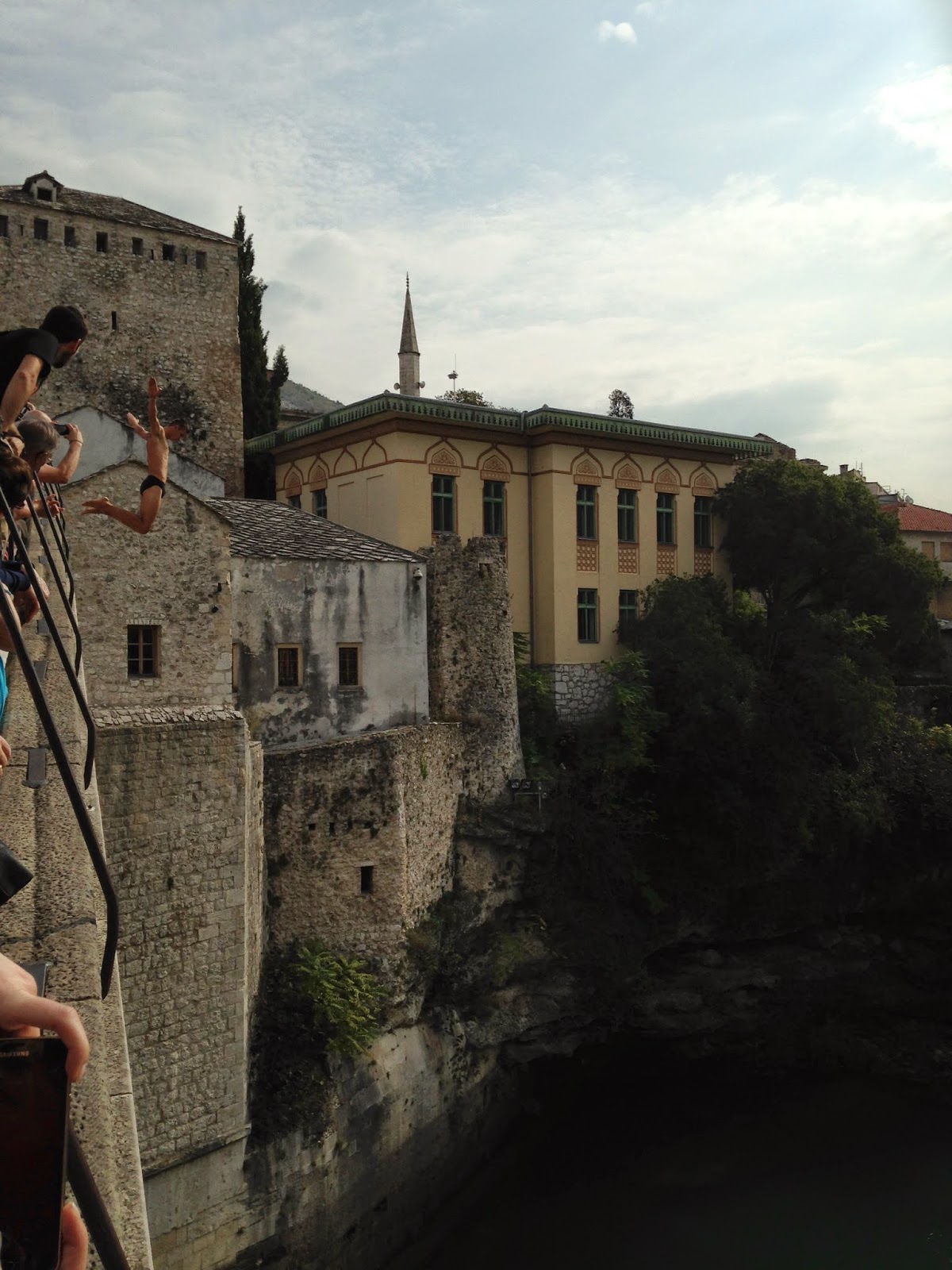
I cross the bridge over the bitterly cold emerald waters of the Neretva River and lick on a gelatto as I sit on one of its edges to watch locals jump for a few coins, unavoidably thinking about this setting’s troubled history.
More importantly, I think about how recent the events are. How two decades ago, the pristine and charming Old Town had been devastated by war, how the bridge dating from the Ottoman times where tourists now cram for a selfie was bombed and reconstructed. Under the stunningly clear sunshine of today, I think about the genocides that happened in nearby Srebenica and with no hesitation, as I did in Kigali and Auschwitz, I open my mind to looking at my short time in Bosnia from an inquisitive perspective, to learn from the past.
At the small hostel just outside the compact Old Town, the young owner checks me in and with the widest smiles hopes for a good review. I befriend a British guy and we decide to walk down to ‘Bulevar’ Avenue. Once a thoroughfare that marked the main front line in the siege of Mostar, it reinvented itself as a glamorous upmarket artery of Western fast-food chains and brands.
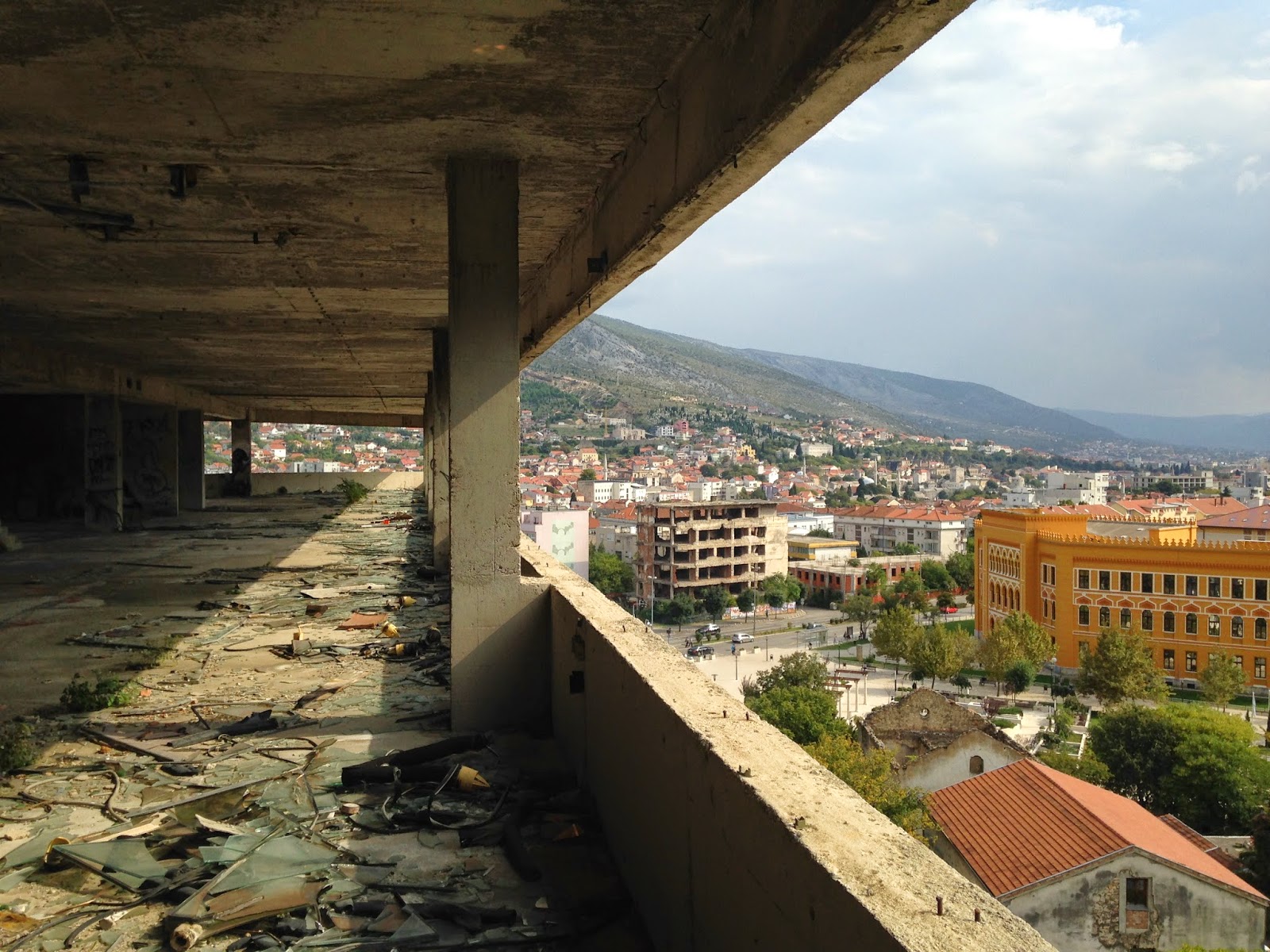
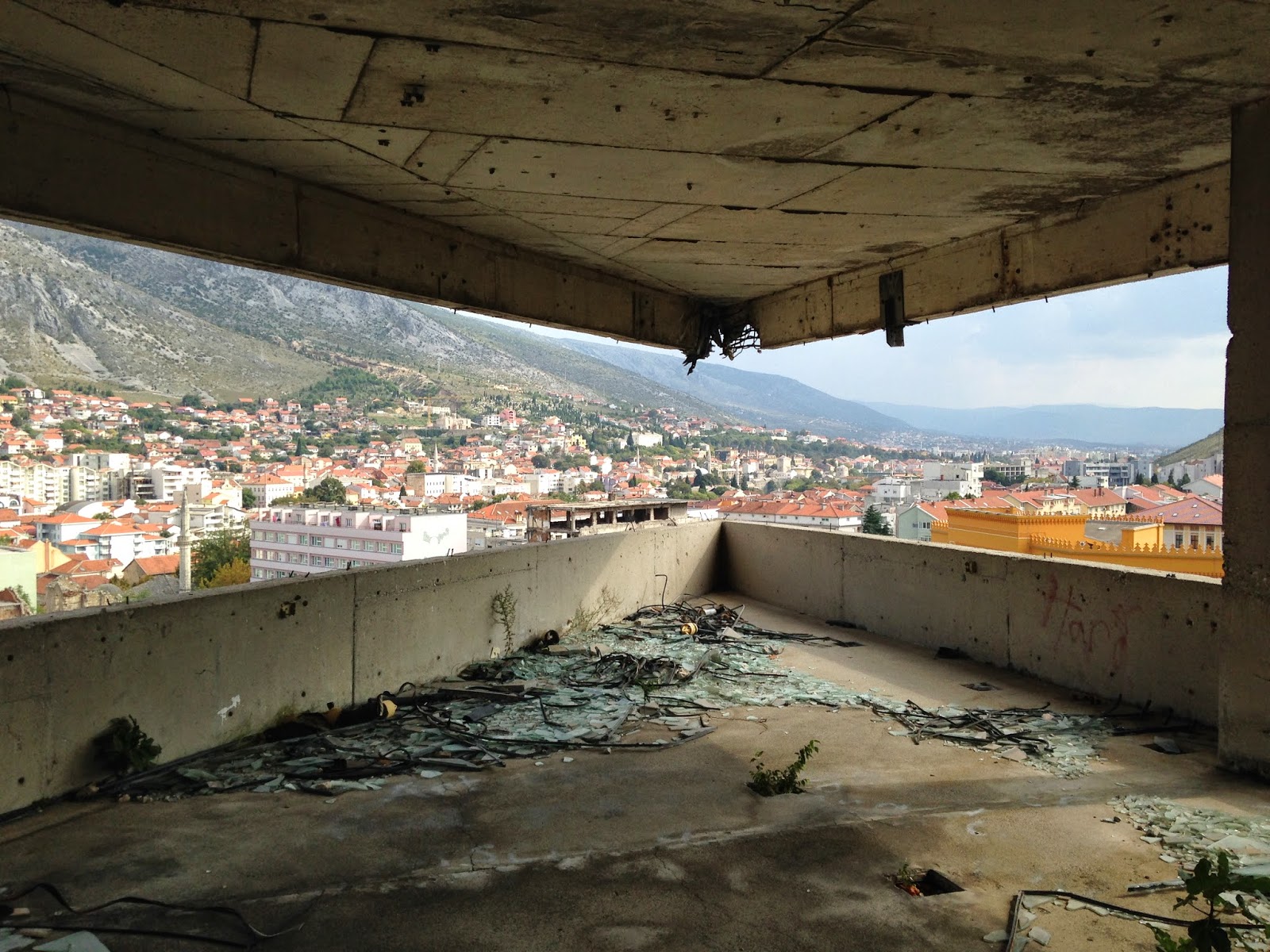
A grafitti-covered concrete structure catches our attention as a challenge to be conquered. We jump across the derelict wall, wander around piles of rubble and broken glass, and climb the abandoned staircase to the top of the former headquarters of Bosnia’s Central Bank to sit down and in silence, contemplate a city in the process of healing, a city in transformation.
Back in the hostel, we are joined by two Australian girls as we sit in the lobby and drink apple tea. We plan a trip down the valley to Blajac but, with a Muslim holiday taking place and buses seldom running, we hail an old Mercedes car driven as a taxi by a disturbingly young local.
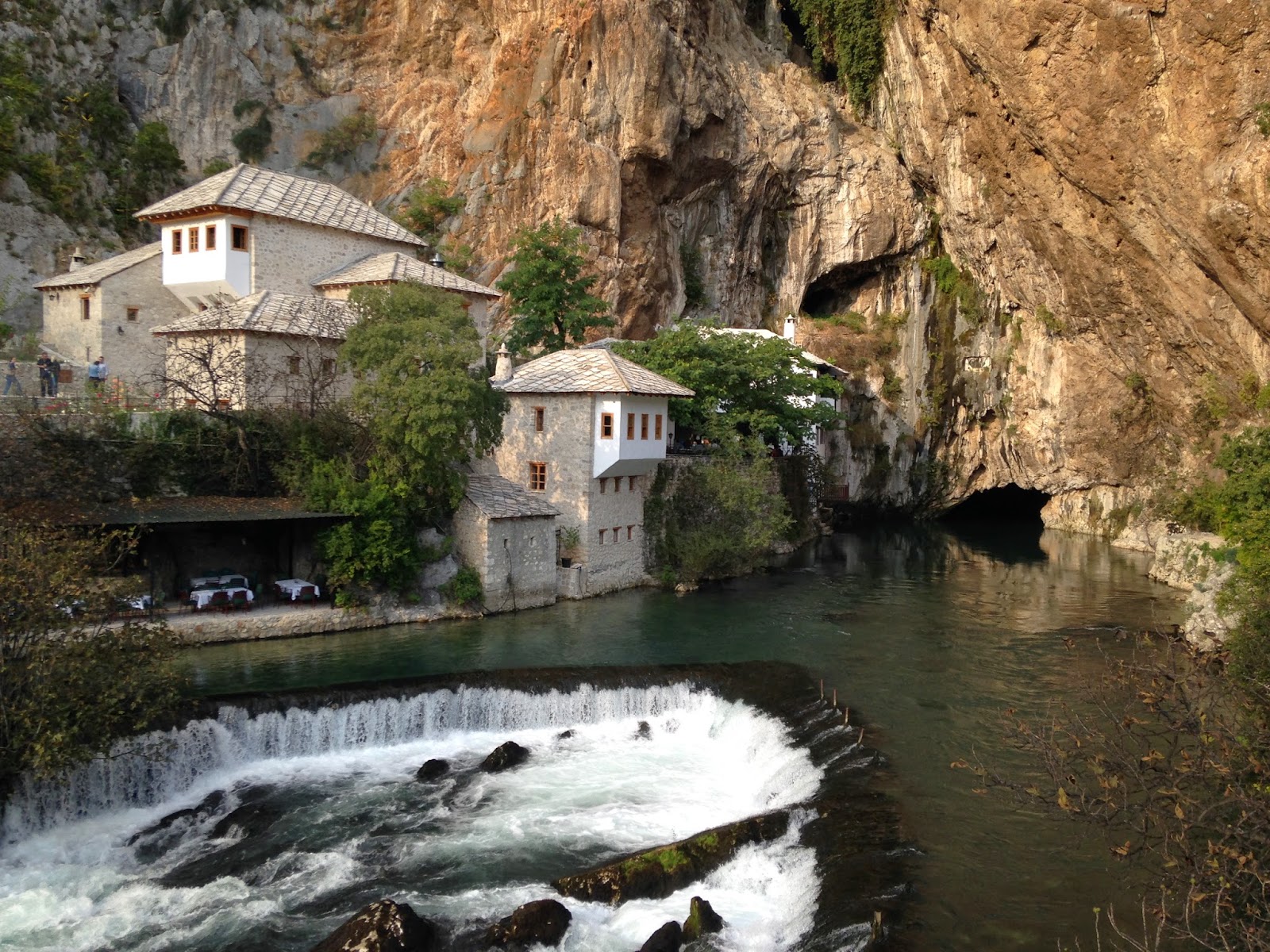
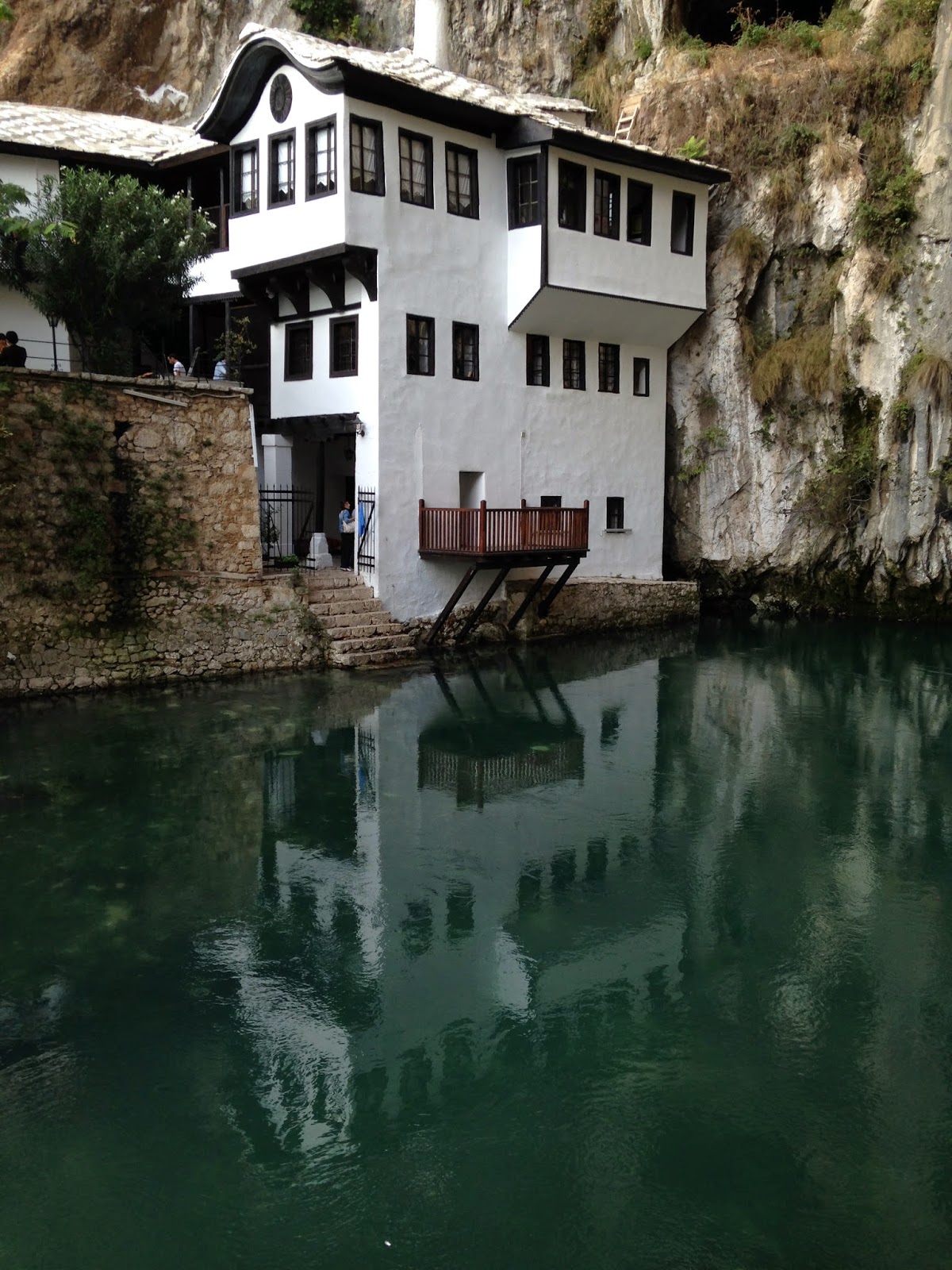
A retreat for locals and foreigners alike, the Ottoman-built monastery guards the entrance to the entrails of the Dalmatian mountains since 1520 in a peacefully idyllic pace. Around it, glacial water from the Bunna River trickle in between concrete islands of empty tables and closed restaurants.
We decide to hitchhike on the way back, and two miles down the road, a local couple stops their SUV next to the dusty broken asphalt.
In a mix of stiff Eastern European and mellow Canadian accent, the driver introduces himself as a Bosnian citizen turned Norwegian after a decade in Canada. He briefly touches on his proud Muslim heritage and on the painful journey of leaving Mostar during the war as we drive past an empty airport into town. When he stops the car next to the hostel, he thanks us for visiting his homeland and with a shy grin, he fills his chest with the mountain air and exhales a call for better days in the valley.
The constant moving of the day has made me realise I have not had a meal in almost twenty four hours, and for a little over five Euros, I lose myself in the smoky delights of a cepavcici, a mix of pitta bread, fresh vegetables and grilled meat, downed with a local beer.
The night falls and turns the temperature around surprisingly cool. We walk down to Park Zrinjevac to hug the Bruce Lee statue and for the last time, visit the abandoned former Central Bank building to sit on the ledge of the top floor and watch the night hiding bullet marks beneath a lattice of street lights suspended in the valley.
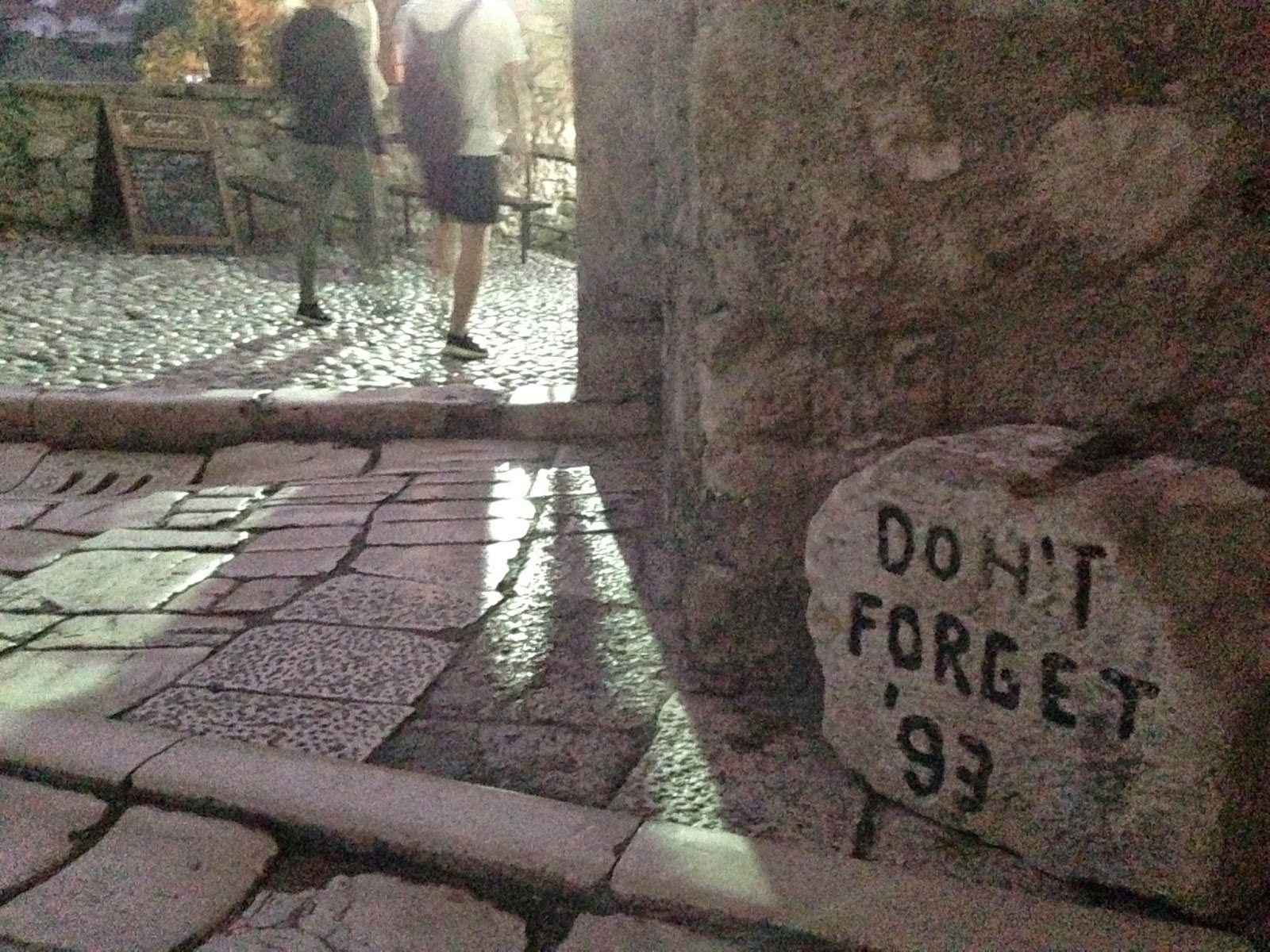
I collapse at the hostel’s red couch while watching Ace Ventura on a laptop-improvised cinema. A few hours later and again in darkness, I walk across ghostly streets of wet cobblestones sprinkled with war memories and morning dew. The bus climbs up the serpentine of pavement and the charming plateau slowly dwindles dwarfed by the tall karst mountains surrounding it.
At the border, my passport is once again held by the officer and brought into a small glass booth where it is flicked through and heavily stamped back into Croatia, back into the European Union.

 THE FLYING CAMBA