
It starts with an early departure. A commute to Dublin Airport in the freezing early morning (or late night) previously shoveling a thick layer of ice from my windscreen.
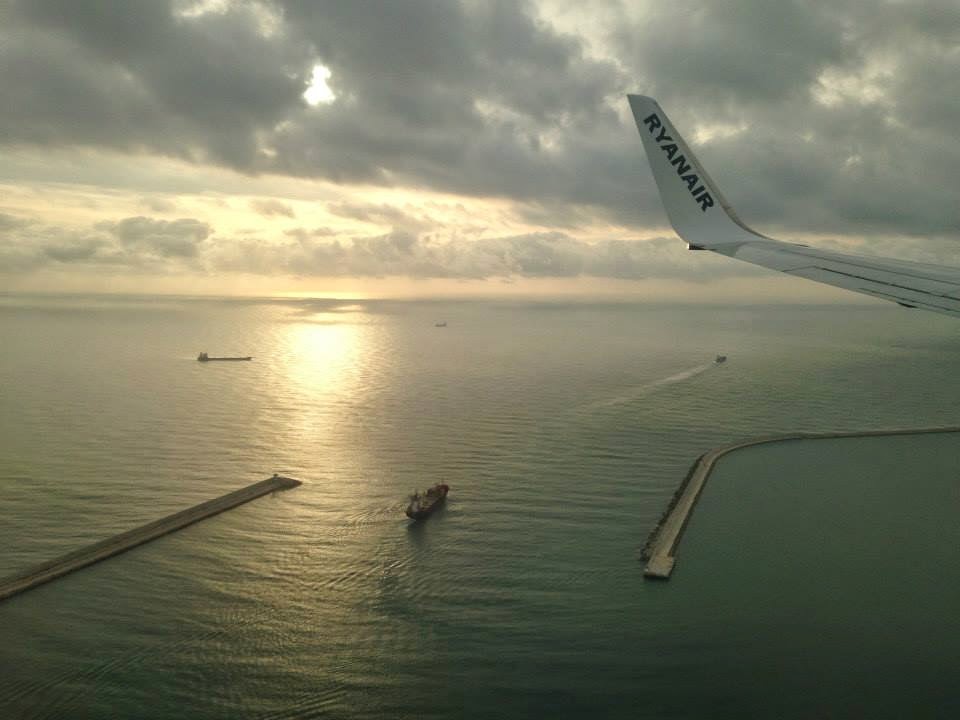
A convenient and modern train takes me through the pseudo countryside of El Prat de Llobregat, slowly cruising through olive and artichoke fields and into the Southern suburbs before crossing over tall viaducts and deep tunnels to the station of Sants, from where I emerge into the streets of the neighbourhood of Eixample.
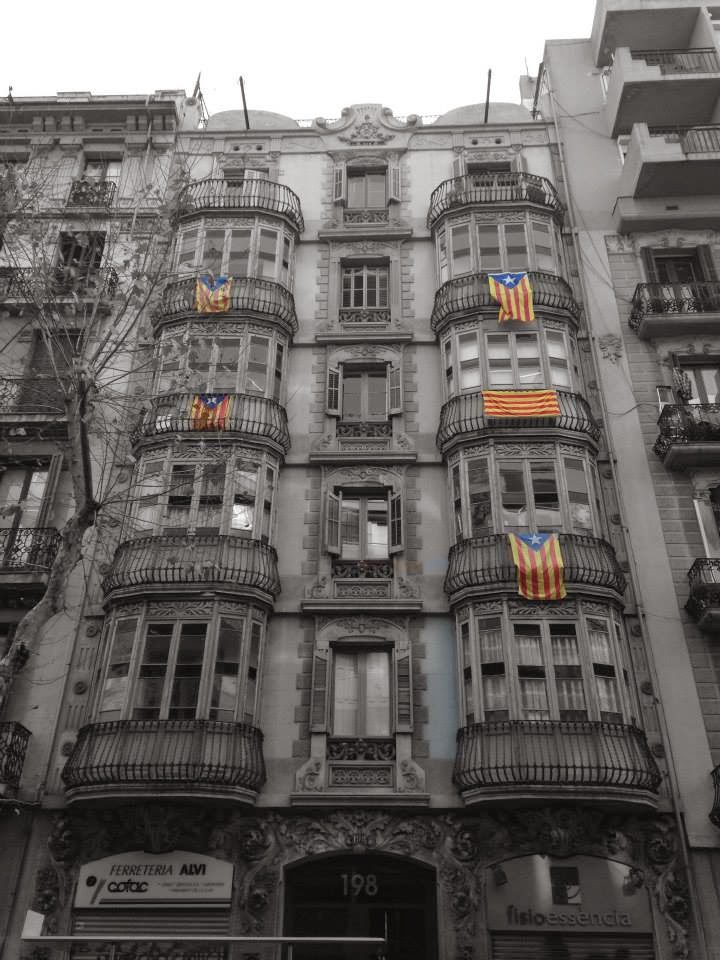
Eixample means enlargement, and basically this part of the city worked as an organised development of the Medieval Town through a large plateau which finds its limits at Mount Tibidabo.
Wide avenues, perfectly organised in grids form a region defined by art nouveau apartment buildings in which gracious glass balconies are decorated by Catalonian flags.
At street level, design stores, small supermarkets, bakeries and coffee shops provide with an energising buzz of what the city has to offer, translated in its mix of locals and immigrants.
Once checked in and wearing comfortable shorts thanks to the brilliant weather, I follow a street line to a world icon: La Sagrada Familia.
Antonio Gaudi’s masterpiece, La Sagrada Familia works as a beacon of both faith and beauty, rising over the Barcelonian skyline with its 170m towers, slightly resembling a sand castle.
More importantly, despite construction beginning in 1882, the cathedral still hasn’t been finished, only promising a more complex structure in the future, adding magnitude to its grandness.
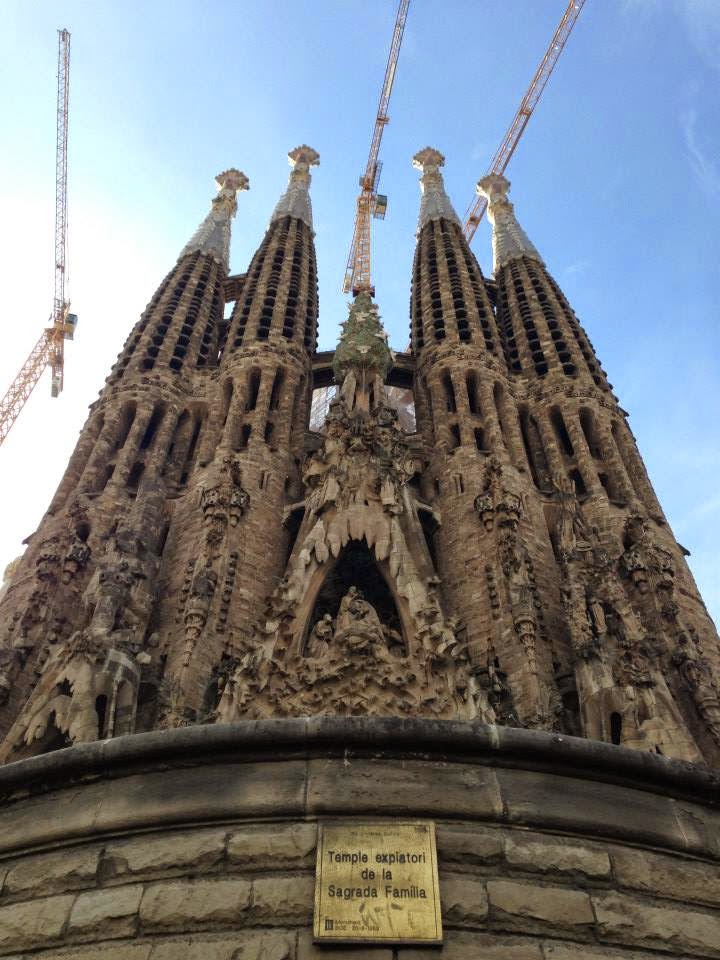
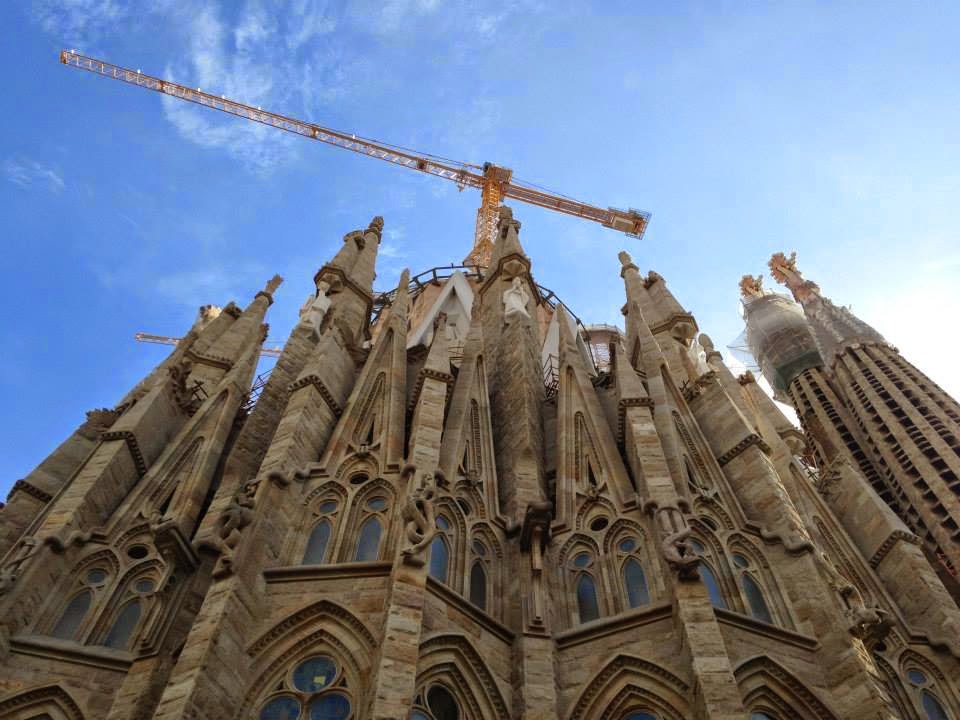
Tourists pile up and take hundreds of pictures, whilst some others queue under the refreshing sunshine.
I decide not to enter the church but silently contemplate it from the outside, trying to spot particular details in a discreet and obvious awe.
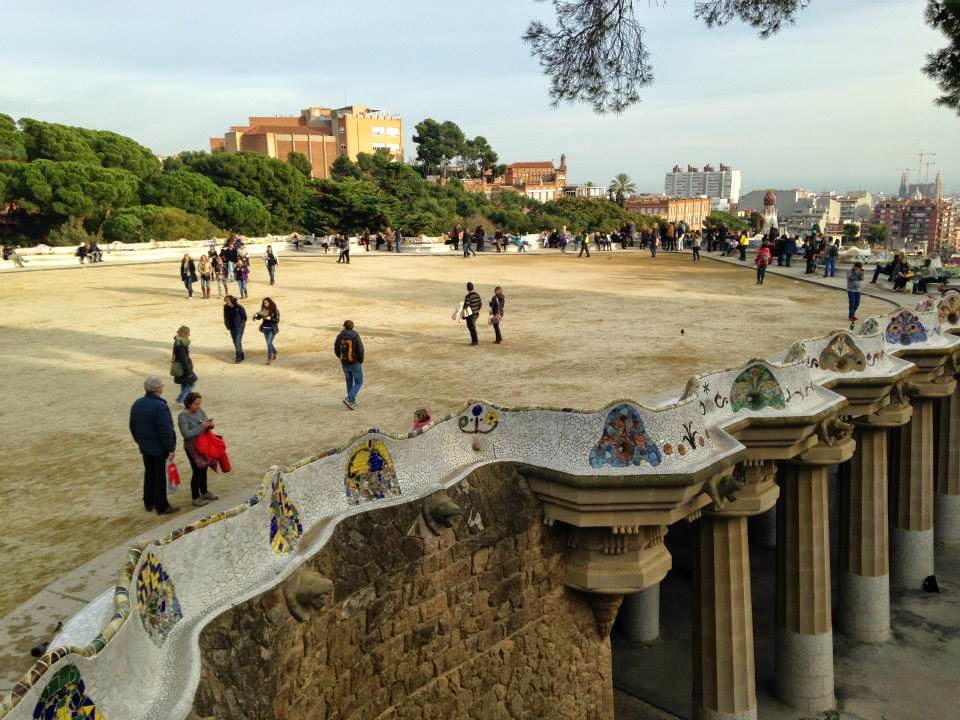
Continuing through the Royal Hospital , I decide to walk up the hills and eventually get lost in the narrow and windy streets of the neighbourhood of Gracia until finally reaching yet another of Barcelona’s trademarks: Parc Guell.
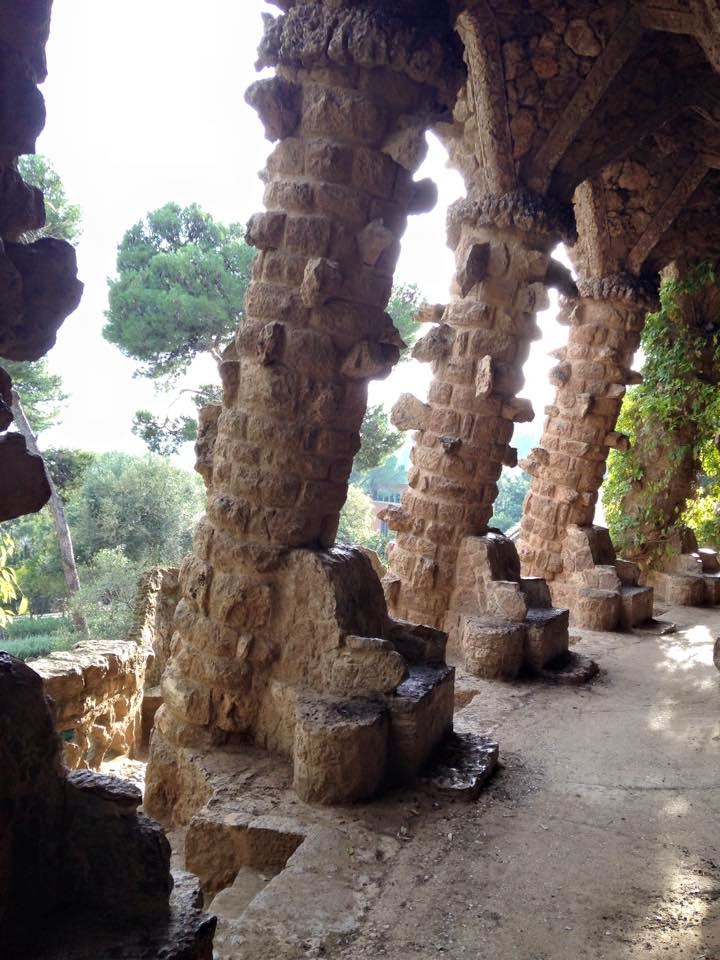
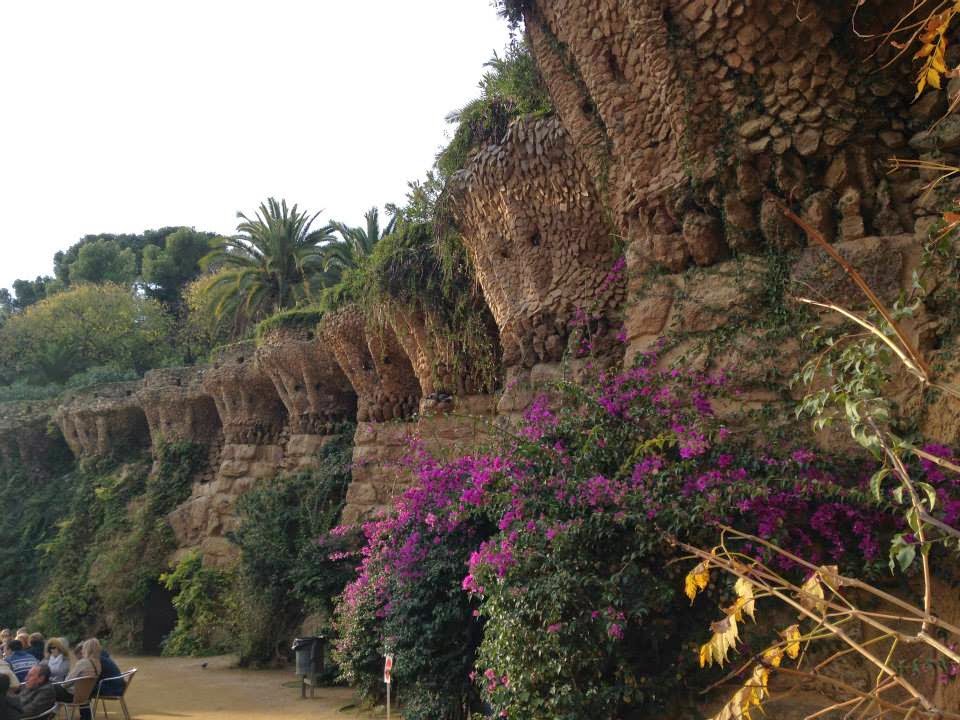
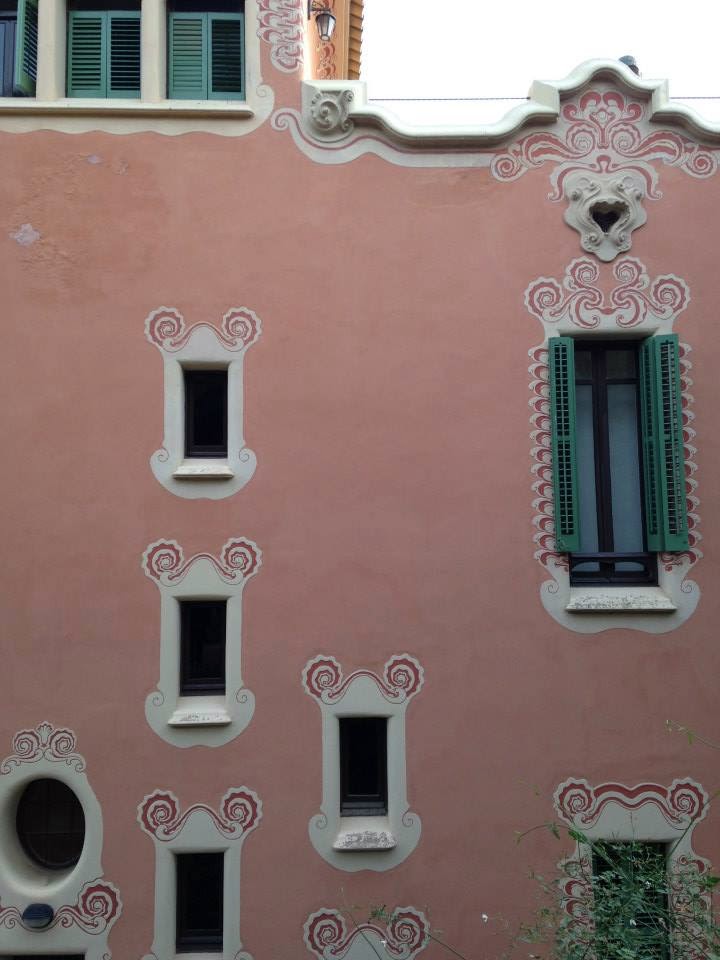
Firstly thought as a private estate for the wealthy by both Guell and Gaudi, using the same lines and imaginative of some sort of naturalist phase, Gaudi transformed this hilly green space into a series of stoned terraces and secret passageways, with a main square defined by sinuous edges and colourful tiles from where privileged views of the city can be seen. Obviously better enjoyed with a bottle of Spanish wine, serrano ham, green olives and freshly baked bread.
The Metro takes me back into the heart of Barcelona at Urquinaona station. A perfect place for some churros con chocolate, whilst tourists and locals alike glance through several wooden stalls installed by the main Cathedral and selling Christmas goods, including small sculptures of El Caganer featuring different political or famous figures, which translates into ‘the shitter’, or ‘the crapper’ and no, I am not joking.
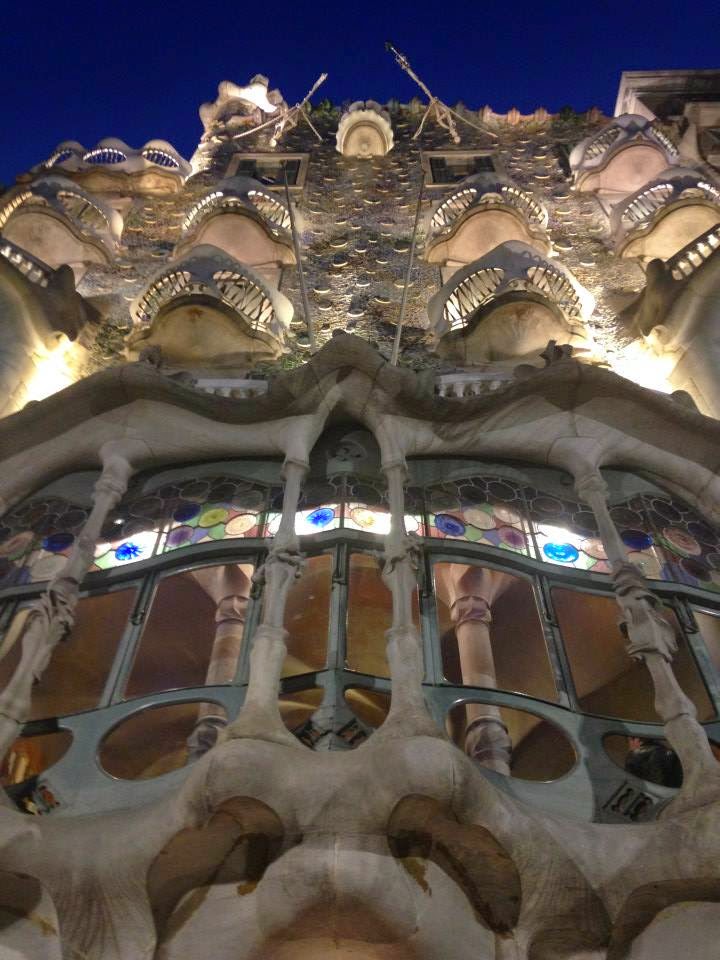
In the evening and unable to fall asleep early, I take a midnight walk through Eixample, fascinated at a tourist-empty La Rambla, visiting the Casa Batllo, buying a croissant at a 24-hour bakery and contemplating the colourful lights at Placa Catalunya before finally returning to the hotel for a good night sleep.
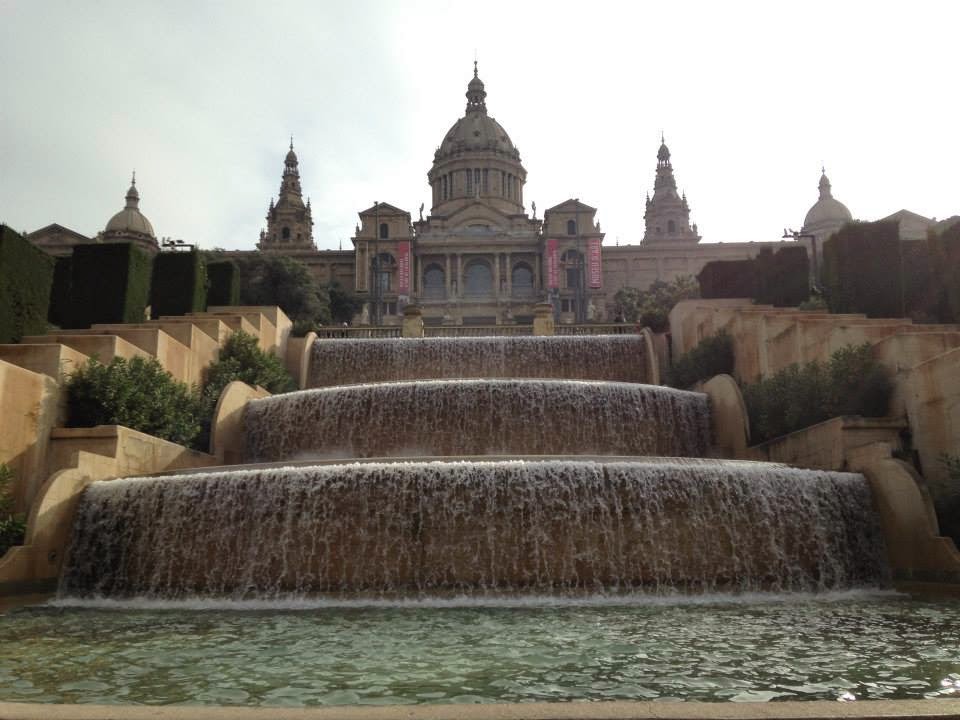
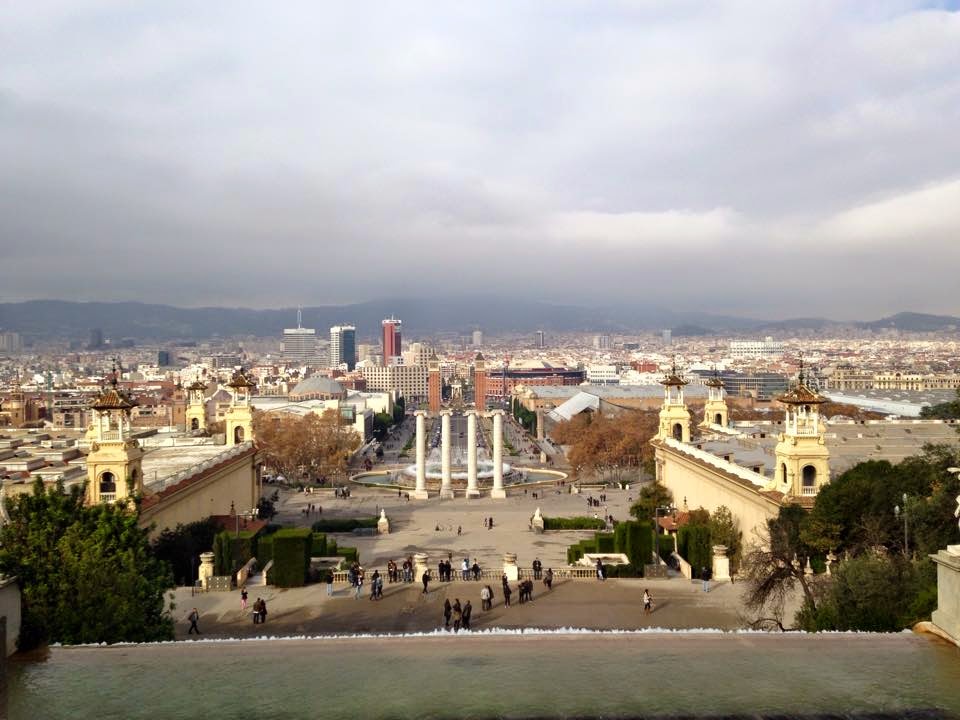
In the morning, shortly after refuelling with a strong black coffee and a serrano ham baguette by Universitat station, I take a short metro ride to Placa Espanya, located just besides the main arena, the Fira Barcelona and a dramatically wide avenue leading to one the largest water fountains I have ever seen.
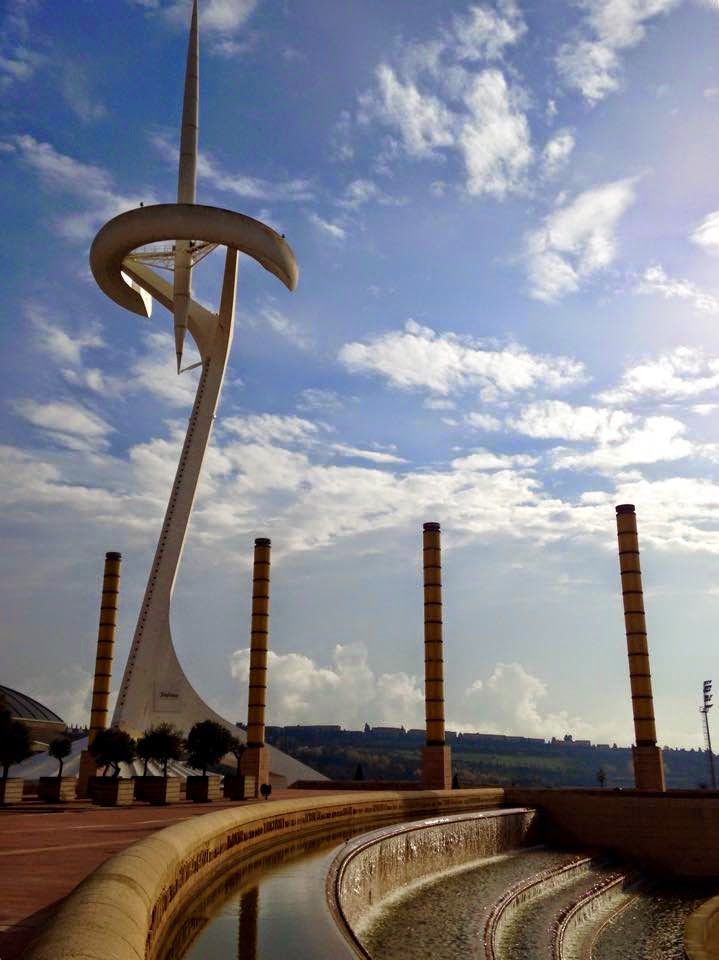
A series of roads lead me to the Castell de Montjuic, almost hanging off a step cliff, creating the impression of flying over the port area.
Thick red bricked walls are crown by vigilance towers and Catalonian flags, a building sentineling the Mediterranean Sea, once protecting Catalonia from former invasions. Free admissions on Sundays after 15:00pm.
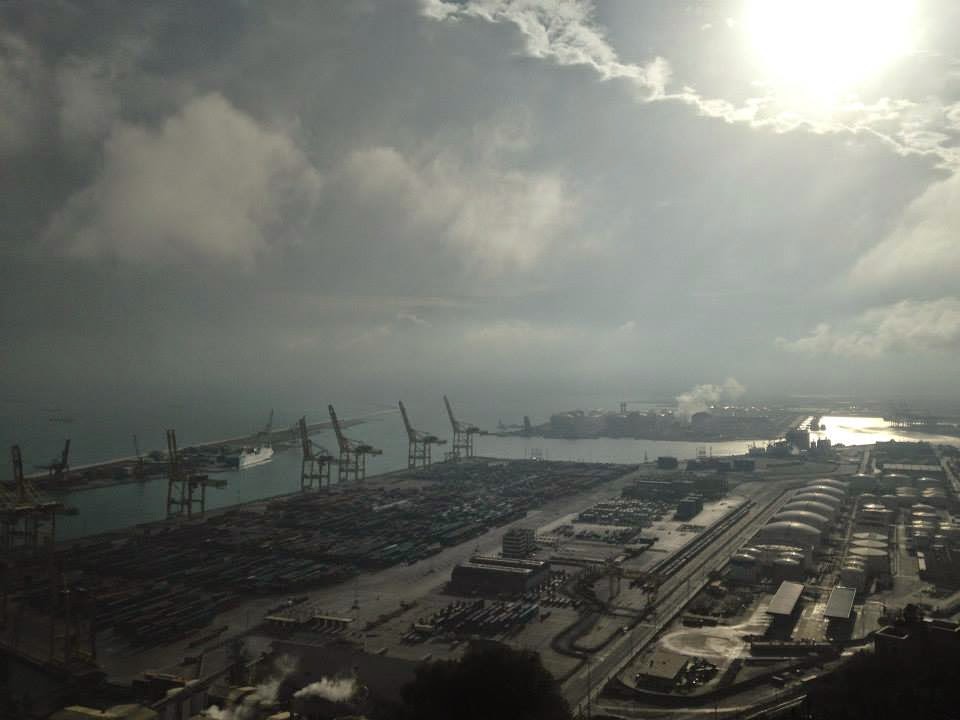
I decide to enjoy a little picnic under the cable car station realising that I still have enough time to witness one of Barcelona’s famous sunsets and, almost instantly I make use of the excellent network of public transport running across the city through buses, escalators, metro transfers, reaching Guinardo in as little as 35 minutes from Montjuic.
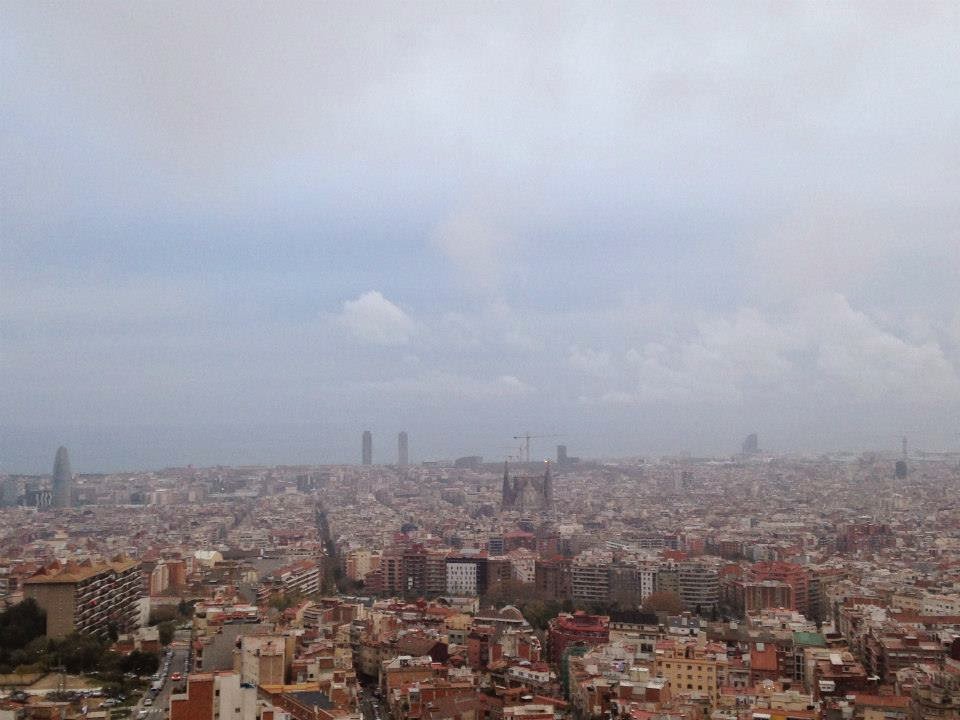
A rapid hike through a steep dirt road and I reach the top for the best view of an ever-transforming Barcelona underneath, brightly lit by the Agbar Tower in Diagonal, La Sagrada Familia in Eixample and Montjuic by the coast.
Fellow tourists are seen sitting in an abandoned terrace sipping on wine boxes and smoking weed.
I return to the Medieval Town and its narrow streets splashed by Halal shops, Filipino-Latino haircuts and small convenience stores.
Drunk locals are seen singing or playing guitar in the dark alleyways before I decide to enter one of the many small taverns and enjoy some house white wine and a heavenly combination of tapas until I can’t even breathe properly.
The sounds of a heavy thunderstorm is heard whilst I sleep on my last night in Barcelona. An inclement weather condition which extends through the morning, adding wet shoes, sniffles and coughs to the Catalonian tale.
El Mercat de la Boqueria is on the cards, the perfect place to shelter from the rain whilst enjoying a refreshing freshly made smoothie and soaking up the aromas of freshly cooked seafood, the almost synchronised sound of loud merchants selling fresh fish and the festival of bright colours of carefully laid food stalls, everything framed by a steeled structure and a colourful glass arch, designed by the omnipresent Gaudi.
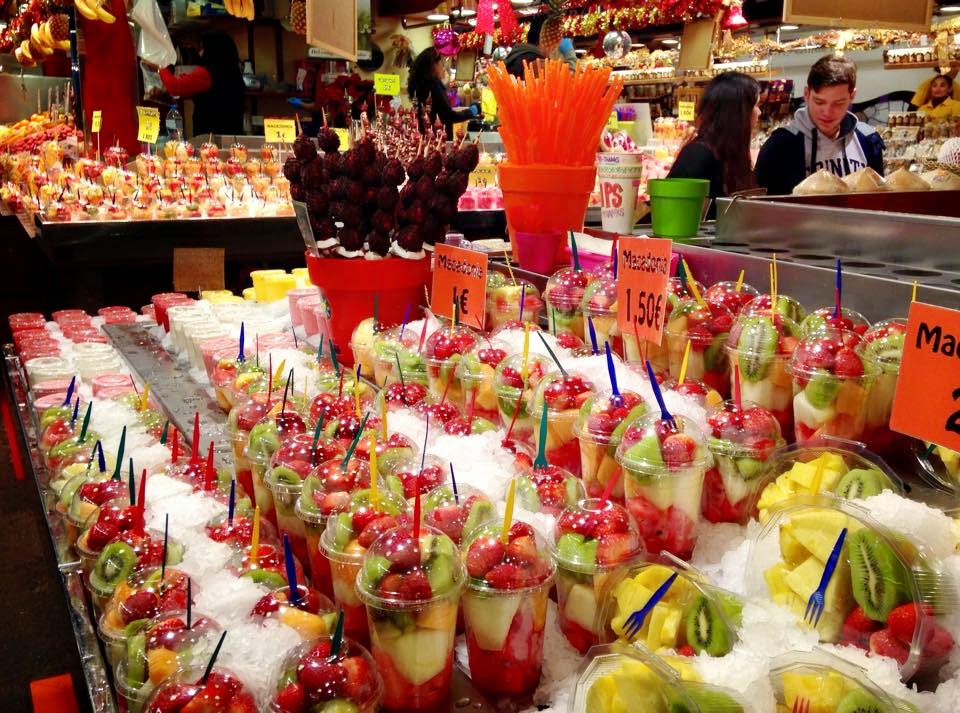
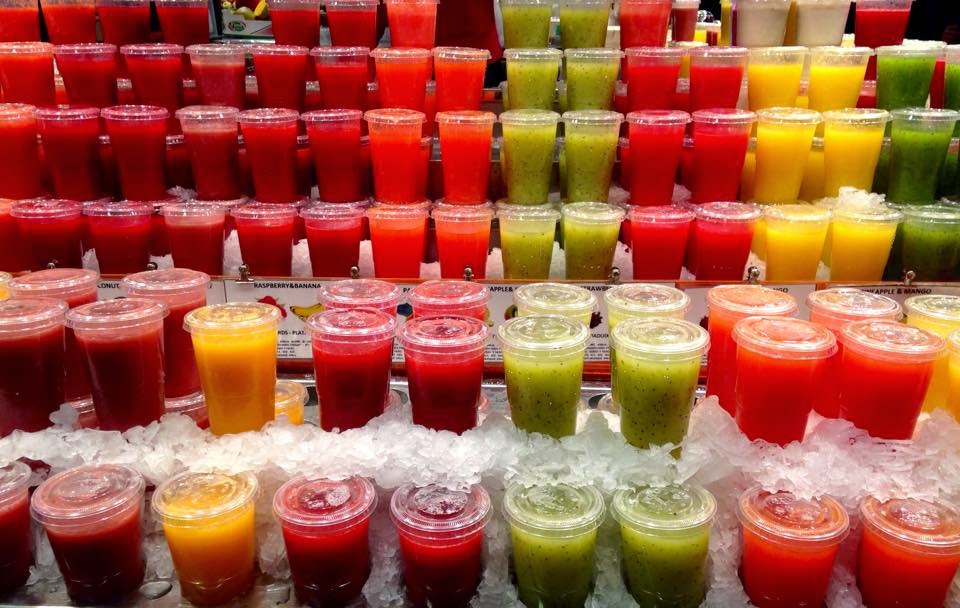
As hunger strikes, I meet up with a friend who I hadn’t seen in over 12 years near the Port Olimpic area. Succulent (and cheap) dishes are served whilst the rain finally stops and an efficiently timed catch up over his lunch break takes place at the cozy restaurant.
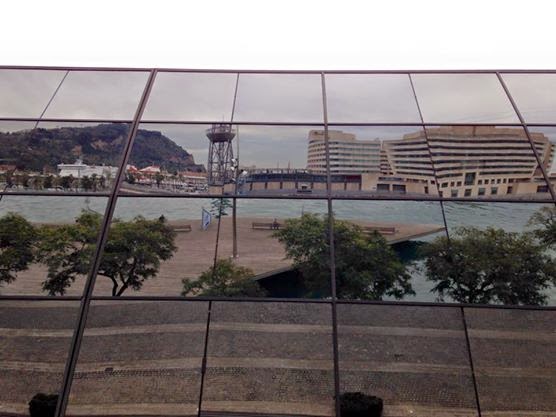
My last hours in Barcelona are spent wandering around the old La Barceloneta, aggressively coexisting with the modern white steeled structures of Rambla del Mar and Port Vell.
I close the day with a last walk through the Mirador de Colom, a flamboyant roundabout honouring Columbus, and Las Ramblas before taking a combination of metro lines to Sants and finally to El Prat Airport.
I leave Barcelona at the sound of three loud drunk Mexican teenagers creating havoc during take off, adding extra tensions between fellow passengers and thankfully extinguished by the alcohol an hour later.
The return flight takes a different path, extending for over three hours before turning South of Dublin and landing through a series of dramatic turns and crosswinds nearly at midnight.
Whilst driving back from the airport, I realise that comments I had heard about Barcelona coming from fellow travellers were entirely true. Affordable, vibrant, cult, historical, pretty and most importantly, an obvious sense of excellent quality of life being prioritised. Blame redevelopment, culinary or even the laid back Mediterranean lifestyle, Barcelona has definitely entered the list of the best places I have ever visited.
 THE FLYING CAMBA