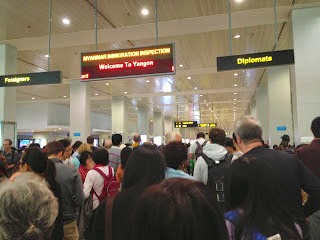
Built with large window panels, like a vitrine to a new country which has barely opened to tourists recently, the arrivals hall see a rapid influx of passengers nervously forming four long queues around five immigration agents as passports and visas are checked.
A very friendly officer grabs my documentation and with a wide smile states: ‘e-Visa, very easy’ heavily placing a stamp in my passport, finishing the formality with the a discreet ‘welcome’.
Just a few steps away, a very organised queue of taxis await for clients and surprisingly, haggling is not encountered at all. Instead, taxi drivers politely ask where I am heading to and, in fast Burmese discuss rates and routes with each other.
Just as many other destinations, landing at night time represents a dramatic arrival and a challenge to the confidence.
Outside my taxi window, lampposts are dimmed in a reddish tone which, mixed with the haze of the tropical evening, reduces visibility considerably. I am surprised by the cleanliness and freshly irrigated gardens around the main road.
Cars look in general good conditions, an immediate and clear example of the recent ending of an almost legendary commercial embargo.
They are mostly second-hand Toyotas given a second life in these lands and brought from Japan, featuring steering wheels on the right hand side, fitted for left-hand driving.
Nonetheless, traffic flows in the continental right-hand driving! .Roundabouts were never as adventurous and daunting as they are in Myanmar.
I am dropped off at my hostel, which is a converted Victorian house stuck in the middle of a busy and dusty neighborhood.
The receptionist explains that Yangon is a very safe city and suggest a nearby option to grab some dinner and it is just that, despite being only 22:00, the streets of the Burmese capital are completely deserted.
My day in Yangon starts with children singing an upbeat national anthem at the primary school located just besides the hostel and a Burmese breakfast including steamed white rice, banana dumplings and a strong cup of coffee, served in a balcony overlooking the street. Pure bliss.
I meet two Canadian girls before start our procession through the busy morning traffic which, despite being at an almost total standstill, no car horns are heard and people seem to quietly wait in their cars for things to happen. Motorcycles are banned from the Yangon region, making things slightly more bearable.
The sight of Shwedagon Pagoda and its golden crown getting closer seems to almost blind us only feeding the anxiety of discovering such iconic landmark.
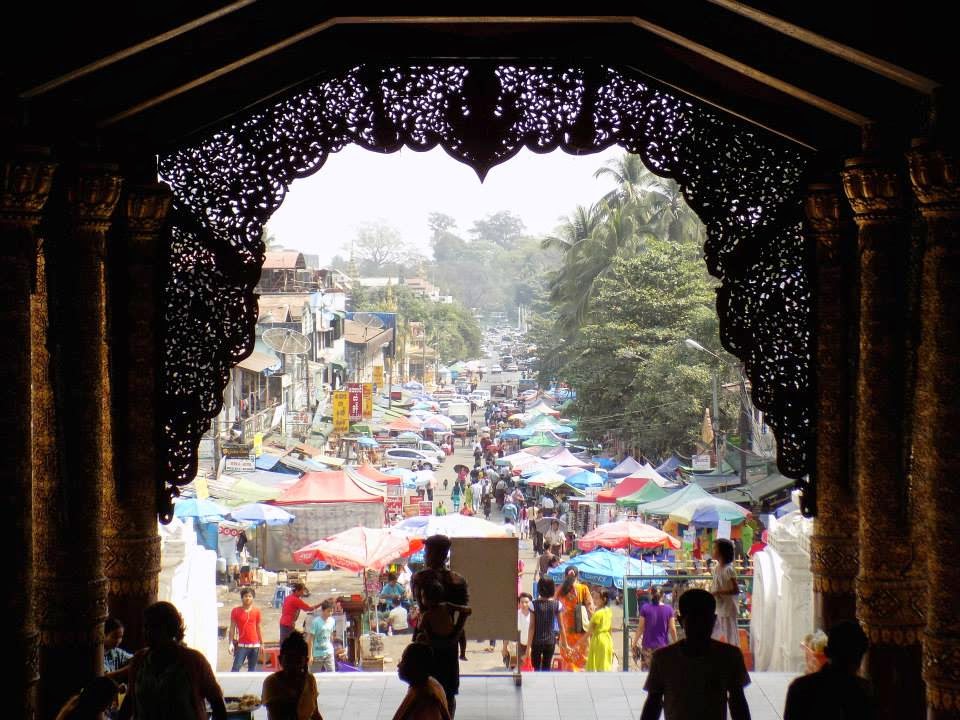
Two golden lion statues, a large empty hall and some oddly placed electric escalators greet locals who climb up the hill in order to celebrate their faith.
Tourists are barely seen, which enhances the experience of entering such a sacred place, key destination in Burmese Buddhism.
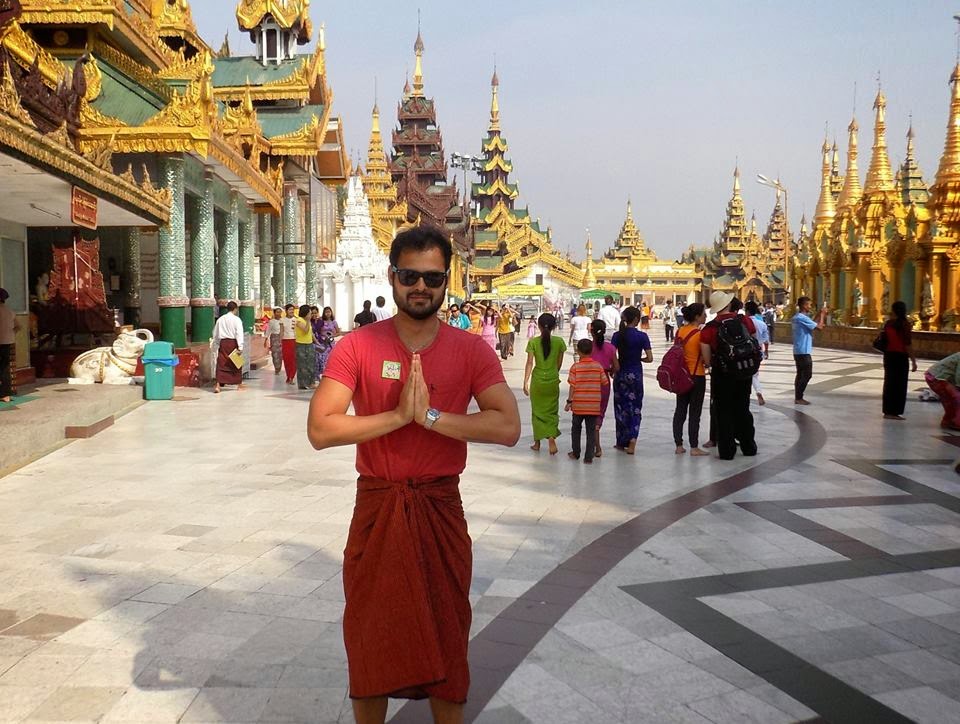
At the entrance, an abrupt receptionist in military uniform explains that foreigners have to pay a fee of 10 US Dollars to get in. I am also wearing shorts, which means I am also forced to buy a typical longyi, which is a tubular piece of garment which is rolled around the waist, in order to be allowed entry.
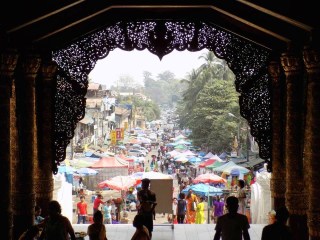
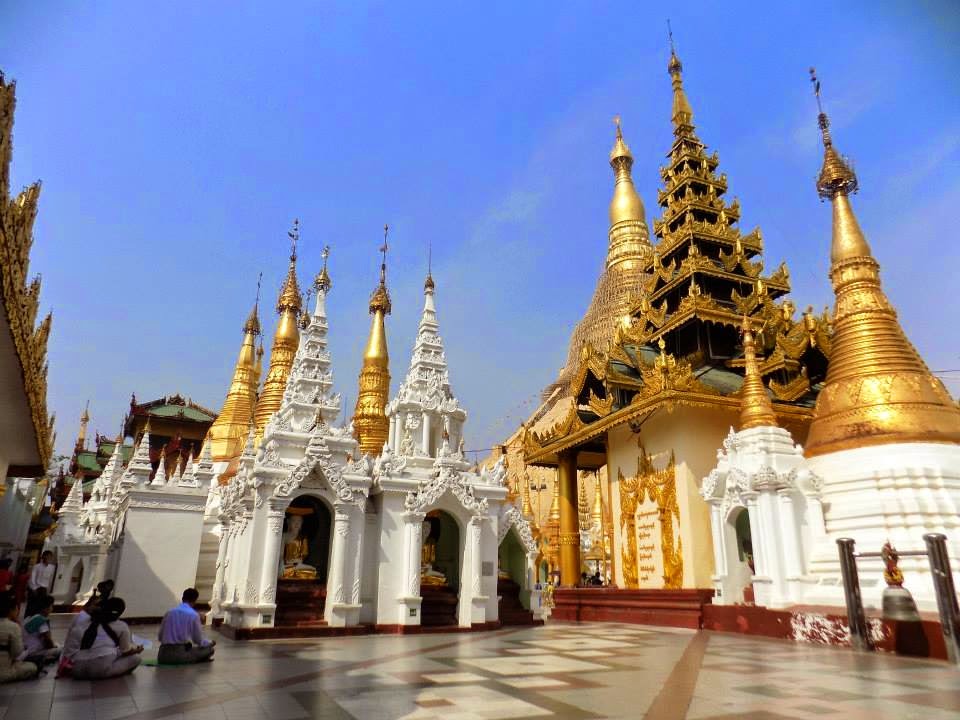
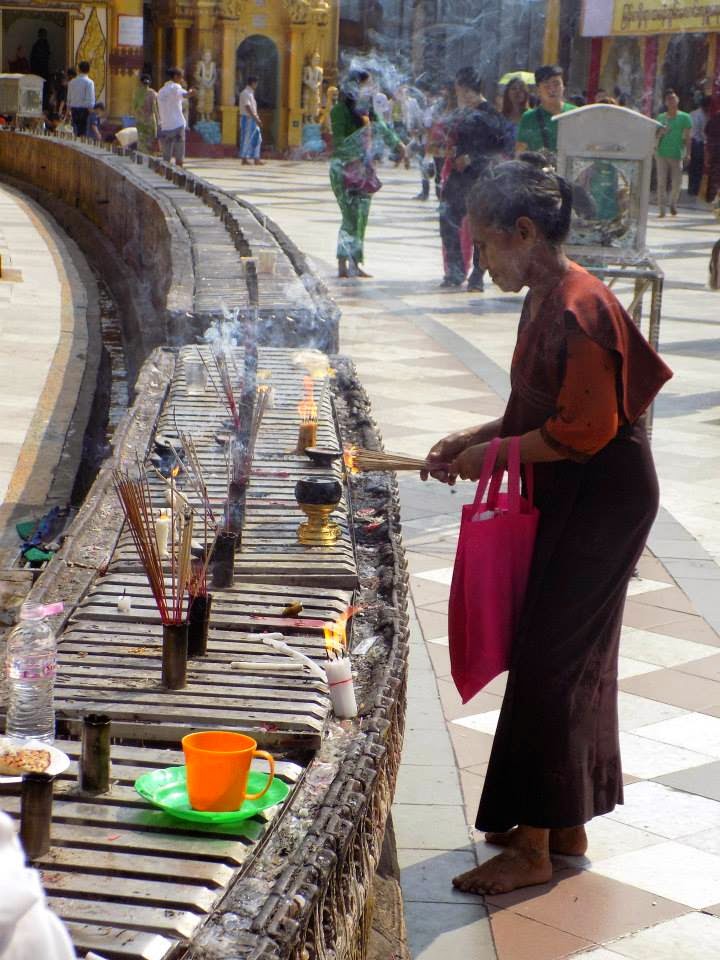
Seconds later, I enter a dreamlike place in which locals and monks euphorically chant and loudly pray to the numerous Buddha statues scattered around dozens of small shrines constructed over a white marble floor. The optical illusion is of a row of white, ivory and golden pointy towers rising towards the clear blue sky.
Gasps of awe are smothered by a strong smell of incense mixed with the freshness of steamed vegetables and rice eaten by elderly people gathered around to have their morning meal, kindly laid out and served in silver stainless steel pots.
Their faces are covered in some sort of cream-coloured clay, which they stylise over their cheekbones in diverse patterns to protect themselves from the strong sunshine.
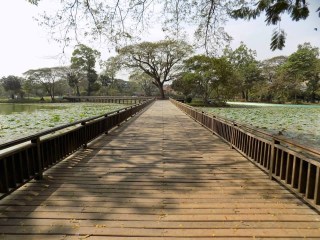
Once the experience of walking through the domains of Myanmar’s main pagoda is finally assimilated, I glance at my map and walk downhill, pausing for a lichee juice to fight the late morning high temperatures and continue through tree-lined avenues to Kandawgyi Park, whose green murky waters once worked as the Royal reservoir during the British colonial times and have now been conquered by an old wooden jetty where young locals date, study or just simply share a light meal trying to also find some relief from the midday sunshine.
As I walk to the main train station, the buzz of this some five-million inhabitants city starts to finally materialise and, the previously clean and manicured streets seem to have given way to a more dramatic and real landscape manifested in scenes of Soviet-like square blocks covered in rusty metallic grids and drying laundry, crowded noisy open-air buses fighting for space in the congested streets and some sort of dark blue sewage running across wide canals covered in acrid piles of rubbish and rotten food. Yet, it is finally the face of the real Myanmar, exhilarating at many levels.
With its white walls topped by golden pagoda-like towers and the constant rumbling of old locomotives pulling dirty carriages, Yangon’s central train station translates the rhythm of the country at its best.
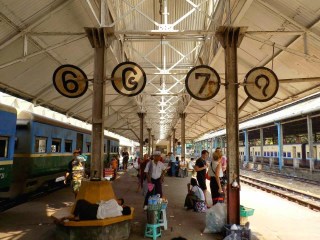
I purchase a ticket for the circular journey and, whilst waiting for the convoy to arrive, locals gather around platform number 7 with all sorts of goods, from enormous bags of Chinese-manufactured candy to grilled chicken skewers ready to be sold in a hop-on, hop-off basis.
The train circular journey is the closest thing to a metro system in Burma, roughly taking three hours to complete a loop around the Northern suburbs of Yangon.
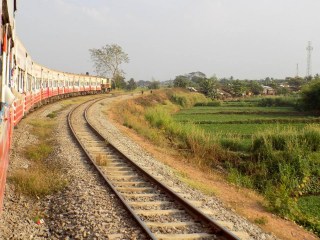
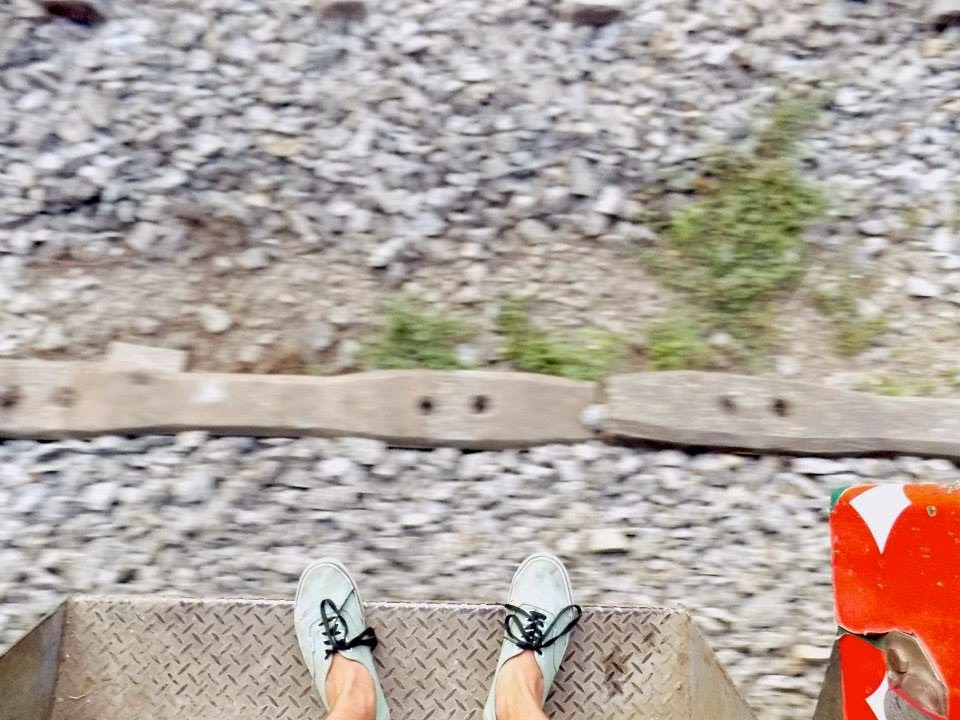
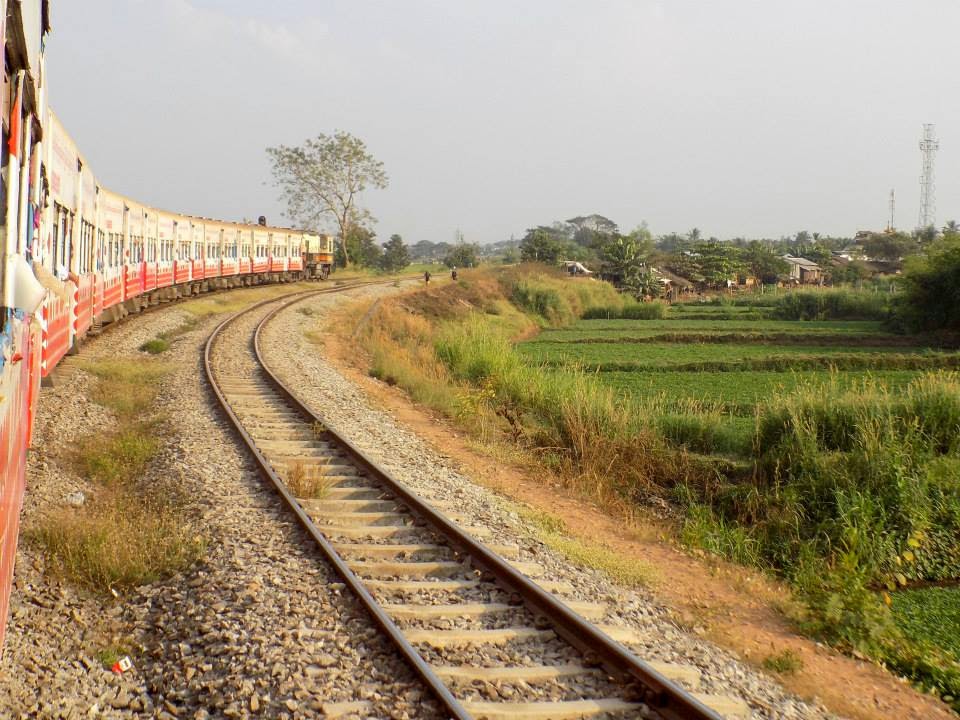
White-and-red carriages covered in telecommunications company adverts slowly pull out of the main station and noisily roll over old and twisted railings.
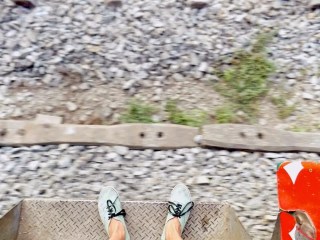
A few foreigners and I get firmly stared at by the locals whilst inside the train, which features wooden seats organised in two long rows facing each other. Yet, smiles, requests for random selfies and obvious displays of kindness add the Burmese sparkle to this particularly special train ride.
The dynamics of the city unfold as stations are slowly (stress on the word slowly) conquered, with busy areas covered in apartment blocks and heavy traffic succumbing to the sight of shacks suspended in wooden palafittes, surrounded by swampy rice fields and small dry islands where barefoot children play with homemade leather balls.
A journey which ends at the end of the afternoon with the sunset reflection transforming the railway jungle of the central station into a shiny metallic mirage.
In desperate need for a shower, I return to the hostel swerving my way through the afternoon traffic, covered in a mix of sweat, red dust and exhaust fumes, later joining fellow hostel guests to indulge in the flavors of a freshly-made seafood Pad Thai and the refreshing bitterness of a Myanmar lager.



 THE FLYING CAMBA