
A whistle is heard and almost immediately, the heavy silver train moves off the busy platform slowly and just on schedule.
As I settle into my small cabin, a small old lady smiles back at me and asks me to help her with er suitcase. whilst a robust man enters the cabin heavily breathing and carrying a white plastic bag full of food.
A man from Azerbaijan is occupying the top right bunk. No talk and no smiles, just a book in front of him and an Azeri passport used as a bookmarker.
Two young Russian men stare at the scene from the cabin next to mine and the youngest gasps some air and greets me with a quiet ‘Hi’, which immediately turns into a conversation joined by his travel mate as the train crosses the Volga River bridge, heading West.
Originally from Moscow, they are both returning home after a short holiday in Kazan, explaining that they have learned the English language as a result of the media influence on the TV and the internet, skill that becomes handy as they decide to join me as my interpreters on this 12-hour overnight journey.
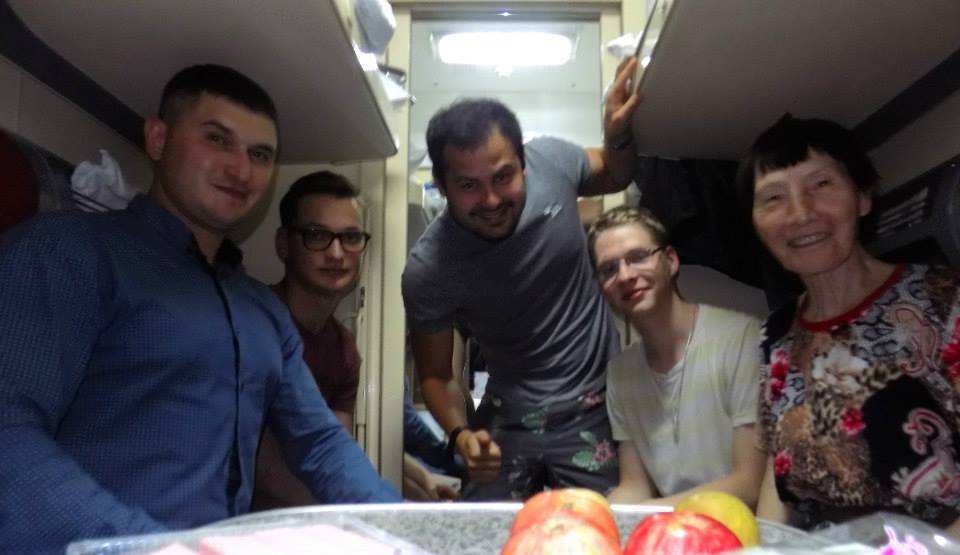
And so, six people randomly start sharing thoughts and stories in a small compartment, which allows me to immerse myself into the real Russia, with real Russians!
The old lady is a retired teacher who kindly (and repeatedly) offers apples and peaches picked straight from the garden in her house in Kazan. The wrinkles on her face become deeper as she constantly smiles and tell stories about life in both Kazan and Moscow.
The robust man, which happens to be a Tatar police man, opens the white plastic bag unleashing a strong smell of warm pastries and roasted chicken, while offering small shots of crystal-clear vodka to each one of us.
One of the young men hands me a box of tinned Swiss chocolates, which I am immediately told is a gesture of extreme goodwill in the Russian Federation, a way of showing that, despite Russia portrayed as the villain in the worldwide landscape, the people within its borders are friendly to the foreigners.
I take the present with a broad smile as a lifetime souvenir which is also good for keeping my passport safe and dry.
I soon learn that train trips in such a vast territory have become a Russian tradition in which people meet, talk and share their food in order to pass time, which indeed seems to fly by as food is eaten, vodka is drank and questions about the insights of a country which has kept its secrets within its borders are answered, because in the end, there is a reason why the Ruble has collapsed, the conflicts with Ukraine are ongoing or Vladimir Putin is still so popular.
Insights that this time are heard through the voices of Russia, from an elderly retired teacher to a soon-to-be young logistics manager, all of them who believe from the bottom of their heart that they live in the best nation in the world.
Few hours of sleep are caught overnight, with the morning sunrise bringing a new life to the train as we cruise through wheat and barley fields dotted with wooden colorful houses and breakfast is served by a stewardess wearing a red uniform.
The surroundings become busier as we get approach the arrival time, transforming into an endless horizon of apartment blocks mixing with the tall cooling towers of distant nuclear plants, linked by busy motorways.
Only one minute behind schedule, the train finally pulls into Moscow Kazanskaya Train Station which, situated in the East side of the city in the middle of a square that combines three train stations together, becomes one of Moscow’s gateways to the rest of the country.
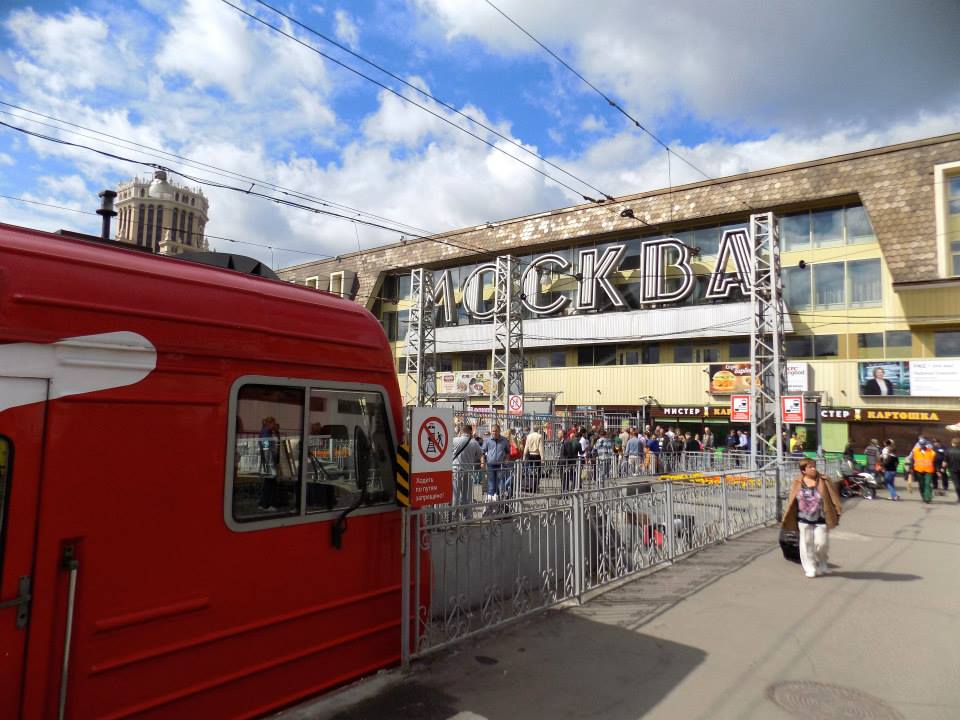
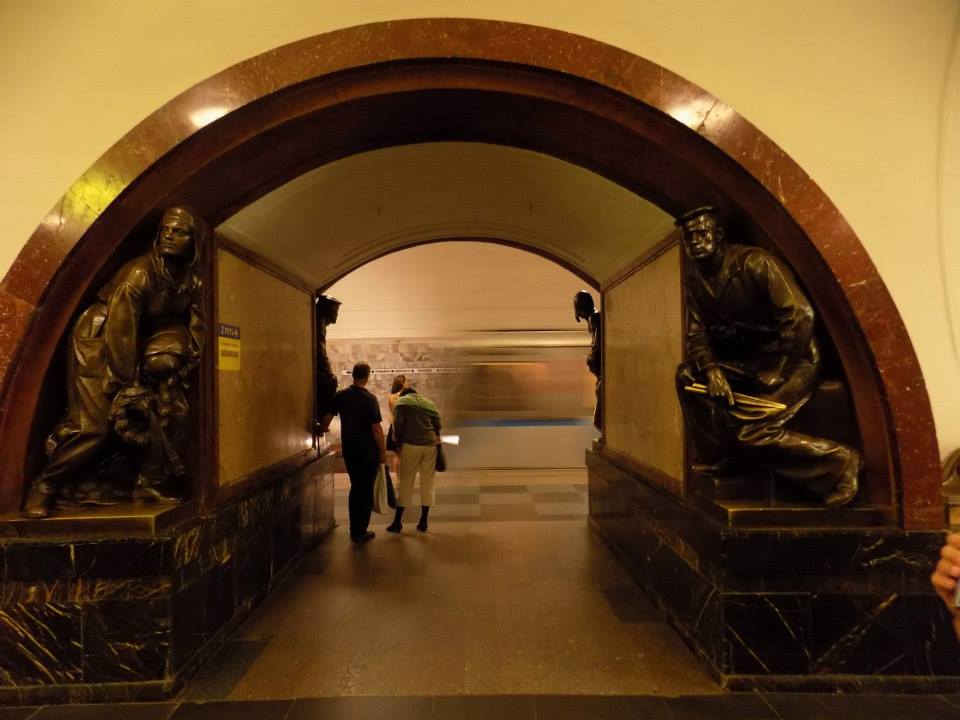
Waves of people make their way through the platforms carrying heavy bags and rushing towards the metro station, where I say good-bye to my train journey companions under the chandeliers of an architecturally unique underground feat of art, which is the main characteristic of the subway system in the Russian capital, a tourist attraction on its own.
Time to look at the map carefully and exercise my photographic memory at its hardest, since every signage and messaging in the Muscovite metro system is in Cyrillic and Russian, which renders any knowledge of English (or any other language) completely useless.
Nonetheless, the metro lines, which reach most parts of the city with its extensive network, are organised in some sort of a cobweb structure, with radial lines extending to all areas of the capital from the city centre and are linked by a circular line. Soviet efficiency perhaps?
A change later, I finally reach my hotel in the outskirts of the city at Partizanskaya, which seems to be a place that has seen better days.
Around the old metro station, apartment blocks cover a landscape in which 24-hour food shops are plentiful, as well as a little version of the Kremlin and a dodgy shopping centre.
My hotel is embedded right in the middle of the action, in what seems to be a block of buildings named after Greek characters, mine being Vega.
The scale of a mega city like Moscow can be better appreciated from the hotel room window suspended six floors over the ground, before finally grabbing a shower, a cup of tea with some Swiss chocolate and a little nap, as I wait for my friend to arrive on a flight from Kazan.
Once we are both set in the capital , it is time to pay the 50 Rubles of a metro ride and head straight into ‘Ploshchad’ Revolyutsii’ station, the Revolution Square and epitome of Russian power.
Just as the wind blows a light rain outside the station, the sight of over sized buildings aim to expose the grandeur of the Russian Federation, because in Soviet Russia:
- The Bolshok theatre will have the best ballet and operas ever conceived.
- The Russian oil tycoons would sip on vodka and snack on caviar at the Four Seasons Hotel overlooking the manicured Alexander Gardens and the mighty Kremlin.
- The police corps vigilantly watch your every move as you set foot in the iconic Red Square.
- There is a crowded McDonald’s just in front of it all.
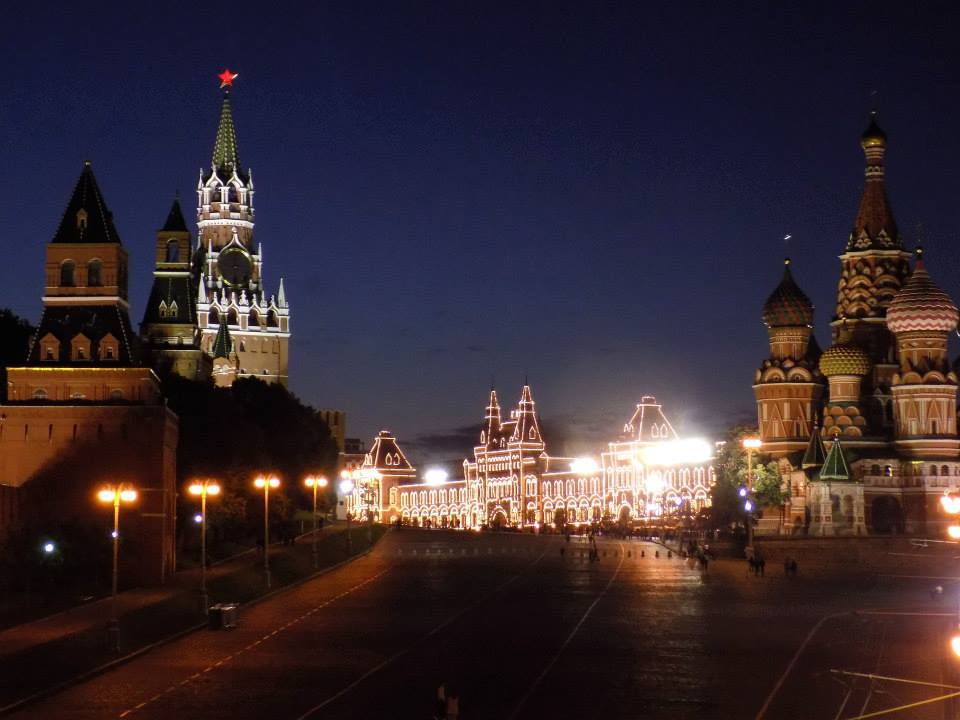
A walk through the Red Square provokes goosebumps on anyone, just as much as walking on Tiananmen Square in Beijing or the Colosseum in Rome.
It is a place where the world has converged both in history and beauty, and where many stories which are now part of our legacy as humans have brewed.
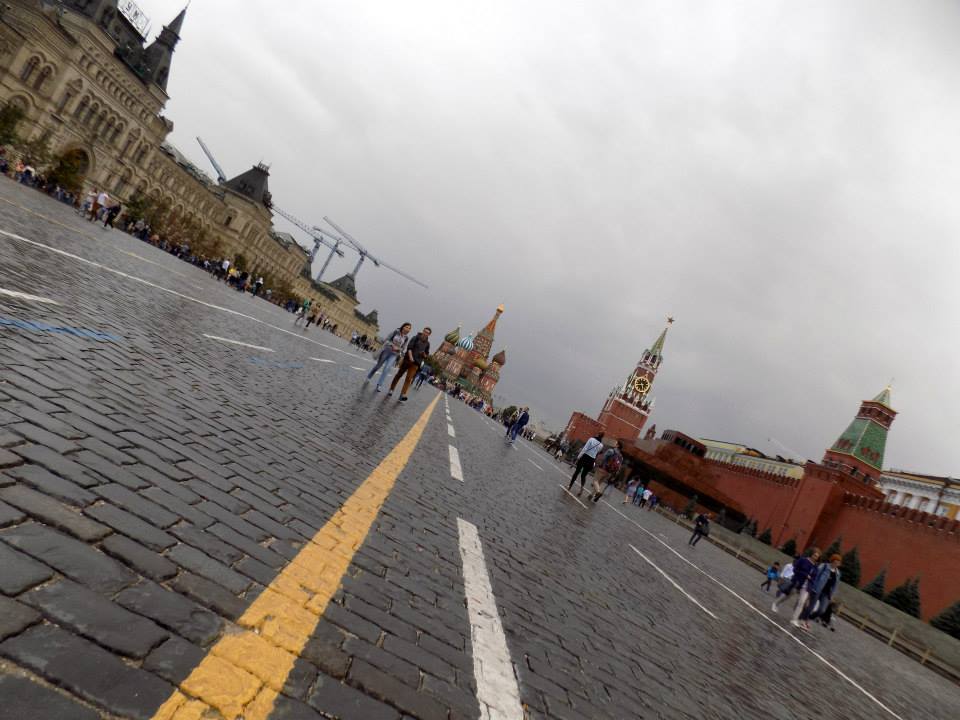
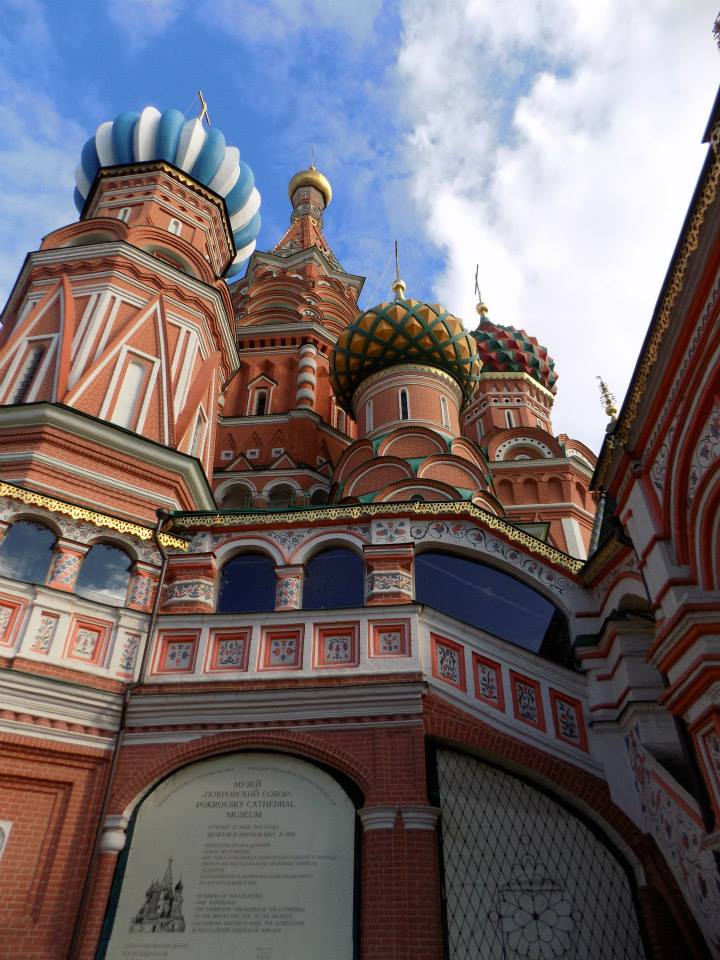
St. Basil’s Cathedral with its colorful domes, symbolizing a lit bonfire rising to the skies, is too tempting to miss, and inside, we discover the secrets and intricate designs underneath this eclectic exterior.
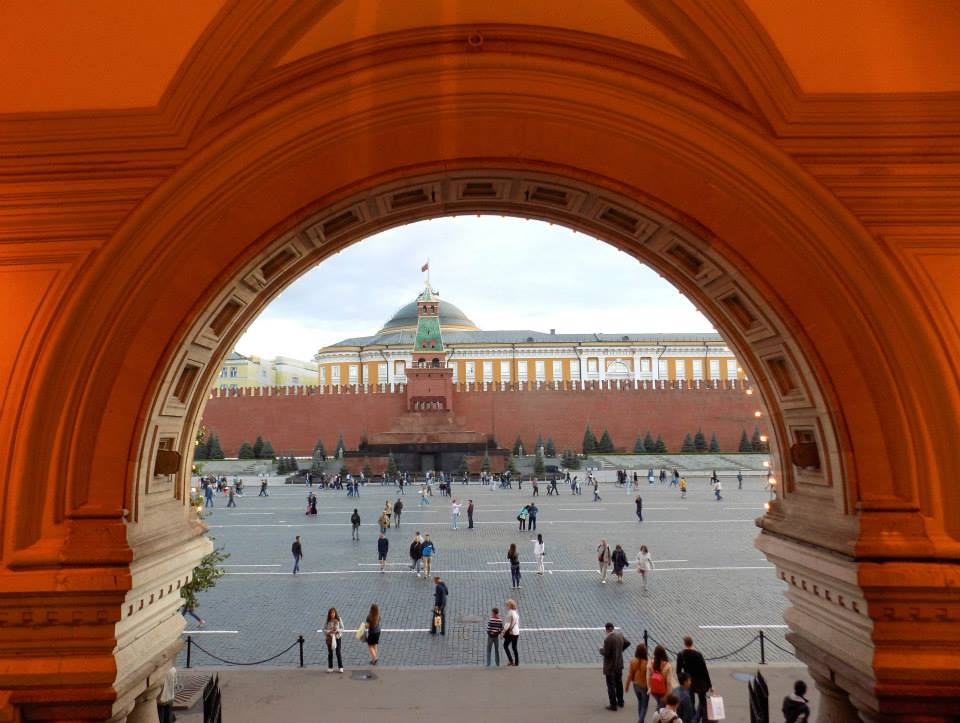
Built in 1555 by orders of Ivan the Terrible, it also commemorates the capture of Kazan and Astrakhan regions, also providing a privileged perspective of the Red Square, overlooking the tall red walls of the Kremlin, the Lenin mausoleum and the flashy GUM department store.
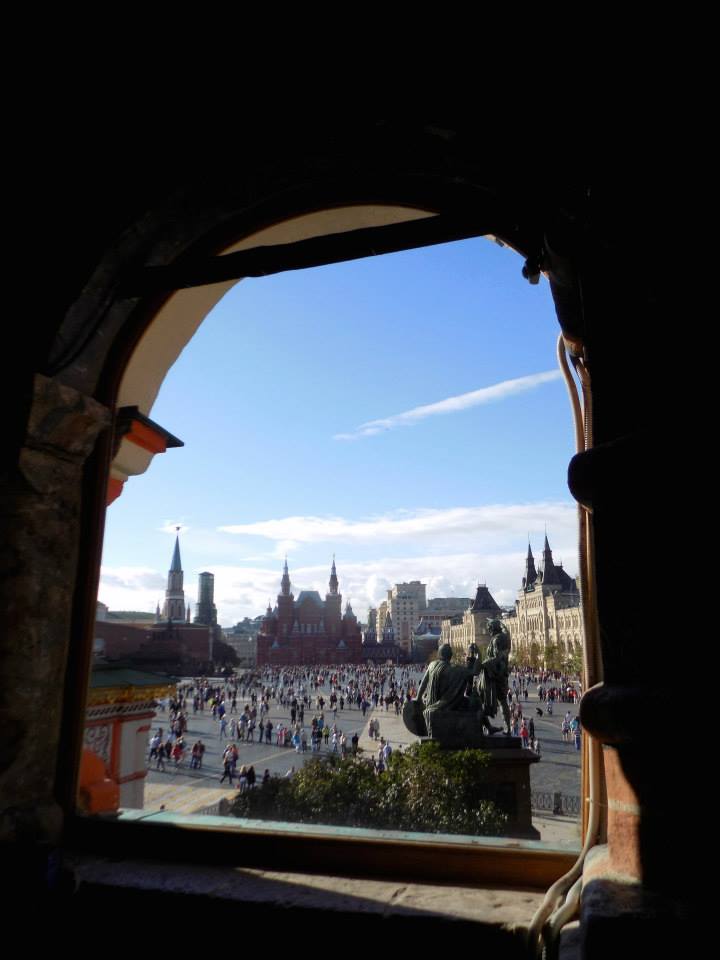
The evening hours transform the square into a shiny set of colorful lights, defined by the luxurious GUM department store, and the cleverly lit St. Basil’s Cathedral, adding a unique end to a day of constant sightseeing in a city that is in constant movement.
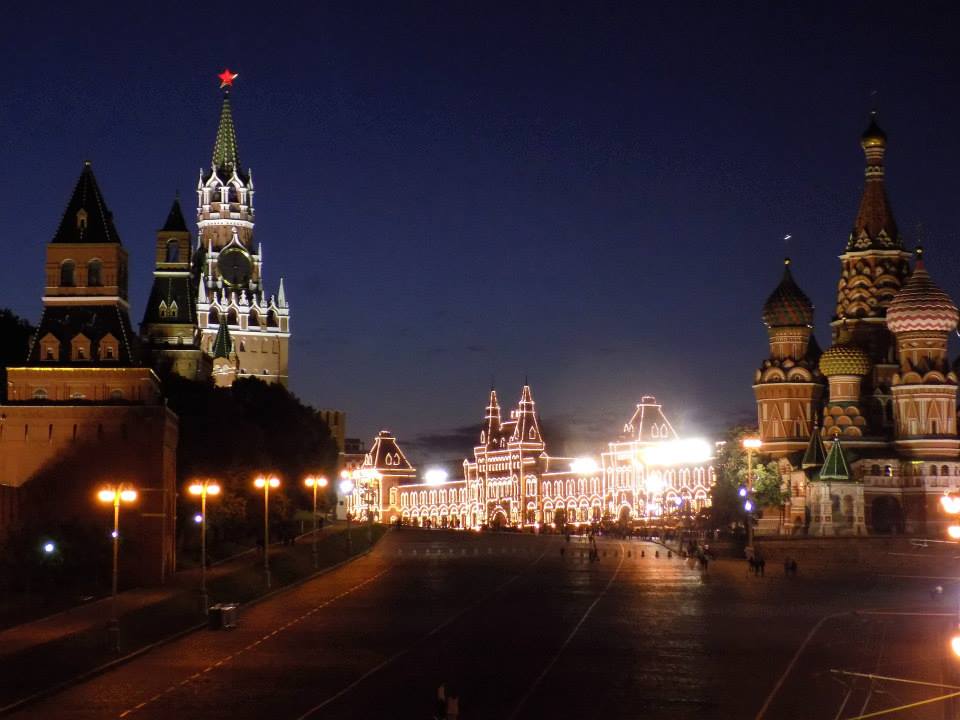
The next morning, after a energy-recharging breakfast, we take a set of three metro lines and its combinations to the North of the city, to a place embedded in the suburbs of this megalopolis and in the hearts of every person living in it: VDNK park.
VDNK stands for the ‘Exhibition of Achievements of National Economy’ in Russian and it’s the epitome of the concept of Russian supremacy.
Here, the Russian cosmonauts have gained their immortality with statues honoring the Soviet space program around a museum topped by a tall sculpture of a space ship rising towards the sky.
A few meters down the road, a tall arch marks the entrance to the park of ‘All things Russian’.
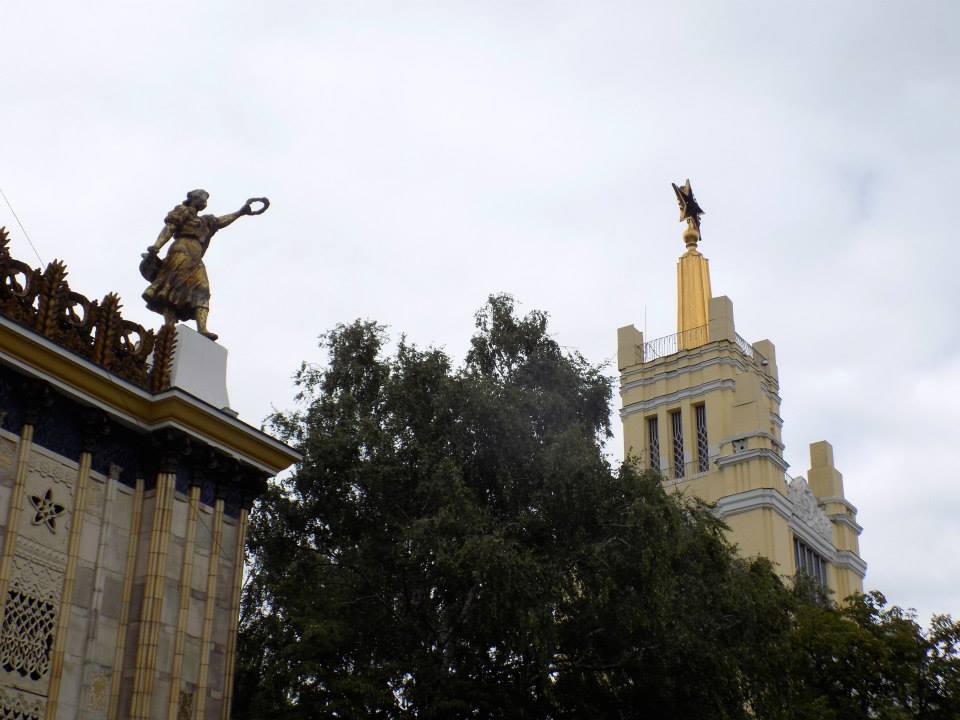
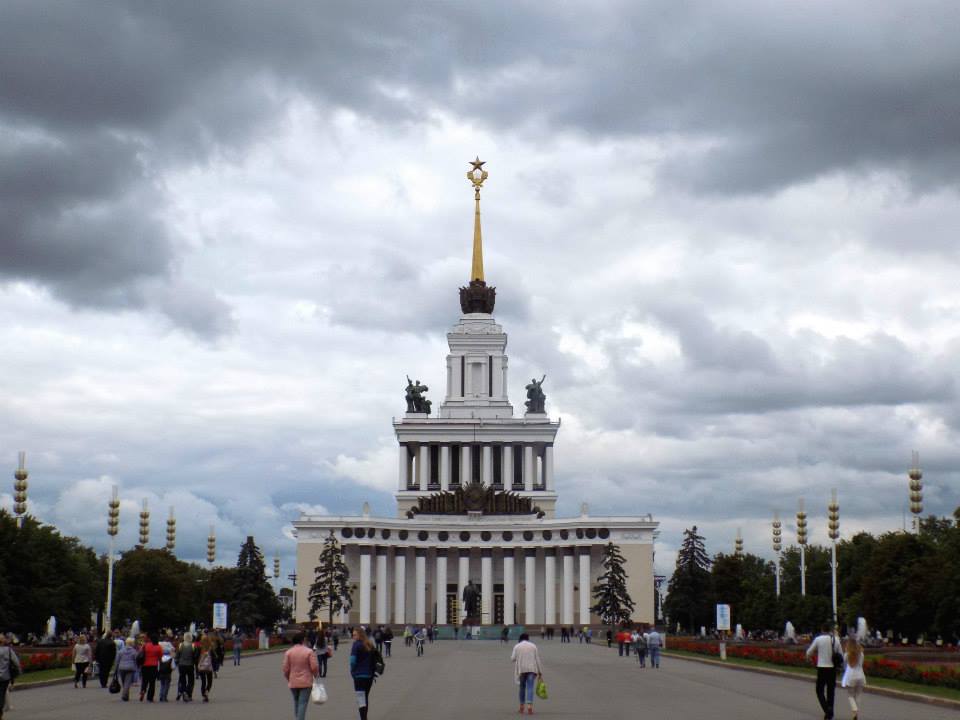

The area was created as an agricultural trade fair in 1935, and further developed into many pavilions featuring different regions, linked by manicured gardens and grand water fountains. An area which turns into an excellent way of passing a few hours looking at the architectural pieces around us, looking at daredevil locals tackle the dodgy roller coasters and mechanical rides of the little amusement park or just sheltering under a replica of a Soyuz space ship.

In the evening, after a hefty lunch at a local Pizza Hut, we rush back to the city centre for a glimpse of one of the best views of Moscow from the bridge linking the trendy Balchug Isle to the golden onion-shaped domes of the Cathedral of Christ the Saviour, and an late afternoon walk along the murky Moskva River to the Gorky Central Park.
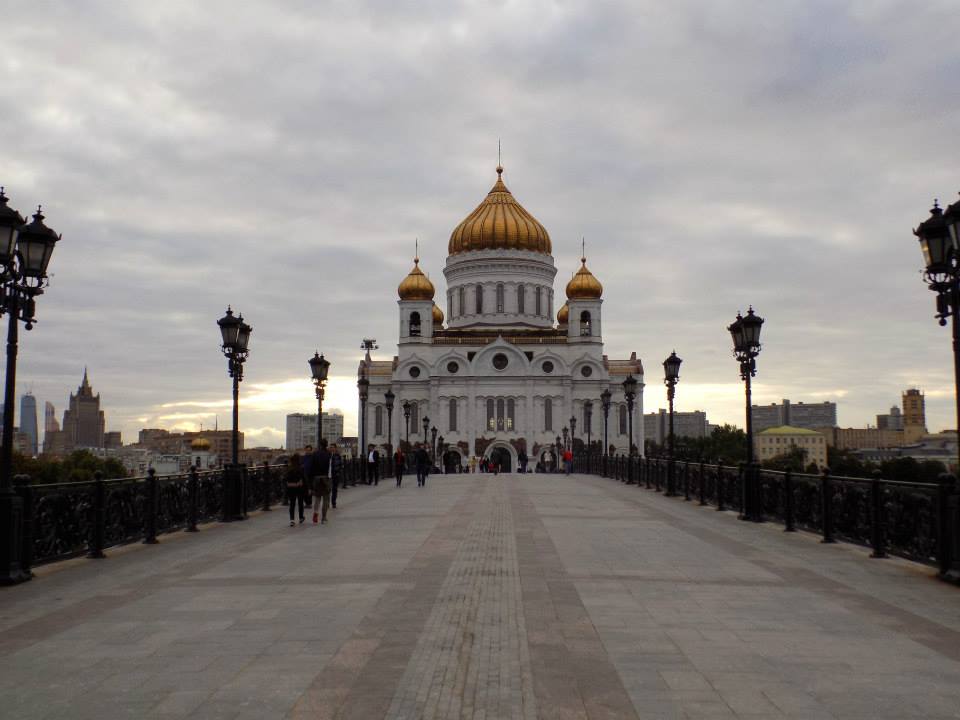
Shortly after returning to the hotel, my friend’s visit to the Russian capital comes to an end and, just as any local would (sic), I help him carry his luggage through the set of metro stations and tunnels to the point in which he transfers to the train bound for the secluded Sheremetyevo Airport.
I return to the hotels as the metro lines close for the day, the cleaners use old brooms to clean the now desolated stations and elderly staff wearing light blue uniforms hold clipboards in which the day’s last trains operations are recorded.
My last day in Moscow is defined by the grey skies and light rain of the early morning, time in which I check out of my hotel and take the metro across the city to a place in which many Nobel laureates have originated: the Moscow State University, also known as Lomonosov.
Since it is just the end of summer, the vast university grounds are now empty, with the functionally squared buildings only echoing the sound of old cars in the distant busy avenues and dwarfed by the imposing sight of the main tower, rising up to 240 meters tall and built in a mixture of Russian Baroque and Gothic styles by orders of Joseph Stalin, a building also replicated along the city in six other locations, rendering them the title of ‘Seven Sisters’, buildings also similar to the cherished ‘Stalin’s Cake’ in Riga, Latvia.
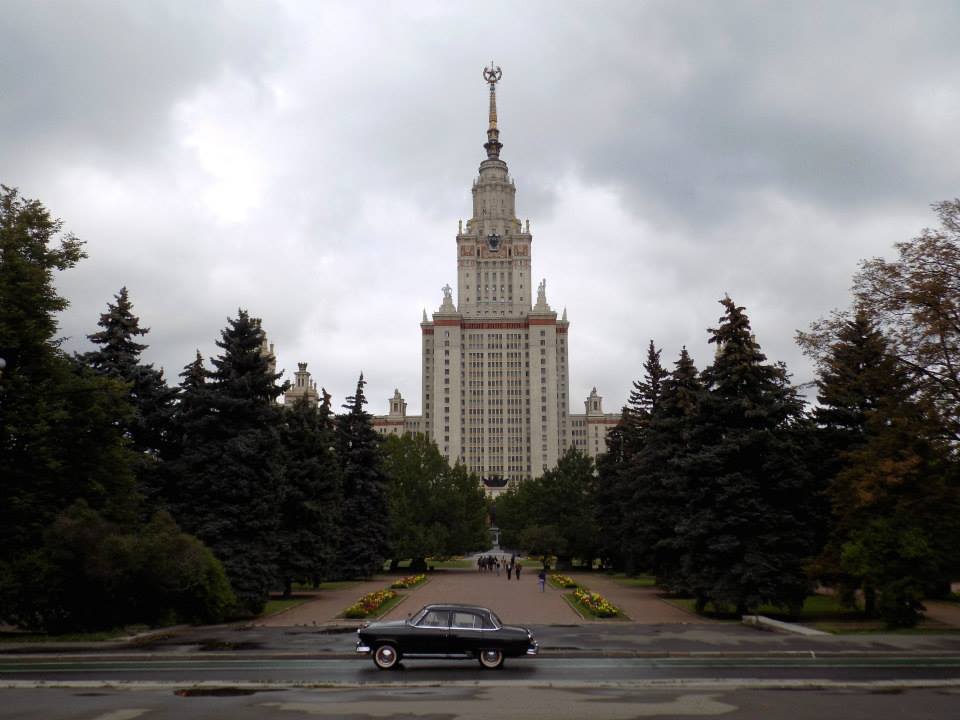
The walk through the grounds is refreshed by the sight of some sunshine, first time since I left Kazan, followed by the ‘coffee + panini combo’ and a series of metro lines transfers to the Paveletskiy Station, my gateway out of the noise of the capital and starting point of my one-hour journey to Domodedovo International Airport.
I fall asleep for a few minutes, whilst the modern train leaves the grounds of the station and enters the now green suburbs of the city and the pine tree forest surrounding the town of Domodedovo and Moscow’s largest airport.
Check in formalities are done, security check is cleared and no eye contact is once made again when my passport is adorned with the departure stamp.
The sunshine takes over the glass-built international terminal and, after a twenty-minute delay, my flight is finally called for departure.
Swiss 1337 is rapidly cleared for take off and soon, the sight of Russia is left behind just as dinner is served over the border with Belarus.
I glimpse through my passport pages and stare at the my Russian Visa for minutes, inevitably thinking of the experiences of this short trip, from the reliving of excitement and failed expectations of participating in an international swimming competition, to the goosebumps of standing free in the iconic Red Square, to one of the best and most authentic train rides I’ve had in my life and surprisingly, to finally be able to decipher many of the things written in Cyrillic on my passport by the Russian immigration officers.
Three hours and a half later, the captain announces our descent into my next stop: Geneva.
 THE FLYING CAMBA