
I step out of the deserted terminal to be greeted by a loud pack of shuttle and taxi drivers offering their transfer services to every imaginable corner in Yucatan.
Sleep-deprived and slightly grumpy, my mood further deteriorates when such drivers tell me almost at unison that the next bus into the city will only run at around 09:00am, some three hour wait in the heat with no amenities or wifi.
Stares are exchanged between myself and some three other stranded tourists carrying heavy backpacks facing the same predicament. Should we team up and try to take a transfer together to soften the fall of the hefty fare?
Ten minutes later, like a shiny carriage coming from heaven, an ‘Autobuses del Oriente (ADO)’ bus pulls into the driveway with a large clear sign on the front windshield: CANCUN.
– Is this going to Cancun? Yes.
– Is it in service? Yes.
And in a matter of seconds, the thought of having landed in Latin America sinks in.
Through the ‘criollo’ idiosyncrasy, through the small white lie with the intention of generating extra revenue. Could you blame them?, in the end, they are trying to make a living at the expense of the rich clueless tourists Cancun is a magnet for.
As the bus cruises through a straight-lined motorway, the sight of distant hotel monstrosities can be seen in the background whilst around us, a dry landscape of white sand dotted with market stalls merges into a sea of minivans and brand new cars.
This is the Cancun most tourists arriving in Yucatan see: the resorts dominating the turquoise coast line, splashing shiny signs and promising a time of carefully designed and scheduled fun.
I arrive at the modern central bus station and the thought of spending much time in an environment as the one mentioned above sickens my stomach and just as a departure is announced over the loudspeaker repetitively, I buy a bus ticket to what I decide will be my base of operations for the next days.
Two hours later, a loudly dubbed Jackie Chan movie and one failed attempt at falling sleep, my stop is finally announced: the town of Tulum.
Tulum is what one would describe as a ‘one-street town’. A town designed to cater for the needs of the less ‘budget-blessed’ travelers wanting to equally enjoy the goodness of the Caribbean blue waters. An agglomeration of buildings crammed into a series of cheap (and not so cheap) Mexican restaurants, an equal array of accommodation options and a row of colourful souvenir shops.
Stepping two blocks away from the main road, the scenery changes to simple one-story houses with very tall walls laid on a grid-like layout of unfinished pavements and potholes-doomed roads.
The walk to the hostel I had in mind seems to take ages under the midday heat and jet-lag combination, yet the wide smile of the receptionist wearing surf-style clothing and messy hair reassures the thought of having made the right decision in choosing Tulum at the time of checkin.
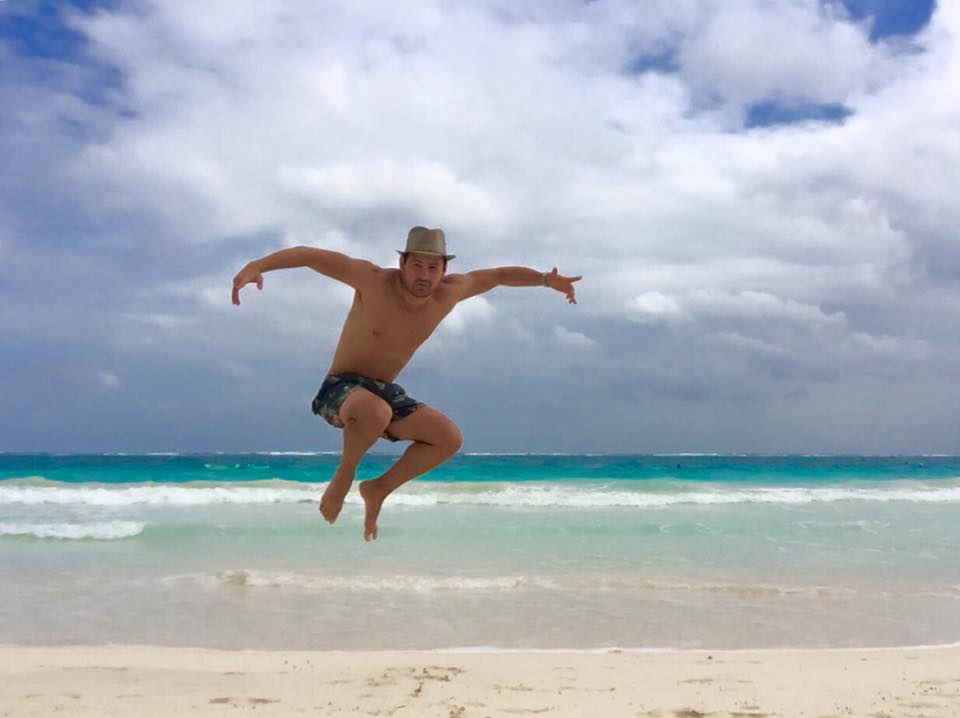
Once settled in my 12-bed dorm, I ditch my shoes, which I’d only see weeks later, and walk through a long mixed pedestrian/cycle track to meet the Caribbean.
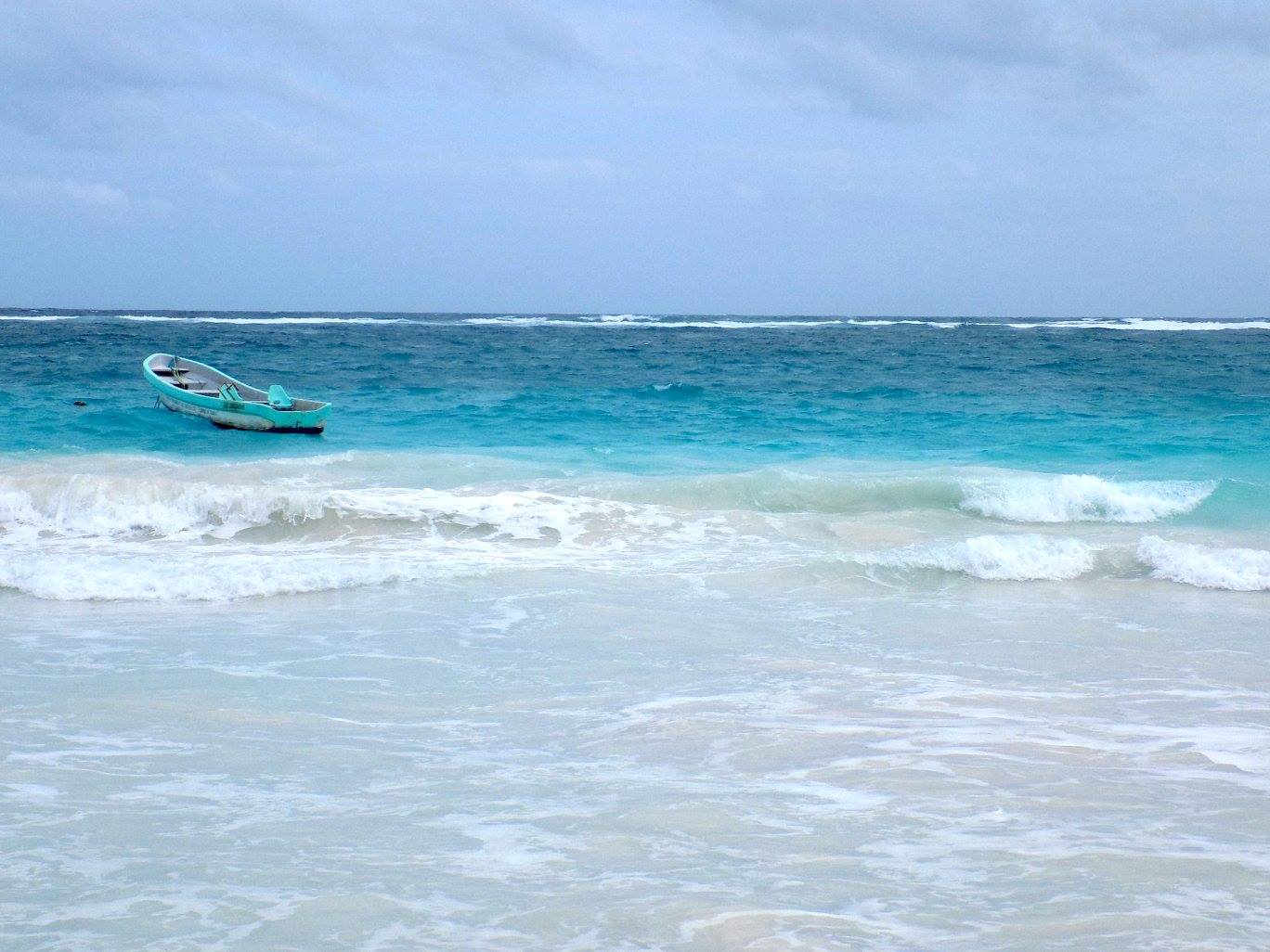
The usually-calm sea is momentarily battered by a heavy cumulonimbus which seem to both refresh the heat and scare a few tourists away, whilst I place my blue towel in the soft white sand and disregard the heavy drops of rain falling, almost instantly succumbing to the thought of a power nap on the beach.
My dinner plans consist on a stroll around the town on my own, buying a cheap straw hat and find the cheapest ‘quesadillas’ restaurant possible, because nothing could go wrong with a place proudly displaying a ‘Solo 12 pesitos’ (‘Only 10 pesitos’, some 40 cents of an Euro) slogan in their billboard.
My first night in Mexico unfolds as a drowsy riddle of banned screaming guests, mild hostel staff drama and a very sick Australian girl who did not have enough time to make it to the bathroom.
Wide awake before the sun rises, I grab a cup of coffee and some burned toast and catch the first ADO bus heading inland.
Once I reach Valladolid, the change of buses to a less glamorous one sparks a conversation between myself and a Chinese girl: ‘the seats are broken and they can not be placed upright’.
The beauty of travelling unfolds again: a chat about our own trips and an exchange of past experiences begin, whilst the bus picks up more passengers and rapidly reaches Piste, stop for a widely-known World Wonder.
A World Wonder visit could not be started without paying a hefty sum of money for the entrance fee which, despite the price, creates a more intense expectation of what lies behind the thick concrete walls protecting the park.
I am lucky. The place is empty and the vendors are still setting their stalls up on the dirt shaded road.
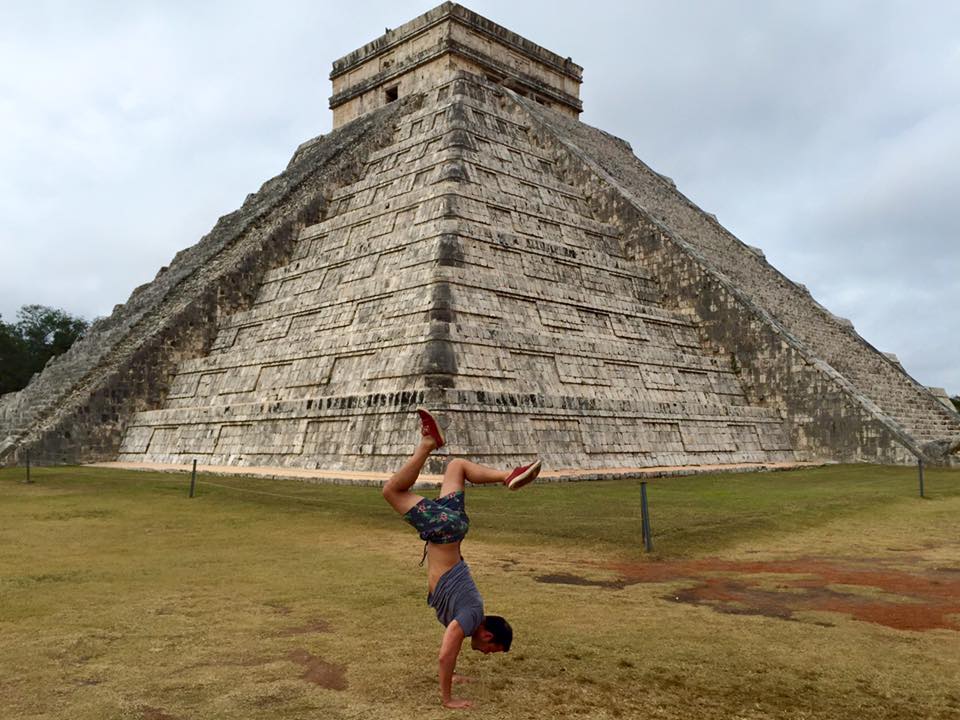
My new friend and I gasp in awe. It is right in front of us: sturdy, perfectly geometrically designed and almost as it was placed in a flat grassland by magic: The pyramid of El Castillo at Chichen Itza.
The whole complex of ruins which extends for over 740 acres, works as a rich playground for hardcore historians and clueless tourists alike and, remarkable buildings such as the Temple of the Warriors with its numerous rows of monoliths, each one carved with homage to remarkable Mayan warriors motifs, will definitely catch the attention of even the most ‘museum-phobic’ person in the world.
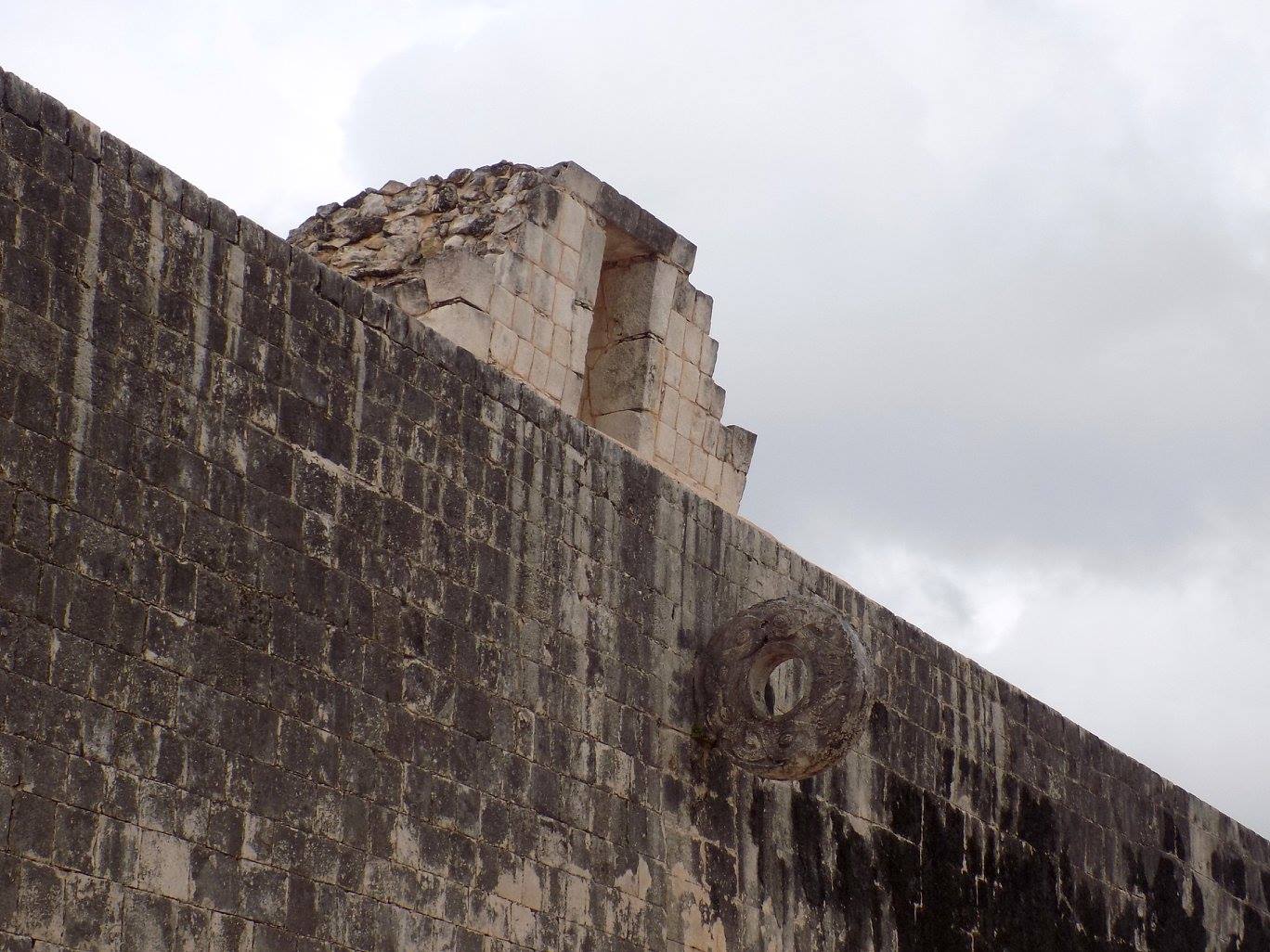
Around the corner, I walk through the main courtyard where a skilful sort of football featuring leather balls, protruding stone rings and human sacrifices was once played, and where now tourists stand in awe repetitively clapping and whispering in order to prove yet another Mayan architecture wonder: the perfect management of acoustics within its ceremonial complexes.
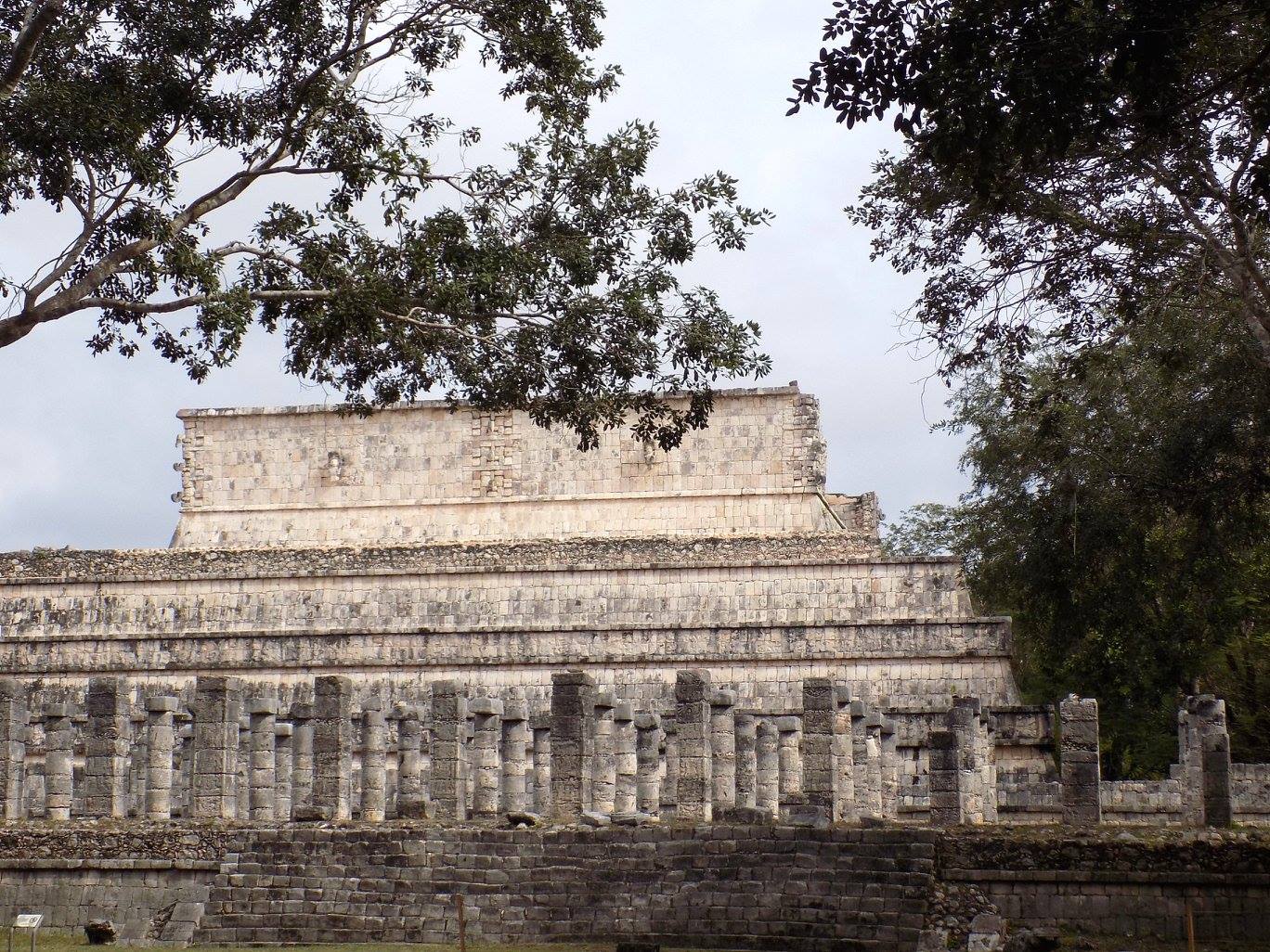
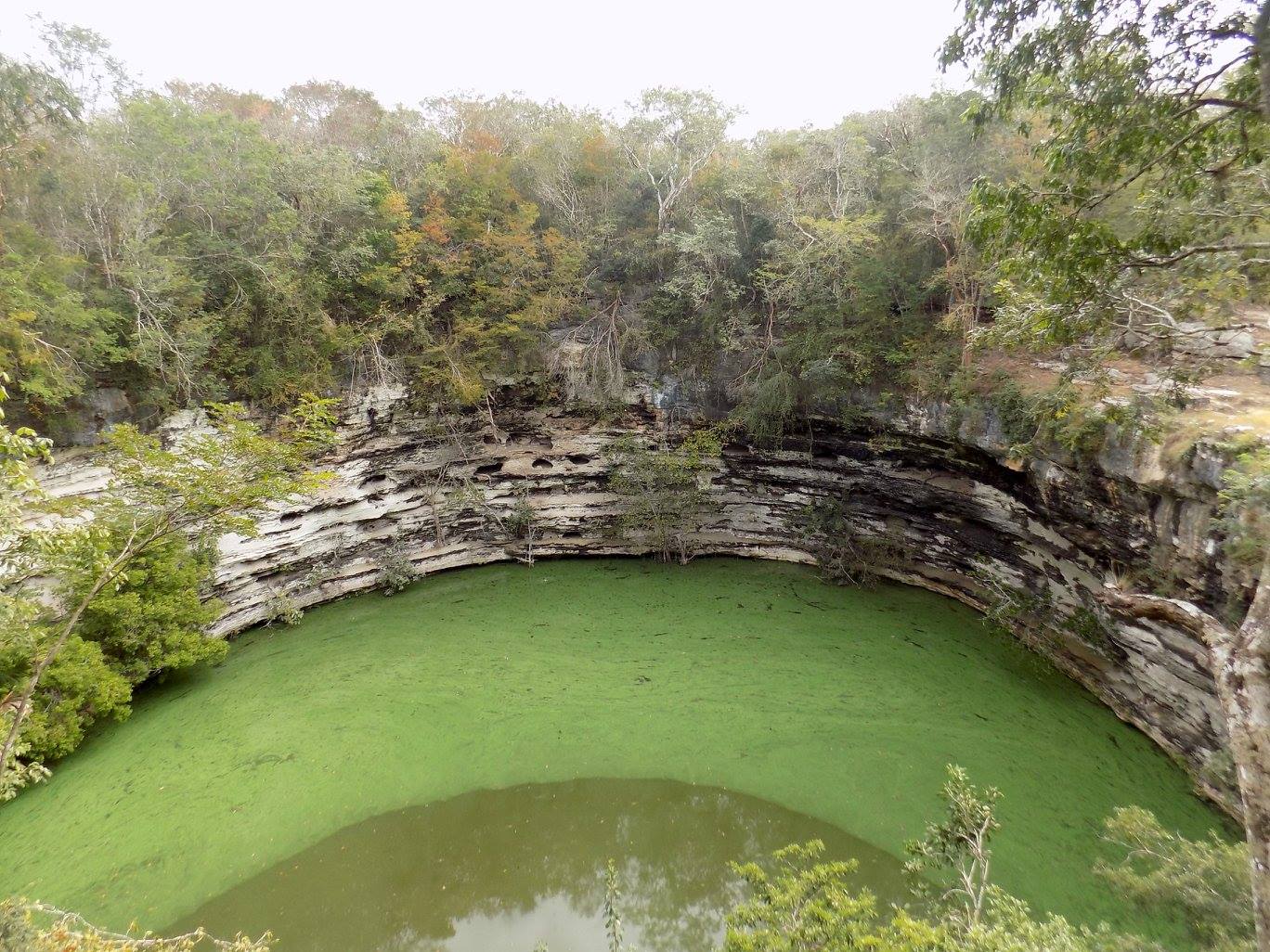
By 11:00am, sunburned hungover tourists arrive in a convoy of luxurious coaches and the place fills up with selfie sticks, becoming almost unbearable to walk through.
It’s time to retreat back to Valladolid for a light lunch and some fresh tangerines interestingly seasoned with a combination of chillies and sea salt.
My new travel companion from Chongqing, a heavy thunderstorm and I return to the coast at Tulum for the night.
The last day in Mexico is spent riding worn out rented bikes, tropical wind in the face and bottles of water in hand, starting with a visit to the Mayan complex of Tulum, a place that synchronises the gloomy grey rocks that now support the abandoned ruins with the dramatic backdrop of the bluest sea one can see in life.
Just a few meters below the ridge, the waves crash onto white sand, refreshing the arid landscape mostly populated by poisonous snakes and large iguanas.

A long afternoon slowly cooking the skin at the beach in Playa Paraiso is next, crowned by a dinner of fresh avocado/seafood tacos and a relaxing evening staring at the clear sky (and my iPhone screen), whilst laying on a comfortable hammock at the hostel lobby.
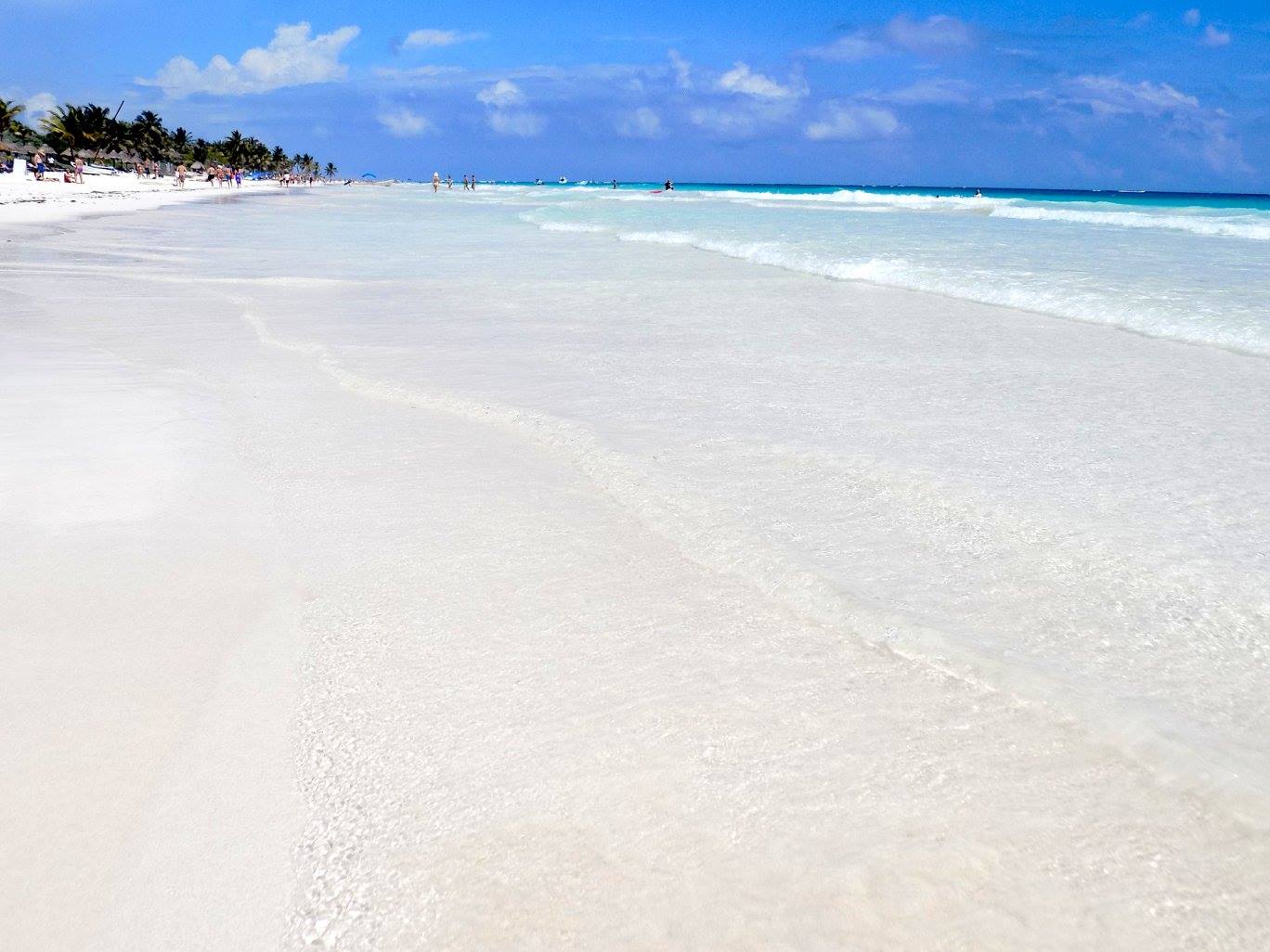
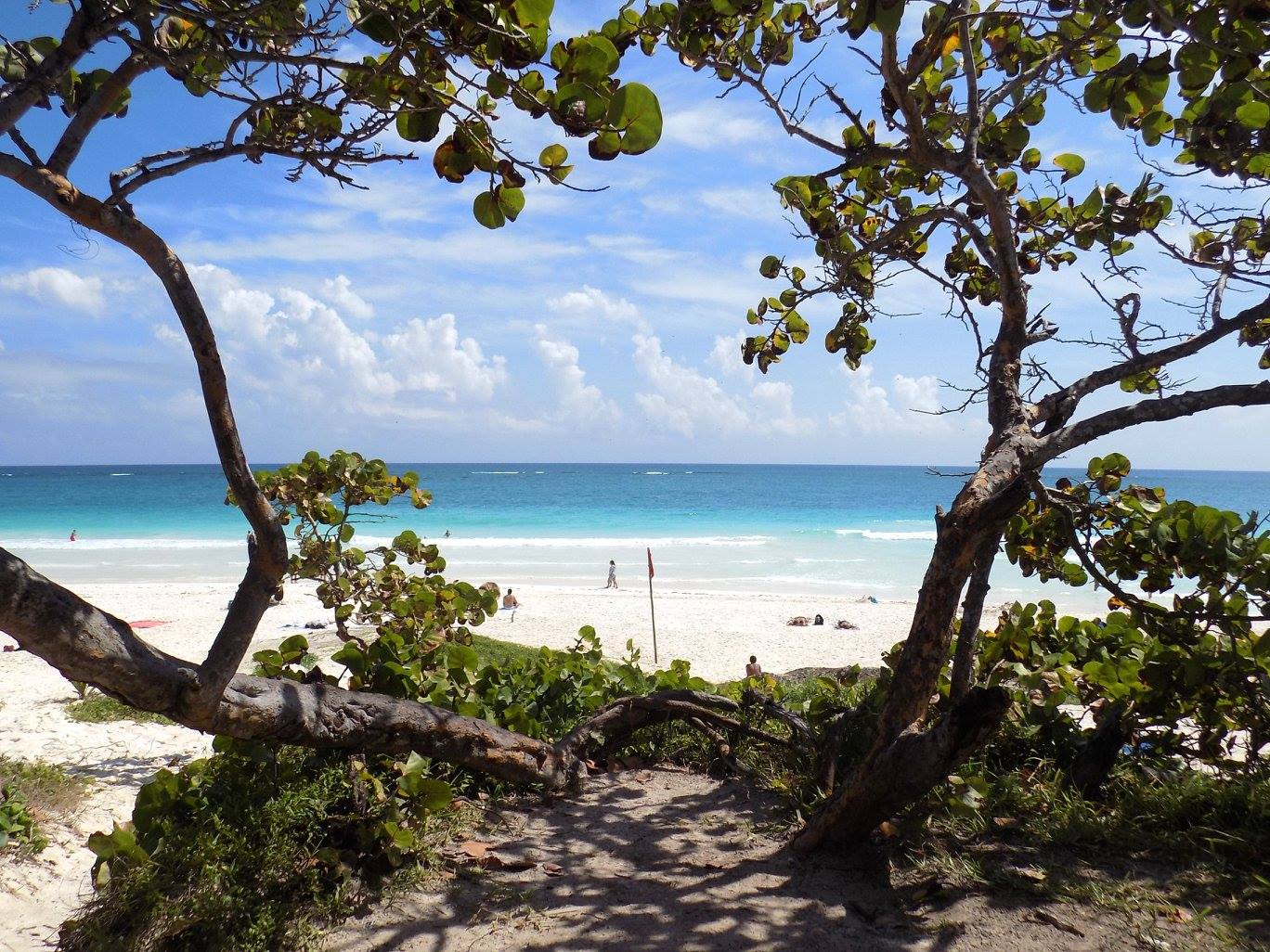
At midnight, we walk across a Tulum transformed into of row of dark deserted streets, where drunk locals stumble around at the echo of distant brothels with gloomy neon lights playing loud norteñas and rancheras.
I remember very little of the bus ride, having fallen asleep shortly after leaving the terminal at Tulum, and only waking up at 03:25am when the darkness of the strongly air conditioned coach is interrupted.
The lights are swiftly turned on and chants of ‘Pasaporte! Frontera!’ finally end the lethargic journey to the border post of Chetumal.
We queue just outside of the coach and are called one by one into a dingy little office in which two immigration officers demand USD 25 to leave the country, leaving no opportunity to explain that such tourist tax was paid on arrival or any other possible excuse for that matter.
No receipt is given either and once my passport is reluctantly adorned with a dim green stamp upon paying the hefty ‘departure fee’, I can only think of the uniformed pair indulging on beers and street food whilst counting the loot gathered from over 25 tourists.
A few meters away, a well-organised border post in which tourists are heavily scrutinised works as the entry point to Belize.
Without not knowing what to expect of one of the youngest countries in America, I enter former British Honduras in the middle of complete darkness, only to wake up at 06:00am with the shake of the coach trying to constantly avoid potholes whilst the sunrise unveils a fertile green land splattered with colourful colonial houses to me.
 THE FLYING CAMBA