
Spanning over an area of roughly 20,000 square kilometers, El Salvador is a country that can be driven across in about five hours from the Guatemalan to the Honduran borders.
This was the premise that turned a planned visit to the smallest nation in the Americas into a relaxed affair in which no plans were made, apart from visiting the coastal region.
A couple of hours after crossing the scorching border, the minivan leaves the windy coastal road and detours into a small village consisting of wooden houses sheltered from the afternoon sun under thick palm trees.
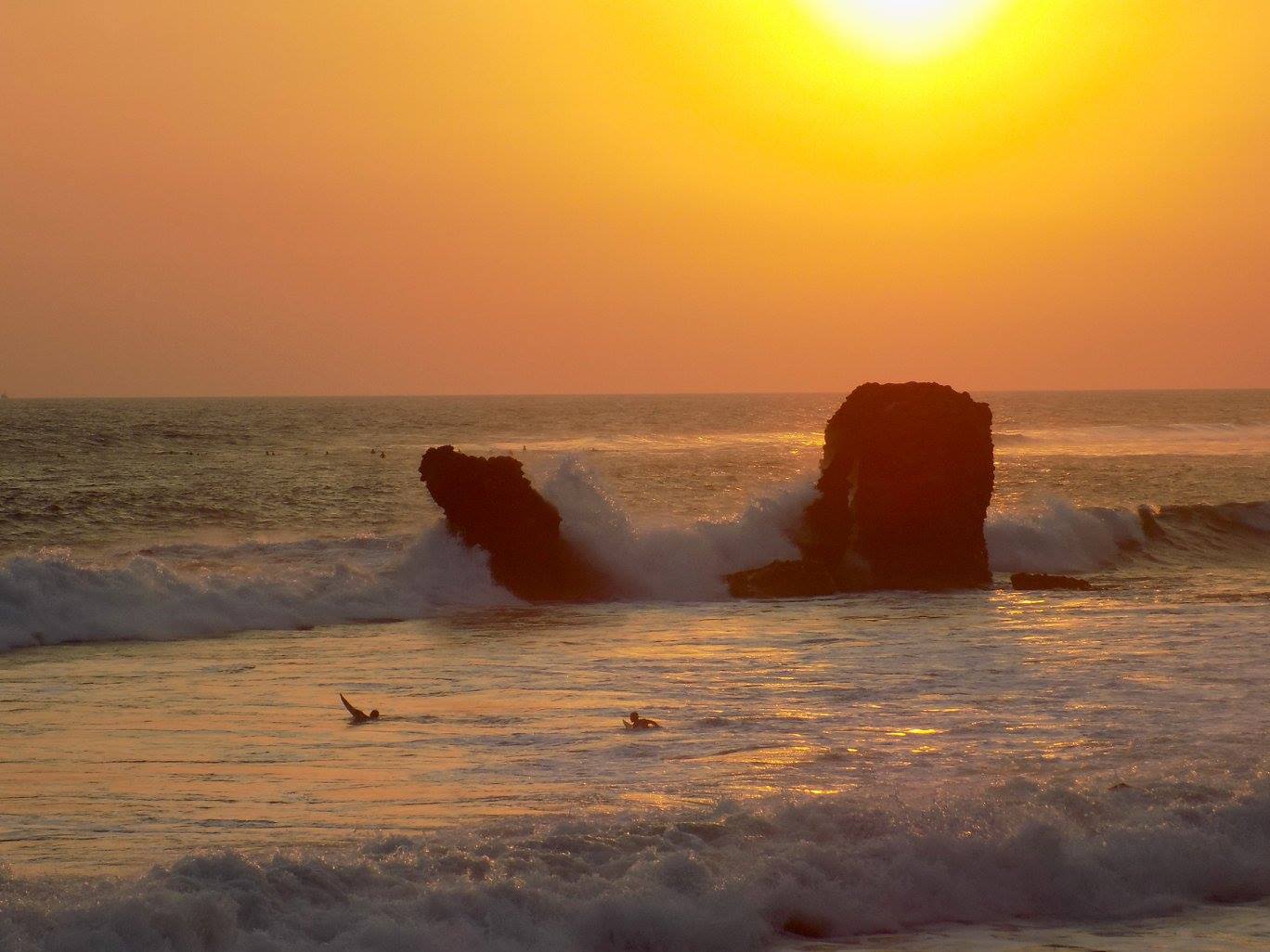
I have just arrived at El Tunco, a small yet very popular surf/sunset spot in which a small number of wooden shacks merge with clusters of cheap restaurants, ‘backpacker accommodations’ and boutique hotels.
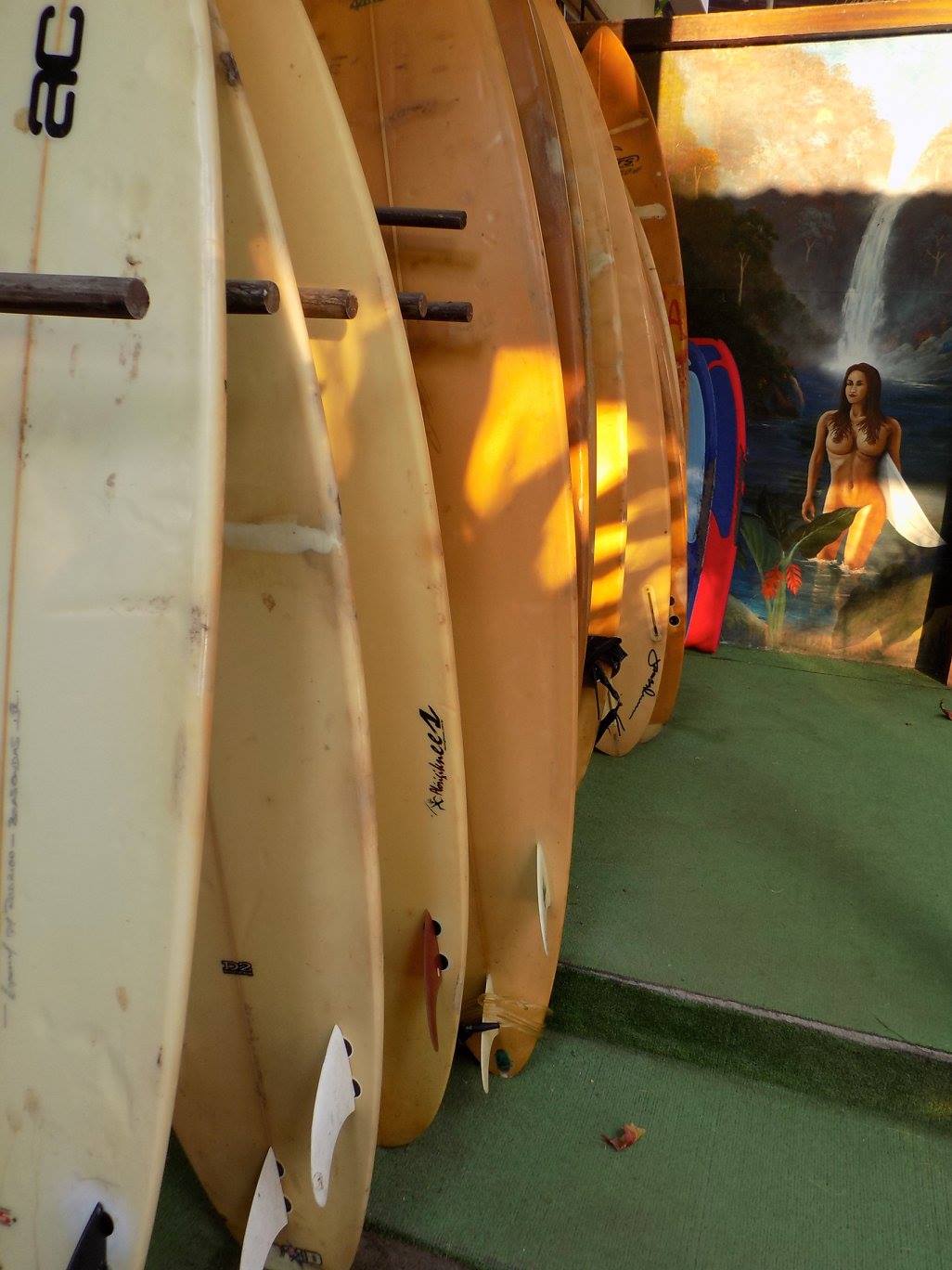
A place in which my backpacking trip takes the ‘solitude’ turn.
When days of jumping from city to city in the company of fellow travellers/freshly made friends whilst repeating the same personal introduction like a broken record of a highly egotistical monologue, finally break ‘the mask’, the one featuring that smiley and colourful persona we decide to embrace at the time of embarking upon a solo adventure.
This is the time in which splurging is much needed, and the place in which I book my first simple ‘single’ room, crooked noisy fan and a dark private bathroom included, in a wooden lodge overlooking the Pacific for the mere sum of USD 15 a night.
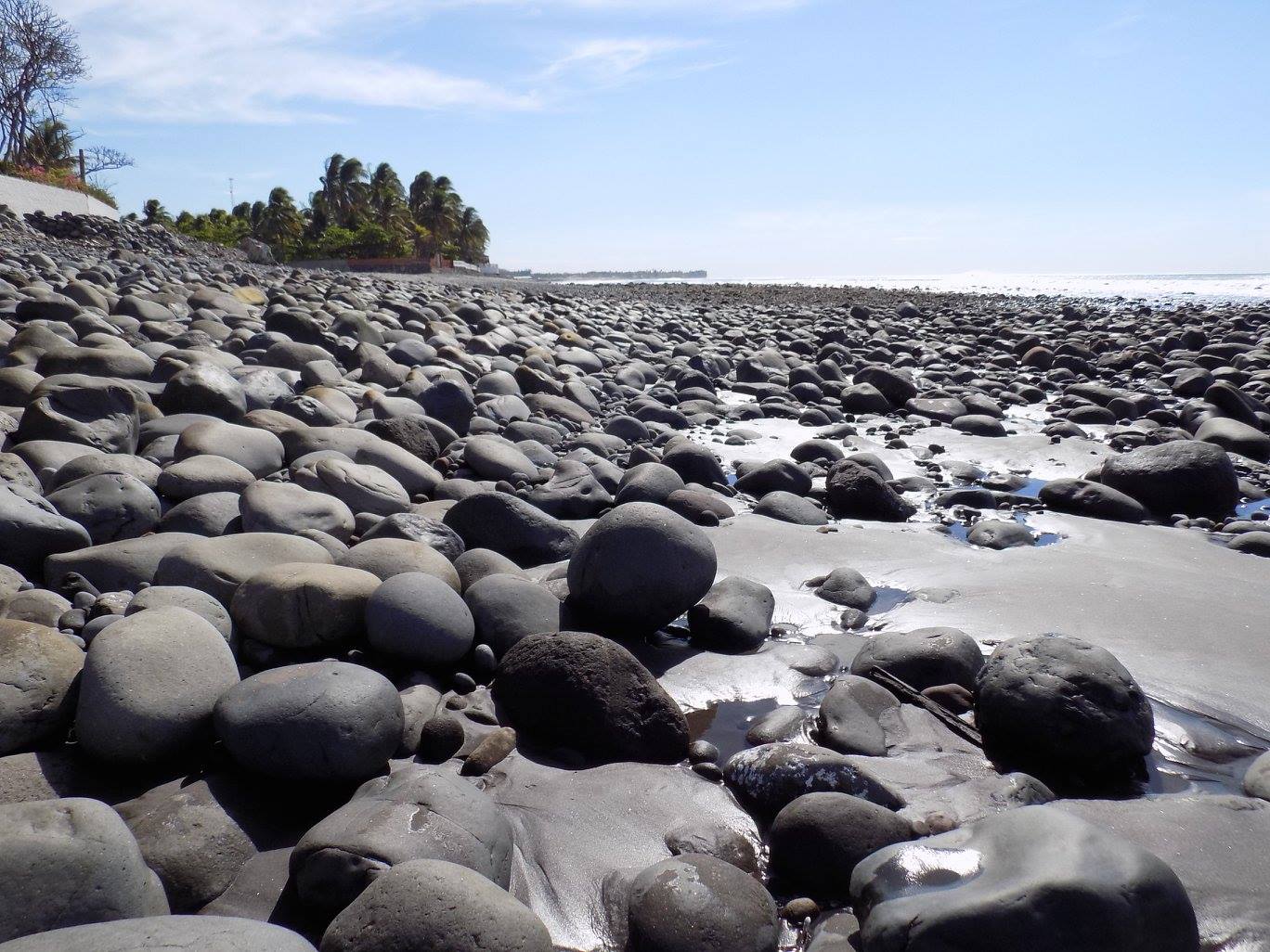
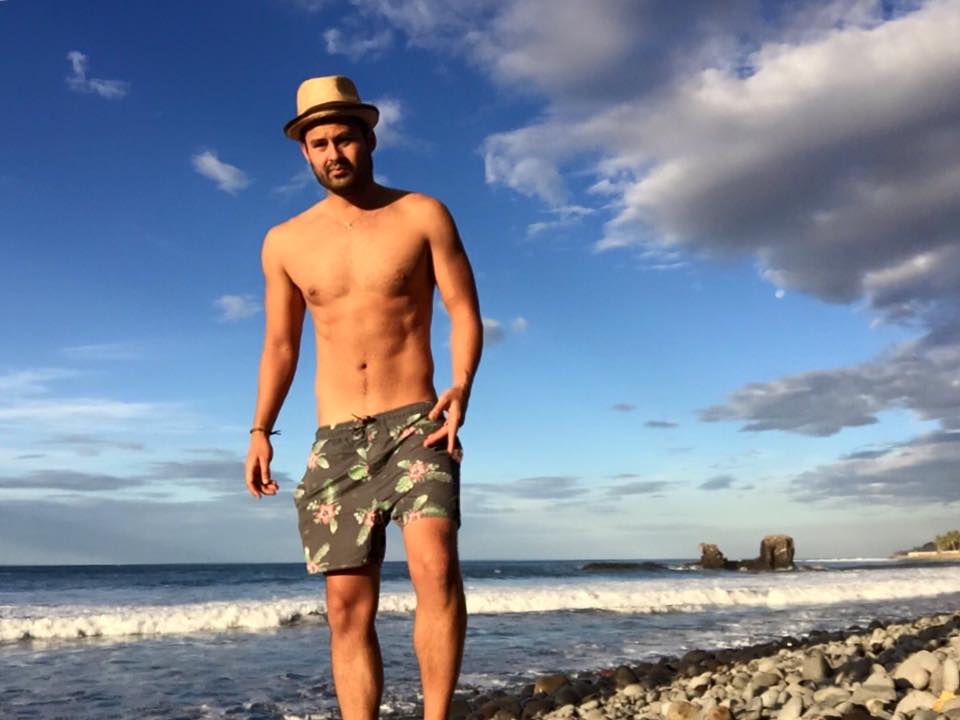
It becomes an idyllic spot to enjoy 06:00am ocean dips whilst trying to avoid being tossed around the sharp pebbly beach by the powerful Pacific Ocean tide, to indulge in long naps on hammocks hanged under tall palm trees or to enjoy short dips in the small yet clean swimming pool.
Most importantly, an ideal spot to just being on my own, without worrying about anyone else, doing as I please.
Breakfast at 11:00am? Lunch of pupusas filled with pork and cheese on my own? Ice cream for dinner? Why not.
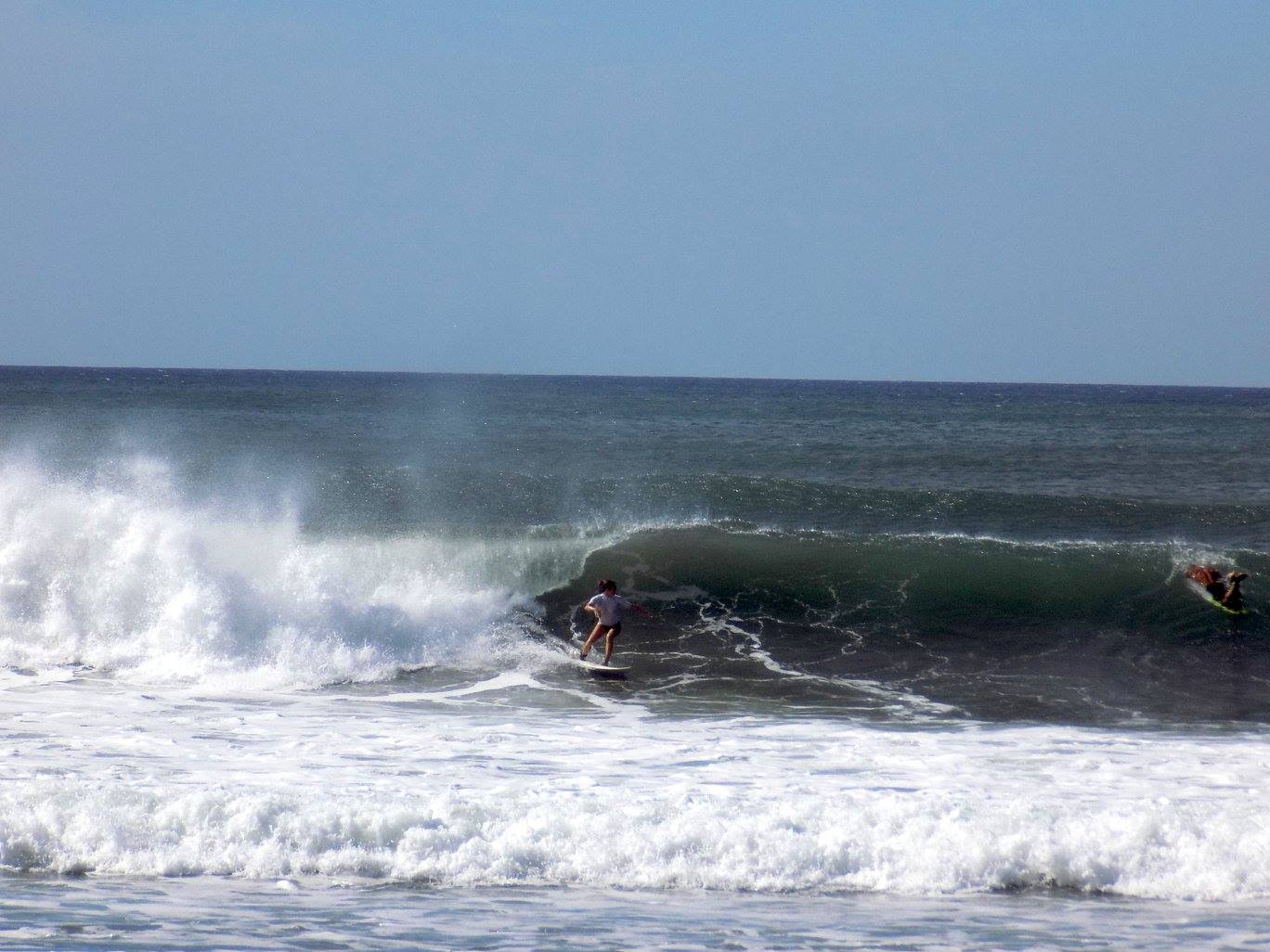
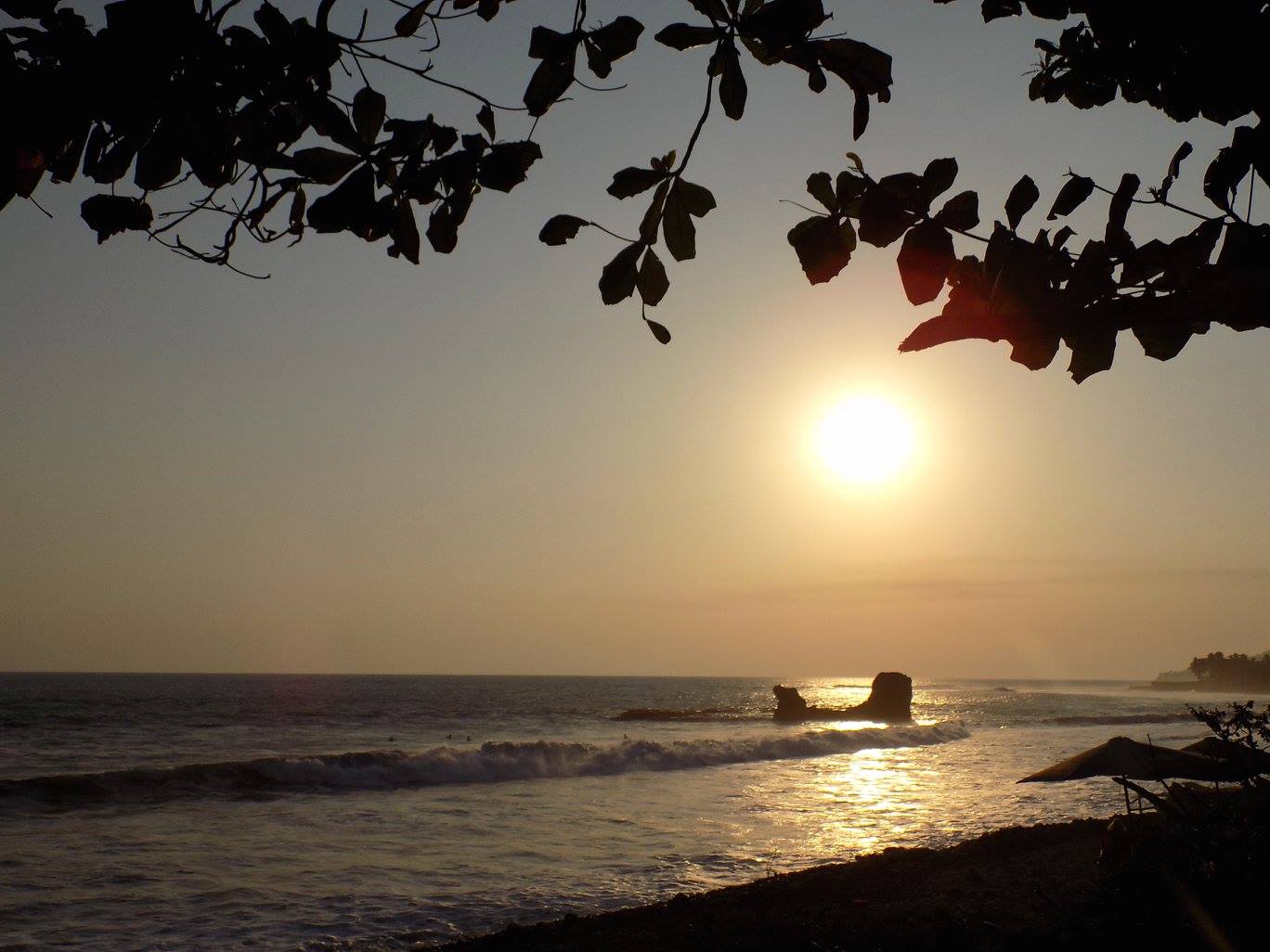
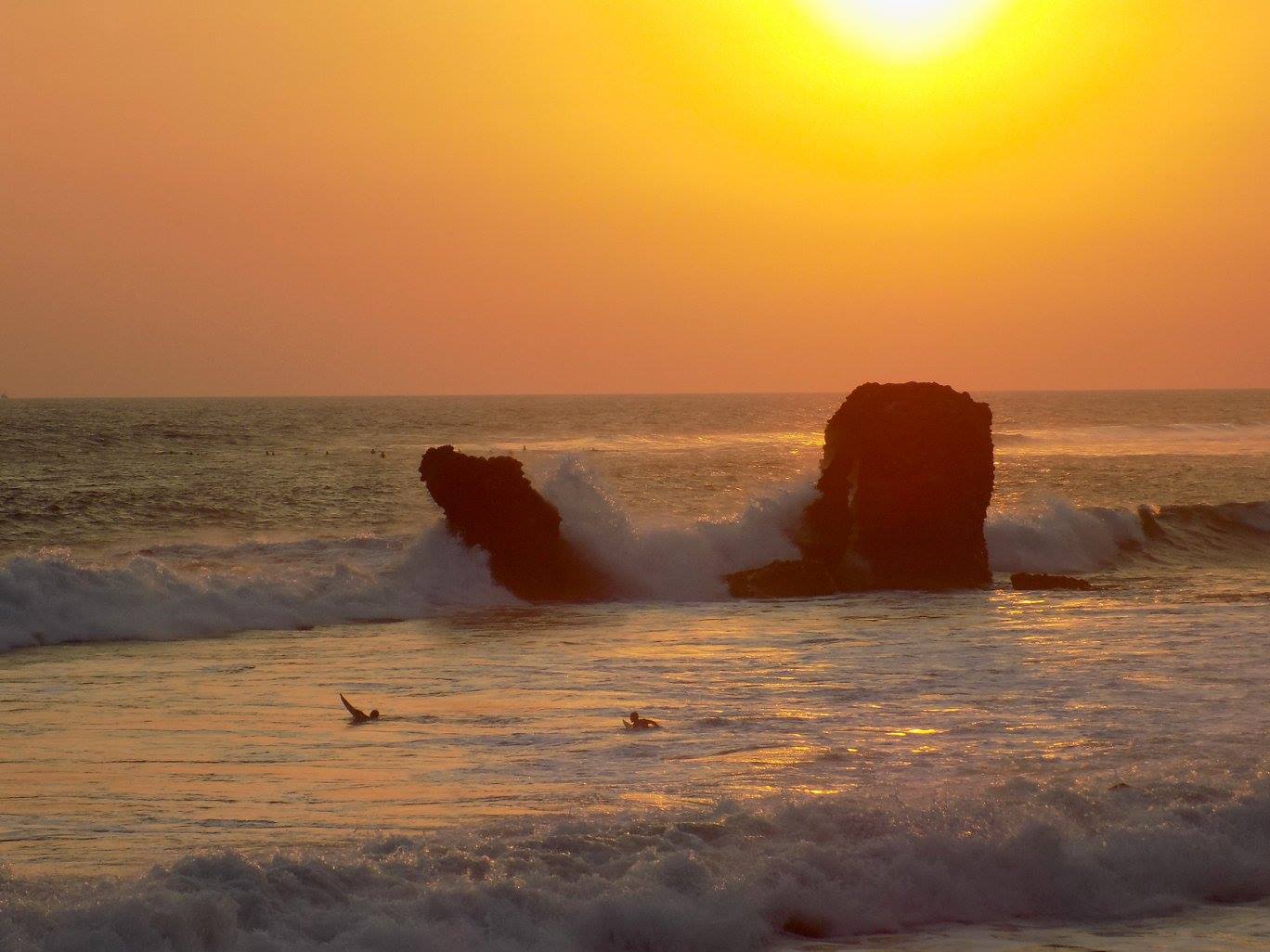
Three days of this relaxed routine in which I interacted with fellow human beings about four times set the mood for the next leg of the Central American Odyssey: Honduras, famous for being the most violent country in the world.
A second review of El Salvador boundaries suggests that, with the country being as small as it is and with a planned route only cruising along the narrow strip that connects Honduras to the Pacific Coast at Gulf of Fonseca, should be a matter of a few hours to make it to my next stop.
I call this : ‘Chronicles of Central American Public Transport ‘
Stage One: It’s 07:00am and I walk out of the village to the main highway. 10 minutes later, I catch a colorful ‘chicken bus’ to the larger port town of La Libertad, a place which most people would avoid.
Stage Two: From the haphazard market area at La Libertad, I am told to jump into what I define as ‘chicken bus on steroids’, sexually suggestive stickers, LED lights and DVD player included.
The vague outdated information I had read online instructed me to request a stop just before the viaduct that intersects the highway to Comalapa Airport and so I do this.
Time to wait at a makeshift bus stop underneath the viaduct whilst enjoying some fresh oranges sold for a ‘cora’ (word derived from ‘quarter’ since the currency in El Salvador is the U.S. Dollar) and getting my picture taken by roguish local women sporting high tech smartphones.
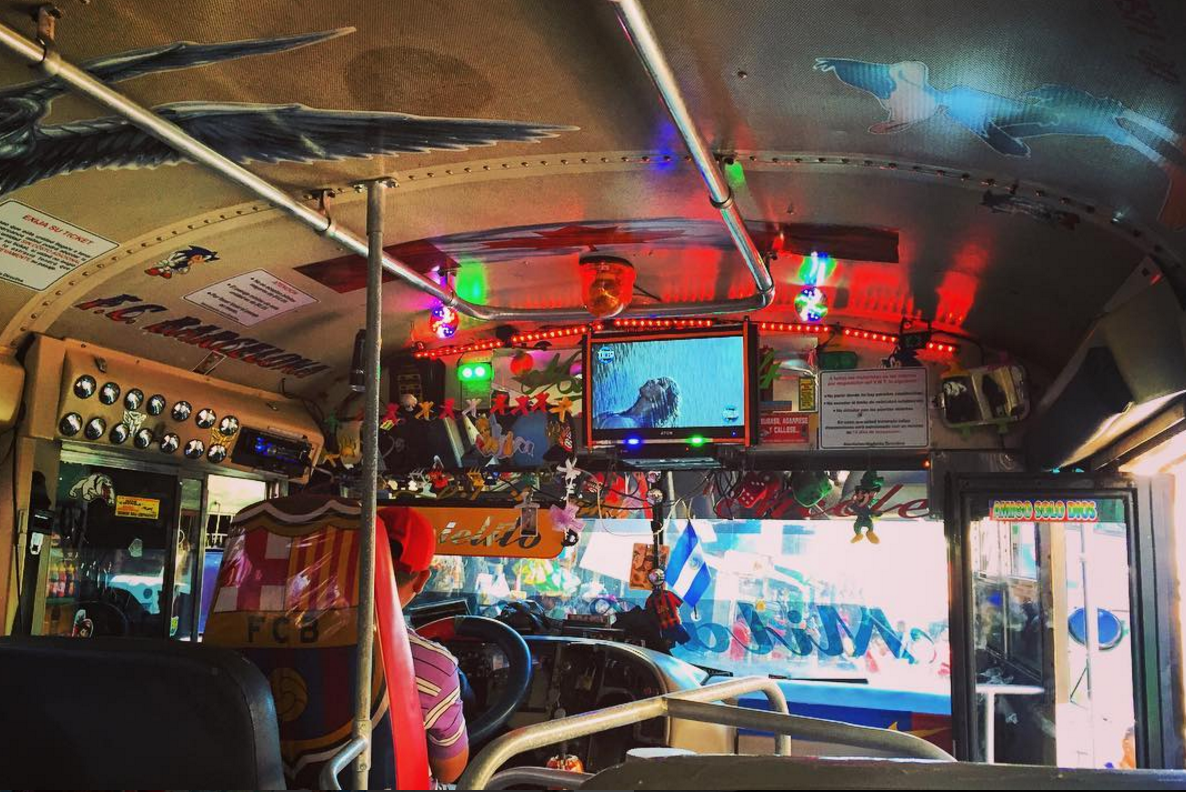
Stage Three: I take a large ramshackle bus, laid in a 2-3 seat layout. Having broad swimmer shoulders prove to be a disadvantage.
A thin female passengers wearing a pink top reading ‘SEX MACHINE’ in large silver letters stands up and, almost like a perfectly-crafted infomercial, recites the benefits/starts selling random merchandise ranging from ‘magic pens’ to toothbrushes. Two hours later, I am just outside Usulutan.
Stage Four: I immediately catch a connecting and rather comfortable bus to the town of San Miguel, the largest in Western El Salvador.
Shortly after the bus caresses the perfectly cone-shaped San Miguel volcano, a smiley passenger stands up in the middle of the corridor and, just as she had just been spirit-possessed, spends nearly one hour energetically speaking about the Lord Jesus and, with a pungent language, telling stories about her past as a prostitute in the United States… donations are of course well appreciated after the strongly religious speech in this rather eventful bus ride.
Stage Five: It’s already midday. The dusty thermometer placed outside the crowded bus terminal at San Miguel marks nearly 40 degrees Celsius, however, I manage to catch yet another bus to what seems to be the border with Honduras.
The landscape turns hilly shortly before arriving at Santa Rosa de Lima, where everyone gets off the bus… except me. I am told another bus has been arranged to take me to the border.
Stage Six: The ‘bus from the 1930s’ pulls off the Pan-American Highway just outside of Santa Rosa de Lima and wait for more passengers to board. I mumble some swear words in English whilst fellow passengers jump into the dilapidated bus with several bags of groceries and goods.
I start worrying. The general advice is that buses in these countries stop running at 18:00pm, time in which it is too dangerous to ride or drive any sort of public transport, so the companies basically stop their services at this time.
At this stage being 14:00pm, with half the journey to be completed and a border crossing to be conquered, the thoughts of not making it to my next stop and end up stuck in some roadside Honduran motel escalate, whilst I both swear and pray for this journey to end.
Avoiding a five-kilometer queue of idle trucks, I make it to El Amatillo at 15:00pm where I am waved good-bye from El Salvador and hastening cross a whitewash tall bridge into Honduras.
The border control in Honduras is slow and every traveller is heavily scrutinised, turning it into a good opportunity to exchange my U.S. Dollars into Lempiras and grab a bottle of much needed cold water.
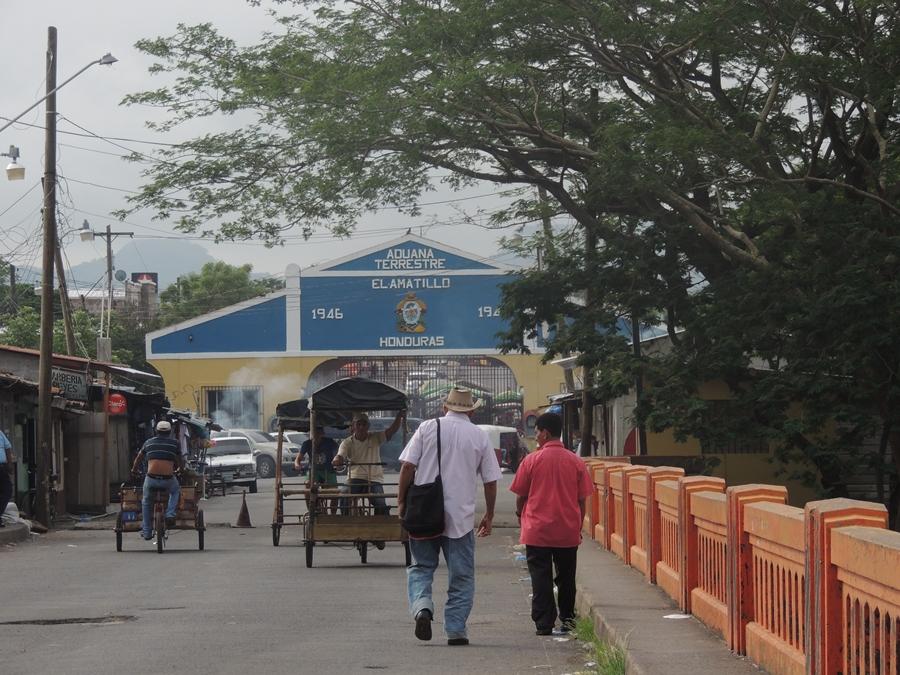
Stage Seven: A bright yellow ‘chicken bus’ parked next to the border post announces its departure to Choluteca and half an hour later, starts its procession-like departure through the Pan American highway. With each passenger-picking stop I feel like both kicking my seat and crying in frustration.
However, my spirit is slightly lifted by the wind blowing through the dirty window whilst the bus gains speed and rockets through the narrow highway swerving around the soft dry hills conquered by wire fences and dirt-made shacks, breathing in relief when the driver announces my stop, some three kilometres before the town of San Lorenzo. It is now 17:45pm.
Stage Eight: A minute after I finally arrive at my bus stop, a sharply-dressed student stands next to me and, to my relief, confirms he is waiting for the next and last bus of the day.
The end of the afternoon turns the road into an orange/pink asphalt line, lost in between plain fields of dry land and the winds finally blow a fresh southerly breeze.
The bus finally arrives from San Lorenzo, I immediately try to find a place in the crowded last service of the day: a combination of loud salsa music being played by a group of pre-teens students sitting at the back of the bus, women carrying their sleepy children on their laps, hypnotised by the dramatic sunset shining from the right hand side of the vehicle and the gentle sway of the bus hitting shallow potholes.
Whilst standing in the crowded corridor, my mind is struck by a combination of sadness, loneliness, paranoia but most importantly, relief.
I have indeed made it to the last bus and despite the sweat, fatigue and frustration, I made it safely.
As the bus empties with every passing village allowing me to find a free seat, a smartly dressed 29 year-old man recites anecdotes of working for the Honduran Marine, having been displaced across the country for work several times and proudly disclosing trips to the United States for military training, conversation repeatedly interrupted by missed calls and text from his wife, now living seven hours away.
I arrive in Coyolito amidst a dark and quiet evening, where a small boat is lined up to take the passengers of the last bus of the day across the Gulf of Fonseca.
Boxes and passengers are swiftly transferred in a matter of a couple of minutes, the roaring of the small boat engine joins the serenity of a fresh starlit night, magically transforming the 14-hour ordeal of taking eight buses (and a boat) into a rewarding experience.
The dark silhouette of a volcano splits the Milky Way sight into two and the boat anchors in a silver-coloured sandy beach only lit by the pale lights of a few rickshaws waiting for the last passengers from mainland to arrive. I have made it to Isla del Tigre in Honduras.
 THE FLYING CAMBA