I leave the solitary desk in West Dublin behind and skim through the stale autumnal evening, through the busy traffic of the M50 and the light mist setting in the horizon dominated by the Dublin Mountains.
The brand-new Ryanair aircraft arrives and replenishes with a new load of weekend commuters in no time. A weak rainbow draws a colourful rainbow just at the end of the runway, and the sun sets as we land over the greenery of the fields surrounding Luton Airport.
Luton is one of London’s five airports. The thick walls of the hangar-like terminal enclose spaces in which boarding gates pile up and connect through blunt blue corridors with poor lighting and a food court that has seen better days.
Luton is also the reflection of a global city. Next to me, a group of British ladies sporting undersized pink dresses and inflatable dolls scream their way to their Tenerife flight, whilst a couple tightly places their boarding passes amongst the pages of a copy of the Qoran waiting on their flight to Ohrid.
Across the dirty Starbucks’ table , a couple drowns the sorrows of living in the concrete jungle of the British Isles with mini-sized bottles of whisky and a blueberry muffin, religiously looking at the Departures board for any updates on their delayed flight to Rhodes.
The direct link between the soft plains of suburban London and the soulless chimneys of the Ukrainian capital takes over three hours. The passengers are a mix of families on the way over to visit relatives, carrying heaps of Union Jack-themed bags filled with souvenirs, businessmen cramming their laptops in the tiny tray table and working on elaborate projects, and the odd backpacker flicking through a travel guide.
The lights of the Kiev guide our smooth glide through the frozen sky whilst our arrival is announced in the most solemn Russian style, followed by a few applauses.
As a low-cost airline passenger, I arrive in the small yet cozy Zhuliany Airport, which for my convenience has good wifi, a small bureau de change, an ATM and a row of ready-for-bargaining taxi drivers.
The airport is also closer to the city centre. A 15-minute drive along broad avenues opening to long boulevards that seem to vanish in a horizon of square apartment blocks, the silence of their inhabitants and the dimmed lights adding drama to the black fog covering the empty streets and the hollow smoke coming from the old cars.
I reach the hostel, which is embedded in an old building with thick ocean blue walls. A young girl with big green eyes greets me and shows me the basics of the property with a smile, desperately trying to conceal the fatigue of an ongoing night shift. I make myself a cup of tea and grab a couple of pastries filled with blueberry jam and covered in sugar crystals before falling asleep.
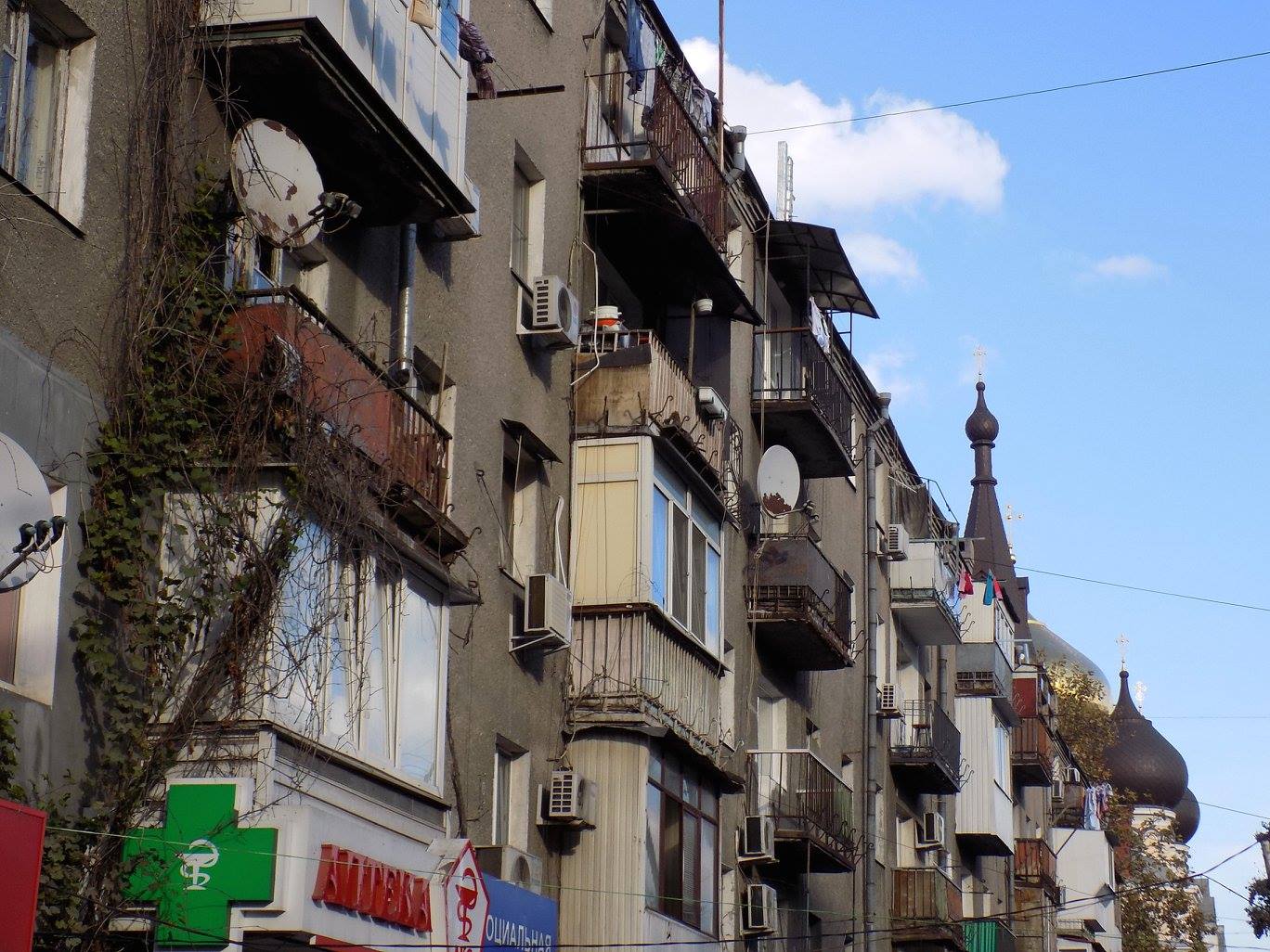
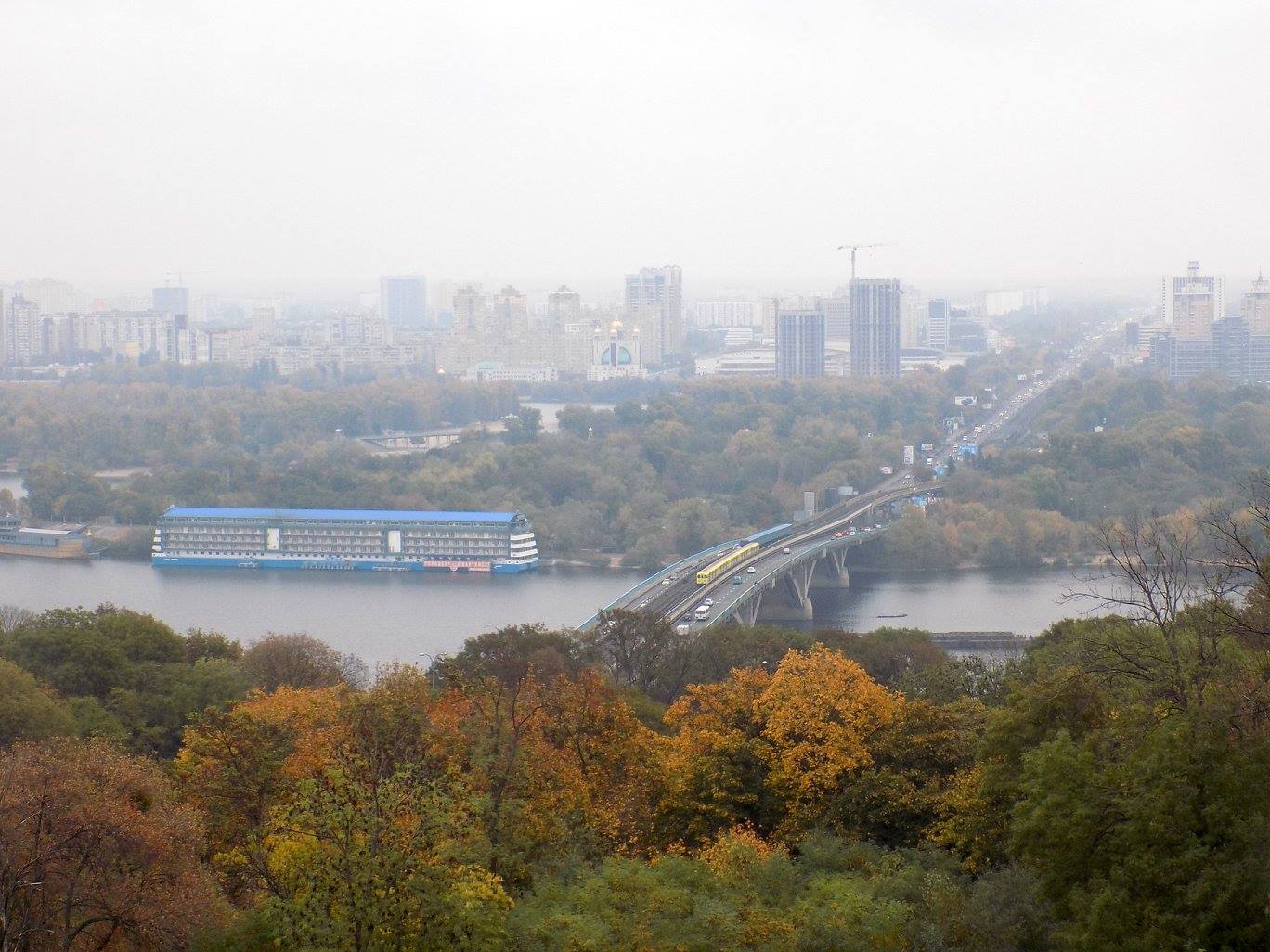
The scale of Kiev is evident in the morning. A maze of concrete blocks slowly cruising over plains at the edge of Europe, covered in morning autumnal fog. The street layout is square and bleak, just like the building lineup of grey and yellow walls splattered with square dark windows.
The metropolis is cut right in the middle by the wide and murky Dnieper River, running through the country like an artery supplying the inland countryside with goods from the Black Sea.
It is a Saturday, and the city takes longer to find its pace. As I walk through the empty streets, I spot the elderly. Their bleak scarves and coats contrast with the colourful socks worn under rubber sandals, their facial skin crumbled by years of cold weather and their arms vigorously waving plastic brooms. Legacies of the Soviet era perhaps: the streets of Kiev are spotless whilst every single member of the population has a function.
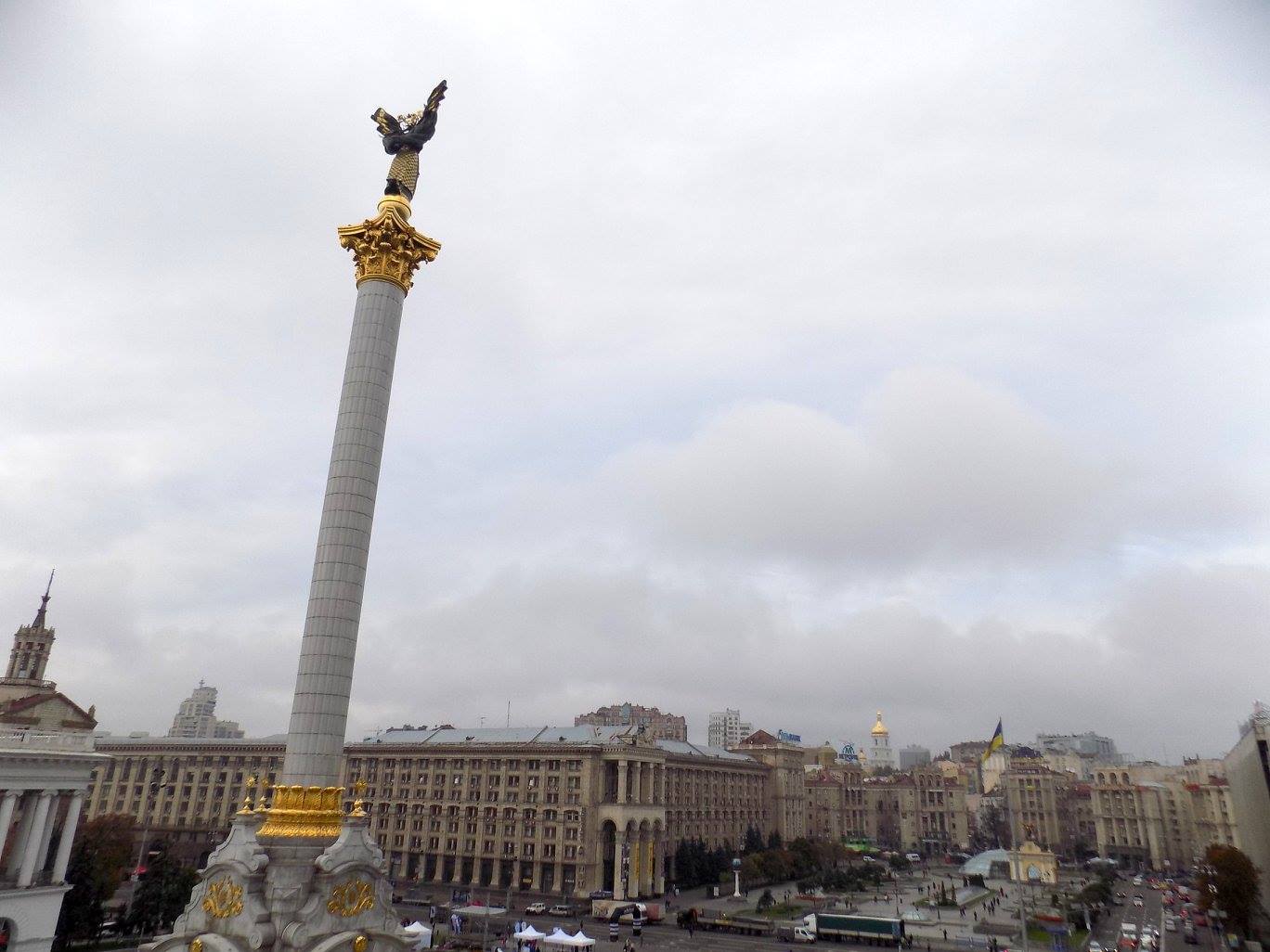
A golden female angel spread her arms and holds a guelded-rose branch over the main esplanade, a representation of Ukrainian Independence, now taken over by a modern department store shining through tinted glass and watched by the stiff concrete lines and solemn windows of the Ukrainia Hotel dominating the hill from behind the tall Baroque pedestal.
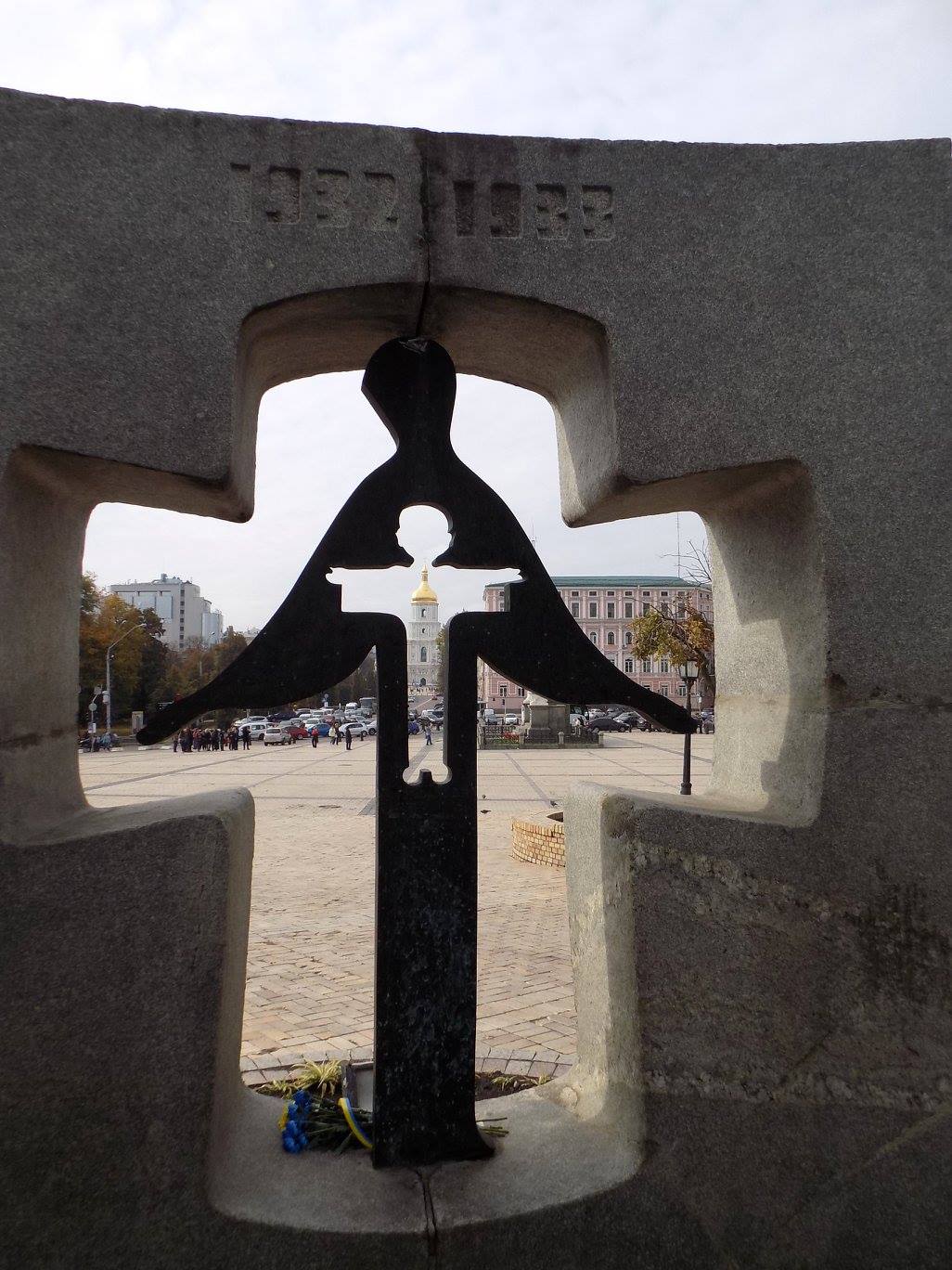
An accurate analogy of the country perhaps, where freedom of speech is still a luxury and reminders of civil fights hit the eyes with pictures of young residents killed in these same cobblestone streets in 2014. The rare trees surrounding the square have become makeshift shrines oozing with cheap candle wax and printer ink.
Just on top of the nearby hill, a steel rainbow hugs the statues of two well-built men symbolising the Reunification of Ukraine and Russia and their eternal friendship. The monument as bleak and grey as the relationship itself.
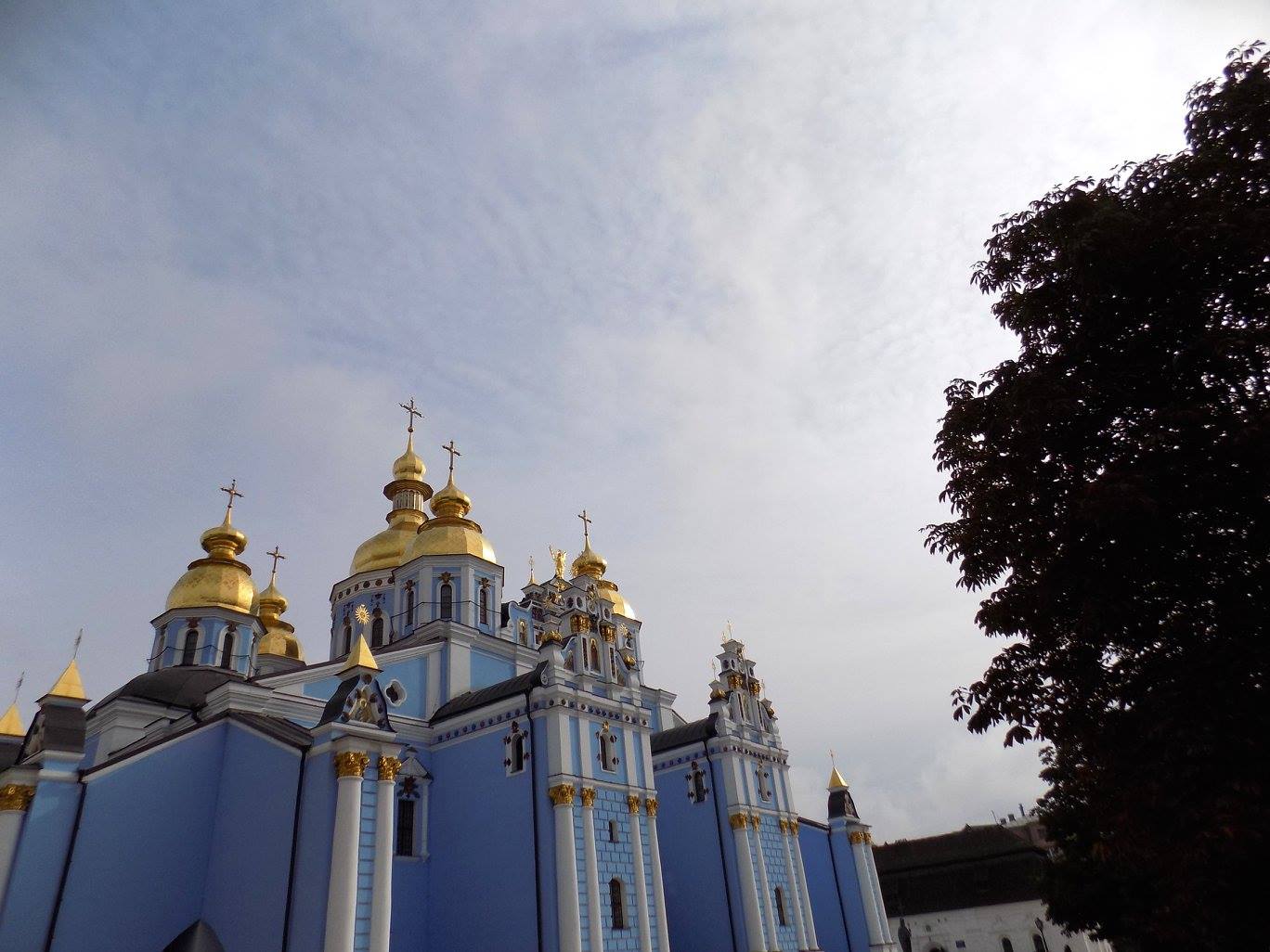
Despite the stillness of the Soviet legacy, Kiev still mesmerises with its spotless street layout which cuts through soft hills covered in amber autumnal foliage and crowned by Orthodox churches with golden onion-shaped domes, scratching the grey sky like delicate pale hands covered in shining bracelets.
I rush to the main train station along a boulevard bordering the University of Kiev, weaving through students carrying heavy backpacks and listening to loud music on their mobile phones. The city vibrates on the main streets, cruised by a mix of old Lada cars and fast BMWs, whilst meters away dark and narrow alleyways lead to derelict-like apartment buildings covered in graffiti.
At the train station, the ticket officer speaks no English. Her pronounced cheekbones might hide her real age, but not the frustration of years behind the counter, lit by neon lights flickering in the background of a room painted in light green and heavily infested with the smell of cigar smoke.
-‘Kishnau’
– (Types in Cyrillic, turns the screen around and points to four numbers).
My mind numbs at the thought of leaving early and spending 14 hours on a train. Blood rush through my brain whilst the attendant blankly stares at me with her wrinkled blue eyes.
-‘Ah ok. Odessa?’
– (Types in Cyrillic, turns the screen around and points to four numbers).
-‘Yes’
-‘Passport’
The printer machine loudly screeches and the attendant hands me a train ticket tucked in the pages of my passport before releasing a small grin.
Only hours are left in the capital. The grey skies turn heavy in the afternoon and discharge a layer of light rain which gives a glossy coating to the cobblestone streets. Puddles of water on the uneven footpaths mirror the pale buildings and the dull sky over Pechersk Lavra, a monastery built on the side of a hill with privileged views over the sandy Dnieper River banks and the horizon of suburban Kiev blending with the infinite sky through fog and industrial smoke.
The monastery was built in 1051 as the ‘Kiev Monastery of the Caves’ and it is now the most important religious complex in Ukraine, featuring several edifications built in the Orthodox style such as bell towers, praying rooms and fortification walls.
The wind increases the chill factor of the already dull rain. I find shelter in a coffee shop next to the Independence Monument, before the rain turns the city into a cold mirage of lights floating in the border between Europe and Asia. A couple next to me kisses whilst flicking through each other’s Instagram accounts and a young blond man sips on craft tea, gluing his eyes to the screen of his Macbook, his legs crossed forward in skinny trousers sported rolled up the ankle.
I take a last look at Kiev before hiding from the cold night in the tunnels of the musty metro, emerging only at the dark main lobby of the train station amidst travellers carrying canvas bags, suitcases, fur coats and plastic bags exploding with fruit, drinks and elaborate sandwiches. A scene of the dynamics of rail travel in Eastern Europe unfolding in front of me.
I share a four-couchette compartment with a young local couple and a woman with a rasp smoke-induced cough. No words are spoken. The lights go off as we hit the suburbs and the red melamine panels only reflect the odd street light flickering through the window, just as the train gains speed in the rainy night.
Compartment lights are lit and bags are swiftly packed as the train pulls into the main train station at Odessa.
The cold wind in the platform cuts through the skin of my bare legs. I desperately try to keep warm by briskly walking around the station for information and away from the domains of the station towards the centre of town.
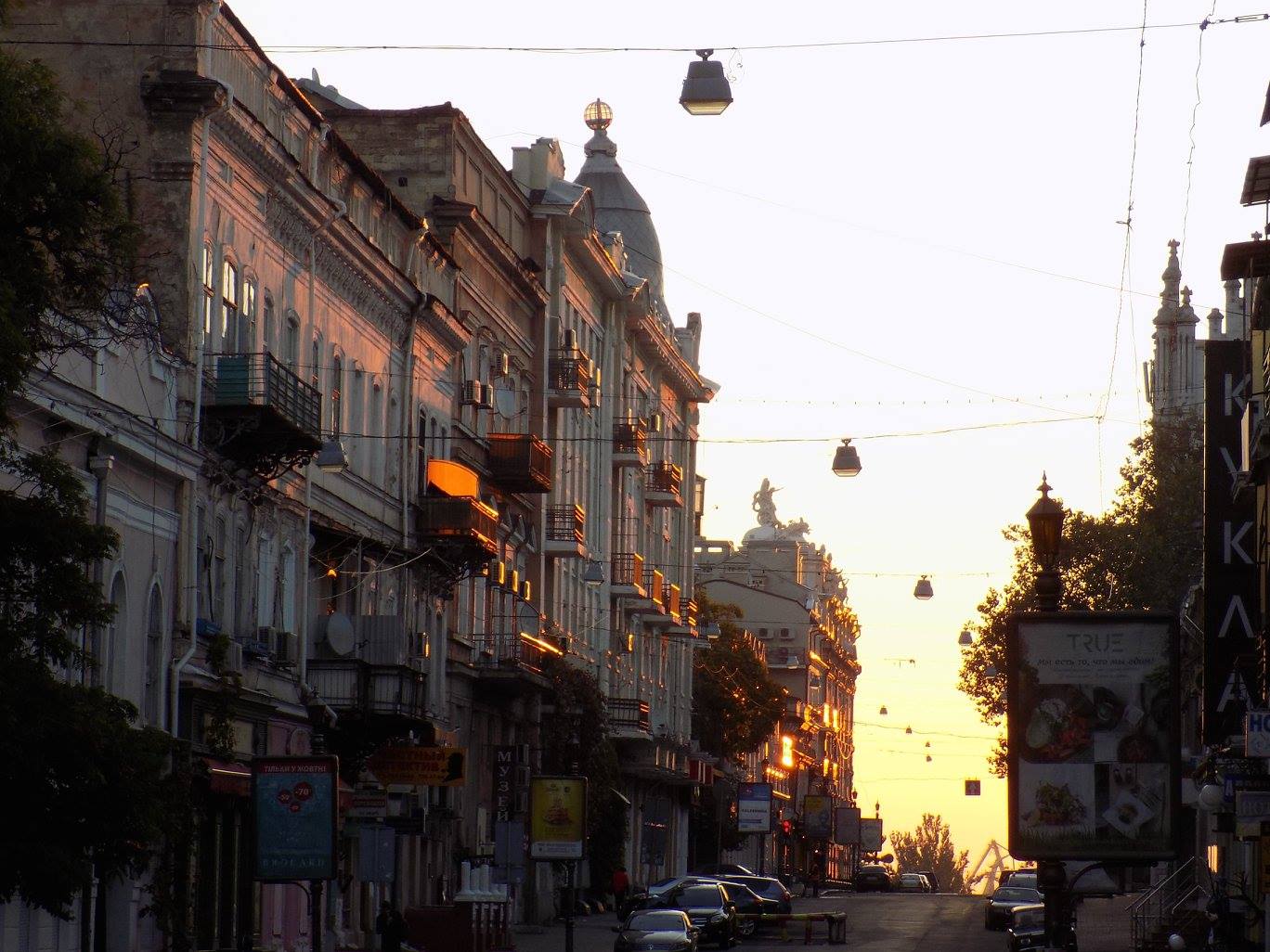
The weak sunrise seems to freeze in time, slowly revealing the street landscape of the ‘Lady of the Black Sea’.
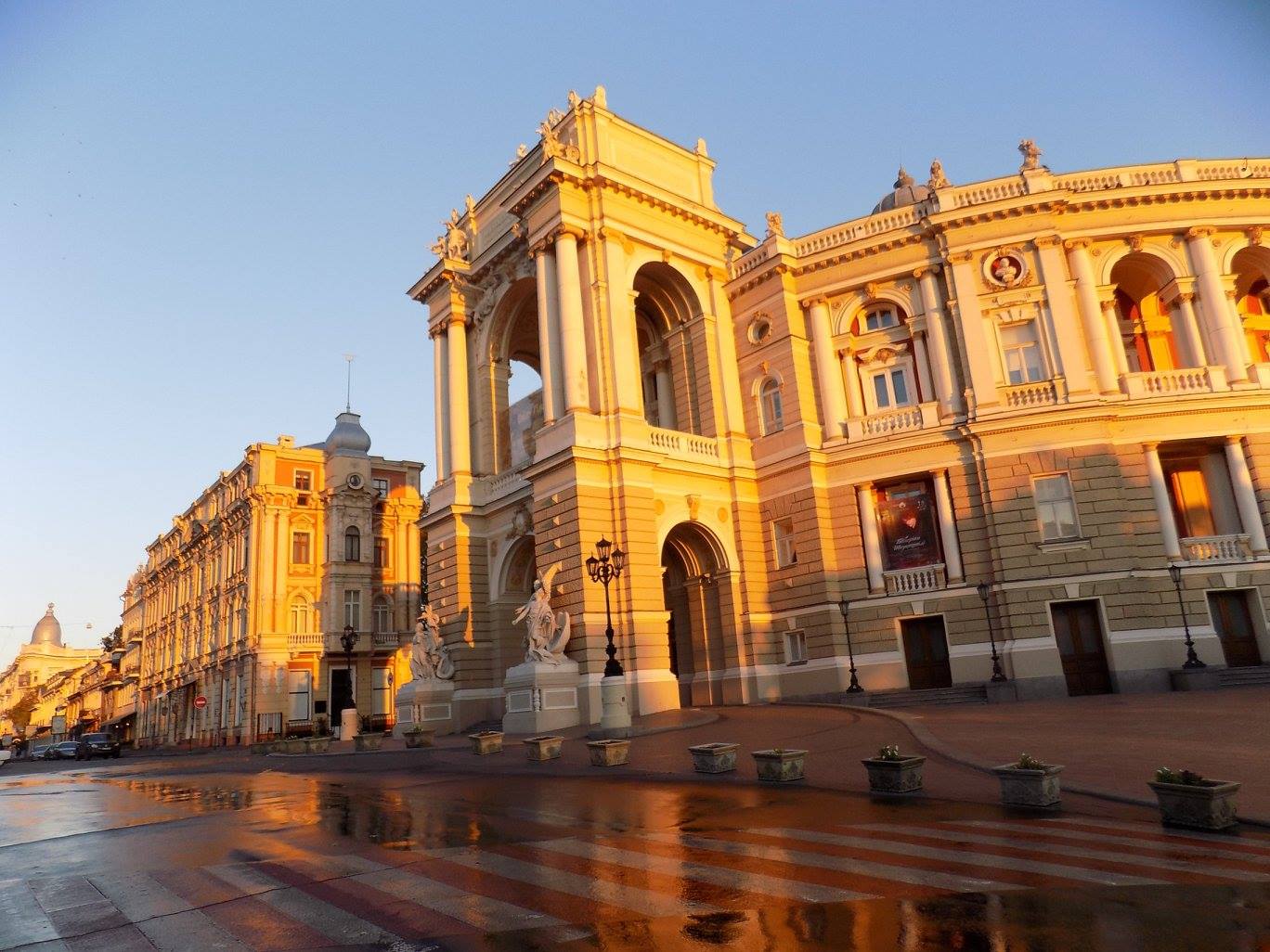
It is the city that all Soviets cities want to be: clean, leafy, rough on the edges but with a bourgeois heart in the centre. Elegant within its streets lined with upmarket shops, bakeries and coffee shops, flamboyant with its Opera House dominating the most expensive hill on this side of the Black Sea with its pastel colours and pseudo-Baroque lines. It is the ‘Soviet Riviera’.
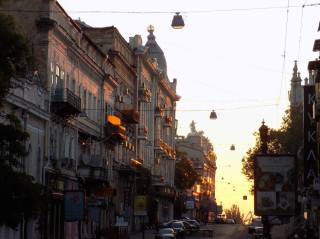
The early Sunday morning see few locals heading to church and many cafes closed for the day, perhaps the entire season.
The port sits still on a sheltered bend of the Black Sea, which glisten blue under the clear sky, cargo ships in a procession towards the Bosphorus draw white foam lines in its pristine water body.
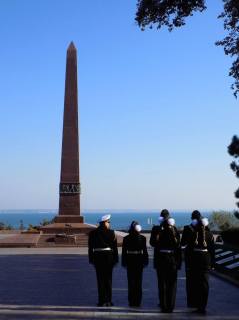
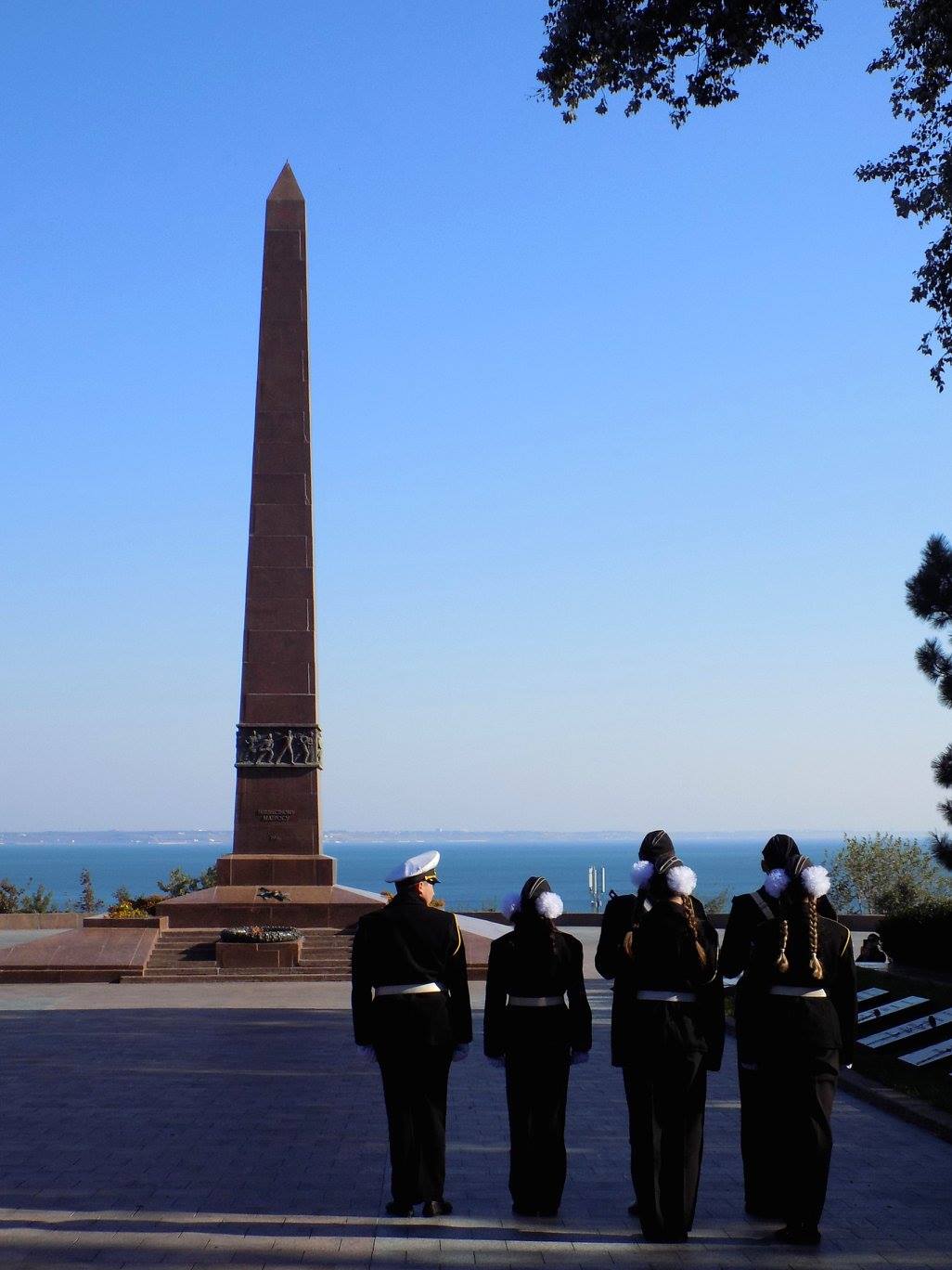
From the top of Tarasa Shevchenka Park, an obelisk reminds locals of the atrocities of the war, whilst four soldiers perform a sacred daily ritual of saluting the monolith and loudspeakers hanging off surrounding trees enunciate military hymns in dramatic Ukrainian, smothered in a warlike soundtrack.
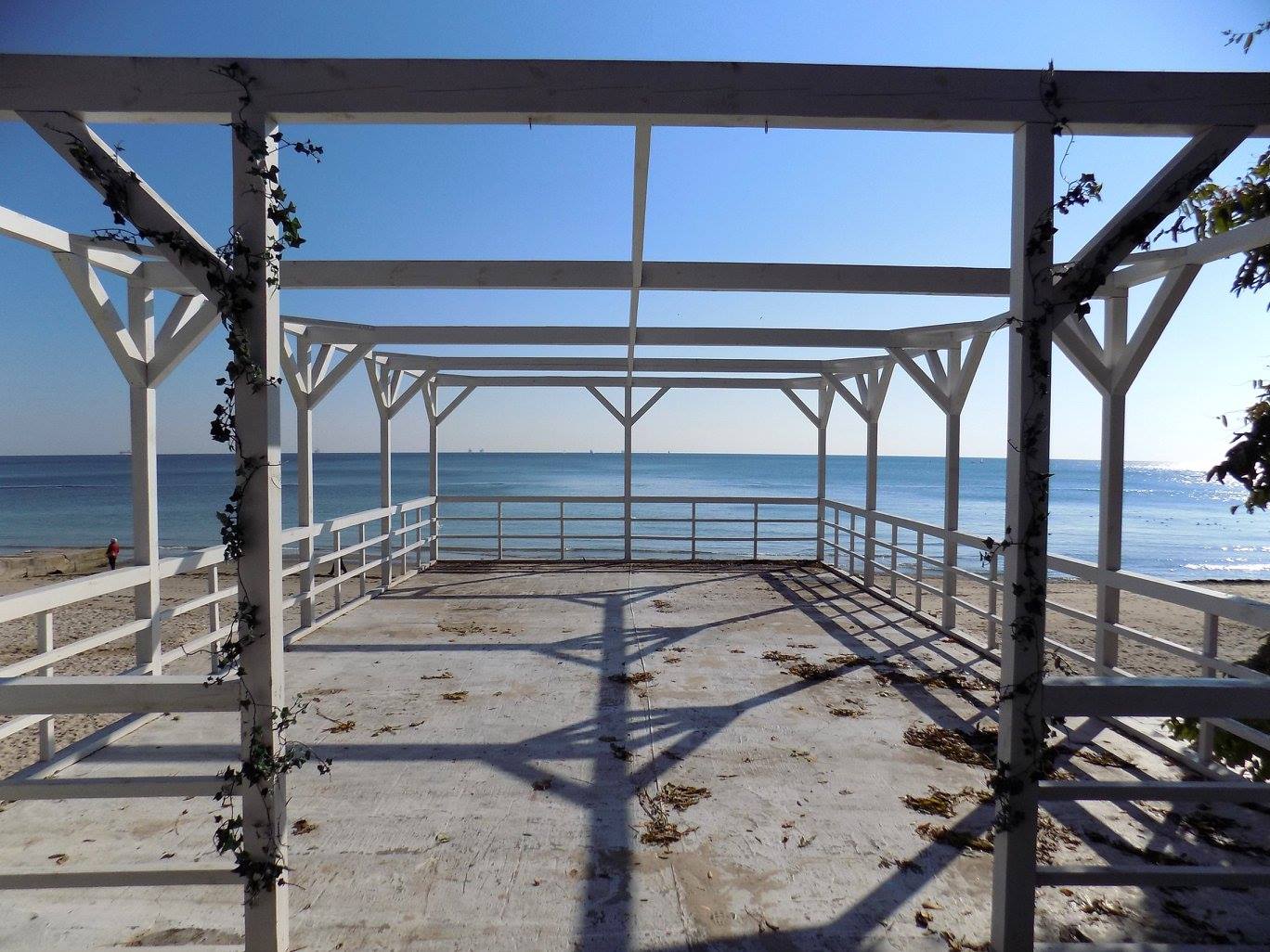
I walk to Langeron Beach, where entire houses sit empty in the sandy wind and wooden decks announce parties extinguished months ago. The essence of Odessa lays here. A beach town ready to embark upon a long lethargy. The frozen winds from Siberia soon battering the blue and whitewashed empty wooden shacks, the pile up of chairs from the French-style cafes closing down for the season and being used as overnight shelter for the homeless, the silent halls of the Opera House and the overnight trains crowded with locals looking for jobs in Kiev or Lviv.
Locals and tourists alike enjoy the erratic dance of the water fountain next to the Opera House, rendezvous for selfie sticks, snacks and one of Ukraine’s obsessions: coffee.
An instrumental concert is played by the military band under the weak afternoon sunshine, providing a melancholic touch to my last hours in a rather melancholic country.
At 17:48pm, the steel wheels of the train screech as we pull out of the station and turn West towards a landscape of dry flat fields extending as far as the point in which Ukraine claims as the border between its domains and Moldova.
The train stops in some sort of makeshift station seconds before the sun finally sets. The staleness of the heated air inside the dark carriage is cut by a sturdy policeman wearing an olive green coat and sporting Ukrainian flags on each shoulder.
He sits next to each passenger, his deep blue eyes stare and compare the passport pictures with the people in front of him with a rather disturbing grin. The pages are abruptly stamped and returned before a word is spoken.
An hour later, the train starts its slow march through a new territory. Ukraine has now been officially left behind, and just as I feel like my every action is not being watched anymore, I am slightly relieved.

 THE FLYING CAMBA