
I once read Moldova is felt as soon as you enter it. A dim border between Ukraine and Moldova through the self-proclaimed Republic of Transnistria confuses me for a few minutes, but as the train slows down and the carriages proceed to constantly balance sideways, the pace of the trip also reduces its speed, entering a land claimed by many and also nobody.
Behind are left the nuclear-powered lit villages and fields of the Ukraine. Transnistria seems to somehow learned to exist submerged under the gloomy lights of yellow street lamps and enclosures of desolated dirt roads leading to silhouettes of soft hills. The powerful electric locomotive kissed our train goodbye at the border and was swapped by a dirty blue diesel one.
As the train pulls into the main station at Tiraspol , the capital of Transnistria, a horizon of smokestacks topped by weak red lights announce both the start and finish of a urban sprawl consisting of dull apartment blocks, their lifts broken and windows shattered.
The train tracks dribble piles or rubble and roads riddled with potholes, the dew-covered wet asphalt reflecting the full moon of the clear night in the plains of Moldova only a few miles away.
I reach Chisinau Gara Nord at nearly midnight, having conquered just little short of fifty miles in over three hours. The station is clean and desolate on the main platform but bursting with a waiting crowd of taxis just on the other side of a silver fence.
I grab a taxi. Its cheerful driver speaks no English but is happy to announce his last run before heading home for rest. He blasts the electric tones of Romanian ‘europop’ on the car radio, slightly opening his window to let the cold air in and speeding up through a wide avenue lined with a disturbing number of slot-machine houses and arcades into the city centre.
Once checked into the hostel , a newly-built house just across the road from the University of Moldova and next to a ‘posh’ restaurant, I grab a dinner of grilled fish, vegetables, chocolate cake and wine for a little over six Euros. Across the red-tile covered dining room, the youth of Moldova enjoys the cold evening in a party of seven, pouring red wine out of a fancy decanter and munching on small elaborate entrees, whilst on the table next to me, an attractive couple sits around a solitary crimson rose and photographs their food before proceeding to eat it.

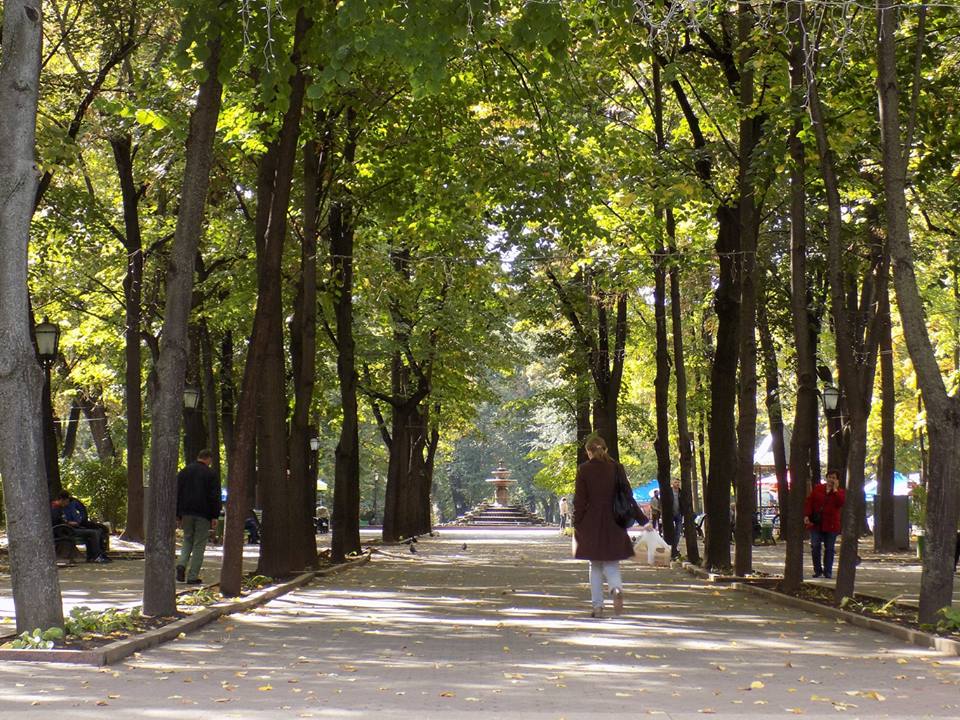
In the morning, Chisinau shows its face as a city of unremarkable beauty, yet as a city that posses an incredible sense of serenity.
The grid-like structure of the city centre is a combination of low-rising houses built in Baroque style and painted in pale colours and whitewashed walls. A few small parks dot the area with pine and birch trees, usually leading to the grounds of aggressively Soviet-style mono block buildings in which the countless bureaus of the Government have found a place and role in this small country’s economy.
The sun pleasantly shines through the bare branches of trees aligned in the deformed pavement of the Boulevard Stefan cel Mare, Chisinau’s proudest street, and the blue sky of the clear day turns the tinted windows of the Parliament building into a colander of clouds.
Entering Moldova through Transnistria technically means an illegal landing into the country. Transnistria being a region in dispute between those who claim it as an independent territory from their desks in Tiraspol, aggressively claimed as Moldovan territory by Chisinau and slightly dismissed by Kiev, it also falls into the category of non-official countries, meaning stamps into this grey area are not given, so the entry to Moldova is never officially registered.
I am addressed to the Minister of Foreign Affairs office, a shy slim door squeezed in between the shiny lights of a slot-machine house and a coffee shop. A marble staircase leads to a narrow hallway in which about fifty refugees cram dossiers of documents under their arms and await for a call from the overworked young receptionist.
Ten minutes later, I am fast tracked and a friendly clerk stamps my passport and staples a piece of paper with some vague immigration information on it. She smiles and timidly affirms that I should have no troubles leaving Moldova now, suggesting no bribes should now be requested at the border.
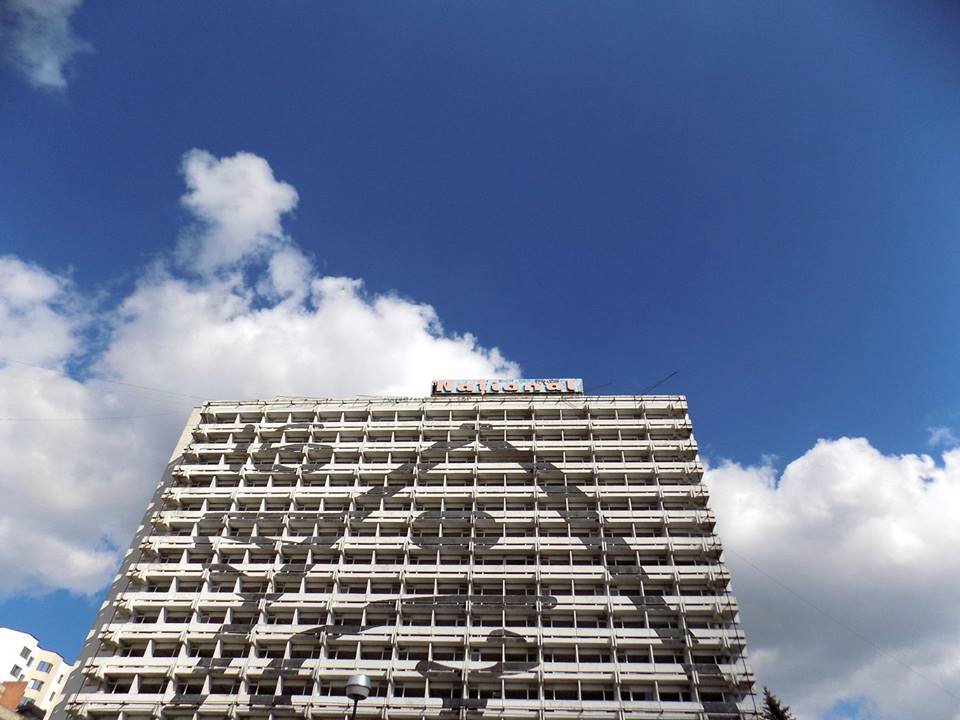
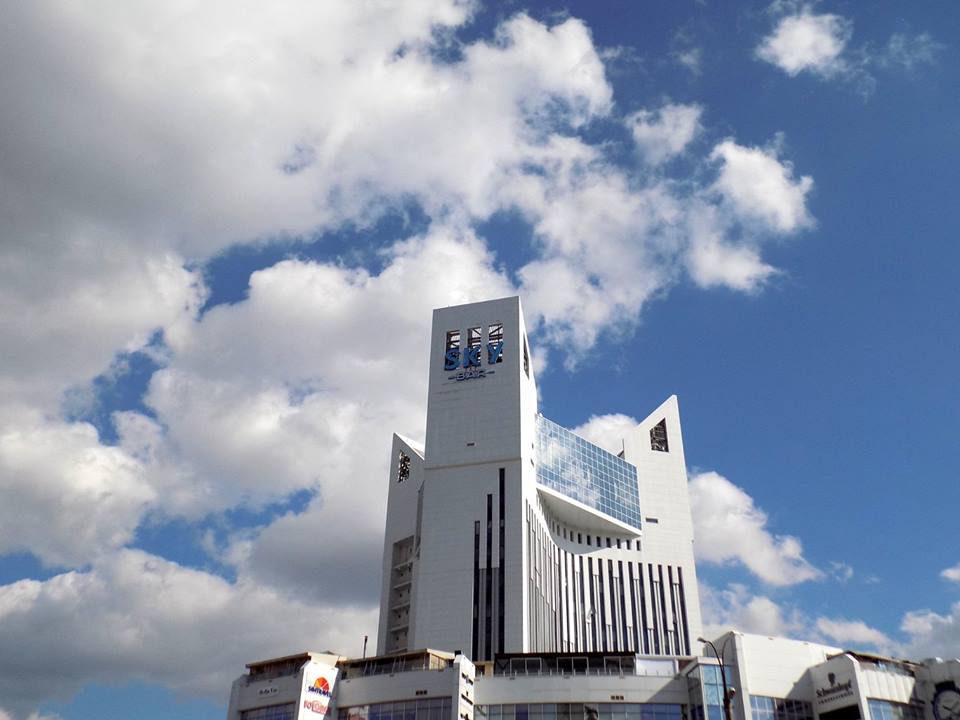
I find hard to find photogenicity in Chisinau. The fascination of this European capital lays on the bleakness of its landscape, on the European traces of the city centre opposing to the Tartar nature of its suburbs.
I decide to spend the day walking around the city with a map in hand as I run my own private errands. A visit to the local supermarket to stock on supplies for the train journey. A stroll down the hill where the main street flows empty on a esplanade of abandoned twenty-something story buildings and travel agencies offer work visas in countries oceans away, opening up to a modern yet desolated shopping center in which bored saleswomen silently await for the odd customer.
Gypsy eyes prey on my backpack next to the train station. Their makeshift fair selling worn second-hand jeans, stuffed animals covered in first-world baby drool and broken mobile phones laid in the cold gray pavement on square spaces of tarpaulin sheets.
I return to the hostel to pick up my backpack. The friendly Italian owner briefly asks for a good review and explains how hard it is to open a hostel in a country that seems to have just opened to tourists, his words also connoting a disappointment in the ‘transit point’ nature of the country.
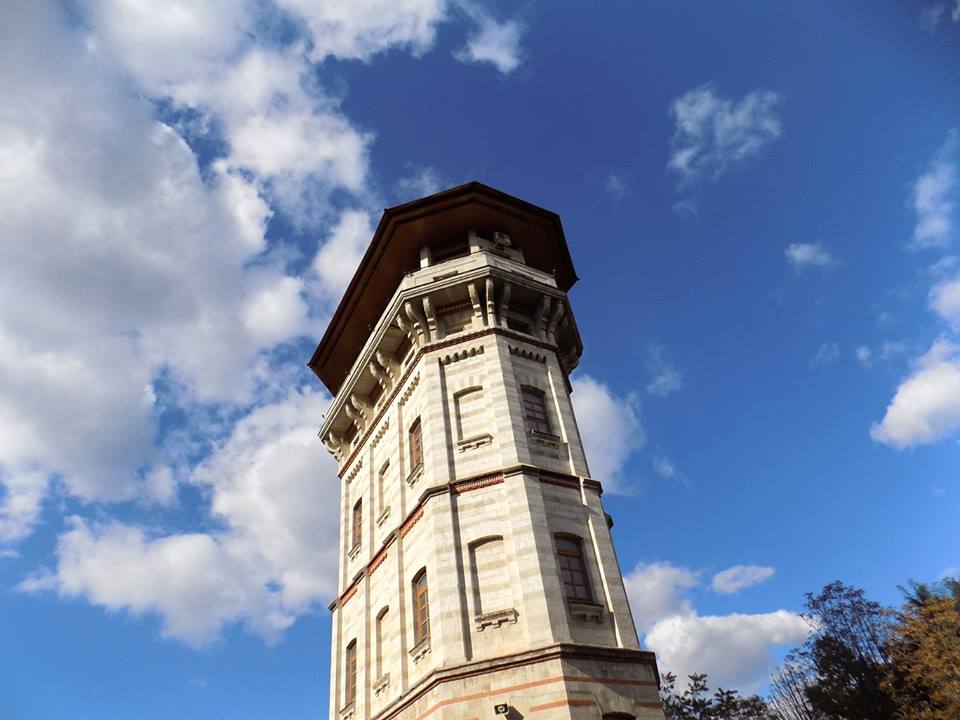
Around the corner, I climb the twenty-two meters of the Chisinau Water Tower for privileged views of the city, extending its arms through leafy affluent neighborhoods of the North and the countless apartment blocks in the proletarian South.
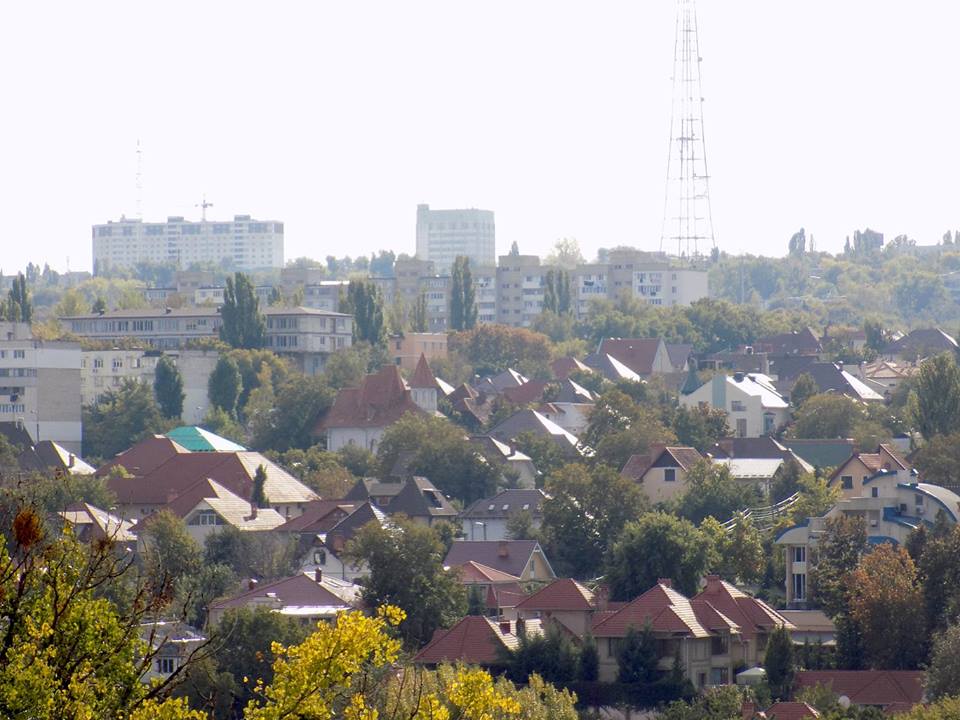
The afternoon takes the city into a gentle transition of commuters rushing into trolleybuses. The gypsies withdraw their makeshift stalls from the pavement and head into the unknown, whilst I finally make it to the train station just in time to catch my next train.
Burgundy-coloured chipped melamine coat the interior of a fifty year-old carriage and impede the stale air of thousands of trips to circulate, almost like I am breathing the same air as those who traveled on the same ‘Moldovan Railways’ carriage two decades ago.
Once in my compartment, I am joined by a tall Belgian guy, his belly proudly protruding from his black shirt and his greasy hair somehow inviting youthfulness. In contrast, an old Irish man exudes resignation from his blue weary eyes and his thick Liverpool accent and a another Irish man introduces himself with the enthusiasm of an eighteen-year old on tour.
It is a cold and stale evening when the sun hides behind the undulating fields of Western Moldova. The train cutting across the hills at a speed no higher than fifteen miles an hour and rocking passengers into a state of somnolence proper to the landscape framed by the dirty train windows.
I am invited to the next compartment, where four other Irish men laugh out loud and down shots of cheap vodka, liters of beer and some sort of dark-coloured champagne.
Silence invades the carriage with the weight of drunk philosophy. The sky outside as black and dark as the villages of rural Moldova. The train stops and an immigration officer demands for passports and documents. Her cheekbones enhanced by the dimmed old lights of the carriage, frame the face of a beautiful young woman in a tight military uniform.
With the alcohol still flowing in the carriage, the Irish men flirt and find an abrupt response given with a polite smile: ‘Moldavian woman and proud’.
The carriage is pulled in many directions until finding a crane. The windows and toilets are locked and the floor grows distant, the operation cannot be seen but felt.
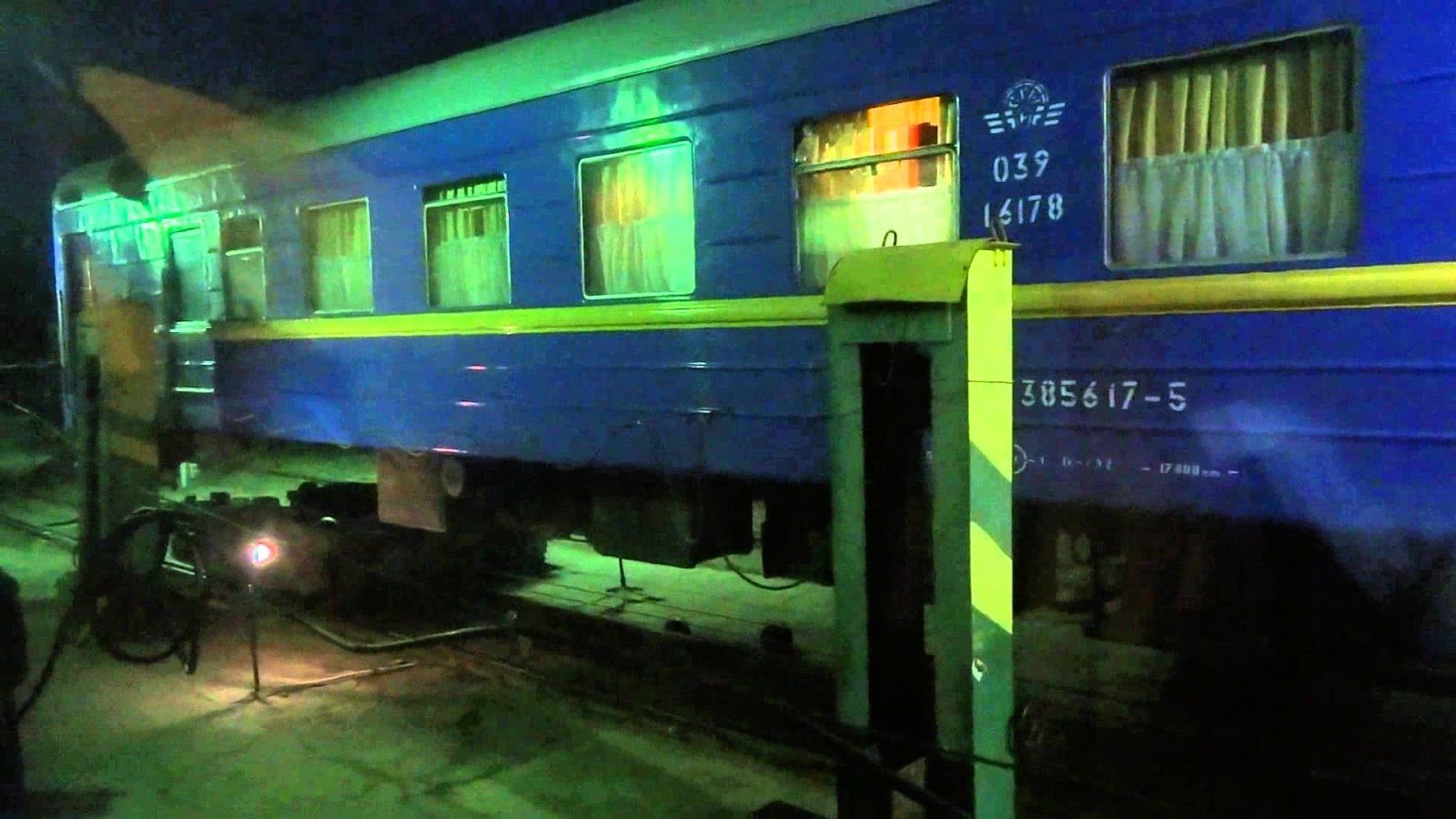
Couplings are disengaged manually and a new broader pair is attached to the bottom of all four carriages in the convoy. Although Moldova and Romania share an international train service, their tracks have different gauges, Romania enjoying German-built lines, standard across most of Europe whilst Moldova is lined by Soviet-built lines. Someone suggests that Germany was not able to invade Moldova because they could not transport their troops due to this peculiar railway feature.
The hermetic nature of the operation suggests restraining. A psychosis originated in an ongoing refugee crisis in Europe and accentuated by the empty nature of the night at the border.
A total of three hours are spent at the border alone with no access to fresh air or toilets, tallying three passport controls, one alcohol-induced casualty, three empty bottles of vodka and one irritated carriage stewardess.
 THE FLYING CAMBA