
Bleak apartment buildings cram over a pile of rusty abandoned engines. The city gives way to an empty terrain which expands into a wide horizon of almost infinite barley crops, lacerated by the single train track weaving alongside farm fences covered in lush green weed.
At times, the train stops at tiny stations with bright whitewashed walls, which seem to have been aggressively teleported into the Bulgarian countryside. With each stop, the station master raises a red flag whilst next to him families greet newly arrived passengers and hastily carry colourful parcels thrown from the tall carriage door.
Industrial smokestacks hug the white rock walls of the Balkan Mountains just as the full moon rises over the geometrically dull figures of countless apartment buildings composing the desolate urban landscape of Gorna Oryahovitsa, an important railway knot in the Bulgarian train network.
I change to my last train of the day, which departs screeching over a sunset-gilded track submerging into a deep mountain gorge, unveiling clusters of houses that seem to float in the sterile sky like a colossal Loi Kathrong.
An American exclaims in awe at the sight. House and car just sold, job quit. Texas accent in hand. His shoulders carrying his whole life, now reduced to a heavy black backpack, and his eyes carrying the refreshing naiveness of a new traveler discovering the world.
The commonality of language spark introductions and conversations through the desolation of an autumnal evening in the streets of Veliko Tarnovo, whilst Tsaverets explodes in colour as part of a cheap yet striking Friday night laser show.
Once at the hostel, I find relief from the long train journey in a bowl of free lentil soup and a cup of peppermint tea, my legs gently resting over hand weaved cushions placed on the heated wooden floor and my mind savouring a taste of accomplishment: the trip is almost complete.
Weird dreams and intense heating interrupt my overnight dreams. I decide for an early start through wet cobblestone streets which defy the freezing morning mist covering the city like a silky night gown.
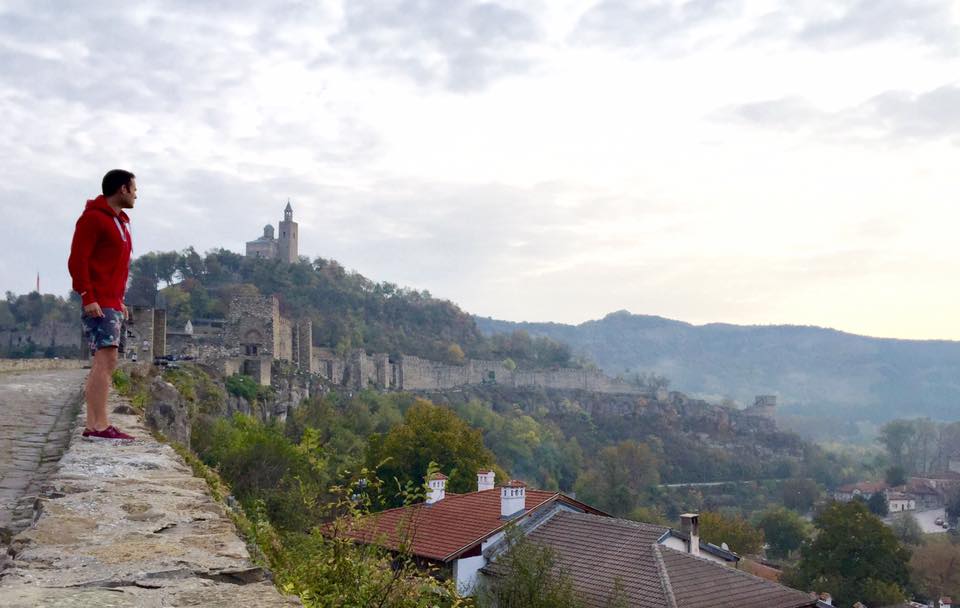
The weak sunshine reflects over the stones of Tsaverets. Built as the Second Bulgarian Empire’s fortress in 1185, the former walled military complex dominates a hill, flirting with the meandering of the Yantra River many meters below.
Veliko Tarnovo is best seen on foot. The area around Tsaverets dominated by bundles of thick stone-built houses clinging to the arid rocks from medieval times, the narrow streets evolving into busy restaurant-lined avenues which later transform into Boulevard Bulgaria as the city rests on a wide plateau, bringing a set of Soviet-era apartment and building blocks to the former Bulgarian capital’s mix, depicting a history lesson within a matter of blocks.
I indulge in a dish of garlic hummus with pitta bread served over a small square table next to a window from which weak sunshine beams filter into the small restaurant. The waitress hopelessly smiles at my requests made in English and her bony fingers point at the small selection of Bulgarian wine available.
Tsaverets is visited at sunset. A maze of stone buildings set in several terrain levels amidst rocks, dry grassland and Bulgarian flags. Its former glory now minimised in scale and austerely shown on display at the restored church dominating the complex.
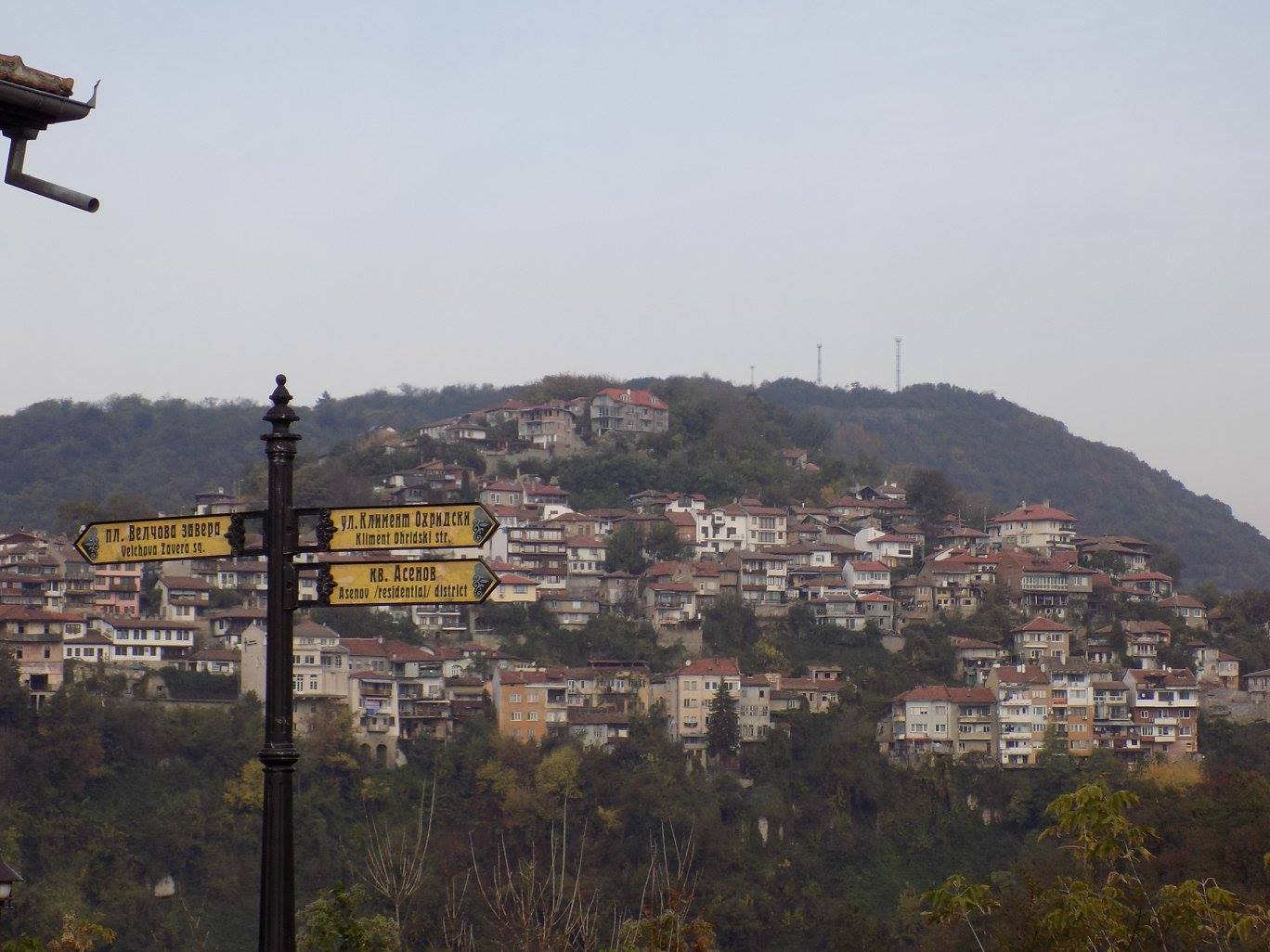
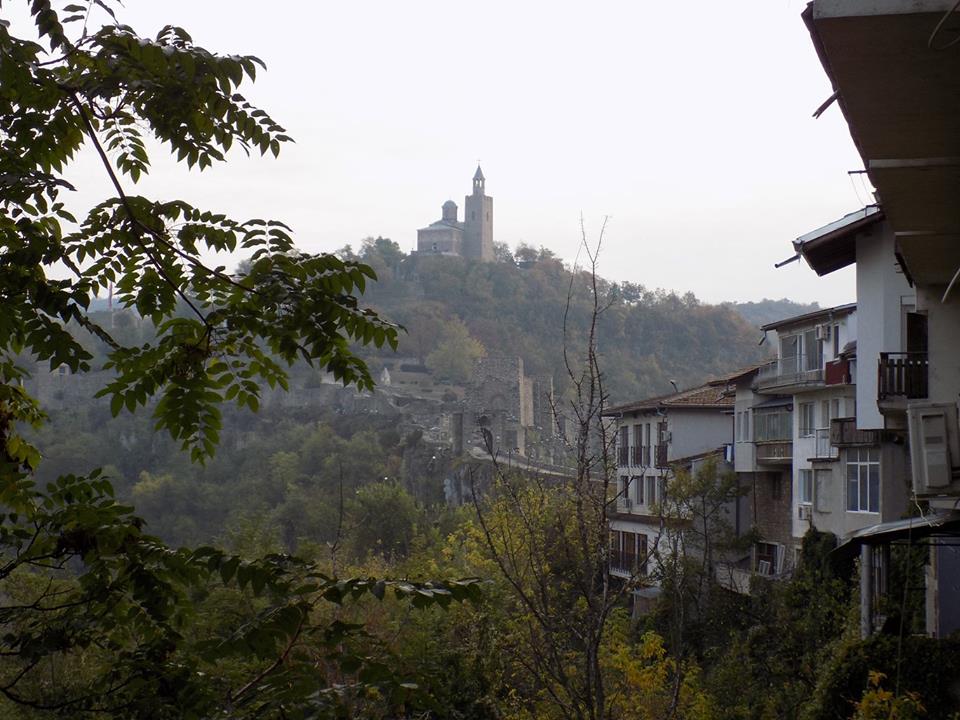
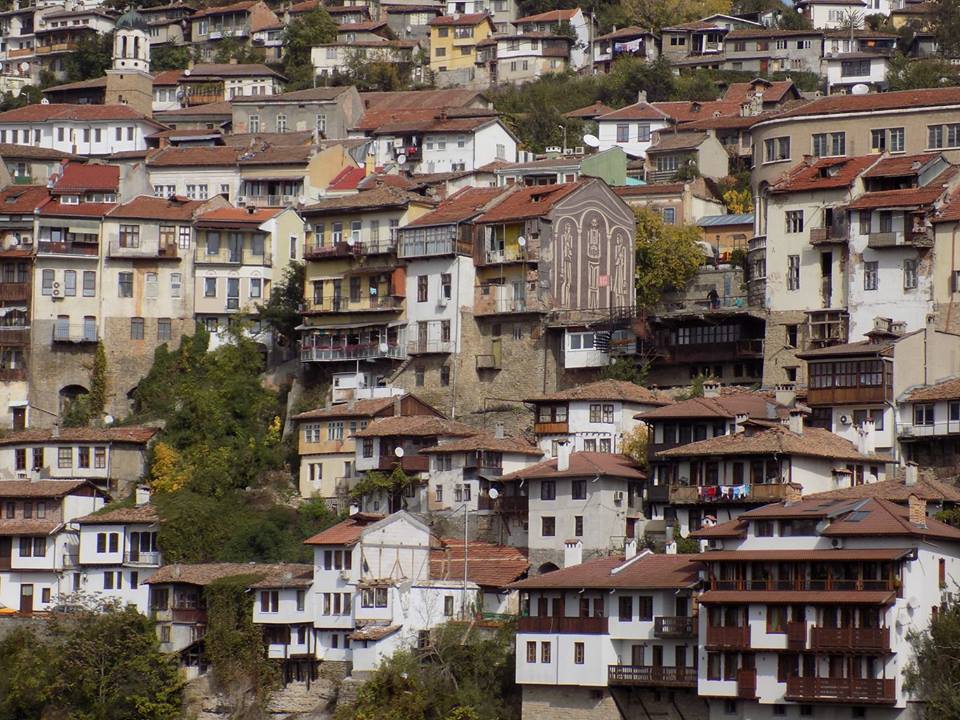
I bump into the American whilst I sit on the wall with my legs hanging over the Yantra as a sign of victory and for the first time in days, my mind finally allows me to become more social. And this is the beauty of backpacking, of traveling: unplugging from usual habits is necessary in order to find comfort and piece with oneself, which creates lasting memories and perhaps more interesting friendships. A chance of reinventing oneself.
We have a late lunch whilst the city turns cold and the waters of the Yantra below claim yet another day of victory against the topography of the valley. Turkish coffee is poured in a gilded cup and the eyes of the American once again shine with naiveness, whilst playing cards disappear and change shape right in front of me in bursts of magic.
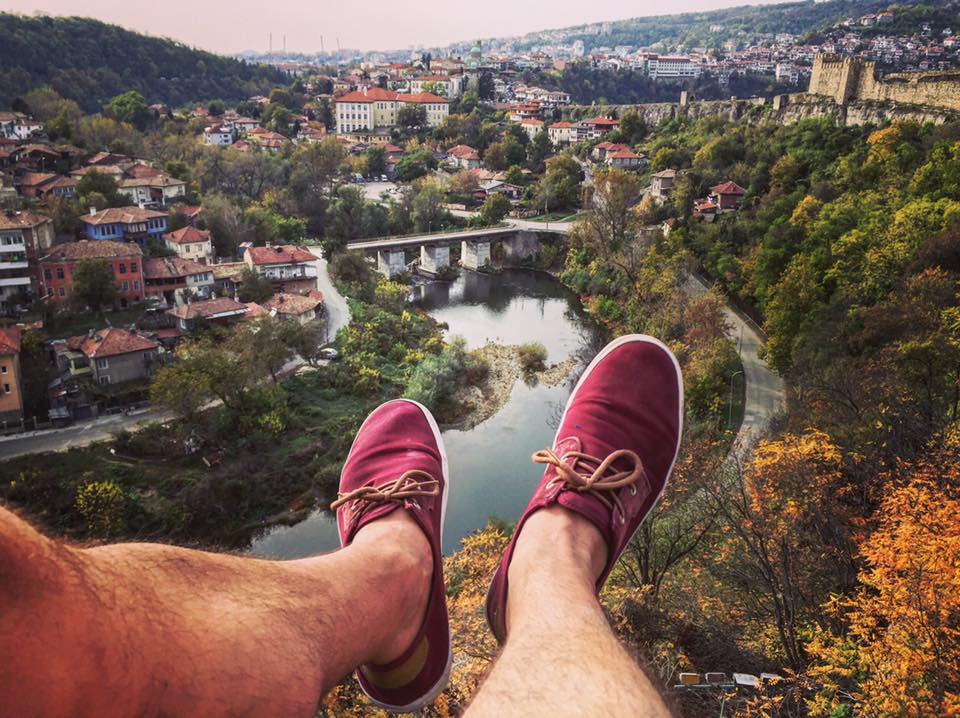
Busy stores close their doors for the day and a bitterly cold wind blows from the South. The frozen clear sky contrasts against the lights across the valley like a Van Gogh oil.
For the first time in days, my mind wanders in exhaustion and my body aches for rest as the brandy flows through my veins and further travel plans are drawn on the table.
Veliko Tarnovo is left behind in the morning. The first train journey jostling across the narrow gorge in over fifteen minutes, later embraced by the dull concrete platforms of the station at Gorna Oryahovitsa where a larger train, painted in faded red and white lines, awaits.
My last taste of Soviet-era trains, a packed cabin for six passengers and ten eyes staring at my every single movement.
They speak in Bulgarian, they laugh in Bulgarian. An old couple mutter and point at a beautiful young girl’s book, she smiles back, and her shoulders protrude forward. Her reply is sang with a sign of university-educated pride. An Ottoman-looking young man slouches over his seat and drools over his smartphone, and a densely-built man munches on several bars of chocolate. A subtitle-less foreign movie. A scoop of Bulgarian provincial life without immediate interaction which keeps me entertained through a flat landscape drenched in cold drizzle.
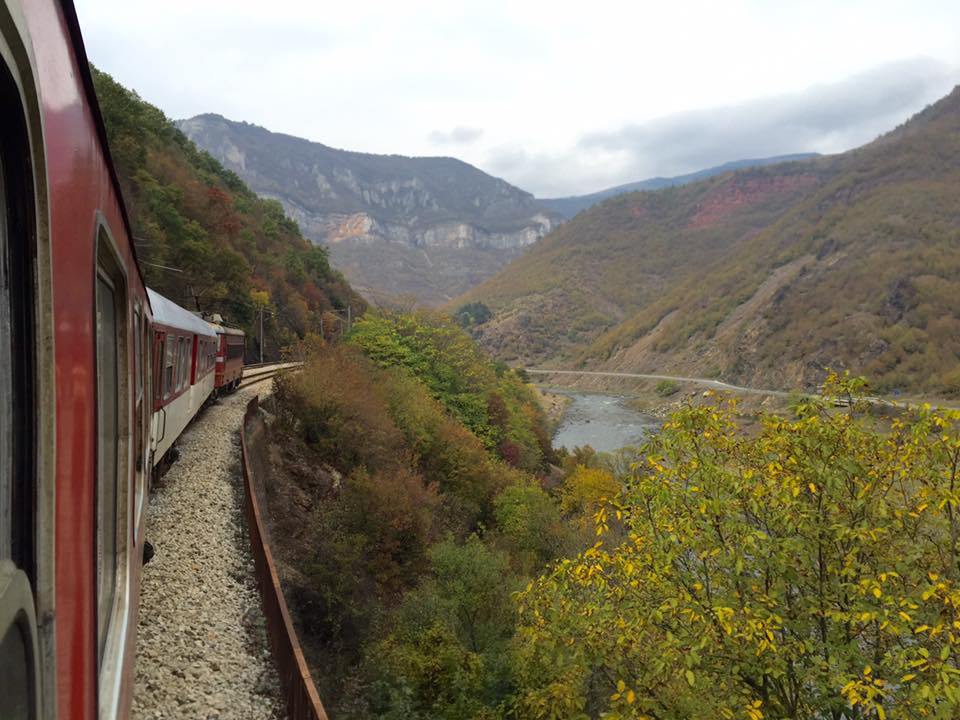
The train starts its approach into Sofia, cutting across an unexpected route through the Balkan Mountains, graciously soaring over deep canyons of milky water and puncturing dark periods of darkness through the heart of the solid mountains.
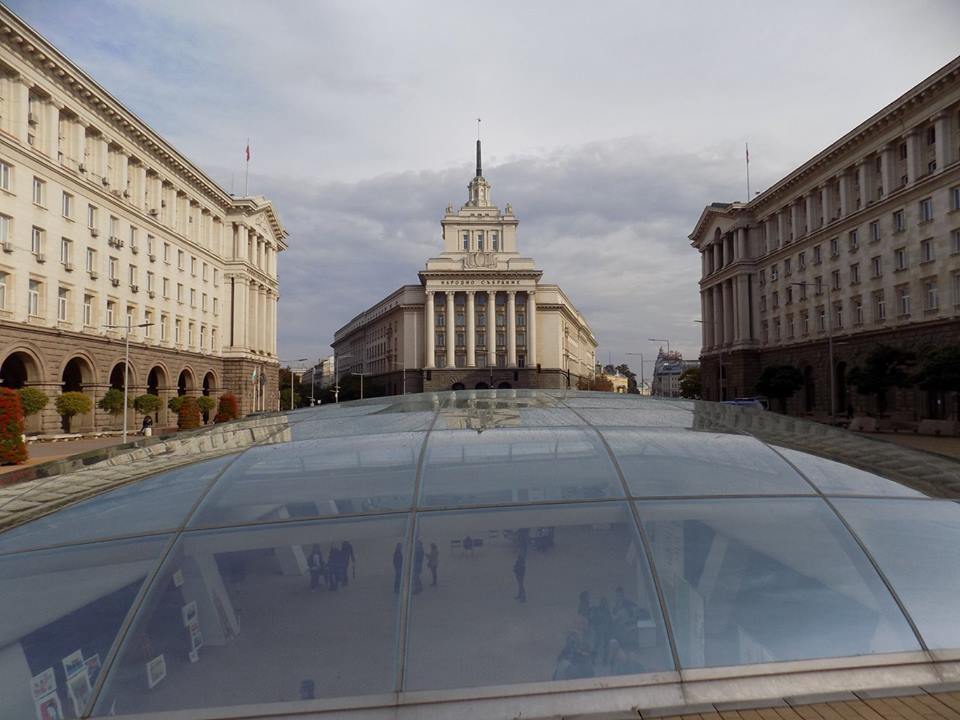
Sofia is reached at sunset. Cobweb-like tram cables hang over wide avenues, the city looking bleak and unremarkable at the shade of the few bare trees adorning boulevard Maria Luiza, used as social spots by the many refugees munching on kebabs by the dirty kerb.
The avenue turns shiny next to the spotless footpath of the Sofia Hotel Balkan, built next to the Sveta Nedelya church, claimed to be the most exciting tourist attraction in the city.
I kill some time by sipping on the iced tea and abrupt manners of the bar waitress at boulevard Vitosha, my last glimpse of the ‘Bulgarian je ne sais quoi’ before heading back to the Western world.
The modern metro journey to the airport is a breeze, plunging into multicoloured plastic tubes over and under the capital’s street level, rushing into the glossy panels affixed in shiny steel of the brand-new Terminal 2, a luxury not afforded by my flight on Ryanair, which departs from the decaying Terminal 1 just across the runway.
I spend my last levs on a panini. The crumbs spill over the chipped melamine table of the stuffy food court in which five British lads chug down on green cans of Bulgarian beer, their last breath of Eastern European affordable indulgence before boarding their flight to Birmingham, and a couple desperately tries to fit several packs of cigarettes into their child’s carry on luggage.
 THE FLYING CAMBA