
Few places in the world would appeal the way the Turkish capital does. Its maze of streets winding up and down soft hills covered in apartment buildings and clogged up with traffic. Even at midnight, when our aircraft circles over it in order to land, the city seems to never sleep.
This is my second time in Istanbul and much welcome sights of empty hallways at Ataturk airport and a wide well-lit avenue somehow sooth my mind, this time with a shorter journey to the hotel in Atakoy, an area vibrating at the sound of loud music and neon sights, smothered in the smoke of kebab shops.
The next day is a bit of a blur. Medical checkups take most of my day and energy, perhaps an ideal shelter for the copious rain punishing the Bosphorus outside. The turquoise almost ironically removed from Turkish sight, whilst in the distance, ships await their turn to venture to the Bosphorus in between the foamy waters of the Marmaris.
Rain subsides overnight and the sunshine breaking through the thick hotel blinds lifts the spirits of a busy Saturday morning.
Stacked with a fresh Turkish breakfast, splashed with the flavour of honey, cheese, sliced cucumbers, tomatoes, olives and bread, a long journey from Atakoy to Sultanahmet in the spotless Istanbul Metro takes over forty minutes, whilst the scale of this twenty-something million people metropolis unfolds on both sides of the elevated tracks.
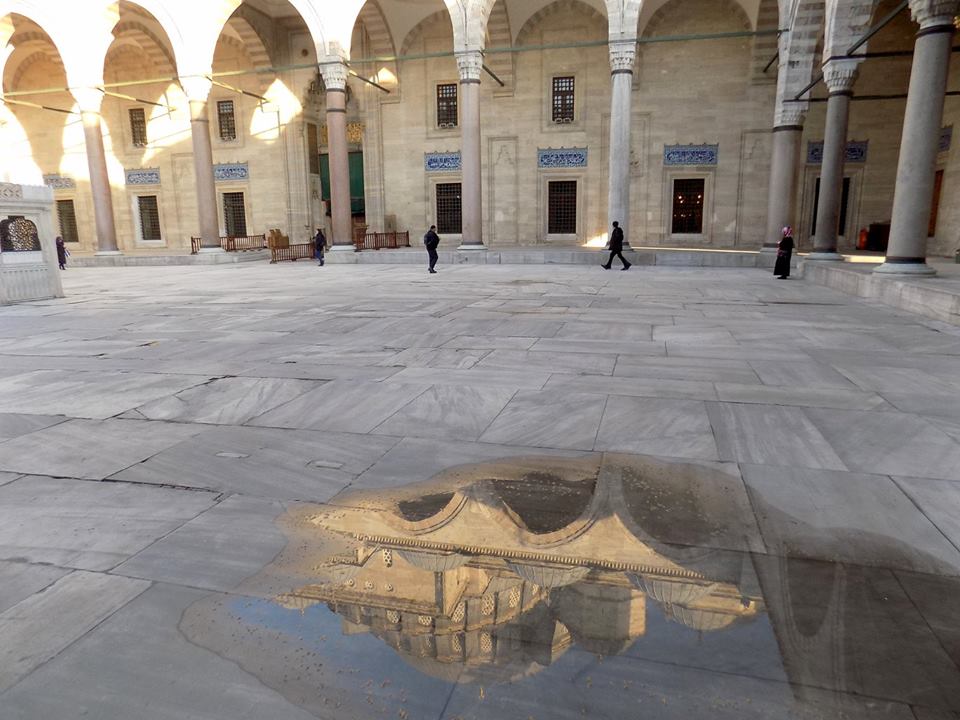
Familiar sights are once again walked through, the long esplanade sporting Istanbul spoiled kids: the Blue Mosque and Hagia Sofia, now heavily surveyed following a bomb attack which killed several tourists and locals alike a year ago. Attributed to ISIS and highly punished by the Erdogan government, it is a reminder of the delicate situation in a region plagued by political, religious and social conflicts.
This is the reason why Istanbul impresses me with its resilience. A city with a history so rich: from the Romans to the Ottomans, to becoming a global city proud of its modern achievements and tall skyscrapers, yet still authentic enough to cling onto ancient bazaars and famously known architectural landmarks.
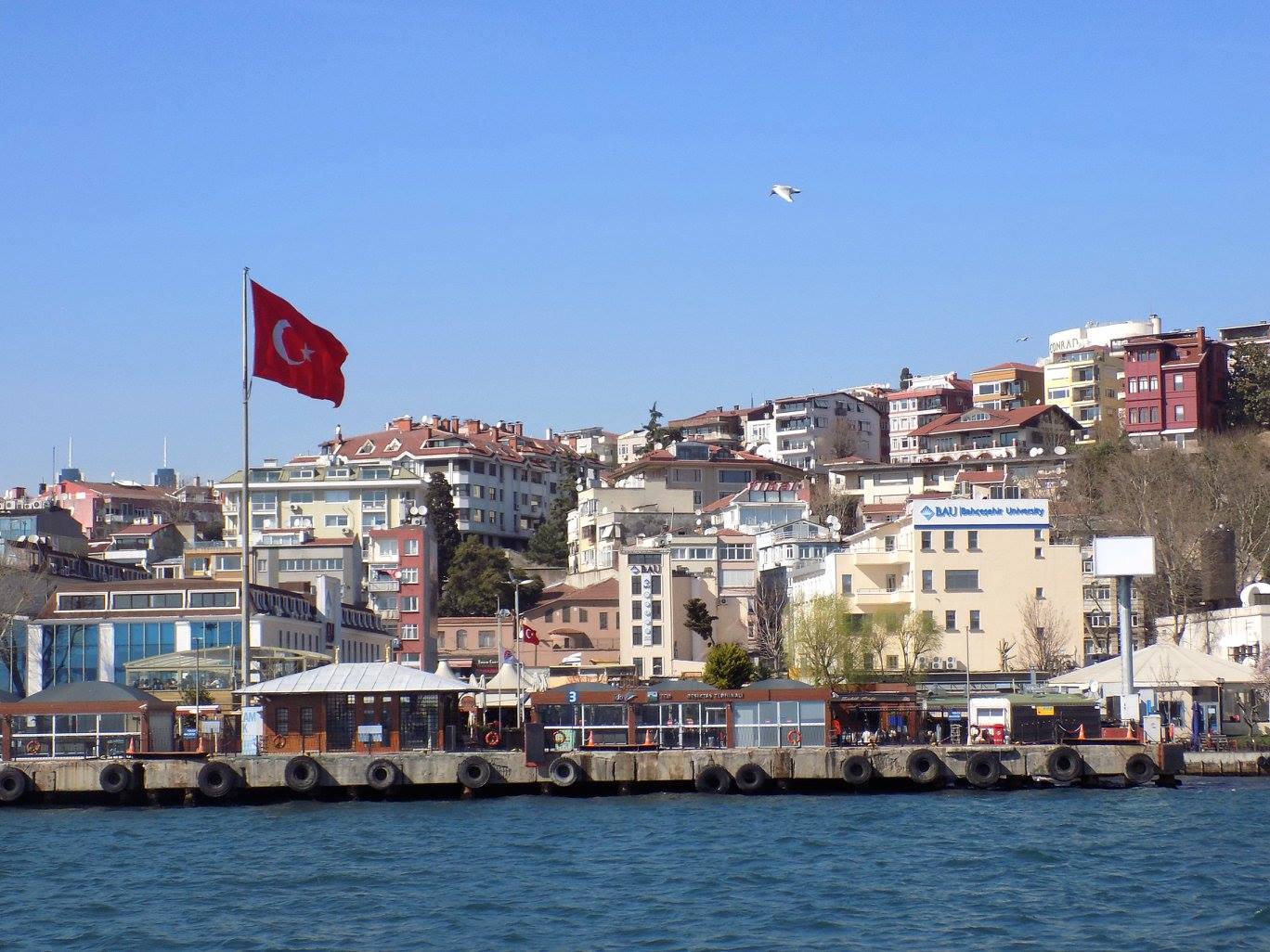
The weather screams for a Bosphorus boat tour. The sun embedded in an intensely blue April sky, the winds blowing from all directions and attracting chunky seagulls adrift, the cold water plagued with intimidating jellyfish.
For around 120 minutes, the city turns peaceful. The busy streets hid behind palaces and upmarket apartment buildings on both sides of the narrow body of water, the wind blows away the noise of millions of cars.
Once docked back in the Golden Horn, I rush up to Suleymaniye Mosque, once again indulging on the same sunset of two years ago, soaking up the last rays of light whilst the Asian side of the city glows in the dusk.
Spring tides bring spring unsettled weather. The rain at times heavily falling over the tin roofs, sometimes amplifying the sound of the day neglecting it shine.
And so, I spend the day sheltering from the cold water, skipping through several tea houses. At times served by polite staff, the kind of young sparked individuals dreaming of better days in Europe whilst staring at my very own body language, and at times by non-English speaking staff, their shyness only enhanced by the frustration of the language barrier.
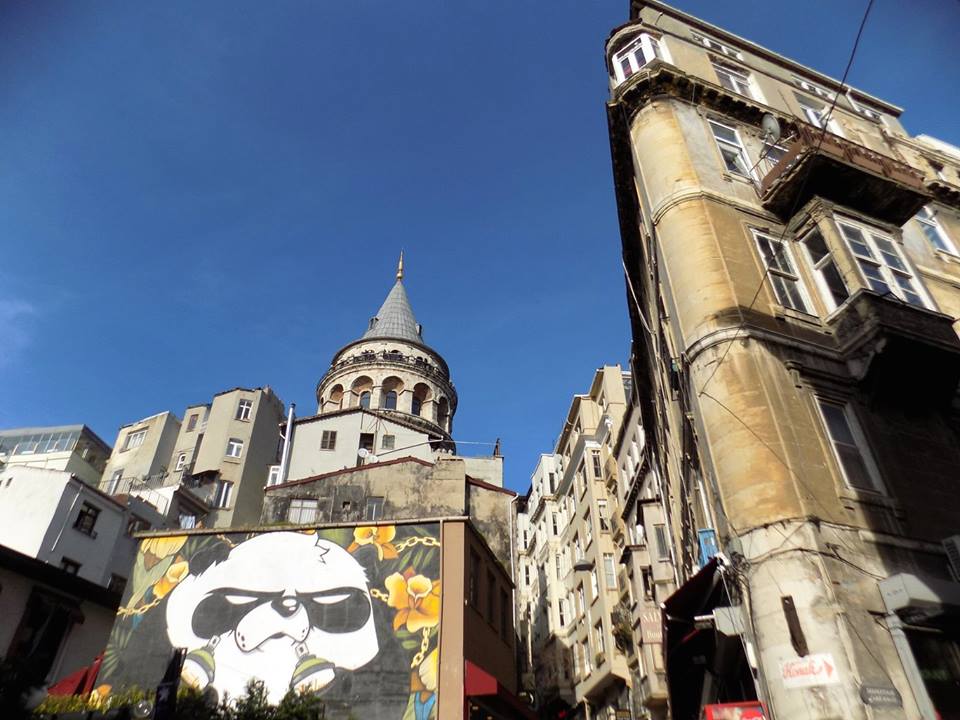
My last of many cups of tea is enjoyed in the seventh floor of a narrow building in Beyoglu, overlooking one of the most charming and bohemian areas of the city. The flowers in colorful pots attract birds so close that they feed on the bread crumbs left on my plate and the rain finally stops.
Avoiding puddles formed in the irregular pathways down the Galata Bridge, my weekend in Istanbul is nearly over. The last call of prayer of the day throwing darts of shivers through my spine, just like the buildings around me tremble at the unisone of the Qoran call.
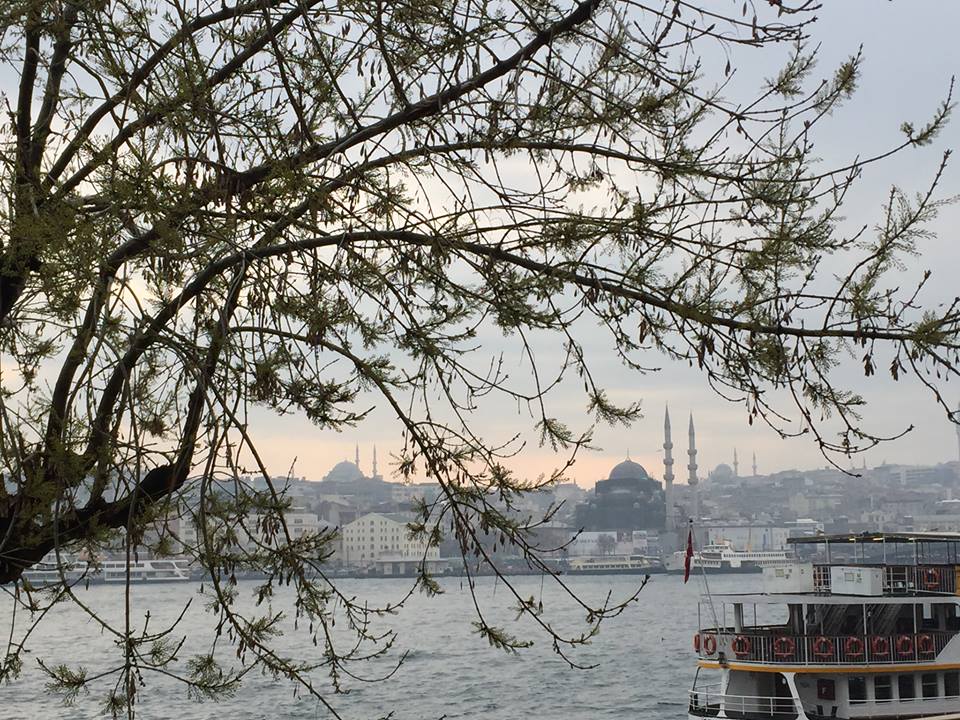
Heavily military and security checks are in place at Ataturk airport upon departure, perhaps the country new and justified obsession. My passport and visa are scanned and I am handed a boarding pass for my next flight.
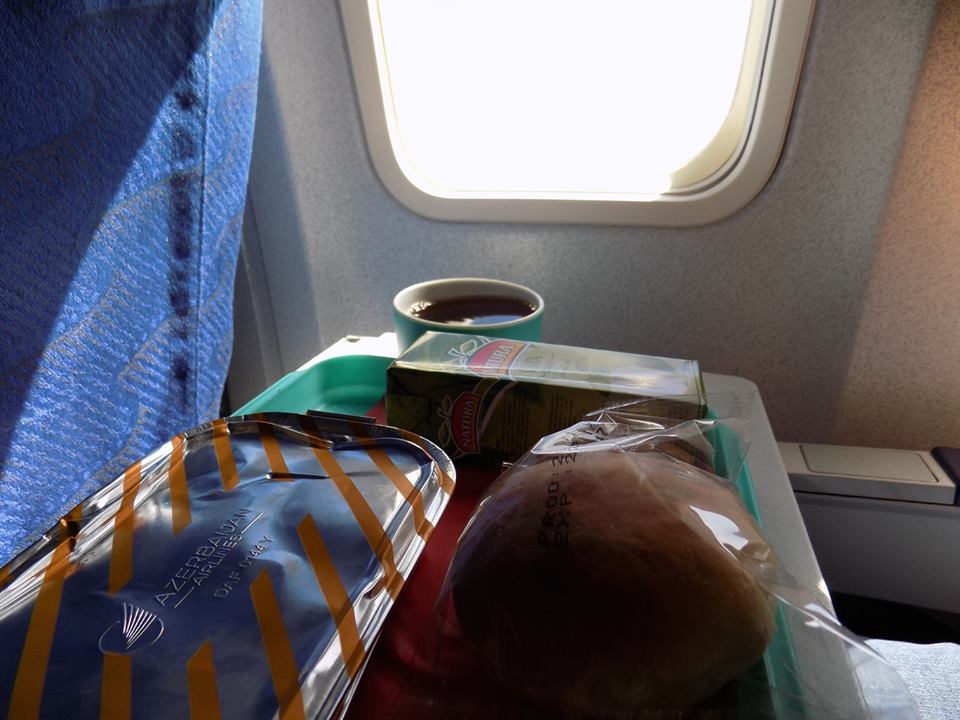
The sleek turquoise-painted aircraft is old and plenty of seats are available. Azerbaijan Airlines striking me as a carrier of old fashioned customs, such as a basic ‘chicken or chicken’ meal and a rather outdated aircraft with good seat pitch, yet at times operating as a low cost and charging me for luggage.
Once we leave the grounds of the airport, the aircraft abruptly turns East, following the Southern coast of the Black Sea before starting a descent over the snow-capped Caucasus mountains.
Baku sprouts from the flat horizon, the airplane banking right and darting for the airport whilst flying over lands of inert tundra which progressively thickens with dirt streets and slums lining up the runway threshold.
The capital of oil-rich Azerbaijan shows its best on arrival. Heydar Aliyev Airport designed in the shape of two massive wooden cocoons, harmoniously creates an almost too minimalistic and spacious terminal, which resembles much to the ones seen in the Gulf.
Stepping outside the shiny terminal, and once the tons of harrassing taxi drivers are avoided, a bus journey to the city now famous for hosting onerous sporting and business events takes a turn to the contradictory.
The almost empty six-lane motorway laid on a dead and dry landscape seems to be conveniently sterilized from the slum nature of suburban Baku by thick painted walls. Tall skyscrapers in the distance flick in different colours through the thick afternoon fog. Closer to the city centre, the motorway turns into an avenue lined by new buildings painted in washed brown. Lifeless and empty, perhaps a face of the city still unaffordable to the local population.
It is like Baku has tried (and somehow succeeded) in wearing their best make up, yet the funds were not enough to extend this beyond one or two streets from the main streets.
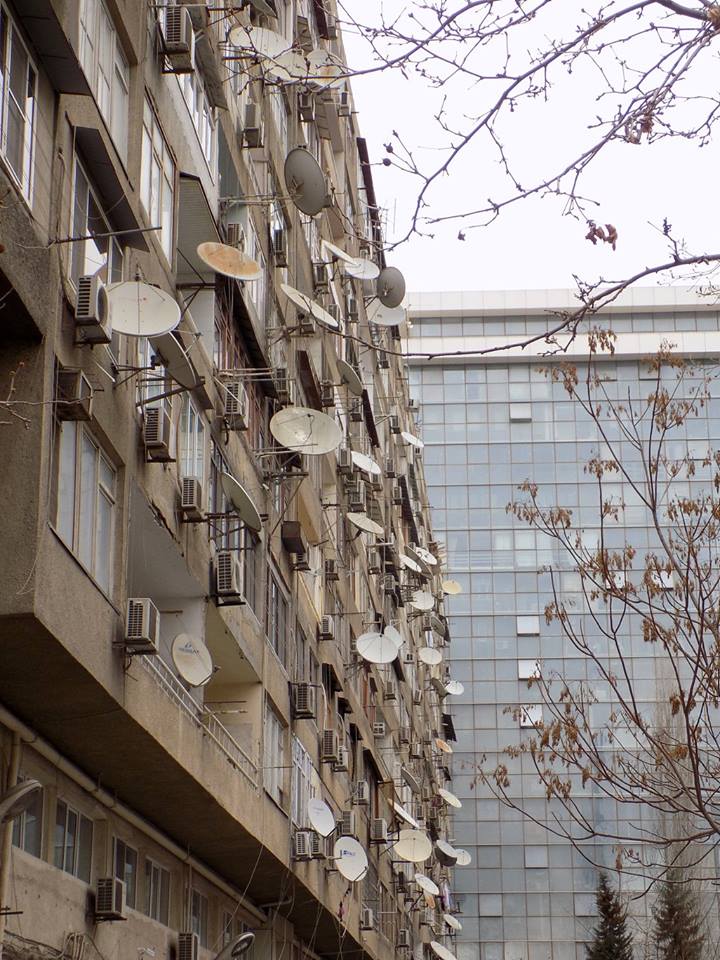
Whilst I walk up the hill from the modern train station, the city grows gloomy. The street lights do not work until the uneven pathways are almost impossible to see in the late winter evening and dingy kebap shops protrude from Soviet-era apartment blocks covered in grafitti and rusty window grills.
I also find myself walking through a wide ‘boulevard’. Intimidating, fast and built with the intention of killing every chance of pedestrian enjoyment. It is like Dubai and Moscow had a child and dropped it in the Caspian Sea shores, over a bed of sterile rock several meters below sea level.
The hotel I find is nowhere better but I am already too exhausted to even protest. I order some food that never arrives and decide to fall asleep on an empty stomach, hoping the city somehow redeems itself from what so far has been a rather confusing introduction.
In the morning, the lack of consistency hits me. One minute walking through manicured Dubai-like gardens and the next avoiding murky potholes in dingy streets where dogs munch on rubbish bags.
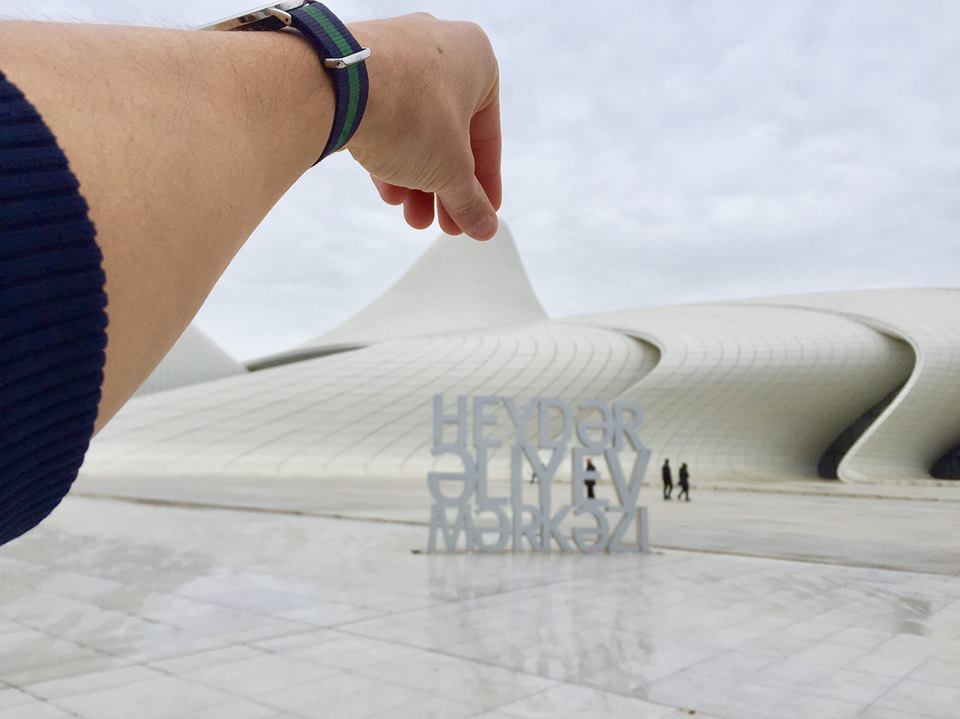
The city overwhelmingly changes as I keep walking. The Heydar Aliyev Centre, a project conceived by the talented Zaha Hadid, resembles a perfectly crafted ceramic sculpture encrusted in a rustic wooden table, the round lines of the building merging ground and ceiling almost like fingers reaching to the sky, whilst the man (former Azeri president) the building was named after becomes an almost-obsessive cult in the country.
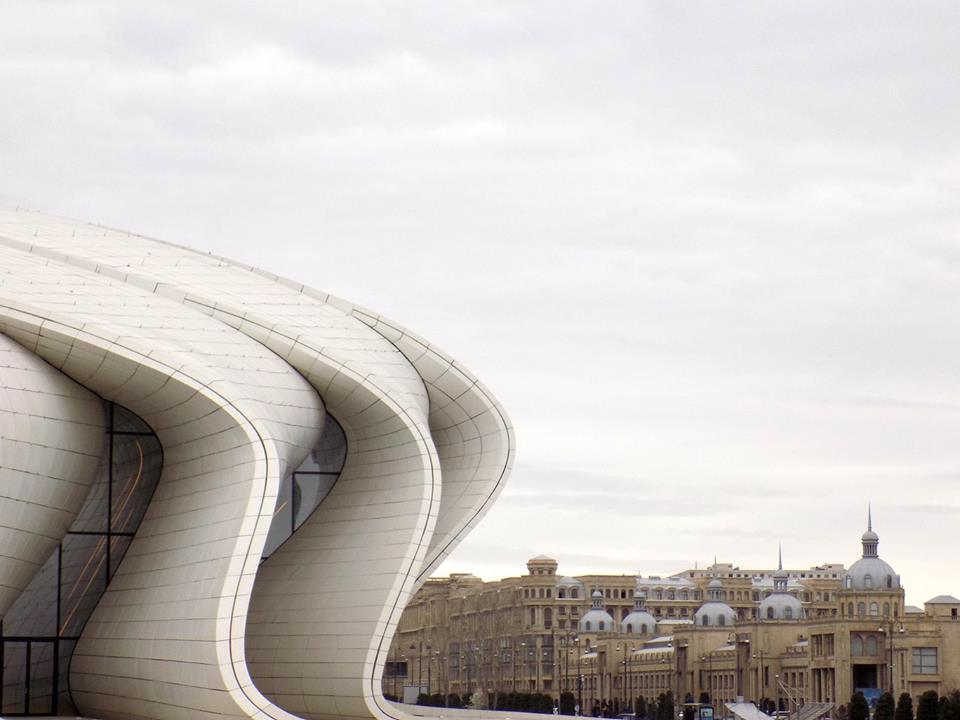
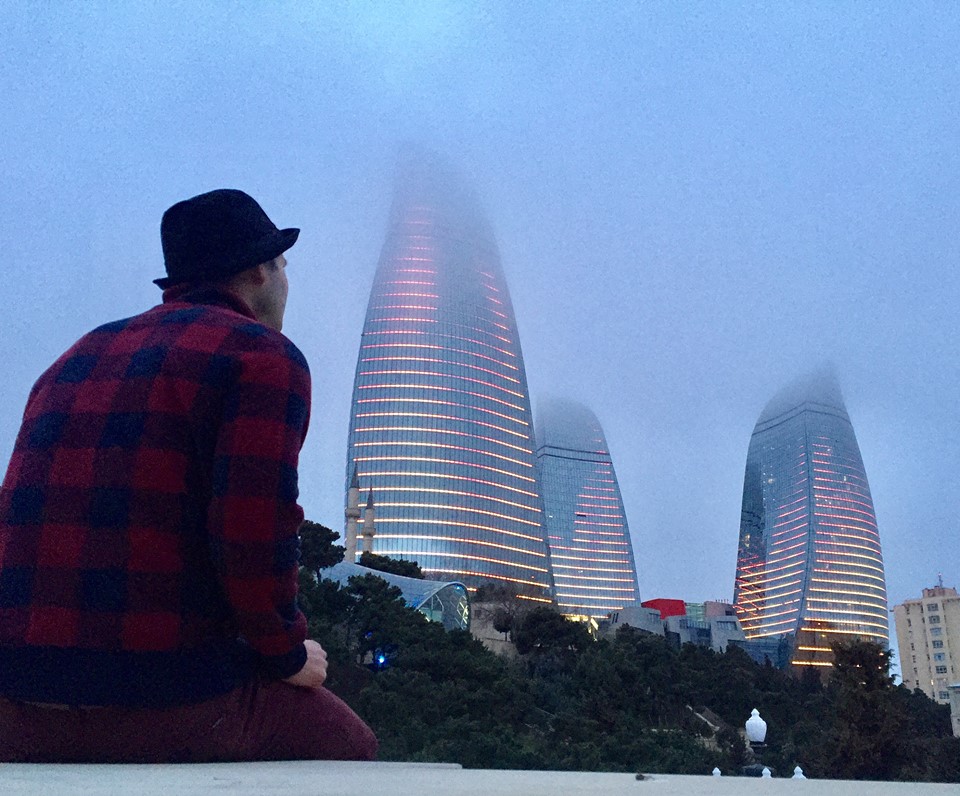
Once my train ticket is resolved in the modern train station downtown, I venture to the Corniche for some fresh air, the humidity and high salinity of the Caspian Sea hitting me like a wall, the water peacefully glittering in tones of silver and the locals taking selfies against the sight of the Flame Towers in the background.
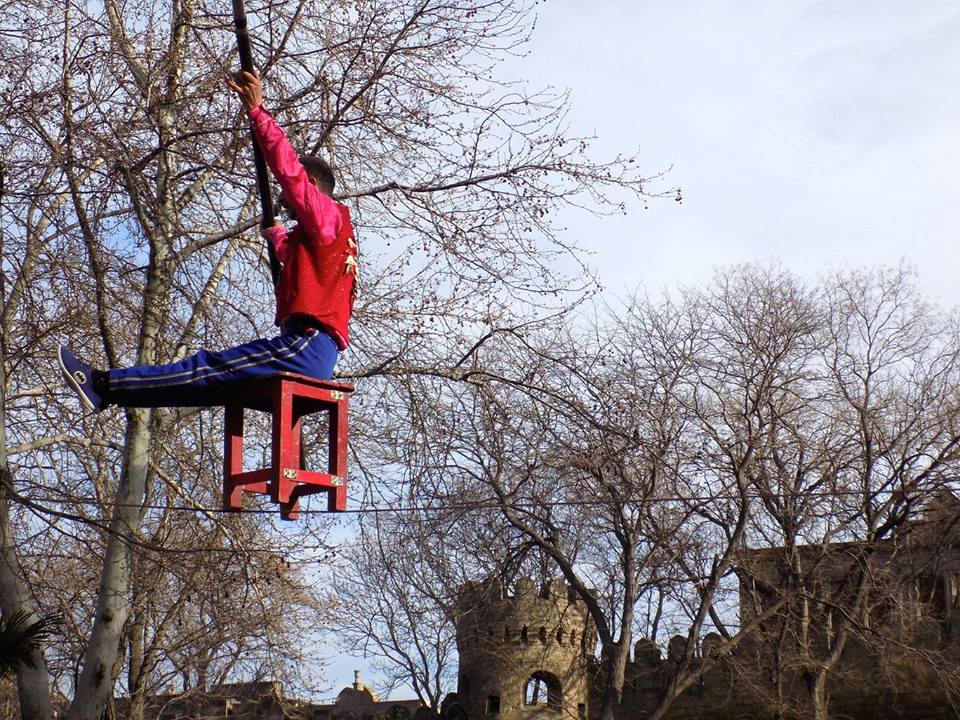
Azeris are a majority Shiite Muslim and this week are celebrating Novruz, which is the Persian New Year in both Azerbaijan and Iran. A week-long celebration in which public offices are closed and locals take a chance to indulge in traditional music, food, sweets and travel.
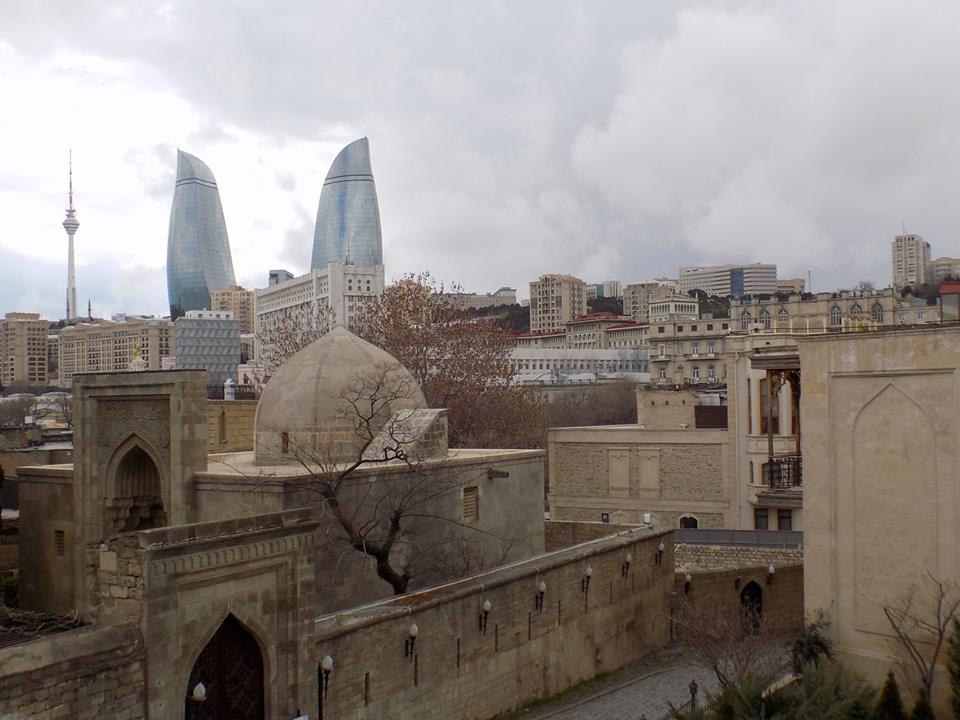
The city moves around the celebration, and the Old Town, completely restored in the best Middle Eastern souq-style vibrates at the sound of tambourines, ouds and nays.
I take the chance of being in Baku to do some housekeeping, at times sheltering from the cold drizzle in trendy coffee shops where the latest music hits loudly play, muffling the sound of ‘millenials’ chatting in between smartphone screens.
A perfect day for walks, to finally see the underwhelming Maiden Tower, to get lost in the narrow streets of the Old Town whilst indulging in kebaps and tea and a hike up the funicular hill to the Flame Towers, proud postcard of the new rich kid on the block.
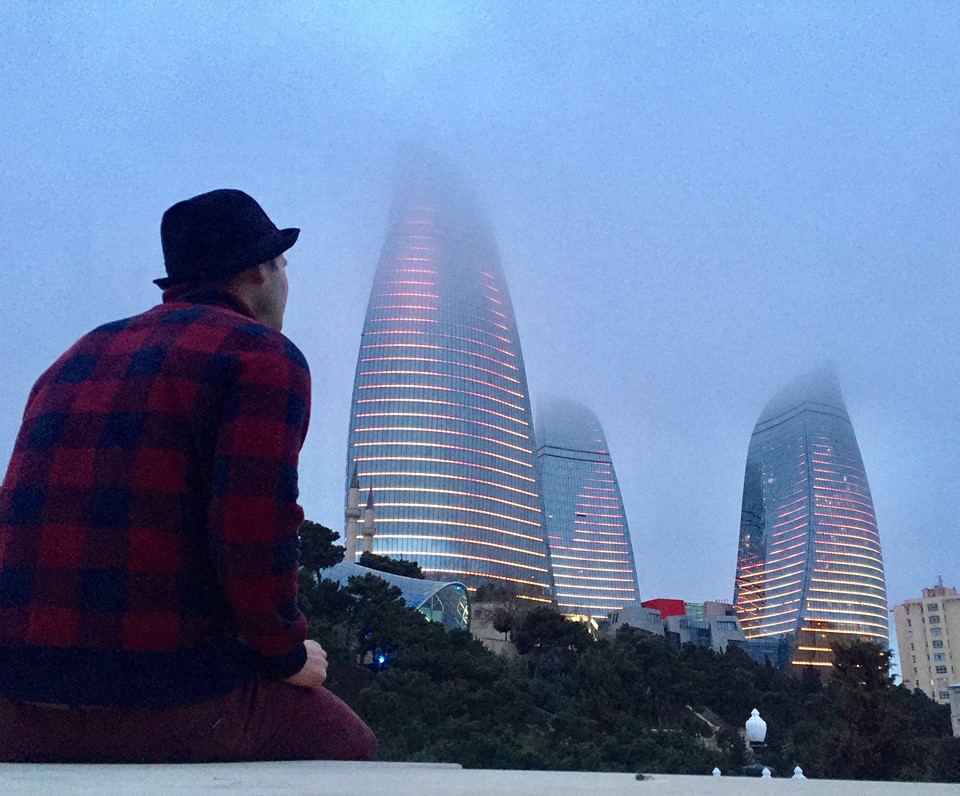
The futuristic aspirations are clearly visible, the LED lights creating impressive shapes in the towers’ facade, a sight spotted from every corner of Baku, the manicured gardens, the modern touches of minimalistic spaces in public areas or the fully refurbished Old Town.
Yet, the old legacies from the recent past are also present, the Soviet era metro playing classical music playing at the arrival of each station, the rusty apartment complexes and the Lada cars.
At night, the Soviet train pulls out of the station, the lights of the city becoming more distant as the carriages speed up the track and the heating hits full blast.
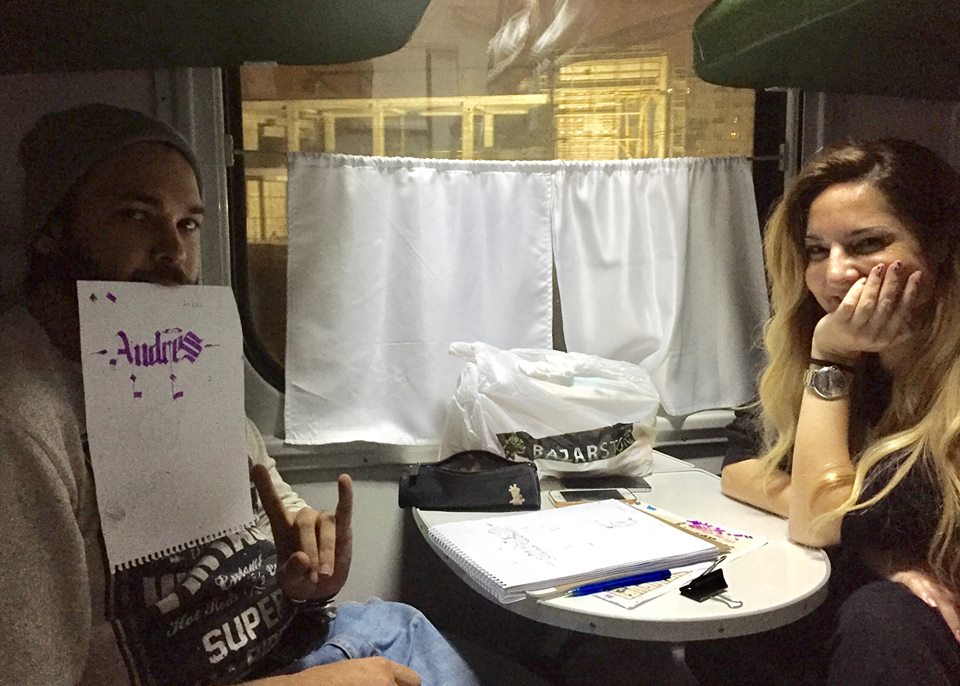
I share a cabin with a chatty late-twenties Azeri couple on their way to a weekend getaway in Tbilisi and a timid Georgian guy returning home. Just as the number 38 train climbs up the stepes West of the city and the landscape turns pitch dark, conversations and memories of S.S.R. Azerbaijan flow as copious as the Coca-cola being served by the stewardesses.
Basic needs seems to have been easier back then, pride on education and student exchange opportunities in Saint Petersburg seem to be the rule. However, the new generation would not dismiss a luxury trip to Dubai, only affordable nowadays by low-cost airlines including Baku in their itineraries.
Perhaps Azerbaijan is a country still trying to define its own identity, whilst sitting in the edge of Europe and Asia, as the Silk Route cuts through its deepest roots over centuries past and centuries yet to come.
 THE FLYING CAMBA