
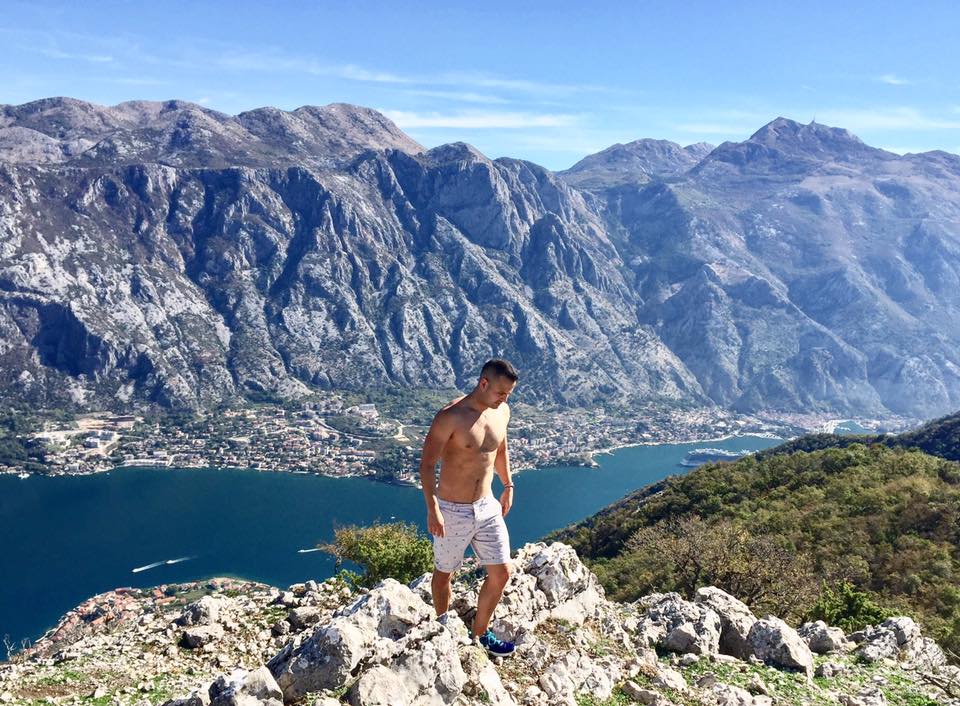
The strident sirens of nearby Pearse station go off and at times alert me of the minutes passing by in an atypically mild October night. I am sleeping on a friend’s couch, my back resting stiff in the cushions while the dim lights penetrating the thick curtains cast gloomy grey shadows over my small carry-on backpack.
Anxiety grows. Unable to sleep, I shift stuff around. Trousers go to the bottom of the backpack, two pair of shorts in the middle, shirts on top to avoid excessive creasing, travel adapter, laptop, passport. The clock finally reaches four in the morning and I leave the city in an almost secretively manner, empty from pedestrians now sleeping the hangover of Saturday night and stuffy with the lingering smell of damp alcohol.
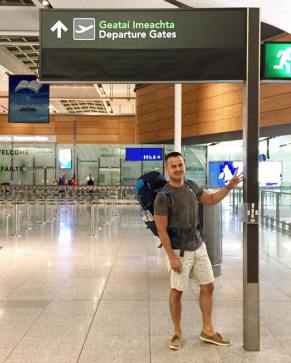
At the airport, the movements are melancholically steady. The smiles of the traveling season now replaced by the straight faces of commuters flying for work or the odd holiday maker sneaking a last break before the dreaded winter.
I fly over Sandycove as the sun rises over the Irish Sea and, weakly sighing I think: ‘Good-bye my Dear, I’ll see you soon’, for this is no weekend getaway or simple A to B trip, but rather the start of a life goal to be achieved, of months of traveling through different regions of the planet, of improvisation and no plans.
The aircraft later crowns the top of the Matterhorn and soars over the swampy waters of Venice, the Croatian coast immediately opening its glistening waters, now fully covered in bright autumn sunshine, dotted with the sigh of islands emerging from a water so blue that at times seems to blend with the clear sky.
We have landed in Croatia and the city is only a few miles down a windy road built atop tall and steep cliffs. Dubrovnik is the city all cities in the Adriatic want to be: sun kissed by an almost constant sunshine, its ceramic-tiled arms flowing towards the bluest of the seas while the tills at every corner register sales from the many package holiday tourists that now indulge within its urban conglomerate. Not being a Games of Thrones fan, not a package holiday fan either, I decide to walk from the Old Town to the bus station, the heat of the middle of the day pushing heavy drops of sweat now felt dripping from my the top of my forehead down to the sole of my shoes.
At the bus station, I sip on a warm bottle of water and the lady at the till tries to sell me condoms. ‘Duracell, not Durex madam’. She blushes and we both smile despite not speaking the same language.
The bus departs and uses the same route we took from the airport. The road turns steep, with only centimeters separating my window from an imminent fall. At the first border post of the trip, immigration officers dismiss Albanians and astringently enquire about my previous whereabouts. I am waved out of the European Union just as across the border in Montenegro, a Russian girl smiles and flirts with me.
-New stamp on your passport.
-Perhaps you’ll get the marriage stamp soon. Inside Russian joke.
She blushes and her blue eyes surrender to the the roundness of her high cheekbones. We exchange numbers and hope for another meeting, perhaps the next day in Kotor, perhaps in years at the Red Square.
There is a notorious change on the highway pavement quality. The bumps turn heavier when the bus leaves a dry plain and the sun hides behind a tall hill. The Dalmatian karst walls open like a solemn gate and the butterfly-shaped bay has now granted us access to its domains.
One of the largest natural bays in the world, the Bay of Kotor tangoes with the sunlight in the late afternoon, the sun hiding between the irregularly-shaped walls which reflect their pale colours in the navy blue water. Intimidating and daunting at times, beautifully peaceful the next minute. In Kotor, the town timidly creeps over the limited amount of flat terrain, dilapidated apartment blocks rise in between the rocky shore and the karst walls. A few empty hotels announce the long awaited entry into town and at the bus station, commuters board a bus bound for Bosnia with numerous canvas bags.
Almost isolated from the daily life in Montenegro, the Old Town of Kotor emerges as a mirage of medieval-time parafernalia embedded right at the bottom of the fjord. Tall walls have guarded the little town for centuries. Its stone blocks tirelessly used to see occupations, the Austro-Hungarians, the Serbs and lately, the thousands of tourists from China and Russia that keep the precarious economy alive.
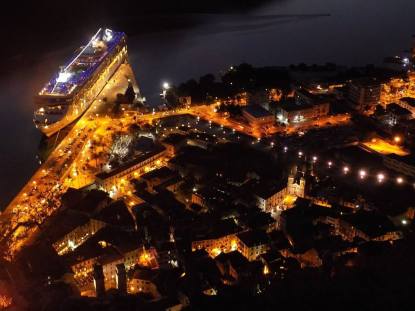
I grab a bed in a dorm at the hostel and stretch my legs after a long day of buses and airplanes. The sun hides between the mountains and the karst walls turn pale orange. Street lights surround the dark waters of the fjord like a festival of fireflies in a hot summer evening. I hit an old sports tavern for a dinner of goulash and over-fried kebabs with a fellow Canadian traveler. The dishes are served by an old lady in the bar’s VIP room, at this time of the evening the weak roar of the lone air conditioning mixing with the noise of a distant TV playing repeats of Manchester United matches.
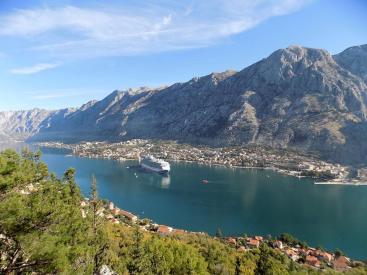
I was once told that everything in Montenegro is steep. The roads defy gravity and meander up and down the cliffs, rendering the chances of finding a flat hike as impossible as the plots in which they were designed.
A hike to the old Austro-Hungarian fort of VRMAC is done through ancient terraces built in an endless series of switchbacks terraces once used to bring materials, supplies and weapon from the sea level to the top of the hill, some three-hundred meters above.
Unimpressed by the fort, now a pile of belic rubbish rotting in pools of piss and smelly water, I follow a path linking a series of abandoned concrete bunkers dotting a leafy plateau to an abandoned antenna. Strategically located, the rusting structure sits atop a three-hundred-and-sixty view of the fjord that tell stories of cold sterile winters, of armies hiding in between the bushes and rock walls below, of past NATO bombings and intercepted old radio broadcasts.


Sweaty and water deprived, the view is a treat enjoyed alone, continuing down the slopes on my own solitude, as my knees and ankles show signs of fatigue and I desperately crave for some food and rest.
Grilled fish with vegetables to replenish for both the hike just completed and for the hike coming next, an ascend through the town fortress’ walls for sunset, perhaps the most perfect time to witness the fjord transforming into an elegant lady, glistening from every angle at the unisone of street lights floating in the pure darkness of the cold rock.
And so, two Euros can buy you a litre of wine in Montenegro. The rest is a blurred memory of nonsensical chats with Australians, Englishmen and a couple of Norwegians who promise me to go dumpster diving next time I set a foot in Bergen. I hug the Norwegian woman in a drunk display of affection and admiration when she adds me to her Snapchat story.
– My daughter is your age. I like showing her the people we meet and places we see.
– Even I don’t have Snapchat!
Hugs and fleeting promises of future encounters are made like in every trip and, when the night turns quiet and the party animals venture out to the nearby clubs, I retreat to the stuffiness of the dorm room, tonight sleeping made impossible by the frequent trips to the bathroom and alcohol-inducing retching of fellow travelers. I leave the bed before sunrise and indulge in a long hot shower before packing up. Still plenty of miles to burn ahead of me.


I take a taxi to the small airport of Tivat. Awkwardly perched on the side of the cliff, airplanes sharply land at the caressing of the mountain crosswinds. Only thirty passengers await for our turboprop to clear the runway and the small cabin vibrates at the roar of the small engines now gaining enough power to lift off and fly over the bay in a corkscrew climb to gain altitude and conquer the mountains ahead. Water is offered inside the shaky cabin while the terrain below us turn flatter and duller, the aircraft looping over fields of dry farmland before finally aligning with the runway at Nikola Tesla Airport in Belgrade, the capital of Serbia.
– ‘The outside temperature is thirteen degrees, thank you for flying Air Serbia’.
The small aircraft door opens and a blast of fresh air hits me in the face. It is a crisp sunny day in the Serbian capital and, once my passport is adorned by a new stamp at the modern airport terminal, I change some Euros into thousands of Dinars before stepping outside the small terminal. Once Yugoslavia, once Serbia & Montenegro, now just plain Serbia.
The city grows closer and a tall ugly tower looms over the smoky horizon.
Suburbian Belgrade looks no different to any other post-Soviet capital: the long and wide boulevards lined with decayed apartment blocks, their broken windows covered in plastic and tarpaulin, dirty air conditioning units transplanted over decades of hot summers hanging from small cluttered balconies, the empty broken children playgrounds, the shop fronts selling mobiles and small grocery items.

Flowing East to West, the Danube divides the city into the new and old Belgrade. Long boulevards leading to treeless parks and long esplanades dotted with monuments to previous ruler’s egos dominate the newest city sprawl, while in the oldest streets, a medieval fortress guards the history of what was once the capital of a gigantic Socialist Republic, dismembered by time and regional uprising.
Montenegro seems to have taken the coastline and with that, Belgrade seems to have grown duller. An industrial metropolis adored and hated at the same time by its inhabitants, the same inhabitants that now rush around Hotel Moskva sipping on coffee and grinning at the foreigners trying to unsuccessfully read maps written in Cyrillic.


The Old Town grows solemn near The Victor and, with its static pose holding an eagle in a symbol of victory, I discover that what makes Belgrade interesting is not particularly its sights or tourist appeal, but perhaps the thought of the city’s resilience best appreciated in the eclecticism of its buildings, the grandeur of boulevards built in pure Austro-Hungarian style as seen around Pionirski Park, or the almost atrocious and functional concrete lines of the Museum of Ethnography built in the most Soviet of the architectural styles.
At Kalemegdan, I find myself too busy digging into a paper bag of popcorn, while the underwhelming fortress is photographed by a group of eager Indonesian tourists. The view over the Danube is of a city of distant buildings and a rather sterile horizon only interrupted by the tall smokestacks in the background exhaling poisonous gases into the blue clear sky.
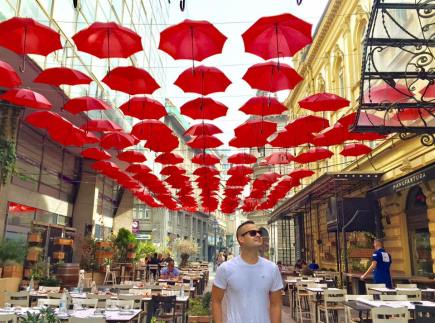
I meet my Serbian friend in the cold late afternoon.
A lot might have changed since we both left the strict confines of voluntary imprisonment in Doha, our lives might have taken different courses on both geographical extremes of Europe, yet the memories of friendships and happenings some eight years ago in the strangest of the places holds enough energy to fuel laughter and smiles to last for the entire evening. A dinner of fish, vegetables and pizza had in the new Belgrade, at the very sight of commuters returning to their apartment blocks and the constant flickering of distant plasma TVs leaking through their windows.
Shortly after a visit to the second largest Orthodox cathedral in the world, the rhythm of the busy boulevard around us rushes as fast as our talk about plans for the future, about entrepreneurship, marriages and mortgages.
I am offered a comfortable bed in a Soviet-era apartment block and I sleep in the soothing confines of cream-coloured walls and parquet floors. Outside, the New Belgrade grows quiet and the night fog finally closes all urban affairs for the day.
In the morning, the rows of wide avenues and apartment blocks are aggressively interrupted by the brute lines of the Palace of Serbia, deserted in its surroundings and proudly surrounded by dozens of Serbian flags.
A long and tall bridge brings me across the Danube for an afternoon sipping on cups of espresso, writing and internet browsing al fresco.
With only a few hours to spare, I walk towards the train station and stock on supplies for the overnight journey across the border. Beggars take the last of my coins at the somber train station main gate and, just as the day submerges the sun into a thick layer of smog in a vibrant-orange supernova, the train pulls away from the platform and enters the suburban areas, the fresh breeze of the countryside now inundating the stale air of the empty cabins of the Balkan Express.
I share my cabin with an English guy and we hit a bottle of vodka. Kilometre after kilometre, the train slides through the cold dark tracks, the stations now left behind working as our drunk metaphor of life: stages of life now slowly left behind in the darkest of the nights, unknown destinations to be reached only in the morning, where a new day will separate us from the ones we know and will bring light to any other new path we take.
 THE FLYING CAMBA