
Barbed wire fences surround the narrow road. Crumbled, they have now relinquished the relevance of its main function to the weather of the hot plain. The asphalt is broken and at times sinks over the sandy terrain. Neglected small buildings painted in pale pink and green emerge from the flat landscape and mark the next border post.
It is just two past midday and the heat becomes unbearable at the instruction of vacating the bus, which is thoroughly searched as we queue inside one of the buildings. In broken English, an agent reluctantly announces that no custom form printouts are available and we are handed a sheet of paper cut with a knife. The customs declaration, handwritten by myself reads:
– NAME
– PASSPORT NUMBER AND NATIONALITY
– BUS COMPANY NAME AND DATE
– I CONFIRM I HAVE NOTHING TO DECLARE
– Signature.
The agent grabs my passport and affixes a visa sticker on it. While doing so, he instructs me to pay 55 US Dollars before allowing me into Zimbabwe on an Irish passport.
– ‘But Britain and Ireland are not the same. Shouldn’t you charge me USD 30 instead?’
– ‘No. Yours is USD 55. You need to pay.’
He stares into the blankness of an old typing machine black keys. A minute later, his colleague rushes into the counter and, catching her breath murmurs:
– ‘Yes. But the charge applies for Ireland too. USD 55 please.’
I hand them a note of a hundred dollars and the local odyssey for cash unfolds. Small notes are a big problem in Zimbabwe and at the immigration office, nobody seems to have anything more than a couple of one US dollar notes in hands. Aware of the haste, a fellow traveller from Botswana offers to change it into smaller notes at the sigh of relief of both myself and the officer.
I feel an adrenaline rush as the visa stamp is finally affixed on my passport, immediately sprinting outside to the loading bay to retrieve my backpack, now precariously leaning against a pole covered in red dirt. Sweaty and somewhat victorious, I glance at the most expensive visa I have ever purchased, my every move catching the attention of three ladies.
Zimbabwean, the ladies are on her way home from Francistown, where they have spent the last week purchasing household goods and clothes later to be sold in the numerous street markets of Bulawayo. In an apologetic tone, they welcome me to their country and in the most motherly way, I am given a security brief about the reality lying ahead.
Within minutes, the most extrovert of them insists and says:
– ‘My name is Esther. You are like our son now. I will make sure you catch a proper taxi and get to your hotel safely.’
The bus clears the short distance between the border at Plumtree and Bulawayo in about an hour, at a time of the day in which the kids have finished school and their English-style uniforms wave at the wind with the same intensity their voices shout at the Seabelo Express arrival.

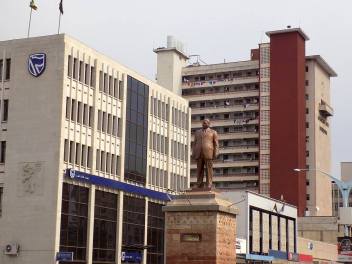
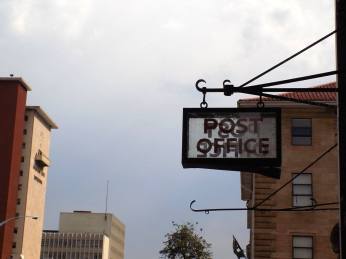
Bulawayo looks dull and flat. Four tall apartment buildings protrude like an eye sore in the hot plain and six enormous concrete cylinders stand atop a hill in sepulchral silence. The second largest city in Zimbabwe, Bulawayo was once known as the industrial capital of the country, a title now frozen in time as still as the buildings around the city centre kept in surprisingly and relative good state, transporting me to streets worth of a postcard of Britain in the early 1900s. Victorian buildings surround the wide avenues of steel-crafted lamp posts, the red bricks of the post office proudly flaunting its thick walls whilst calling locals to shelter from the strong sunshine under its wooden fake ceiling. The bus comes to a stop and the stewardess closes her eyes and prays, thanking for yet another safe journey.
I am now Esther’s guest, and a acquaintance working as a taxi driver, takes our luggage and heads North of the city. Esther’s eyes glow and her voice grows stronger as we approach her homestead.
– ‘ Here is the shop where we get bread from, here is the church we pray in, here is the market where I sell stuff I buy in Botswana, this pink-walled house, this is home’.
She suggests we meet the next day in town and we exchange mobile numbers. The taxi driver takes me to the train station, where I quickly purchase a train ticket for the next day and, as I am driven to the Southern part of the city, the industrial landscape and cramped outdoor markets give way to leafy boulevards and elegant statehouses sheltered under trees of mango and jacarandas.
The driver explains that whites used to live in this area of the city. Expelled from Zimbabwe by the iron-fisted Mugabe regime, they have left for Britain, South Africa and Australia, the houses later re-allocated to the locals now sharing the land and dwellings in numerous families at once.
Once a statehouse of white farmers, my lodge blends with the trees around the limits of the urban sprawl and the afternoon, now milder at sunset, turns disturbingly orange.
Later in the evening, I catch a lift with one of the staff members and venture into the supermarket for biltong and toiletries. In a country in which about seventy per cent of the population live under the poverty line, four dollars will barely get you a small bag of biltong, the same four dollars that can take up to a week to save up for.
It is an evening of beers in the nearby bar, on a Tuesday night only populated by a small crowd of locals playing pool under the half-lit foyer and munching on pieces of recently cooked braai.

In Bulawayo, the architecture exudes Victorian beauty and speaks of the grandeur of Rhodesia. Green-painted parking meters crafted in steel lay useless next to the pavements, Chinese-built cars and white minivans cram the avenues weaving through sweaty pedestrians and street vendors. Earphones and plugs are sold next to vegetables, handcrafts and soap sold next to second-hand mobiles, underwear and garments sold next to a brand new branch of Nando’s selling a meal for the monthly average income.
At the National Gallery, the steel white arches waltz at the support of narrow pillars holding the weight of a neglected wooden-ceiling. Excellent quality coffee is sold in pots for two dollars and Western aspirational cliches are available for the price of a cake and a juice sold in hipster jam pots. Smartphones are raised over the horizon of black wooden tables and the new generation of Zimbabweans, the ‘Mugabe generation’, take selfies in front of their sweet pastries, for an hour oblivious to the hardships of Zimbabwean life, oblivious to the long conversations about the large worldwide diaspora, to the recurrent lack of supplies, now deemed as the new normal by Zimbabweans. A pure example of human survival with the most genuine and naive of the smiles.
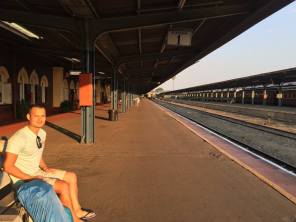
I fail to meet Esther due to miscommunication on texts and timing and decide to walk to the train station before the sun sets and transforms Bulawayo in what she had described to me as a death trap. While sitting on the dusty platform, Victoria introduces herself as the proud station master.
– ‘You are our guest and we thank you for visiting our country. You are on first class too’. She firmly says, before handing me a small pack of sweet biscuits and the wifi password.
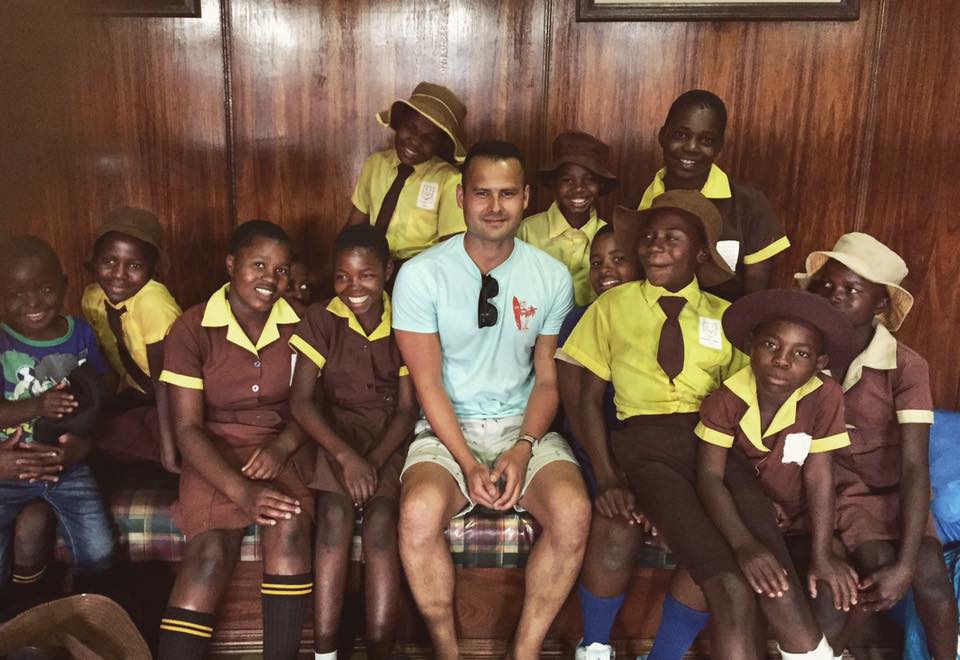
Once the departure time approaches, I enter a waiting lounge smothered in the aroma of the musty oak panels coating the walls. A group of twenty school kids immediately stop their own play and affix their round eyes towards the white man with the colourful backpack in synch. I smile and sit in a corner before asking to take a picture that will forever be displayed at my own living room.

With the precision of a Swiss train, the engine releases a deafening whistle across the platform and the wheels start its long cruise along the Rhodesian night.
I am provided with my own vintage cabin. I read Birmingham Steelworks in the upholstery and the rusty collapsable sink and I glance at my own reflexion on the large mirrors, the hand painted RR (Rhodesian Railways) logos protruding in weak tones of gilded paint over the dusty layer of light.


Four hours into the journey across the darkest of the African plains and once I finish an entire pack of biltong, I place the pillow against the window and rest my head while the sky above me turns turbulent and a heavy thunderstorm fills the air with the ever unique smell of wet turf. As the morning approaches, I wake up to the sound of station masters whistling the train good bye, I see hordes of antelopes and giraffes grazing next to the train line and I wave at the kids running along the departing train in outburst of smiles and curiosity.
Fourteen hours since our departure, the train enters a plain of round hills and blood-red soil. With every passing minute, the distant roaring of the water grows louder and the train enters the station at Victoria Falls in full and slow-motion glory. Street vendors try hard to sell me old billion Zimbabwean dollar notes, yet I pay no attention, I need coffee.


Thirty US dollars are charged for entering the nearby Victoria Falls National Park. Known as the largest water curtain in the world, and proudly claimed by Africans as the largest waterfall in the world -Iguazu in Brazil being a combination of falls-, the place is an oasis of fertile land and refreshing moist air in the heat of the African summer.
Breathtaking, tons and tons of water drop across the scars of ancient tectonic movement and the fall of over a hundred meters add beauty to the enigmatic landscape of the African continent. I unsuccessfully try to protect my camera from the constant water spray, though I secretly enjoy the water soaking up my clothes and hair like a kid playing with an inflatable pool and a hose in the heat of summer.

Shortly after lunch, I retrieve my backpack from the National Park gate and I physically proceed to leave Zimbabwe behind, yet in mind, I stay with the image of Esther proudly entering her pastel-coloured house, with the smell of distant smoke at sunset in Bulawayo and with the salty taste of biltong while the night thunderstorms stomp across ethereal plains of African emptiness.
At thirty minutes past three, I walk past the Zimbabwean immigration point and my overpriced visa is stamped out and rendered useless. Ahead of me, a mile-long walk stands between myself and a life achievement. My heart races and my feet try to accompany it. It is time.
 THE FLYING CAMBA